Erythronium americanum Ker Gawl.
Trout lily, yellow trout-lily, dogtooth violet
Trout lilies are lilies, not violets; the name “dogtooth violet” is derived from the shape of its bulb. Botanist Carol Gracie relates the story of the odd-seeming name adder’s tongue, which may have come about due to the mottling on the leaves:
...John Burroughs, a nineteenth-century American naturalist and writer, felt that adder’s tongue was an inappropriate name for such a lovely plant and suggested either fawn-lily, for its leaves are spotted like the back of a fawn, or “Still better is the name ‘troutlily,’ which has recently been proposed for this plant. It blooms along the trout streams, and its leaf is as mottled as a trout’s back.” (p. 26)
Plants: These plants often form dense colonies. Basal leaves rarely exceed 6″ (15 cm) in height.
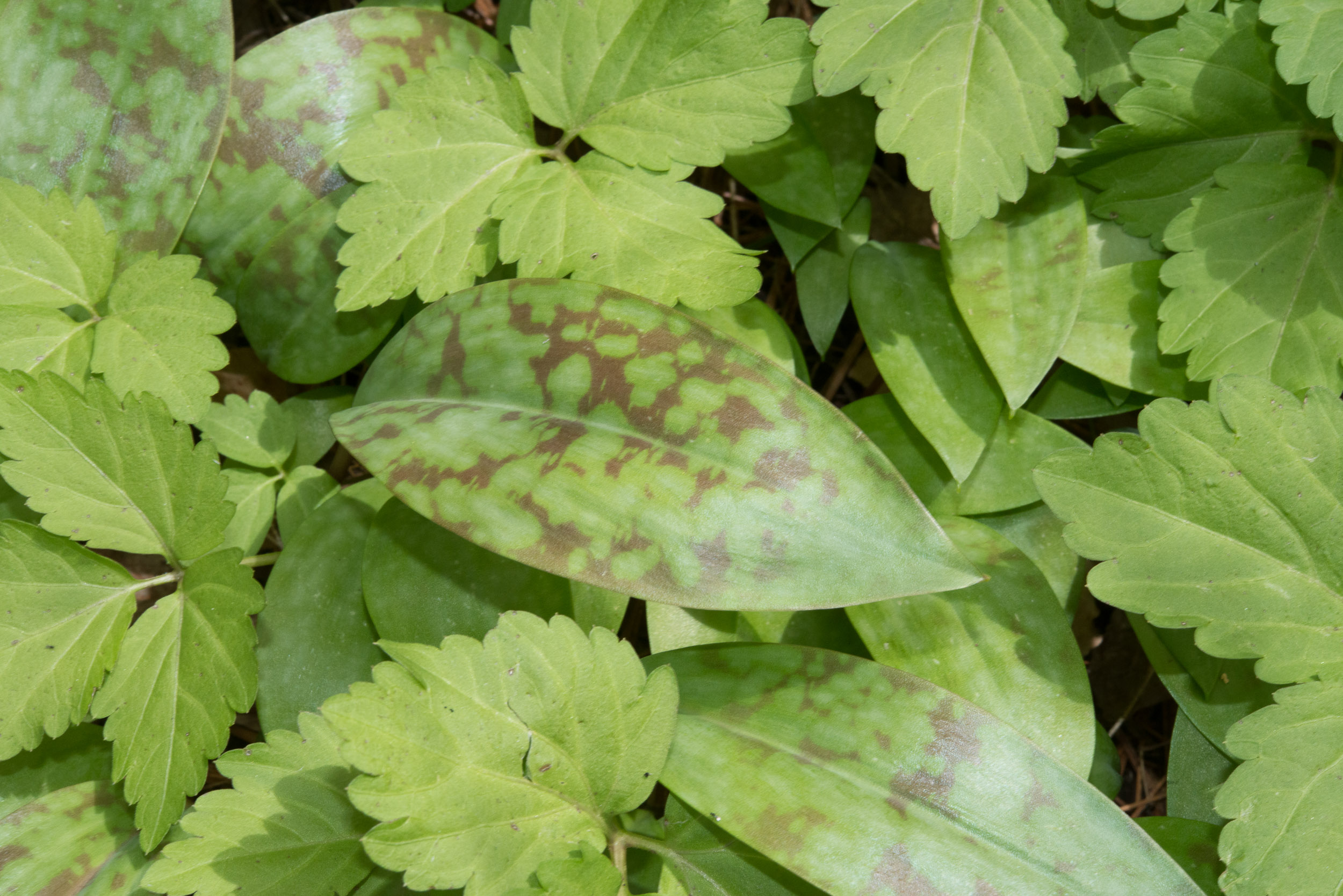
Leaves: Sharp-tipped elliptic to lanceolate, curiously mottled with brownish or purplish irregular splotches. They are 3–9″ (8–24 cm) long.
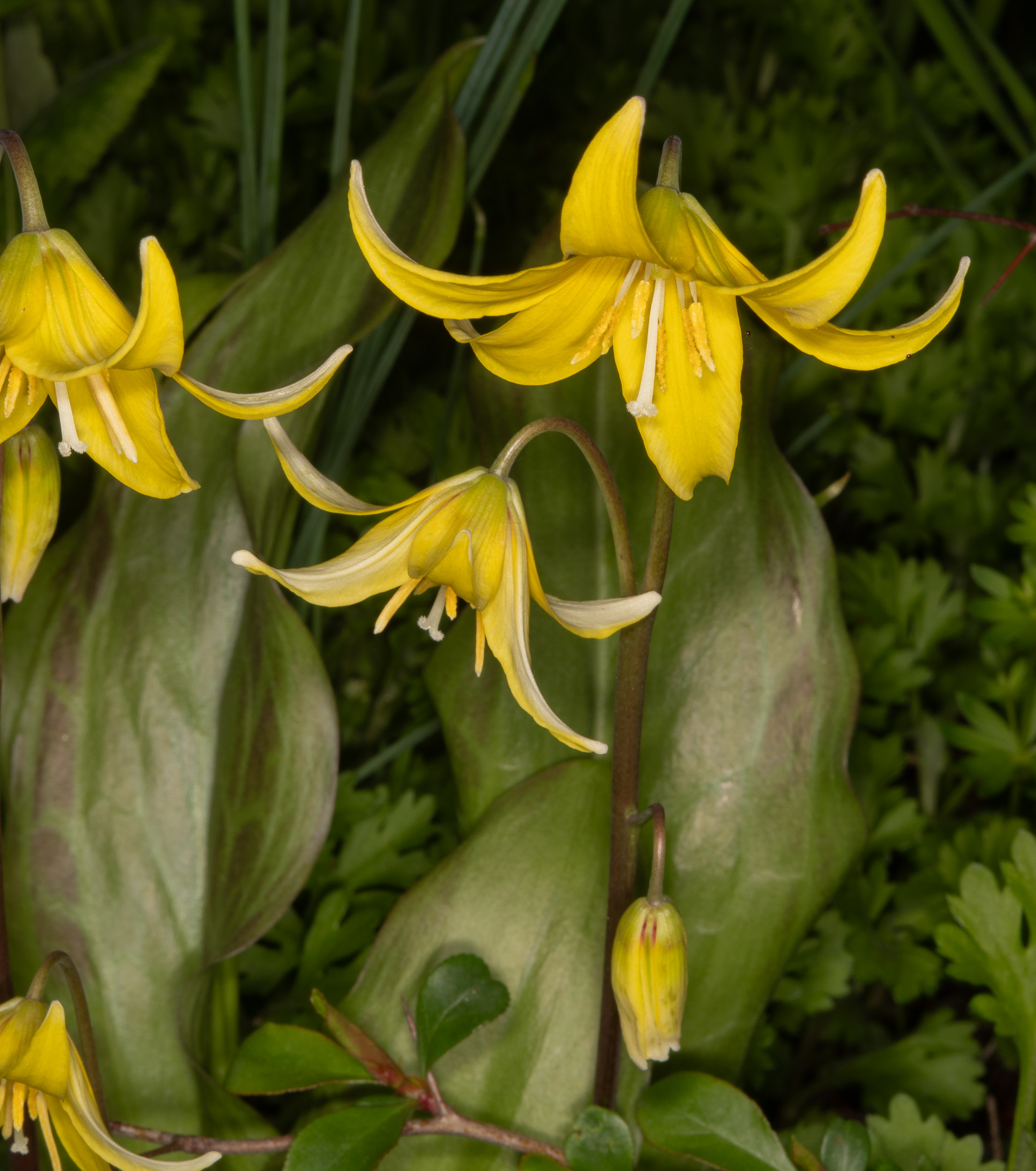
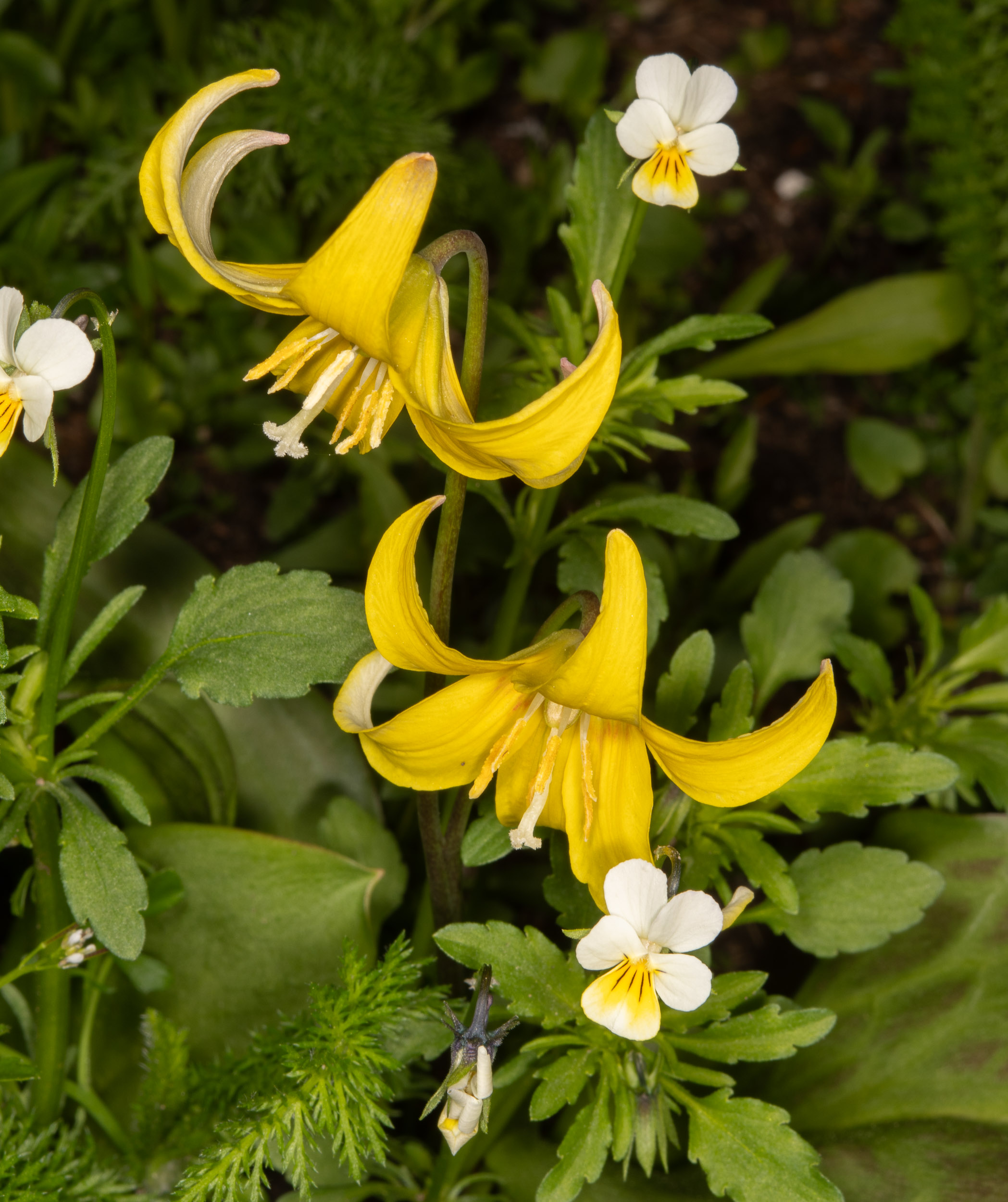
Flowers: Yellow inside and bronze, yellowish-brown or yellow outside, nodding, with six tepals—three petals and three identical-looking sepals—each ¾–1¼″ (2–3.3 cm) long. As the flowers mature, their petals bend way back, fully exposing six long brown stamens tipped with six anthers about ½″ (1.3 cm) long. The anthers are yellowish brown at first, darkening to deep red-purple.
Fruits: ⅜–½″ (1.2–1.5 cm) capsules held aloft on the flower stems, dispersed, principally, by ants.
Habitats: Moist woods, on wooded slopes and bluffs, and along streams.
References:
Online References:
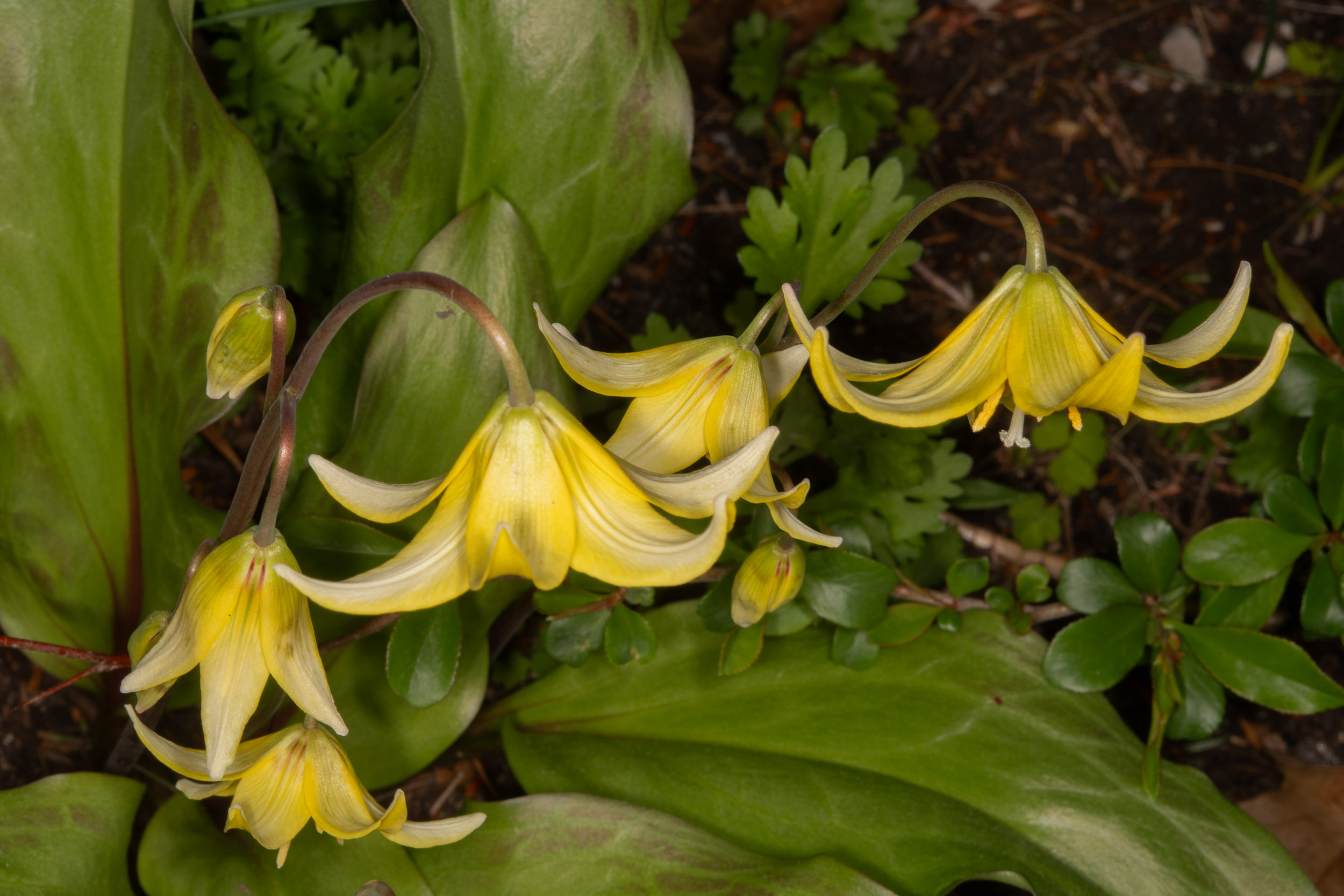
5/8/2021 · Carol Martin’s, Highland Green, Topsham, Maine · ≈ 8 × 5″ (20 × 13 cm) 

4/23/2016 · Big Tree/Porcupine Trail, Beaver, Hollis, Massachusetts 
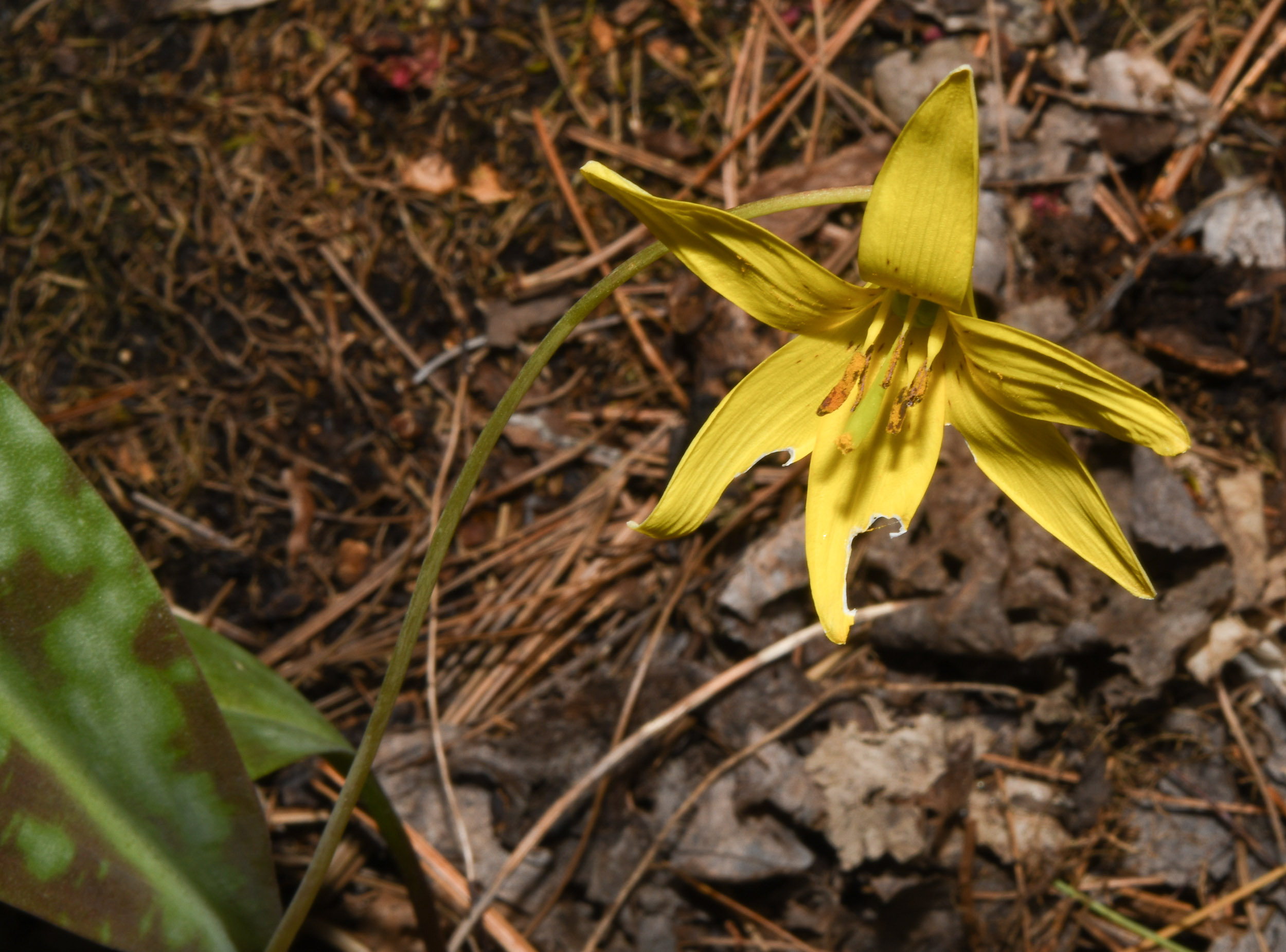
5/9/2016 · Wonder Brook Park, Kennebunk Lan, Kennebunk, Maine 
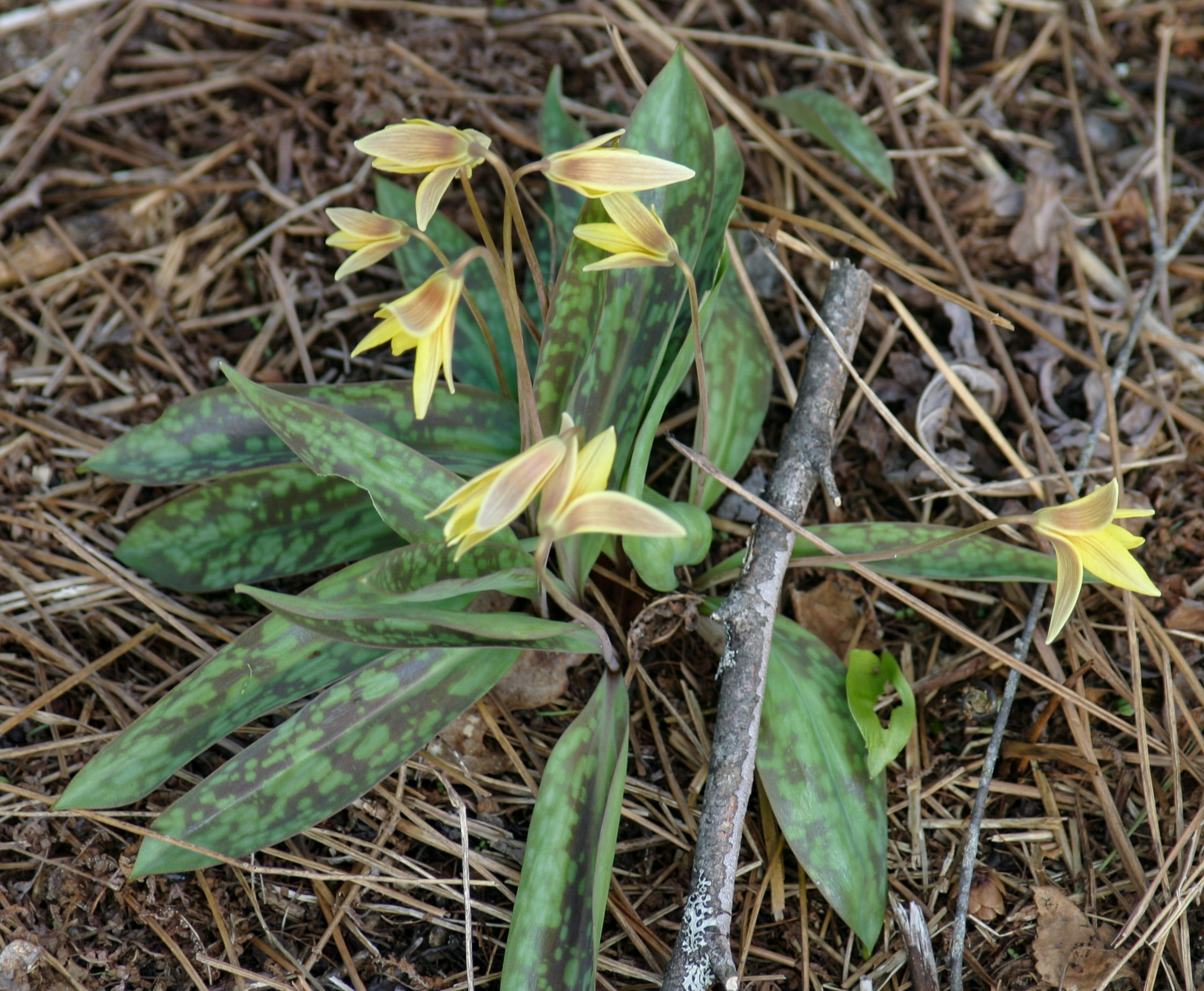
4/29/2012 · Gordon and Kathy’s, Prospect, Maine · By J Gordon Williamson 
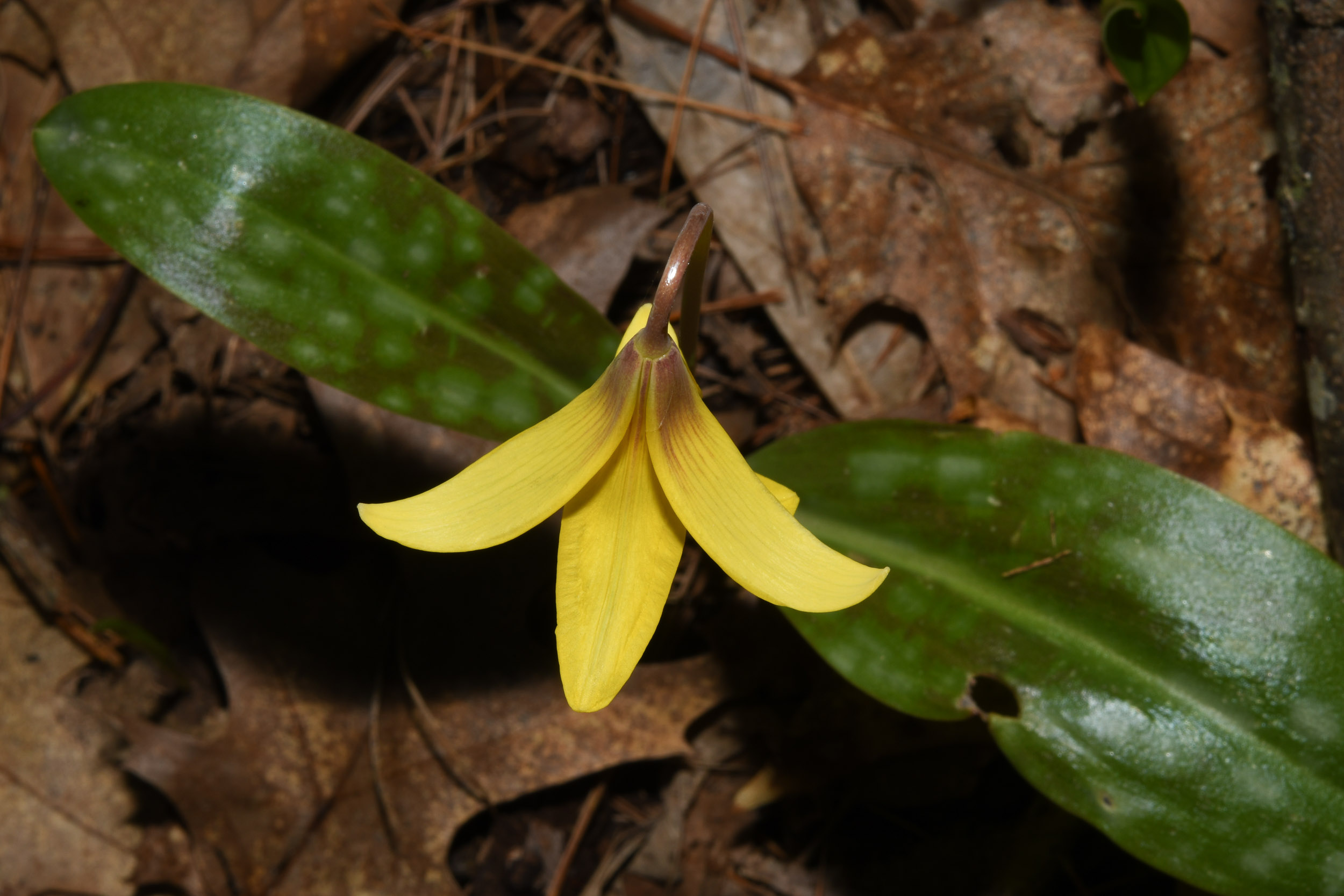
5/9/2016 · Wonder Brook Park, Kennebunk Lan, Kennebunk, Maine 
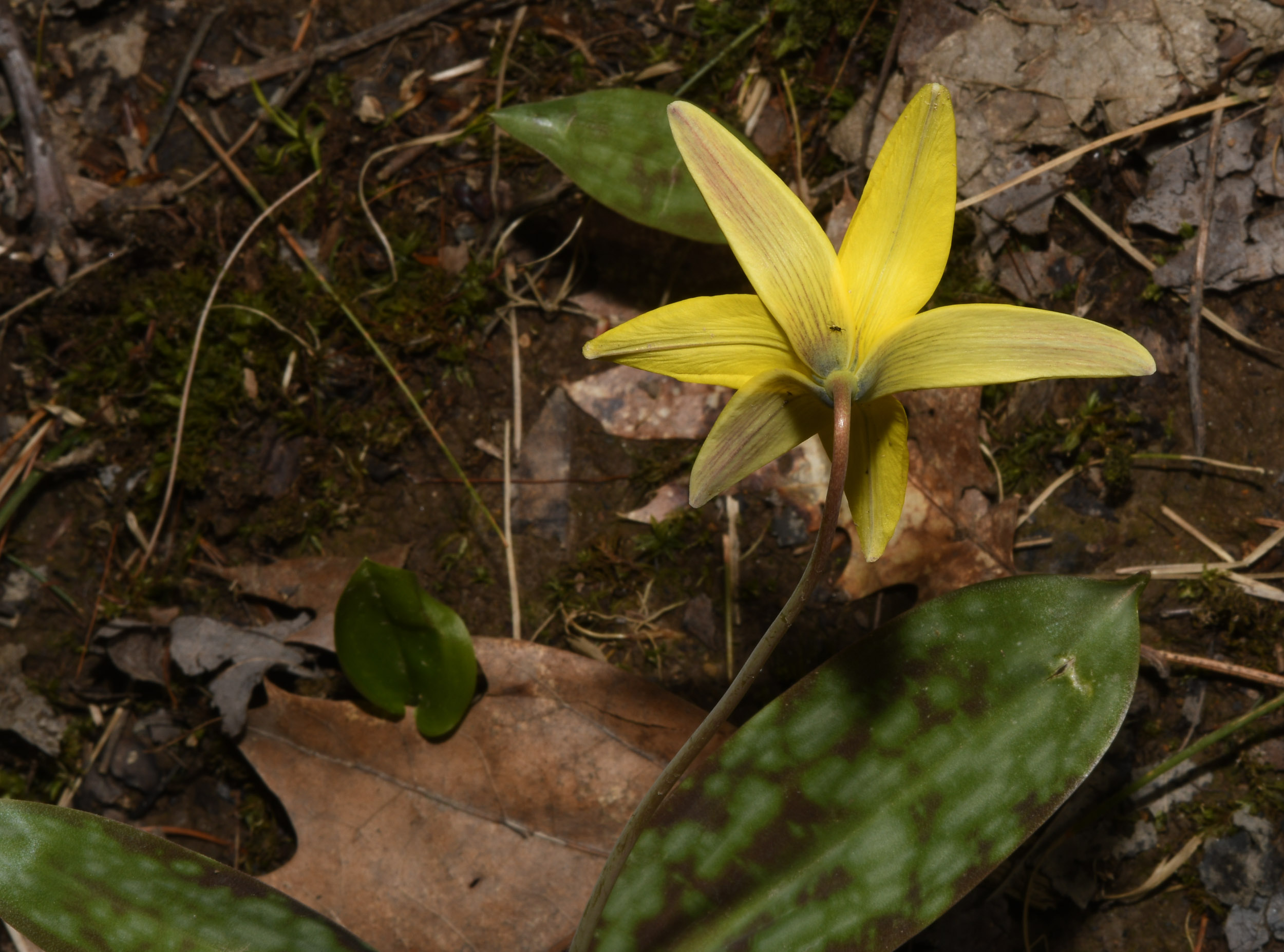
5/9/2016 · Wonder Brook Park, Kennebunk Lan, Kennebunk, Maine 
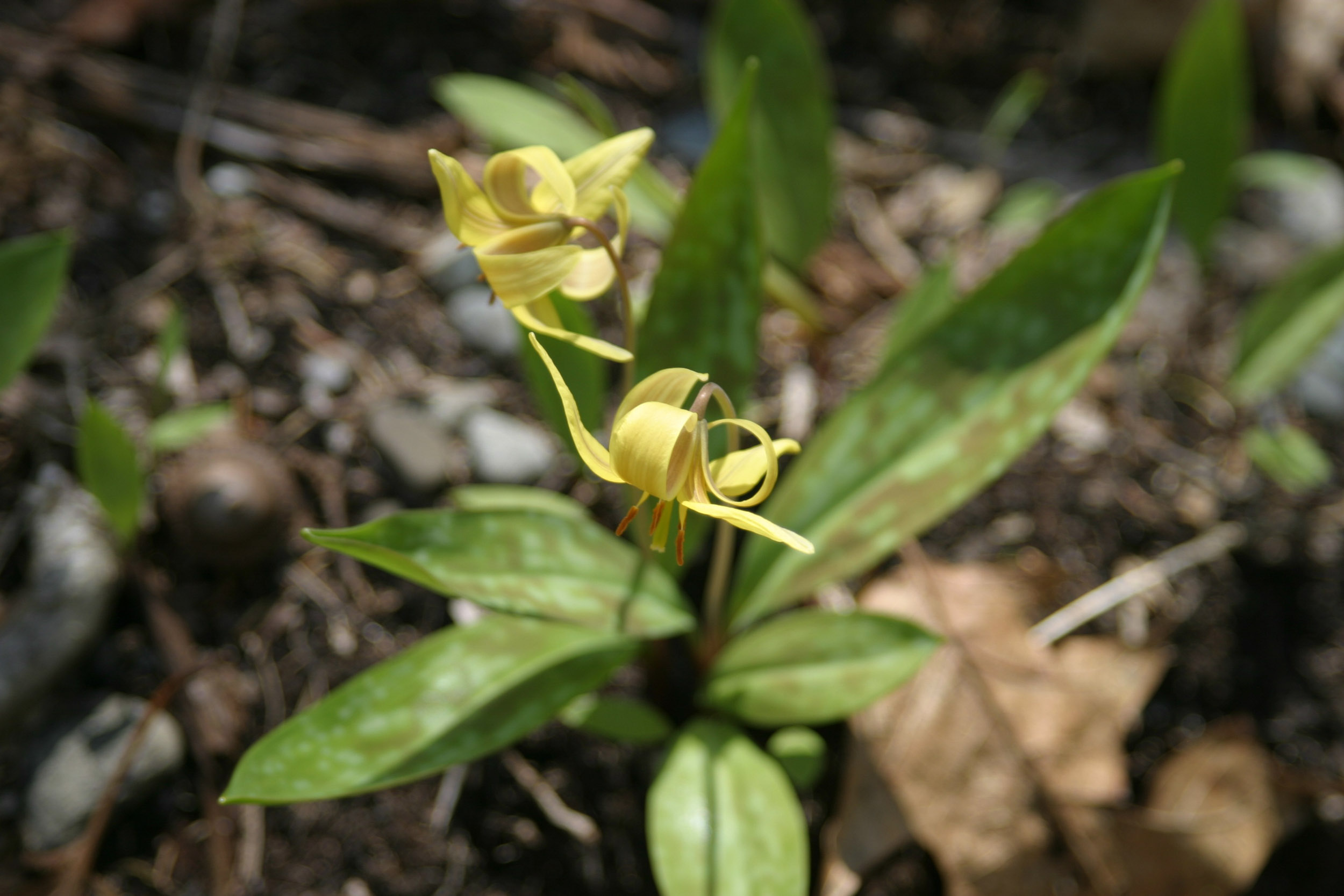
1/5/2026 · Gordon and Kathy’s, Prospect, Maine · By J Gordon Williamson 
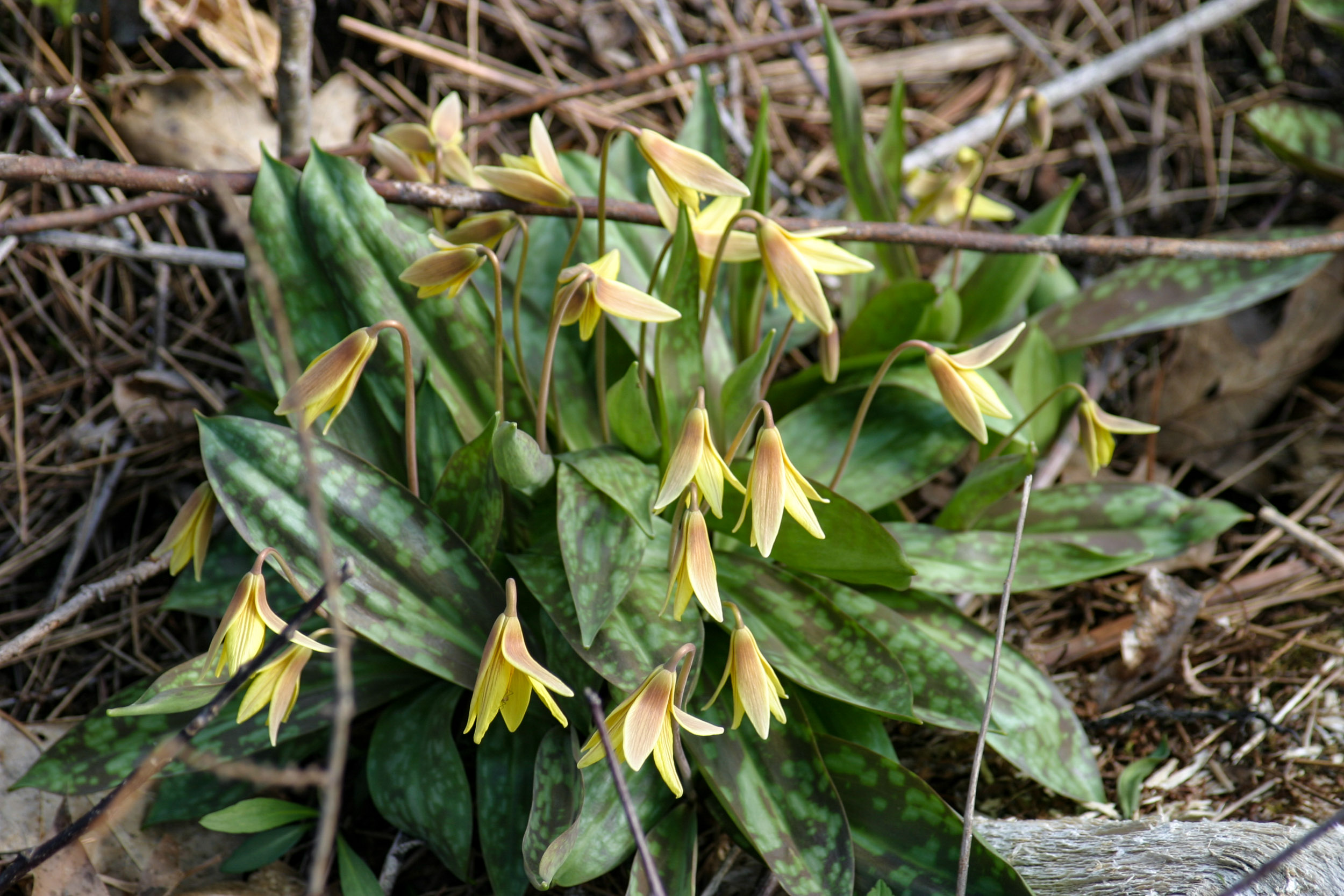
4/29/2012 · Gordon and Kathy’s, Prospect, Maine · By J Gordon Williamson 
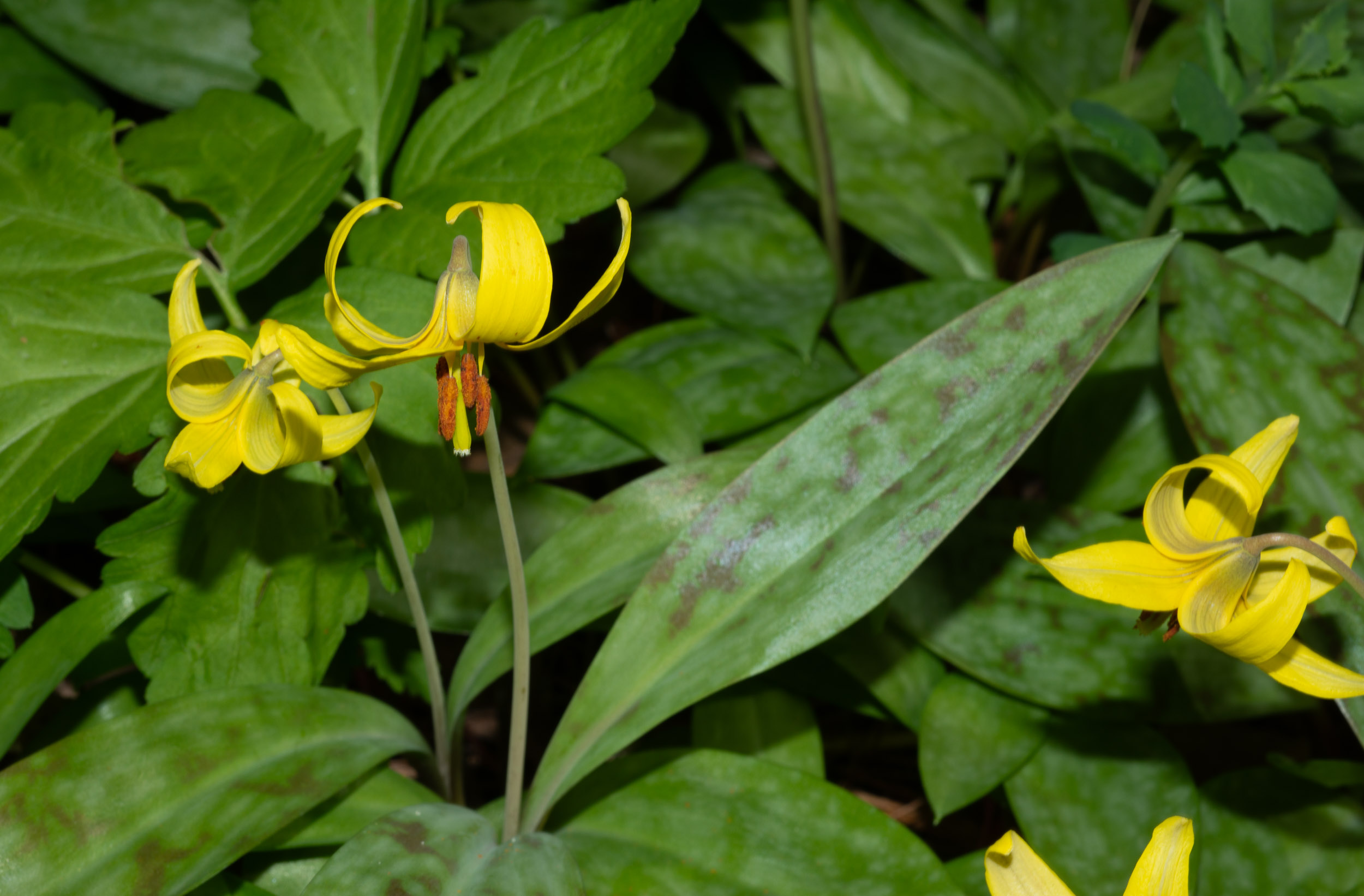
4/29/2013 · Beaver Brook Conservation Area, Hollis, New Hampshire · ≈ 9 × 6″ (22 × 14 cm) 
5/3/2014 · Beaver Brook Conservation Area, Hollis, New Hampshire · ≈ 10 × 7″ (25 × 16 cm) 
5/8/2021 · Carol Martin’s, Highland Green, Topsham, Maine · ≈ 5 × 6″ (13 × 14 cm) 

4/23/2016 · Big Tree/Porcupine Trail, Beaver, Hollis, Massachusetts 
5/8/2021 · Carol Martin’s, Highland Green, Topsham, Maine · ≈ 4½ × 6″ (12 × 14 cm) 
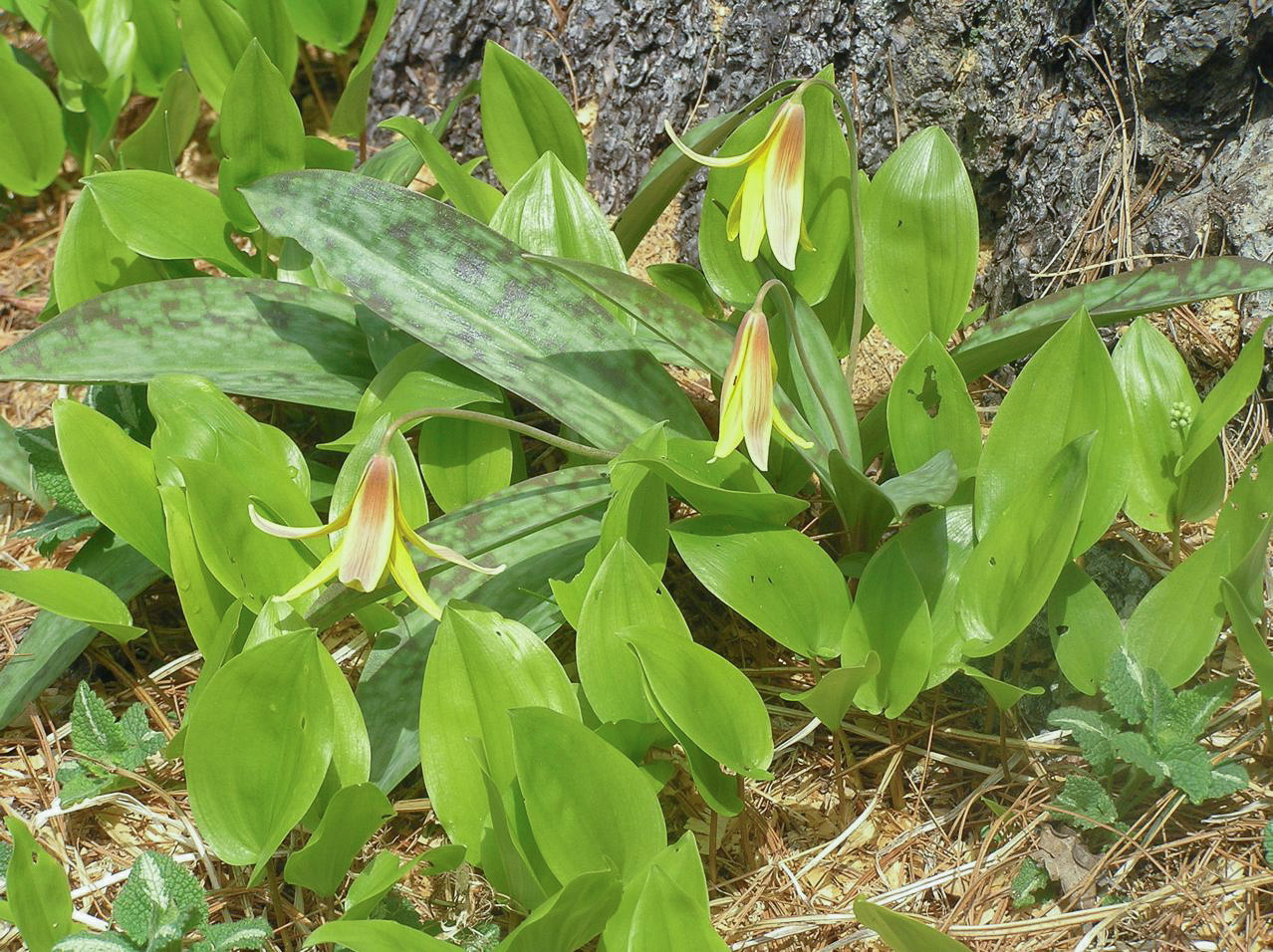
The trout lily is surrounded by young Canada mayflowers. · 4/23/2010 · Stan and Connie’s, Falmouth, Maine · By Constance B. Kent 
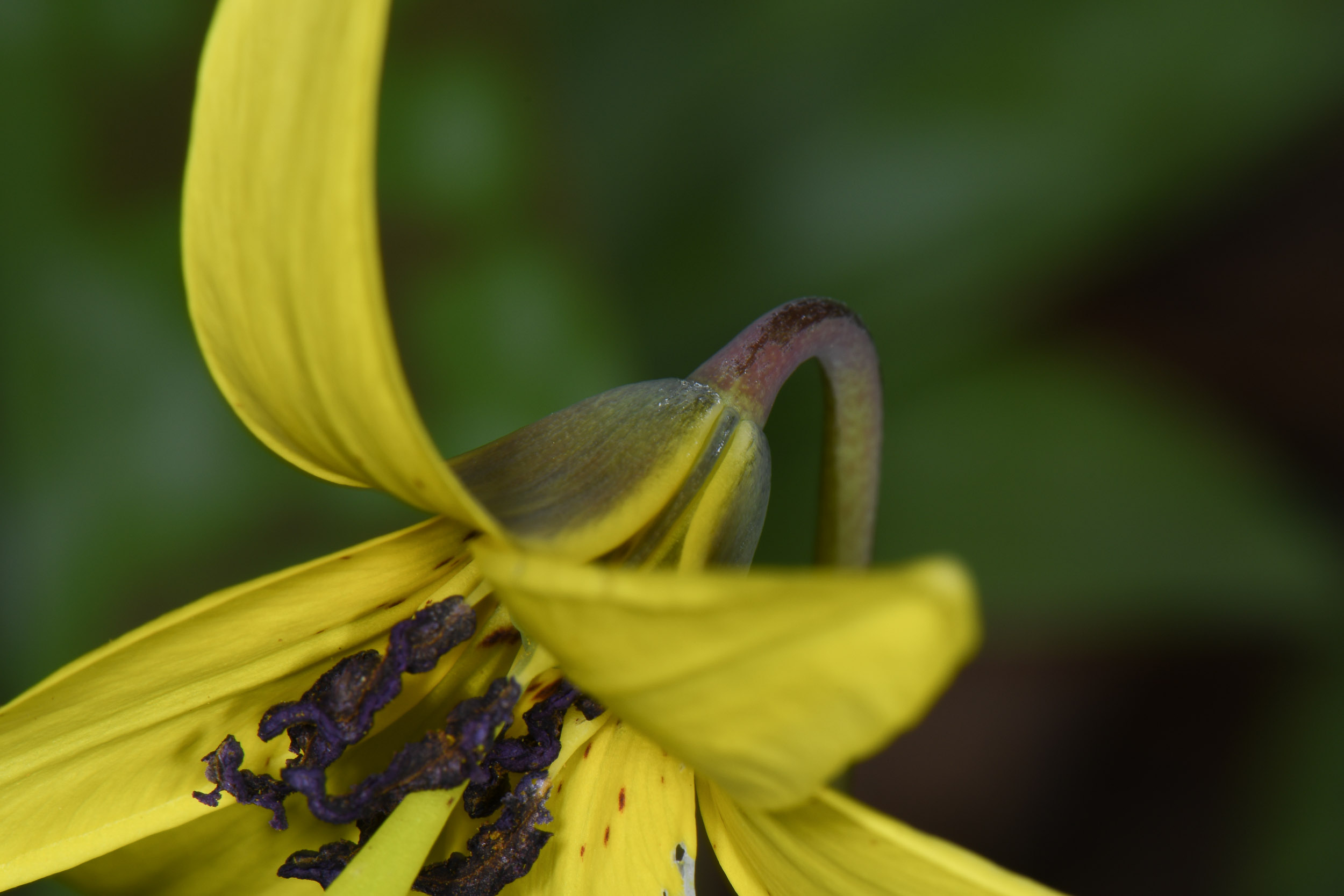
4/23/2016 · Big Tree/Porcupine Trail, Beaver, Hollis, Massachusetts 
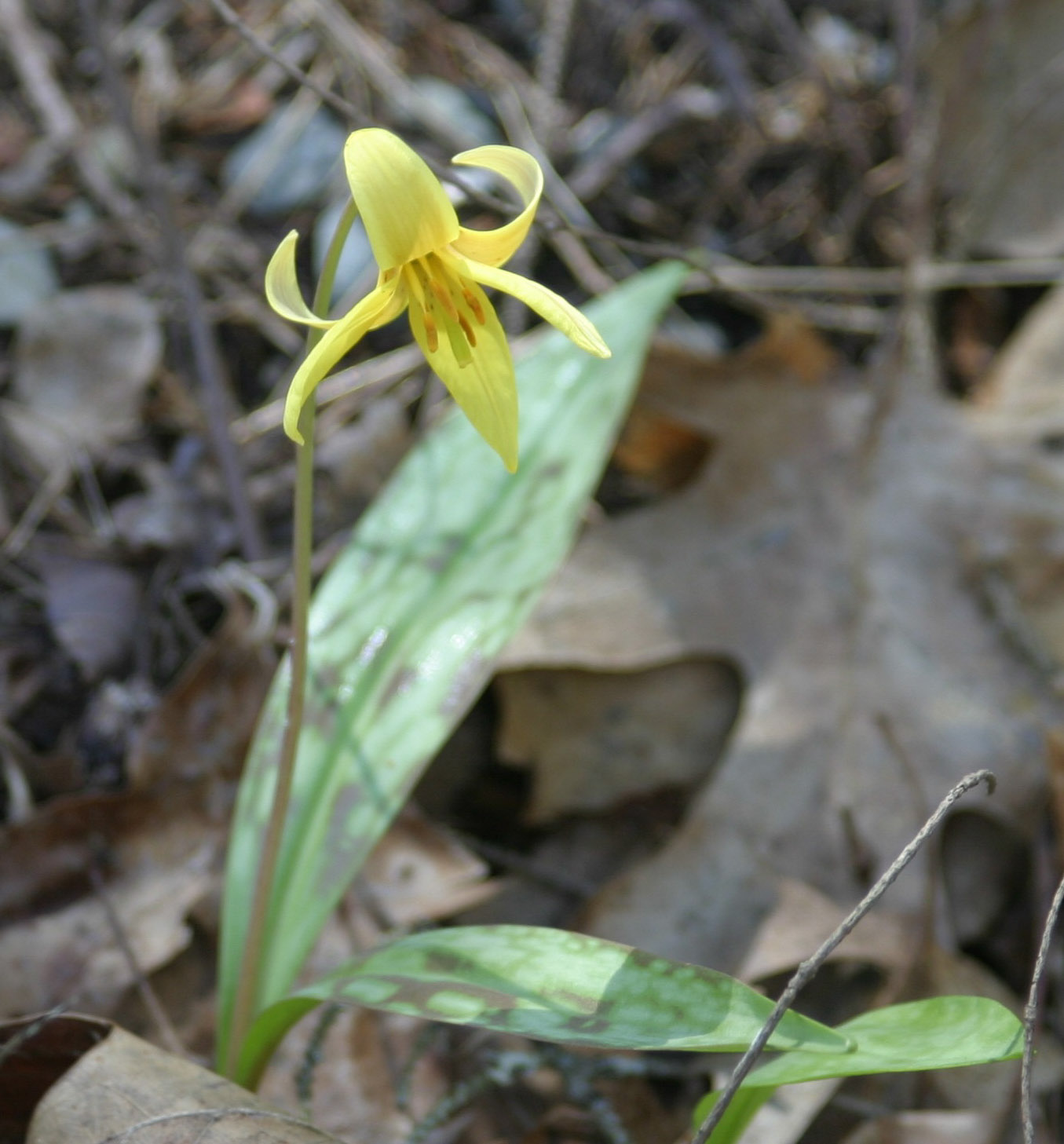
1/5/2026 · Gordon and Kathy’s, Prospect, Maine · By J Gordon Williamson 
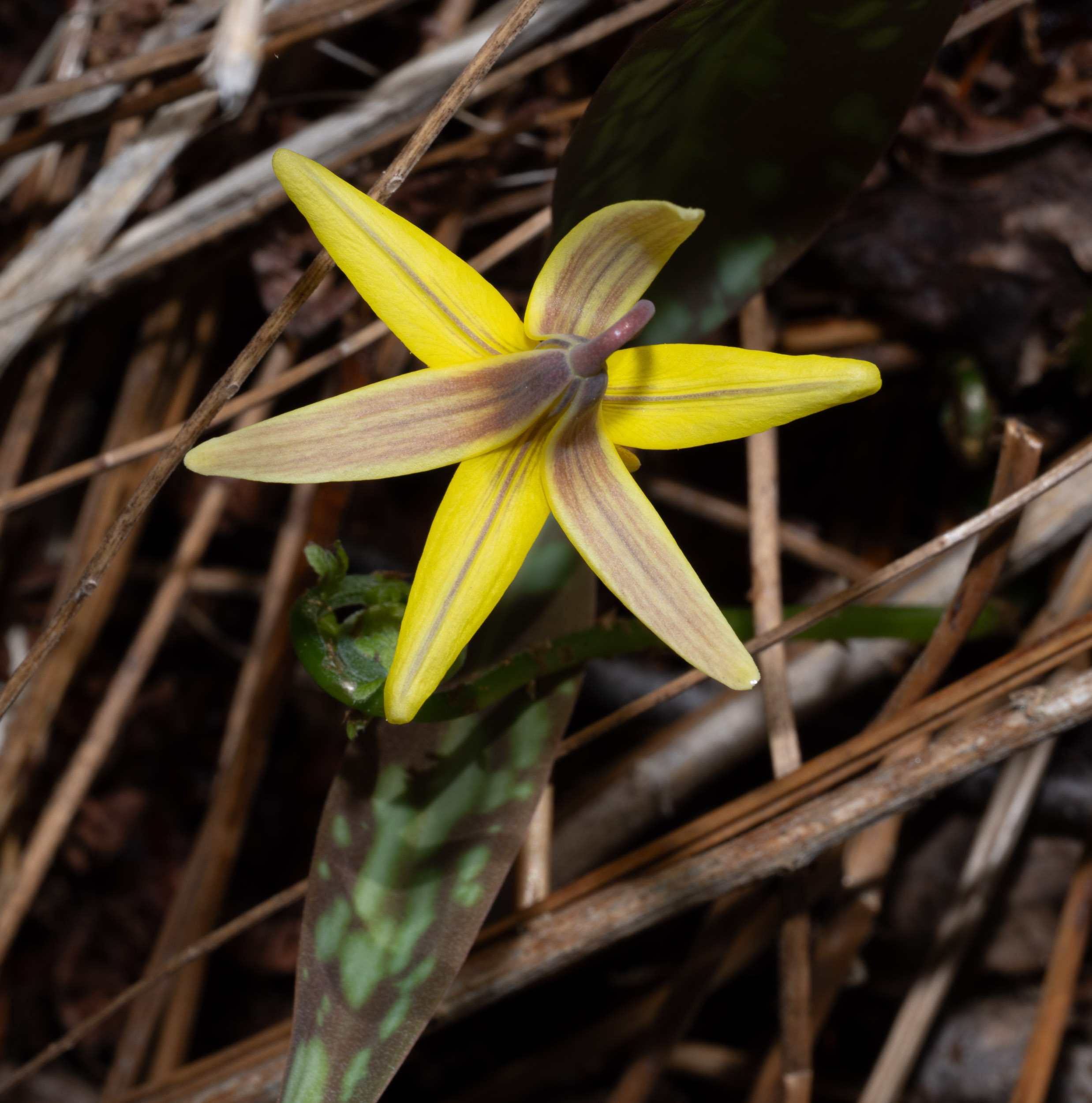
5/3/2025 · Merritt Mountain, Phippsburg, Maine · ≈ 3½ × 3½″ (9 × 9.1 cm) 
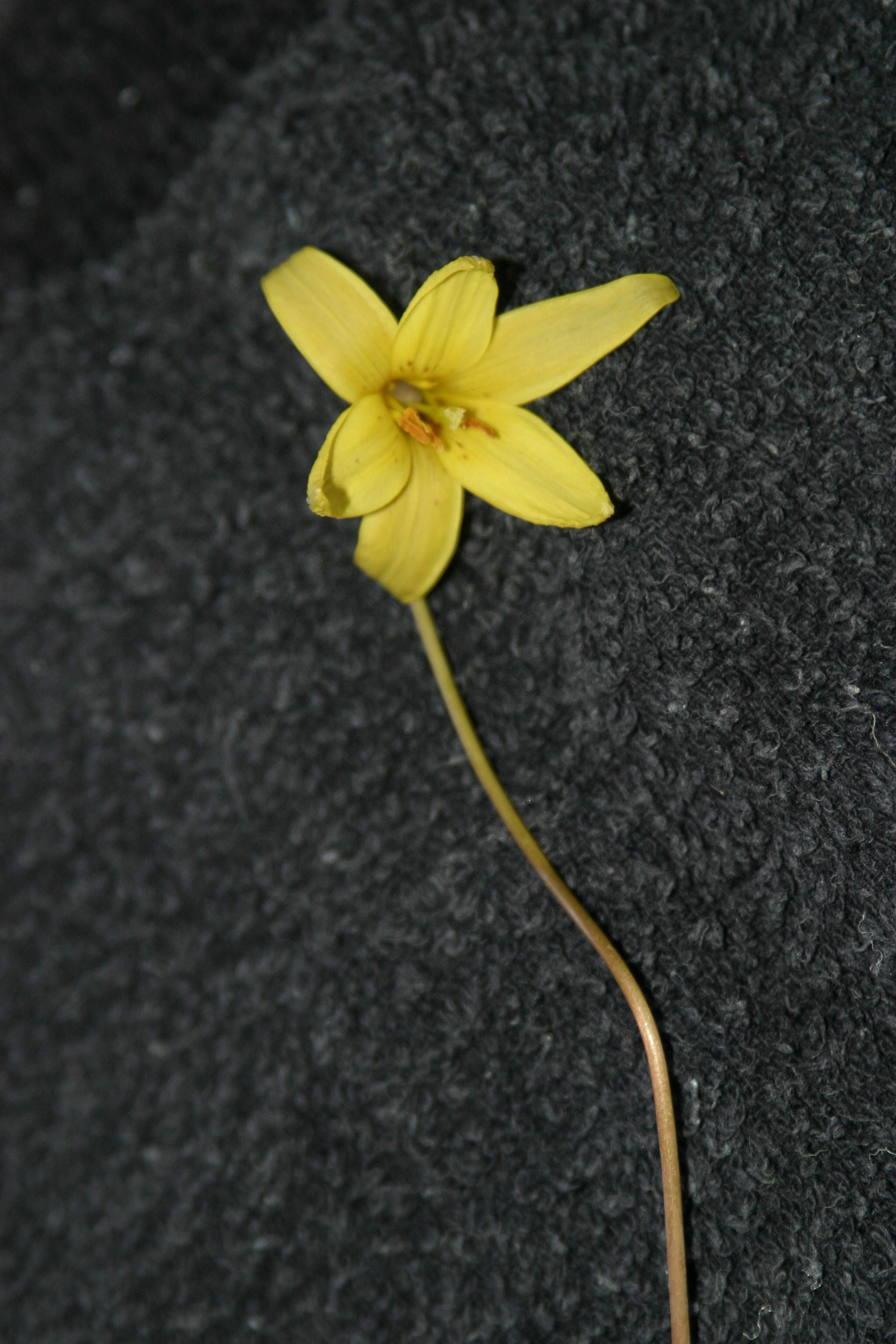
1/5/2026 · Gordon and Kathy’s, Prospect, Maine · By J Gordon Williamson 
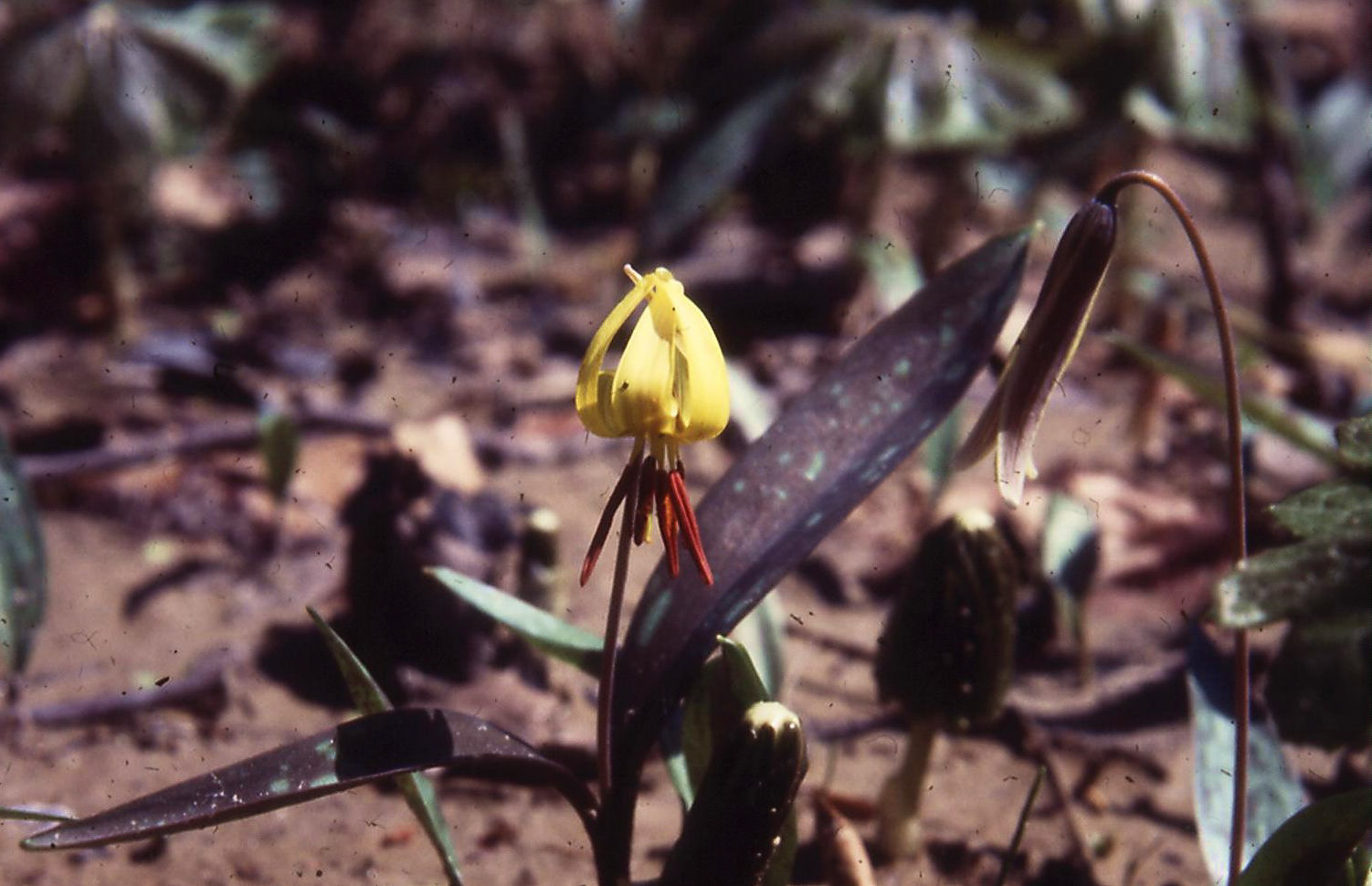
4/15/1979 · Virginia · By Tim Chandler 
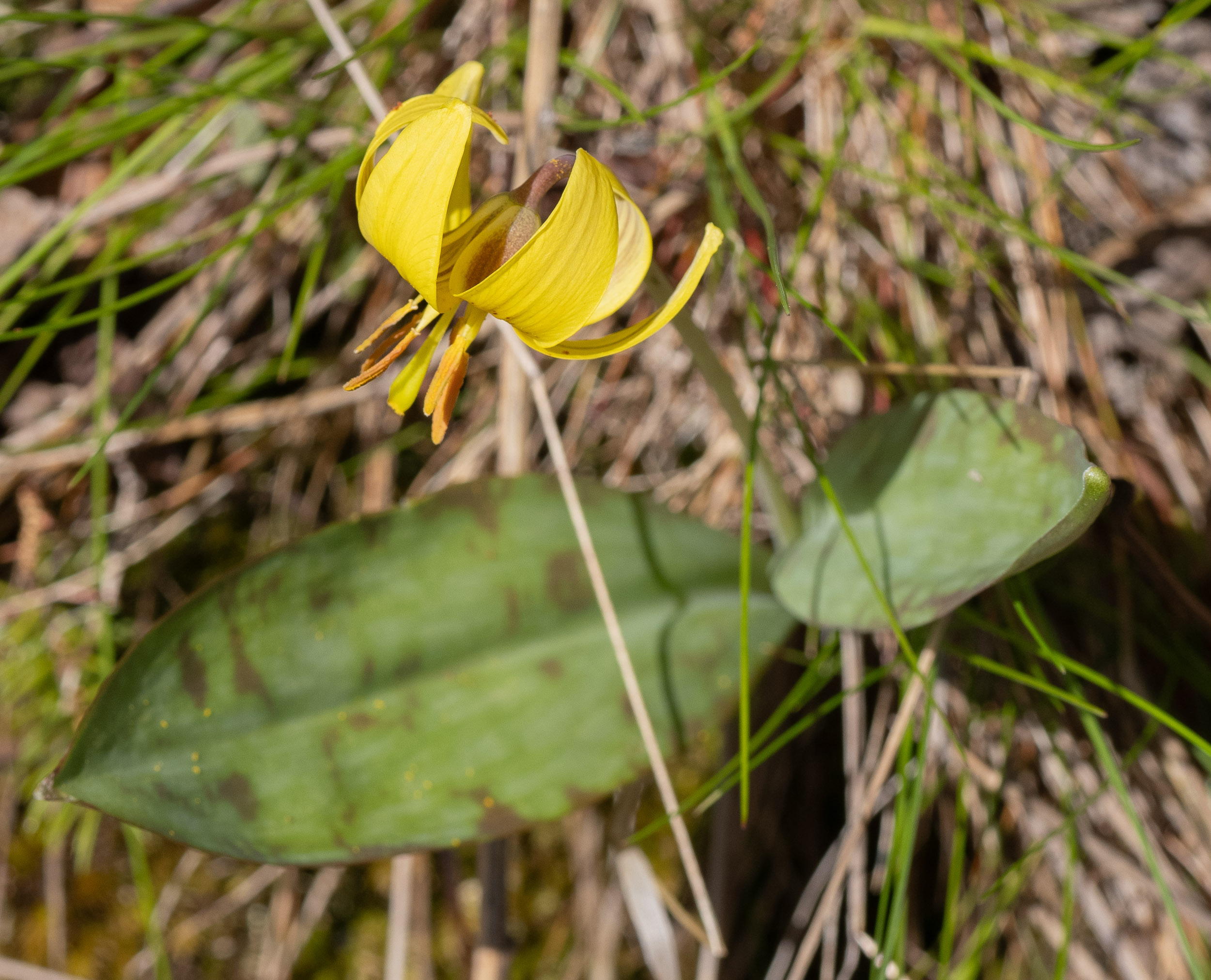
5/5/2023 · Morse Mountain, Phippsburg, Maine 
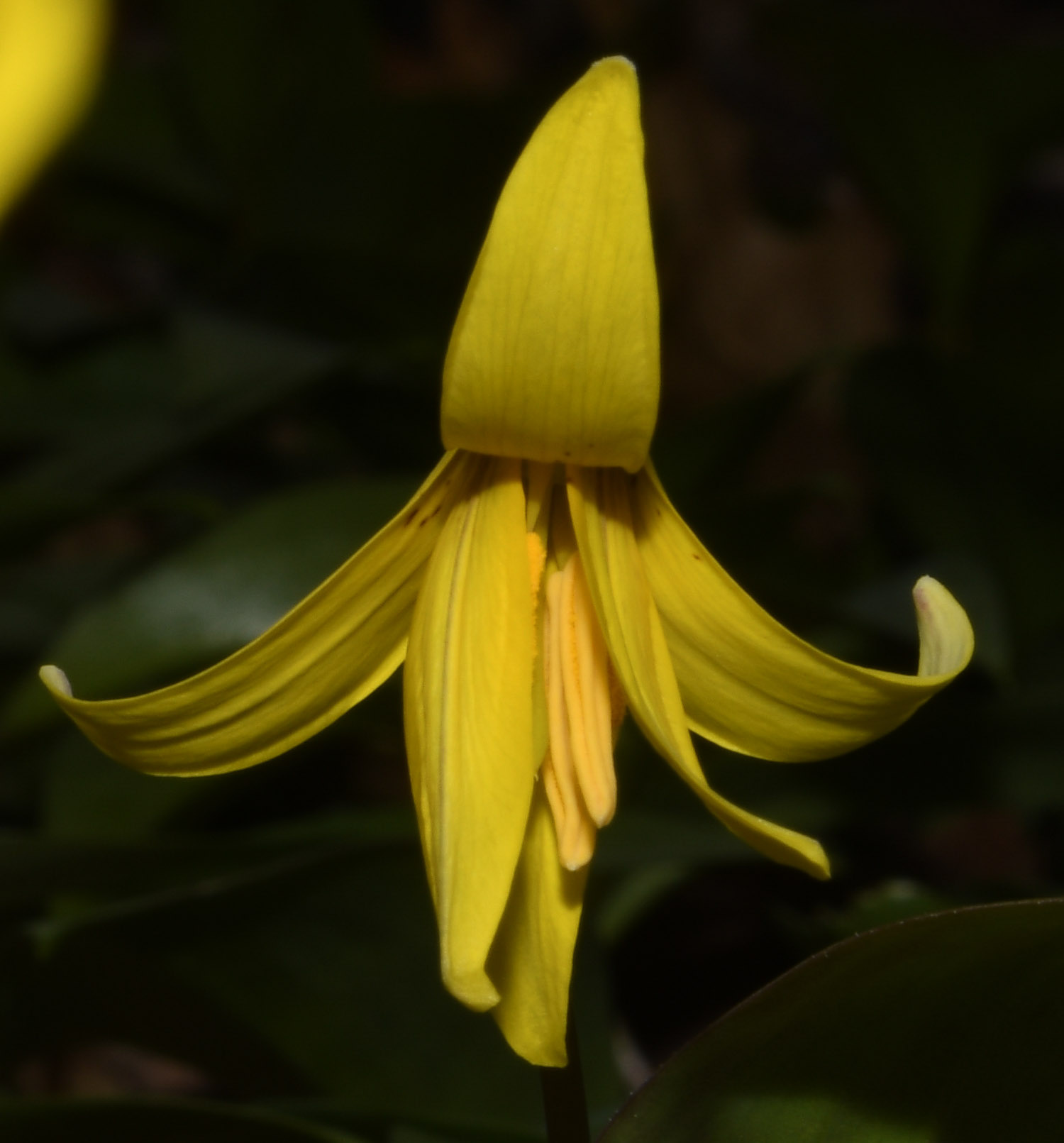
5/9/2016 · Wonder Brook Park, Kennebunk Lan, Kennebunk, Maine 
| Kingdom | Plantae | Plants, but not fungi, lichens, or algae (from Stearn's Botanical Latin) |
| Subkingdom | Tracheobionta | Vascular plants—plants with a “circulatory system” for delivering water and nutrients |
| Division | Magnoliophyta | Flowering plants, also known as angiosperms |
| Class | Liliopsida | Monocots (plants with a single seed leaf); includes the lily family |
| Subclass | Liliidae | Includes lilies, orchids, and many others |
| Order | Liliales | Includes lilies, tulips, trilliums, greenbriars, and others |
| Family | Liliaceae | Lilly family |
| Genus | Erythronium | Greek for “red,” for a red-flowered European species |
| Species | americanum | “From America” |
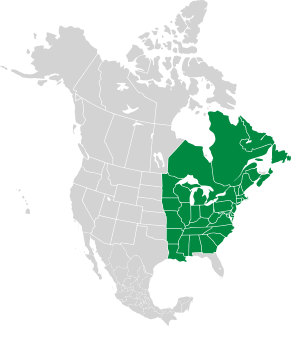
Erythronium americanum description by Thomas H. Kent, not updated.

© FloraFinder.org. All rights reserved.