Kalmia latifolia L.
Mountain laurel, spoonwood, ivybush, calico bush, lambkill
Mountain laurel is native to eastern North America. The common name reflects its widespread presence in mountain forests, but it is also common closer to sea level. This is a popular landscaping plant, and many cultivars exist.
Plants: 6½–30′ (2–9 m) high, usually growing as shrubs but reaching tree size in some areas. Its multiple branches are characteristically crooked, and gray or cinnamon-colored, depending upon age. The shape may be compact or uneven, with irregular branches and uneven foliage.
Leaves: Shiny, 1–4½ ⨉ ⅜–1½″ (3–12 ⨉ 1–4 cm), roughly oval (technically elliptical), with smooth edges and pointed tips. Leaves are usually dark green, but become lighter in high amounts of sunlight.
Flowers: Flowers occur in numerous attractive 4–6″ (10–15 cm) clusters that appear from May to July. Each flower is bowl-shaped, ¾–1″ (1.9–2.5 cm) in diameter, with five overlapping petals, white or pink with rose-colored spots.
Fruits: Inconspicuous brown dehiscent capsules ⅛″ (4.8 mm), that persist into winter.
Habitats: Edges of dense woods or throughout mature hardwood and pine forests where light levels are fairly high.
Edibility: Poisonous  Mountain laurel foliage is toxic to
horses, cattle, goats, sheep, deer, monkeys, and humans.
Online References:
Kalmia latifolia L. var. laevipes Fernald
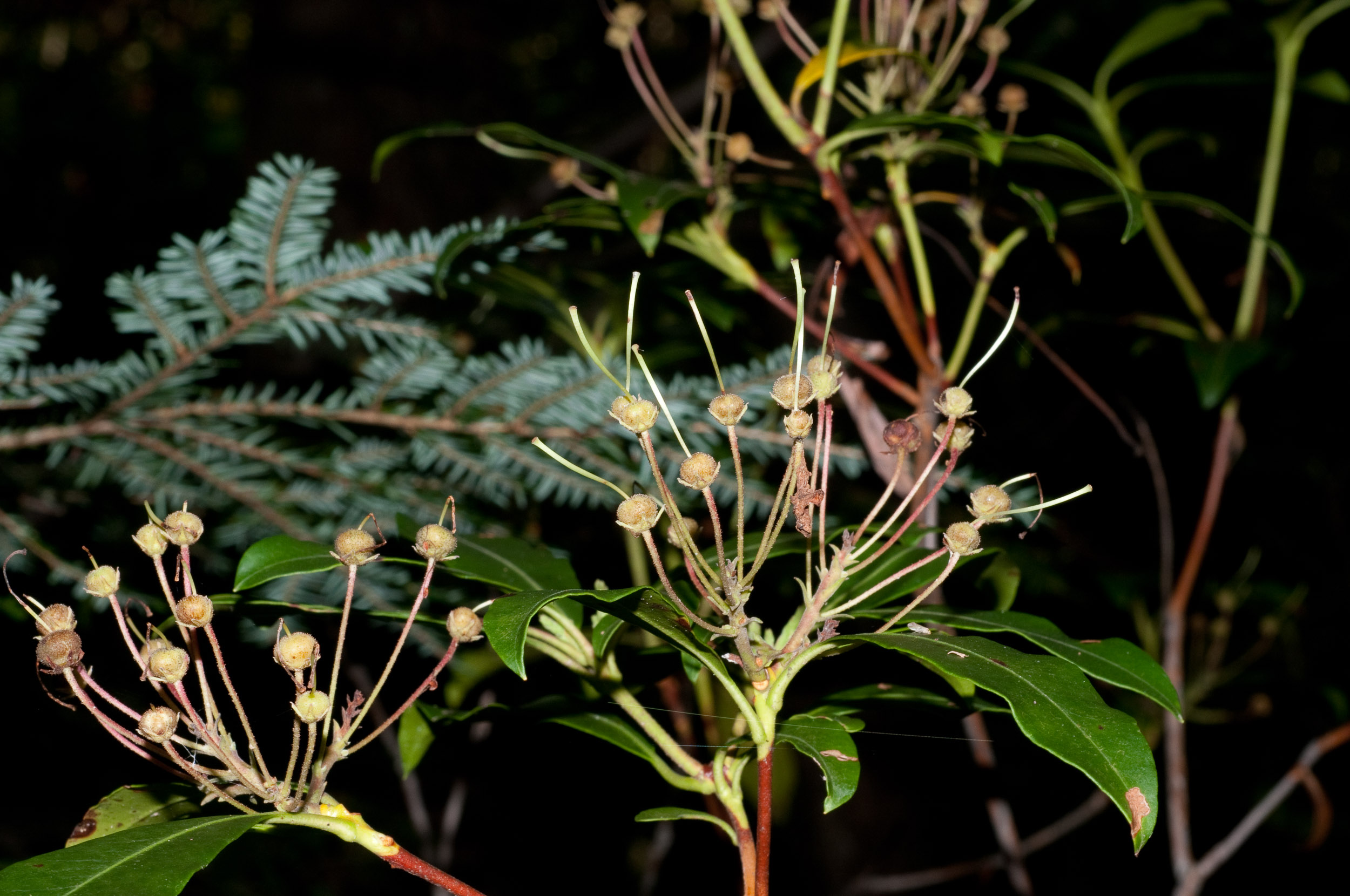
10/3/2010 · Tarkill Interpretive Trail, Rte 402, Poconos, Peck’s Pond, Pennsylvania · ≈ 9 × 6″ (23 × 15 cm) 
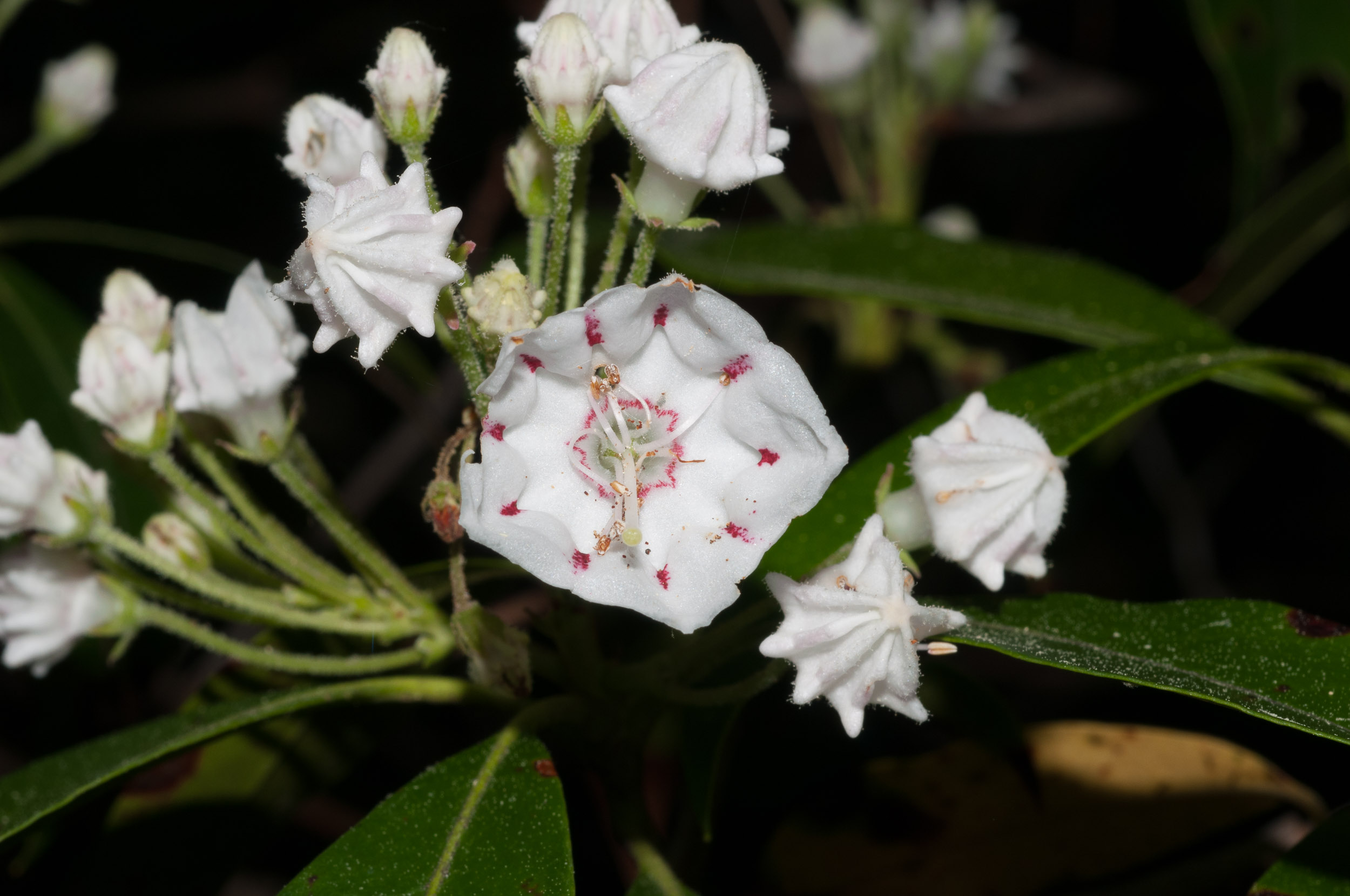
5/30/2010 · Hayes Wood Conservation Trail, Shirley St., Pepperell, Massachusetts · ≈ 4½ × 3″ (11 × 7.9 cm) 

1/1/2011 · MacDonald-Zachos’ · ≈ 7 × 4½″ (17 × 11 cm) 

9/28/2011 · Groton Place and Sabine Woods, Groton, Massachusetts 
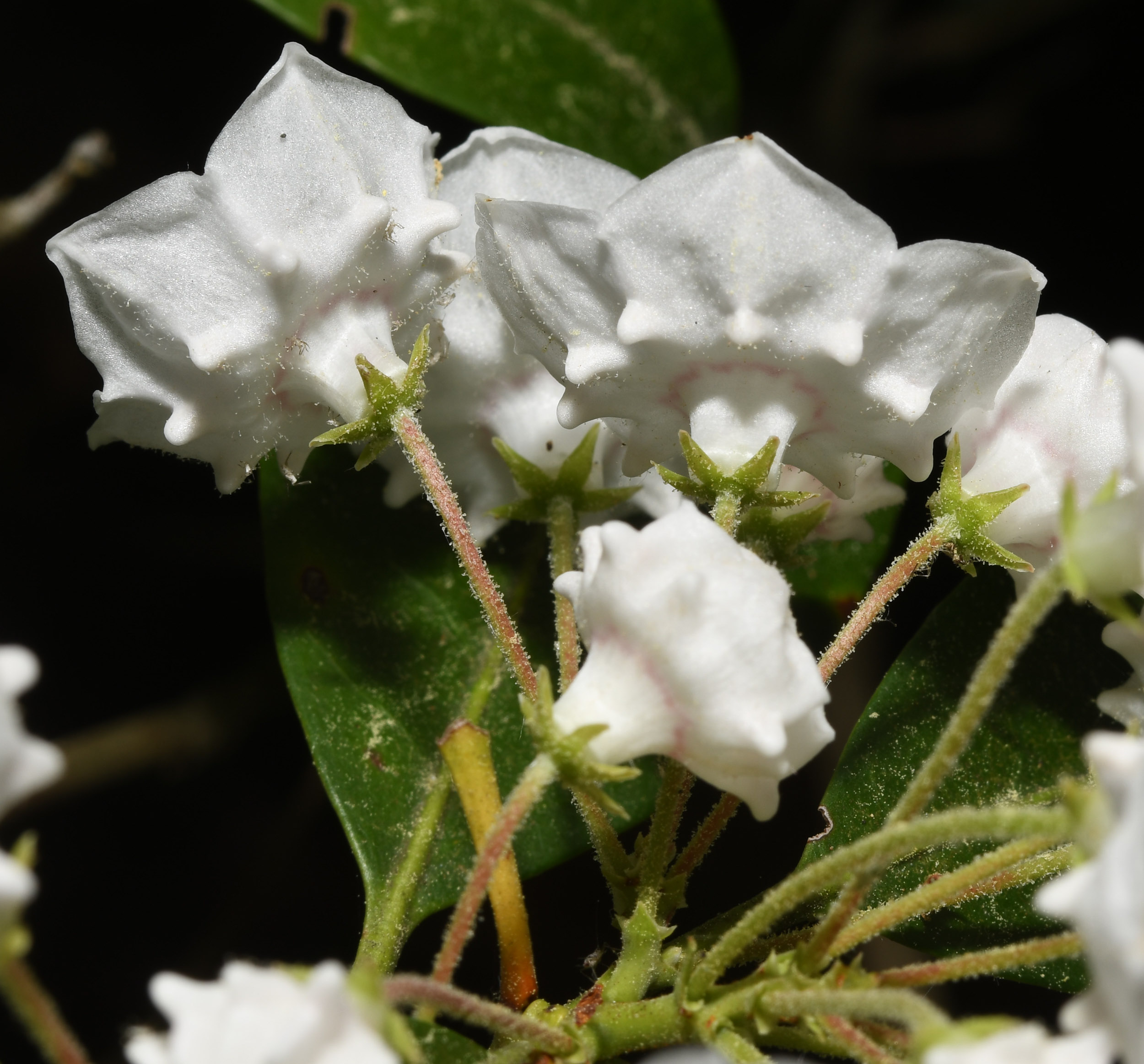
6/17/2016 · Blue Trail, Willard Brook State, Ashby, Massachusetts 
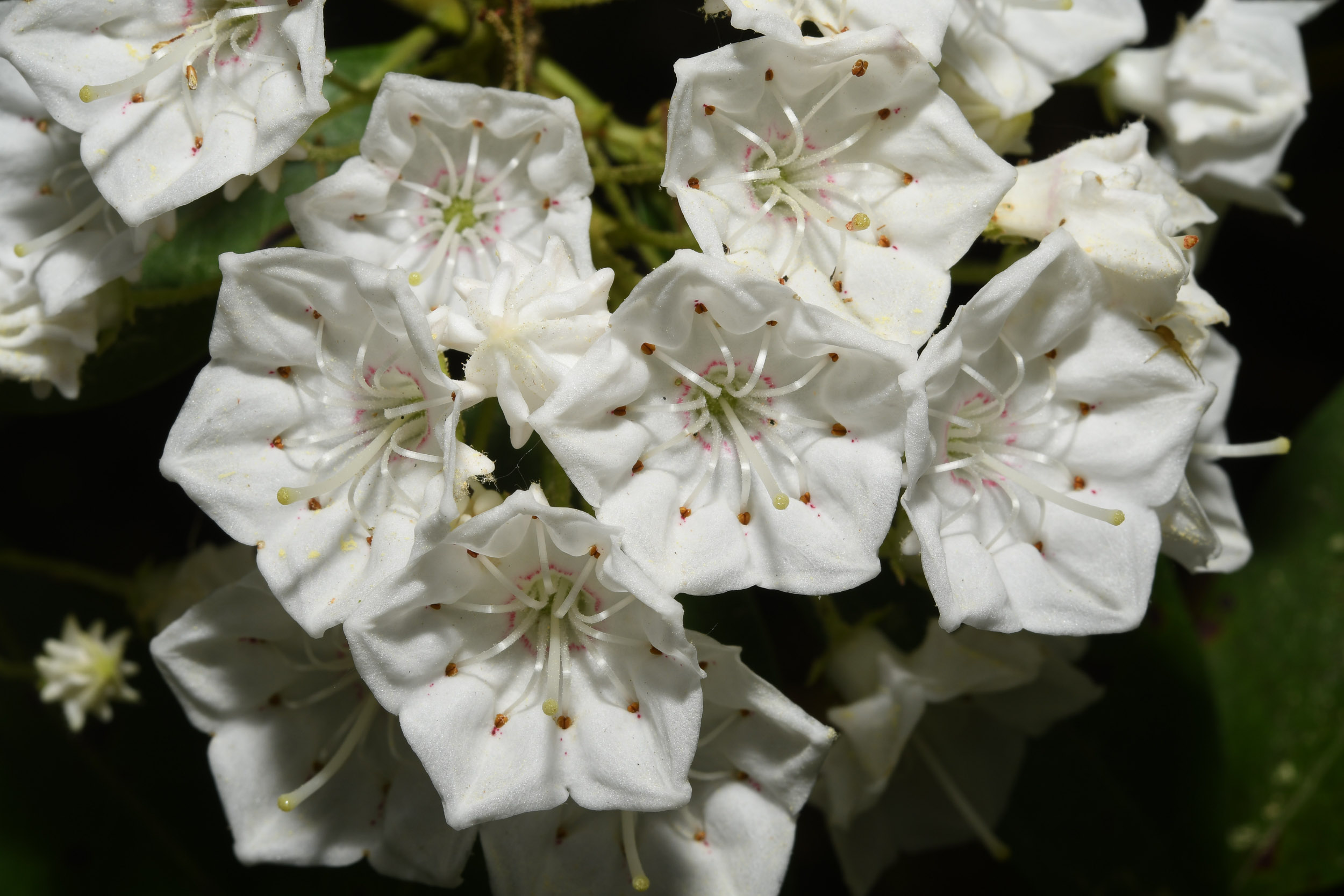
6/14/2016 · Andres Institute of Art, Big Bea, Brookline, New Hampshire 
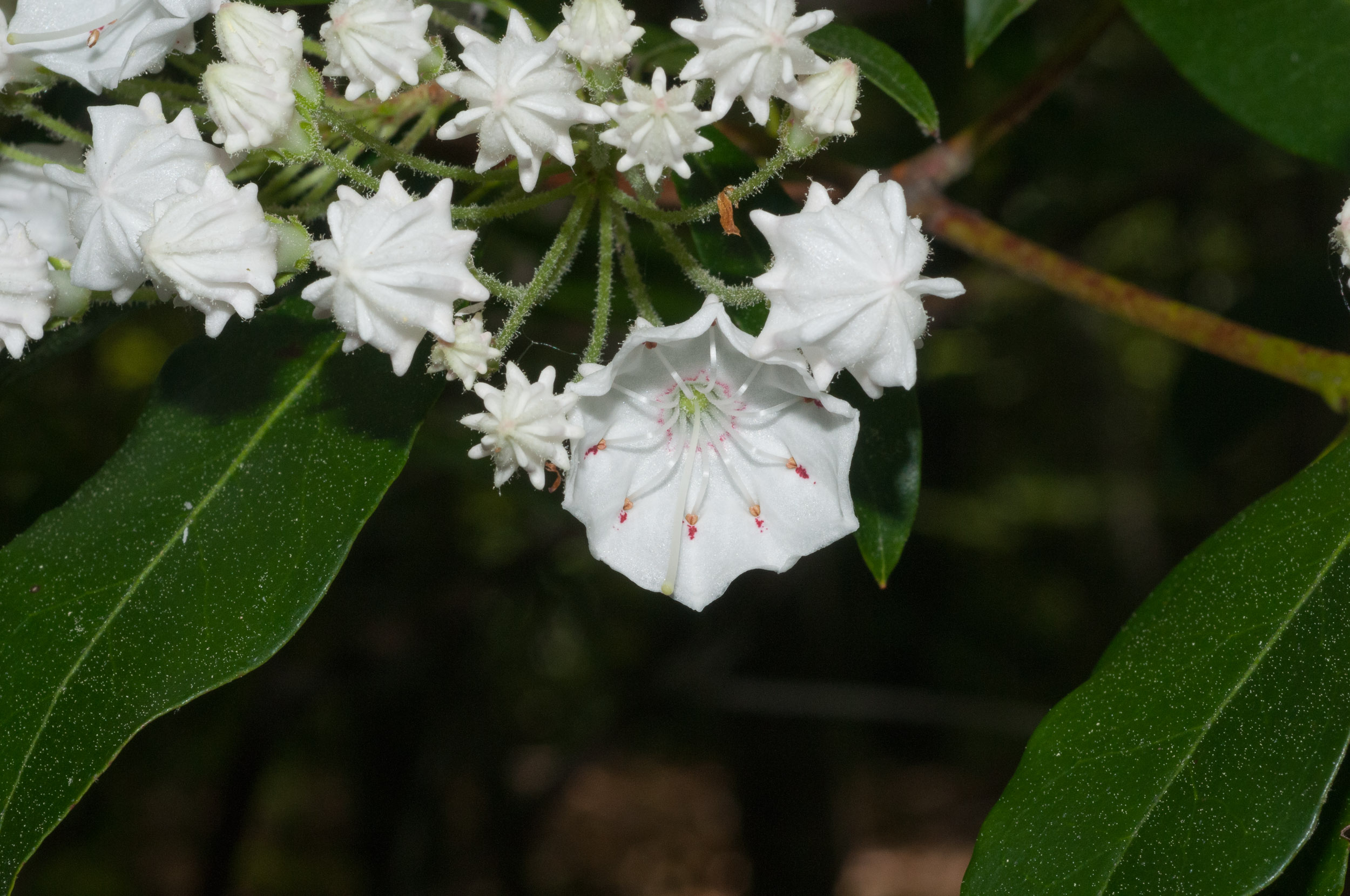
6/5/2015 · Big Bear Mountain, Brookline, New Hampshire · ≈ 5 × 3½″ (13 × 9.2 cm) 

6/14/2016 · Andres Institute of Art, Big Bea, Brookline, New Hampshire 
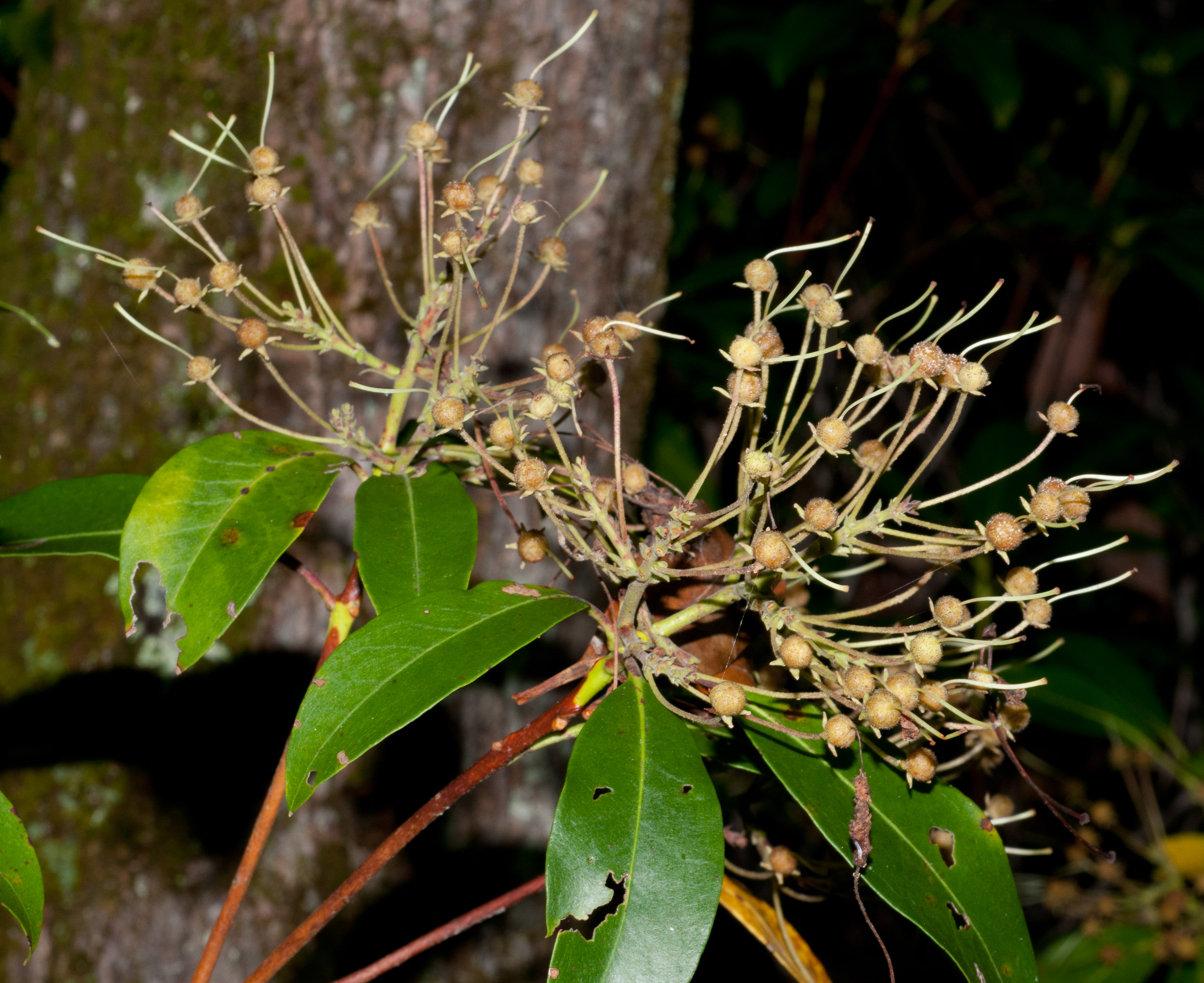
10/3/2010 · Tarkill Interpretive Trail, Rte 402, Poconos, Peck’s Pond, Pennsylvania · ≈ 9 × 7″ (21 × 17 cm) 
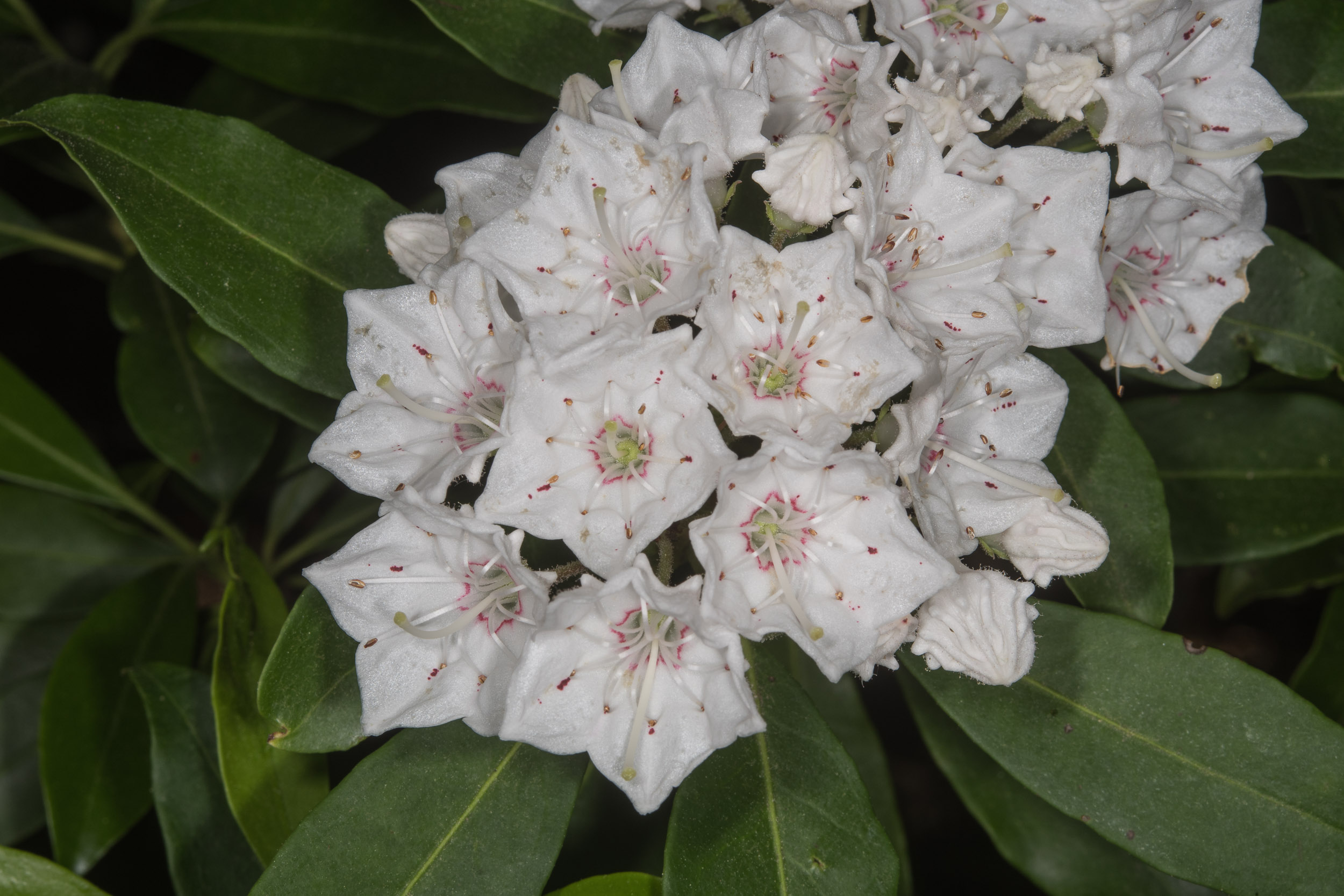
6/15/2017 · Jason’s Cutoff, Beaver Brook Conservation Area, Hollis, New Hampshire · ≈ 6 × 4″ (16 × 11 cm) 
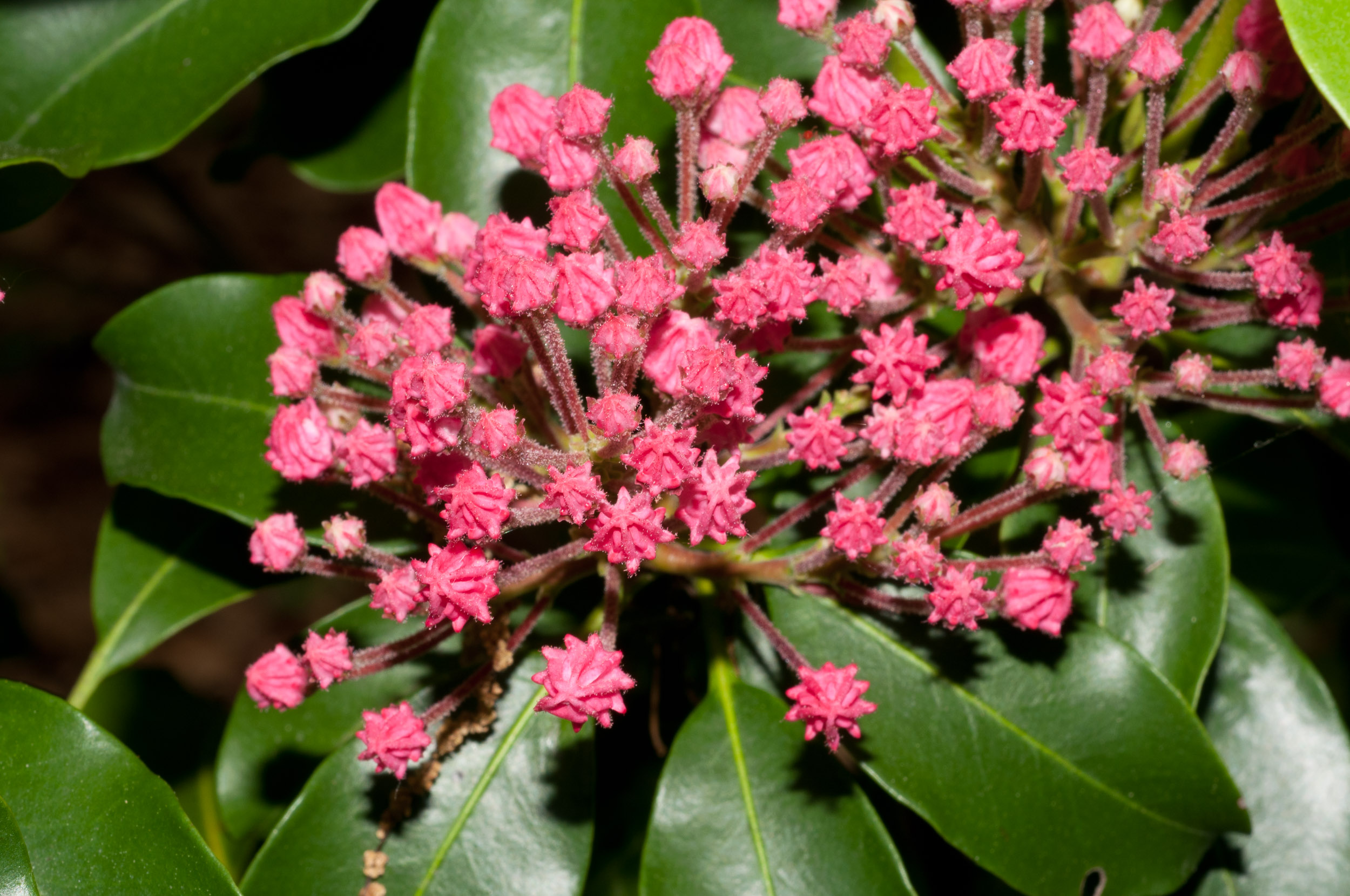
Buds. · 5/22/2010 · Garden in the Woods, Framingham, Massachusetts · ≈ 14 × 9″ (35 × 23 cm)  ID is uncertain


5/30/2010 · Hayes Wood Conservation Trail, Shirley St., Pepperell, Massachusetts · ≈ 8 × 5″ (19 × 13 cm) 
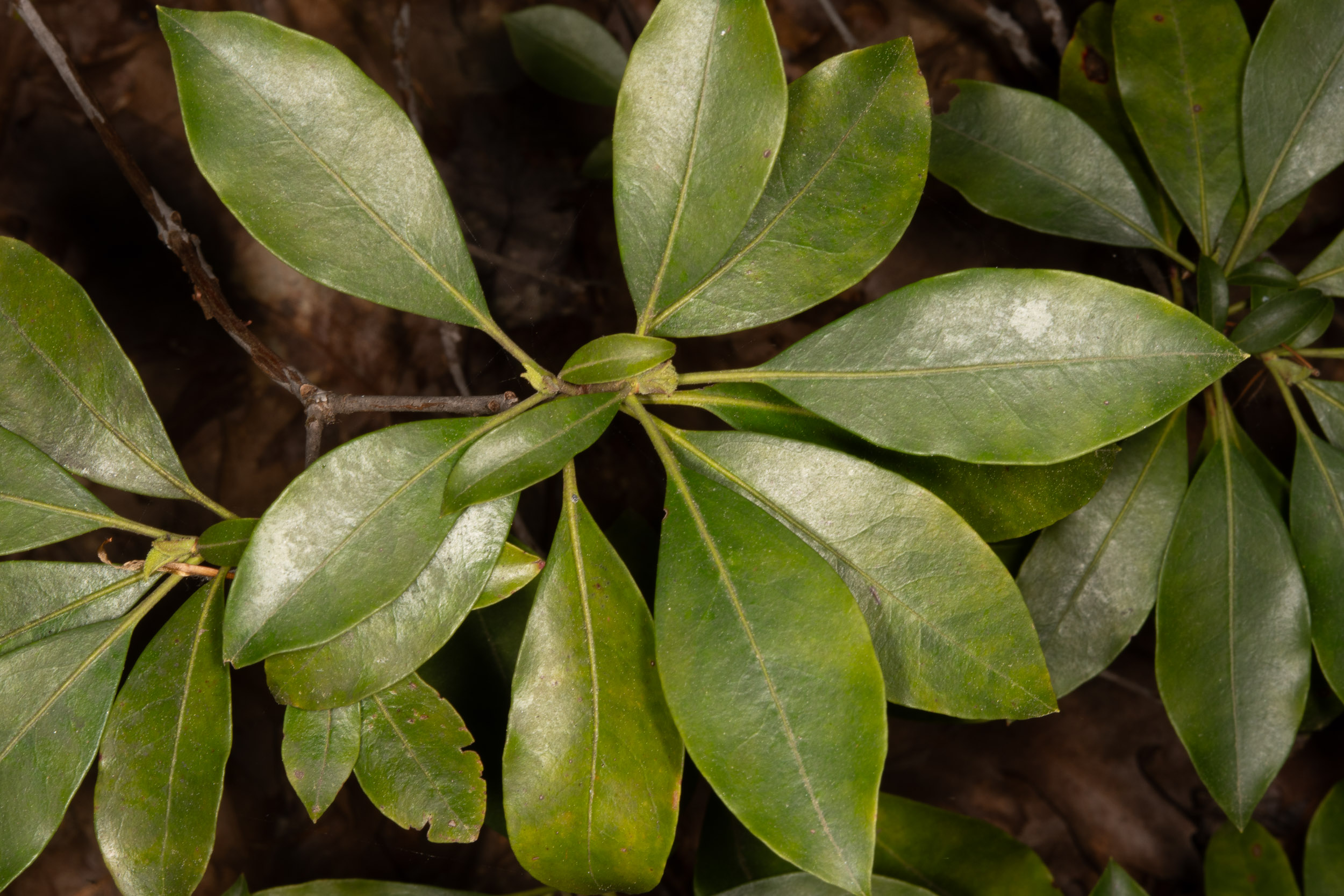
This is among the northermost stands in northeastern North America. · 5/17/2021 · Bijhouwer Forest, Phippsburg, Maine · ≈ 10 × 6″ (24 × 16 cm) 
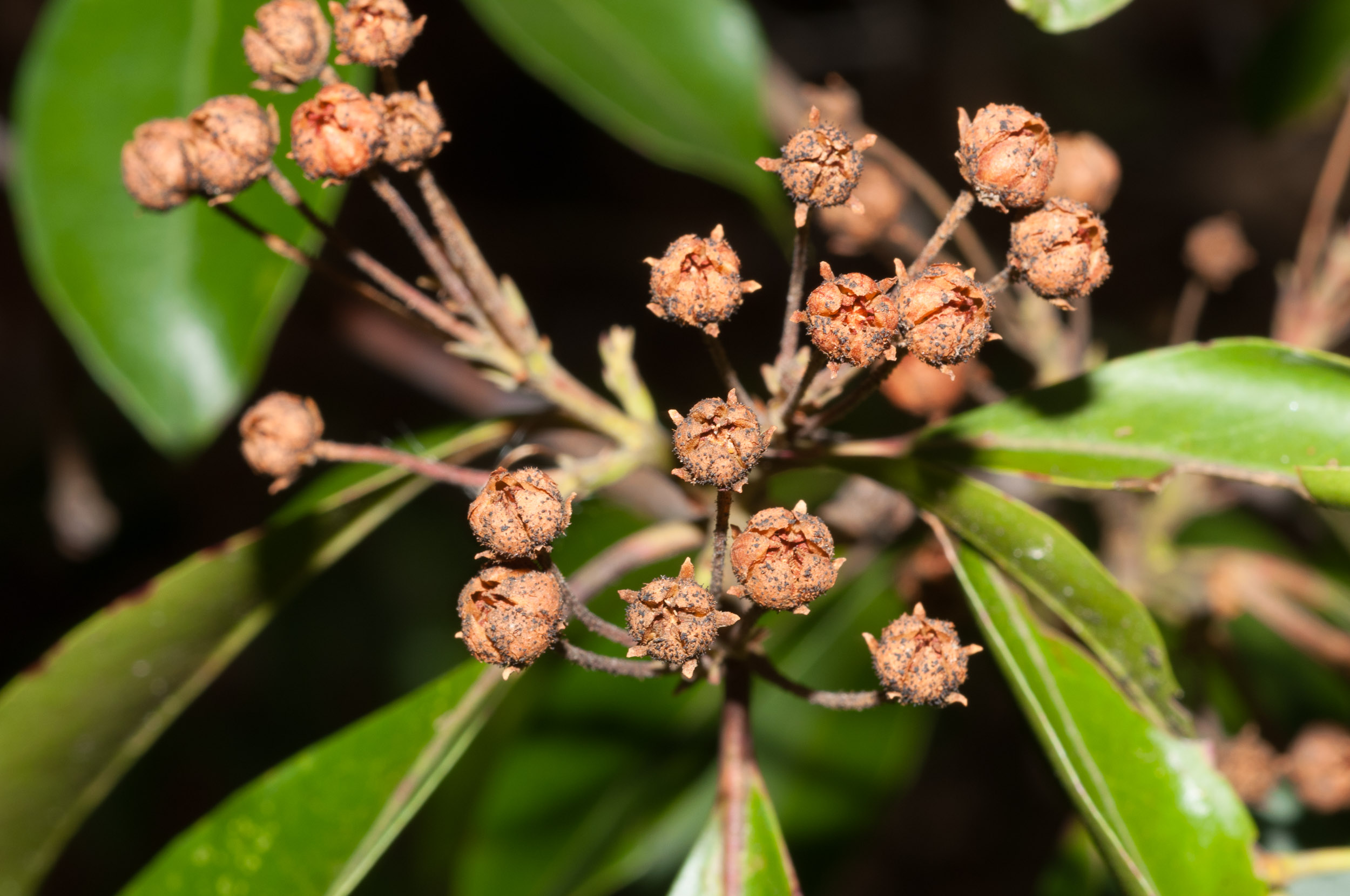
3/9/2012 · Groton Place and Sabine Woods, Groton, Massachusetts · ≈ 4½ × 3″ (11 × 7.9 cm) 

5/21/2026 · Skyline Drive, Shenandoah National Park, Virginia · ≈ 7 × 4½″ (18 × 12 cm) 

6/21/2017 · Pearl Hill State Park, Townsend, Massachusetts · ≈ 6 × 4½″ (14 × 12 cm) 

9/15/2016 · Cadillac Mountain Summit, Acadia, Bar Harbor, Maine 
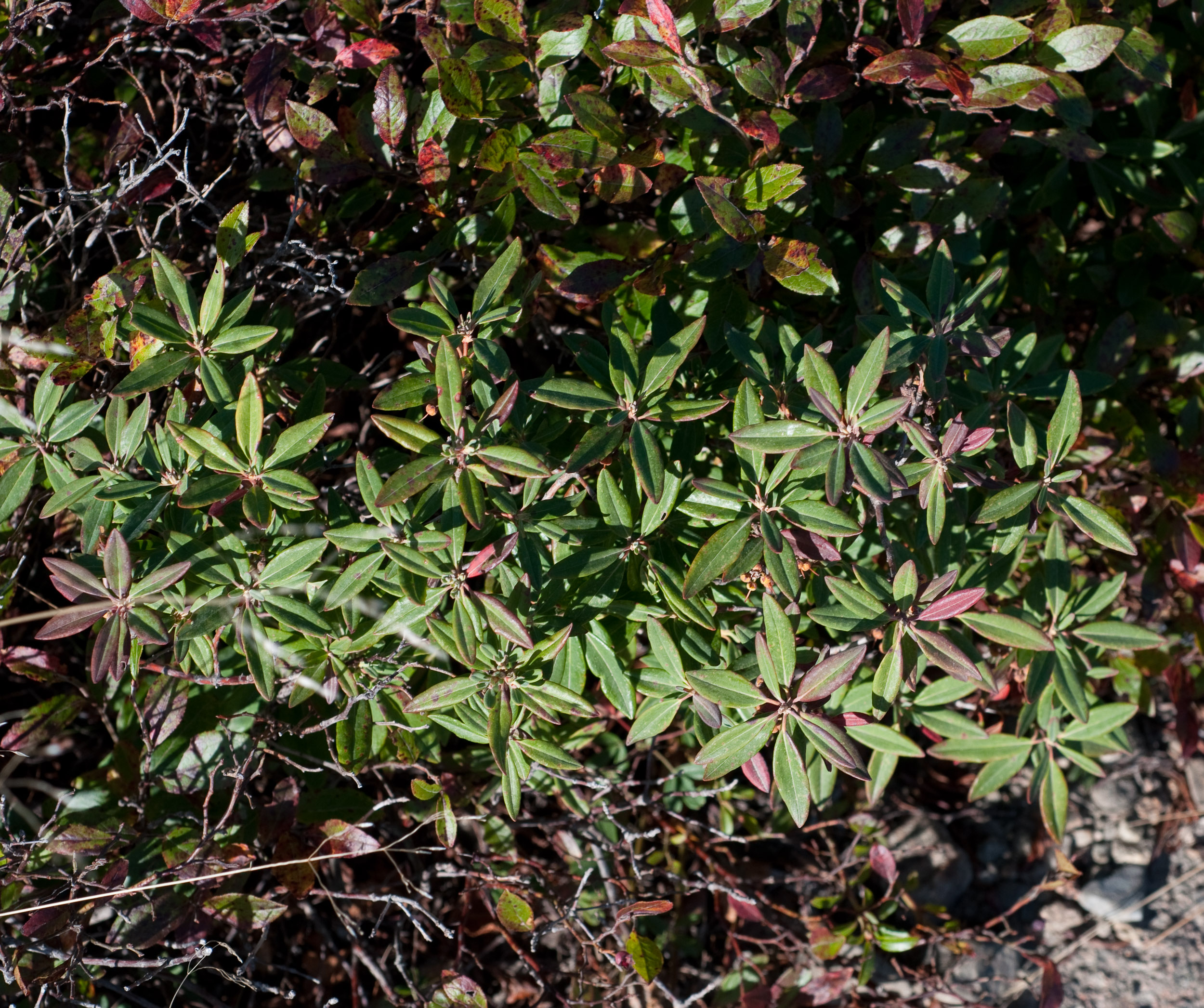
9/19/2009 · Acadia National Park, Bar Harbor, Maine · ≈ 14 × 12″ (35 × 29 cm) ID is uncertain 
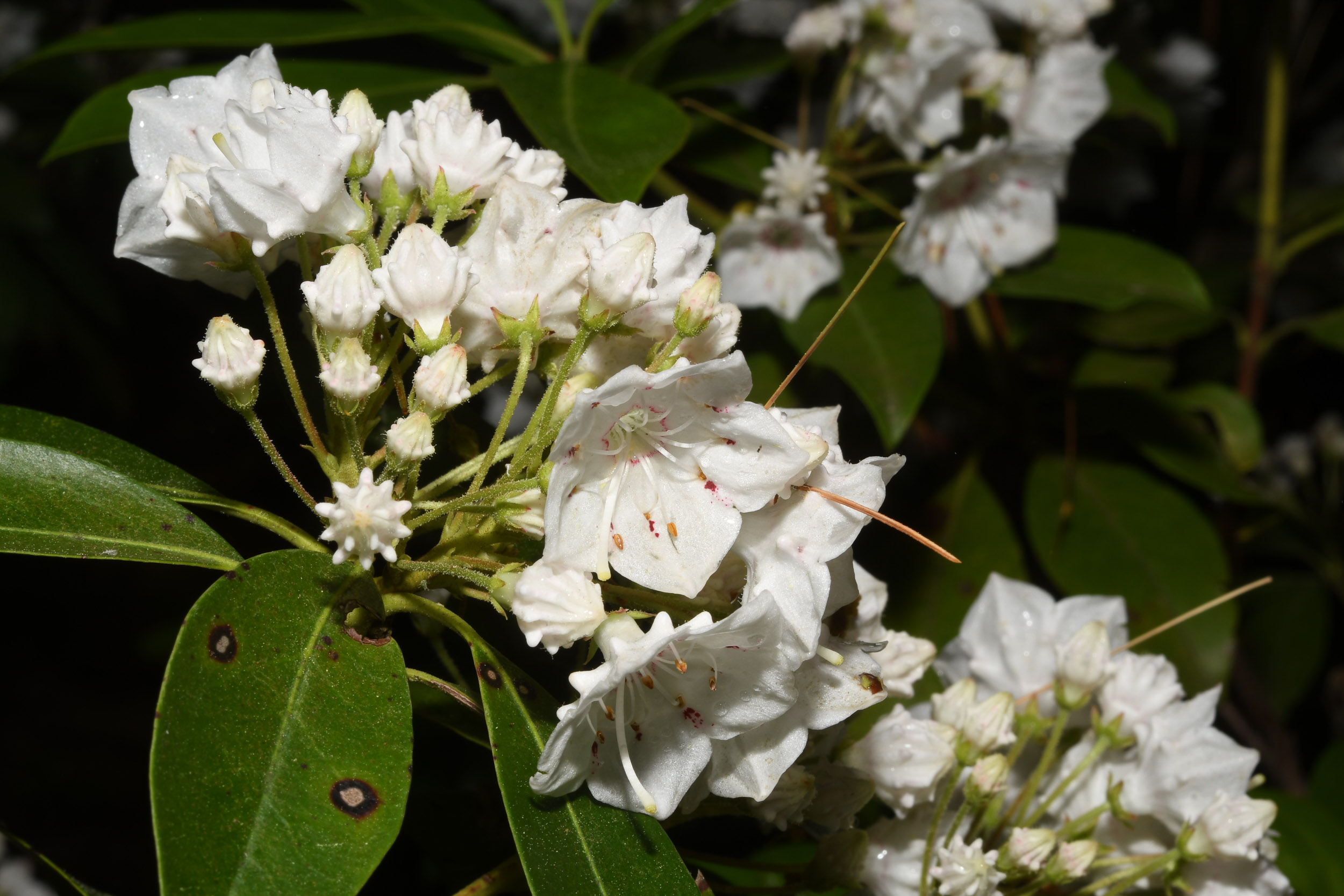
6/6/2016 · Andres Institute of Art, Big Bea, Brookline, New Hampshire 
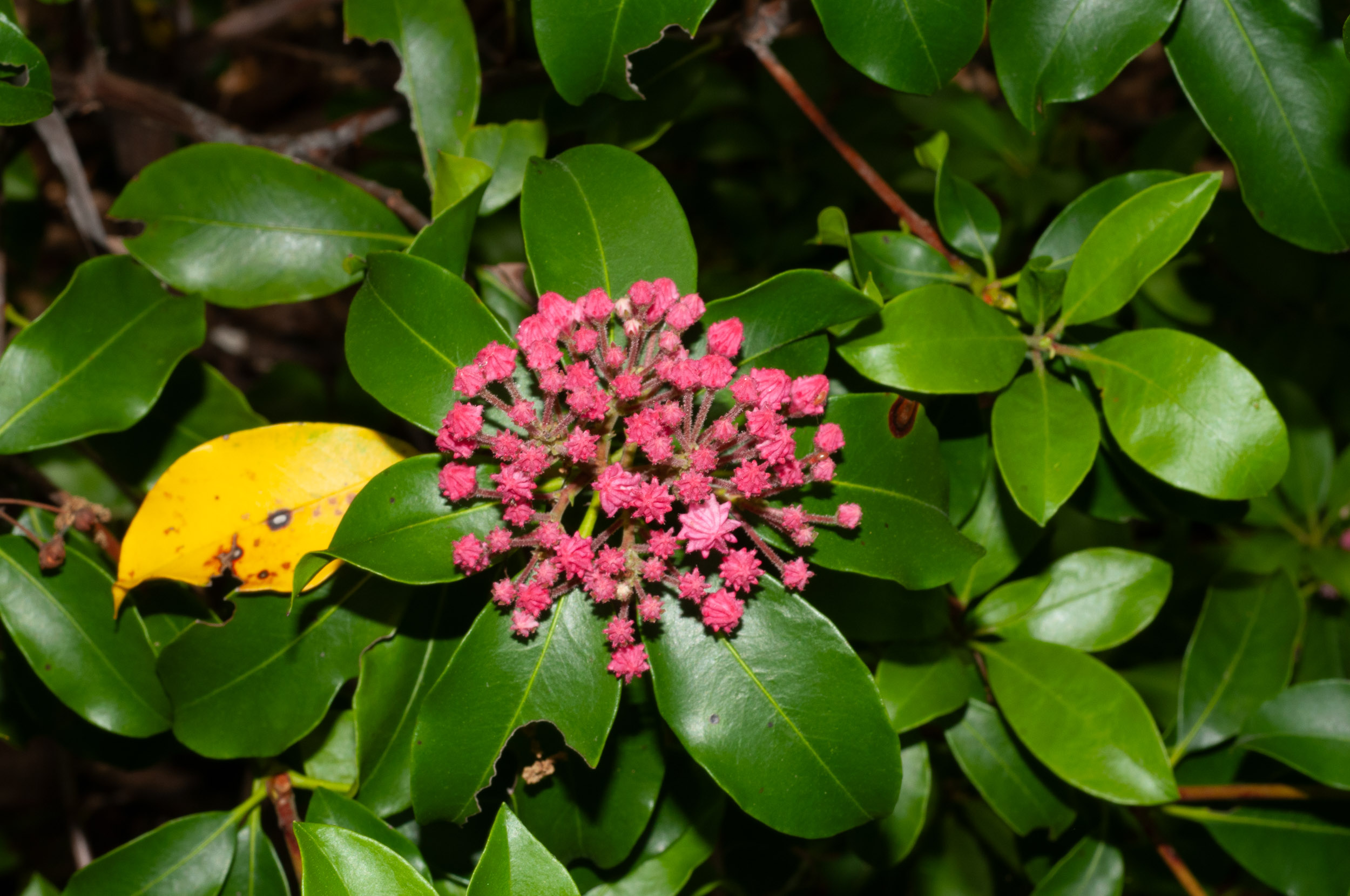
Buds. · 5/22/2010 · Garden in the Woods, Framingham, Massachusetts · ≈ 9 × 6″ (23 × 15 cm) ID is uncertain 
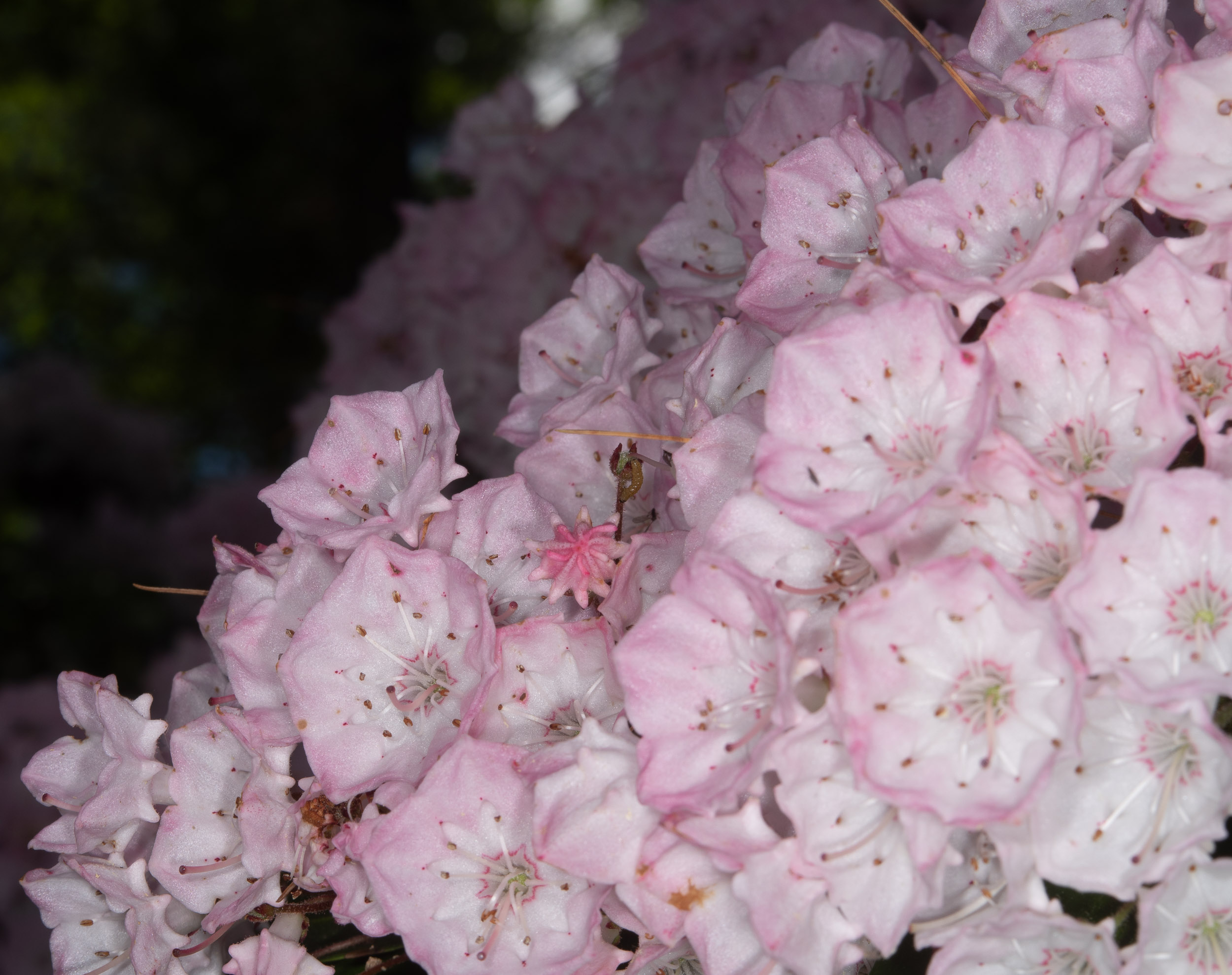
6/21/2017 · Pearl Hill State Park, Townsend, Massachusetts · ≈ 7 × 5″ (17 × 13 cm) 
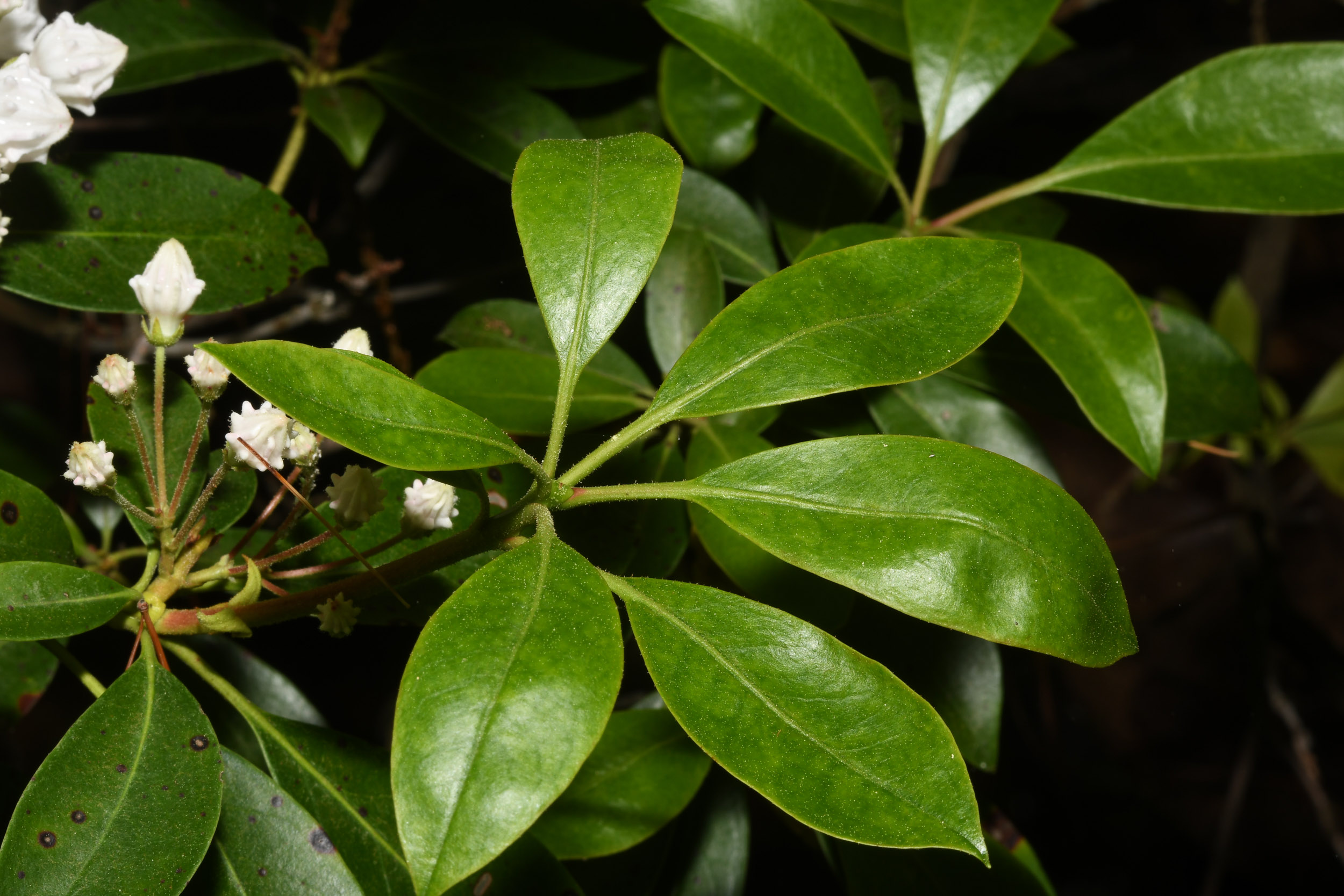
6/6/2016 · Andres Institute of Art, Big Bea, Brookline, New Hampshire 
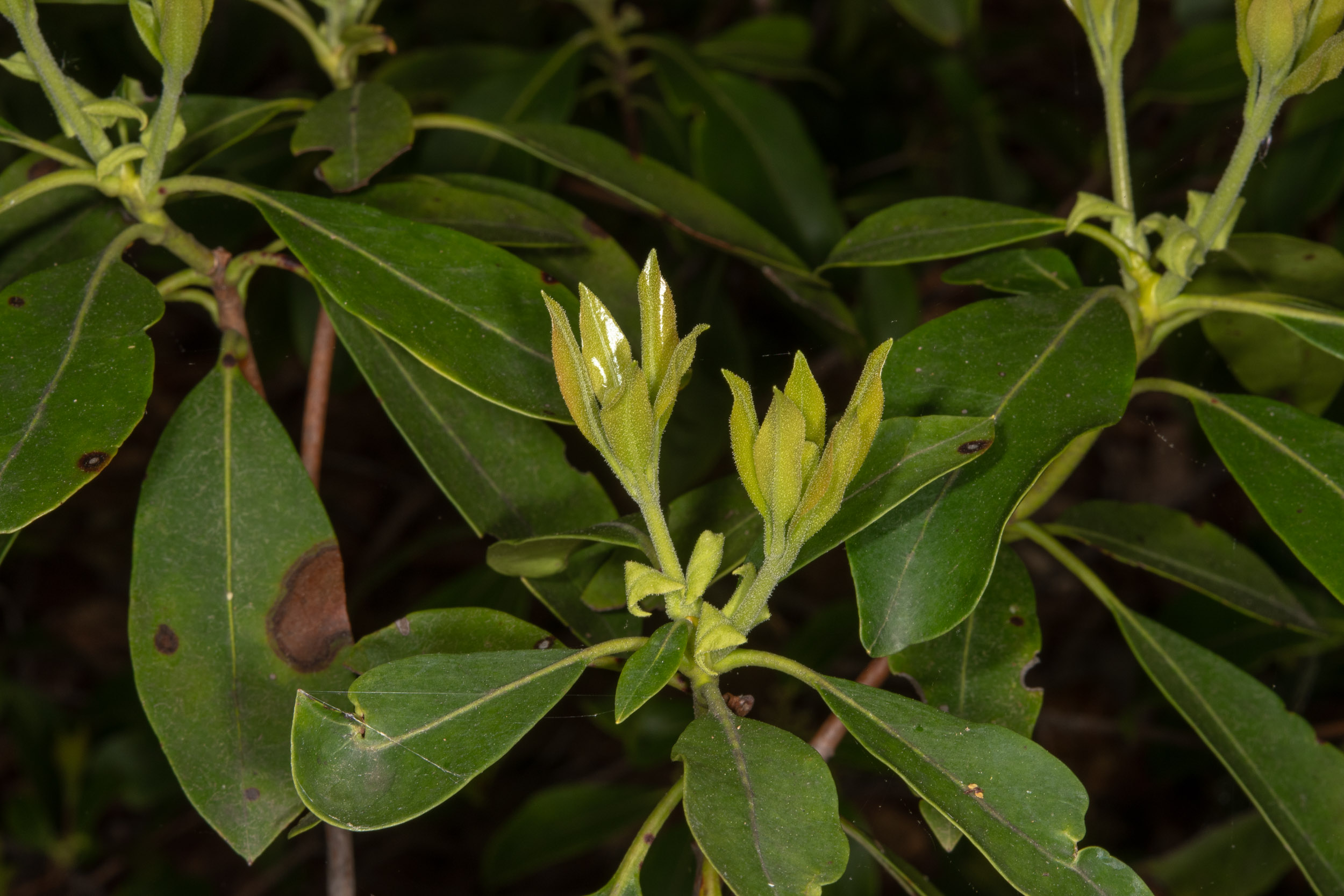
5/18/2018 · Blue Trail, Willard Brook State Park, Ashby, Massachusetts · ≈ 7 × 4½″ (18 × 12 cm) 

6/26/2016 · Short Trail, Willard Brook State Park, Ashby, Massachusetts 
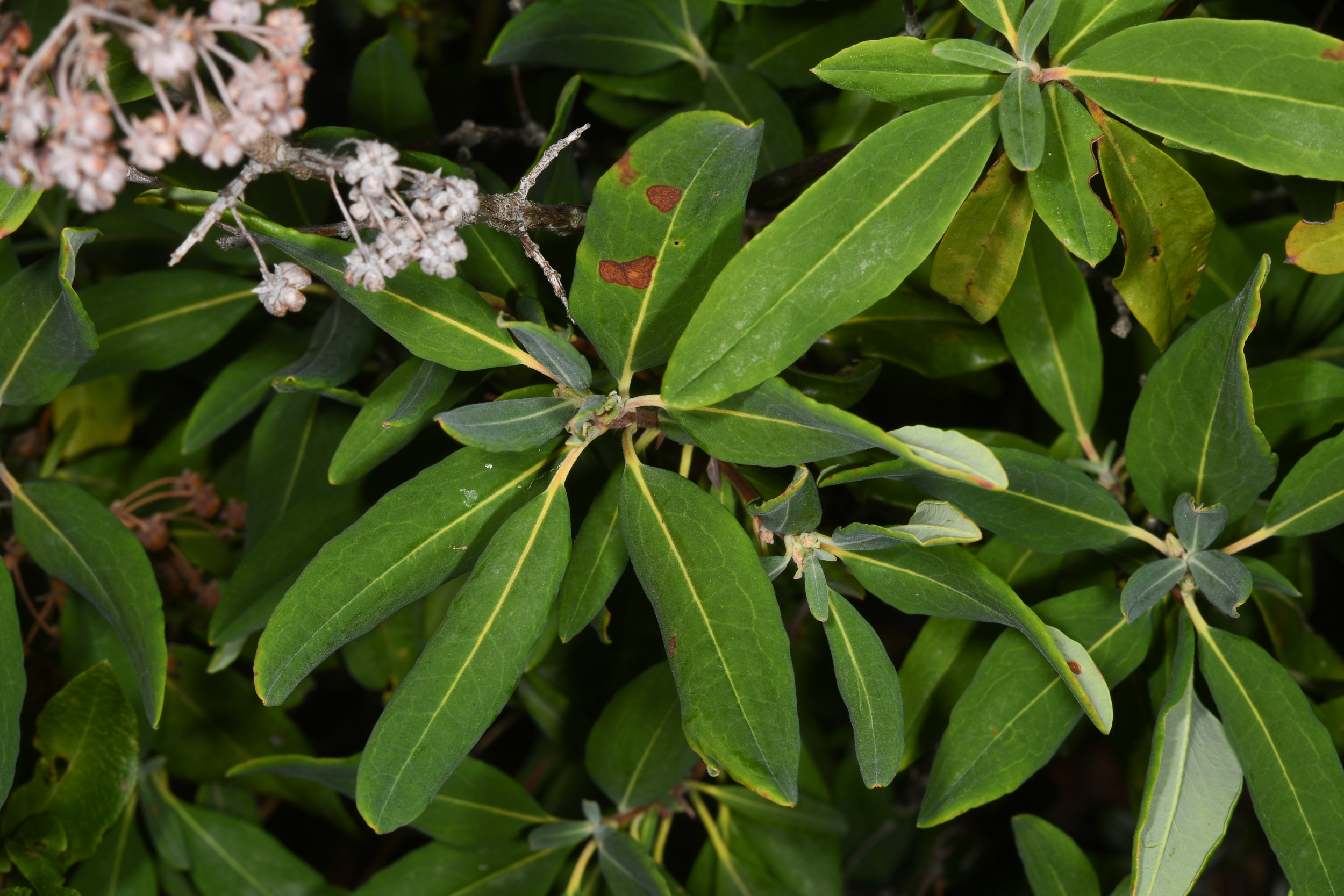
9/16/2016 · Cadillac Mountain South Ridge Tr, Bar Harbor, Maine 
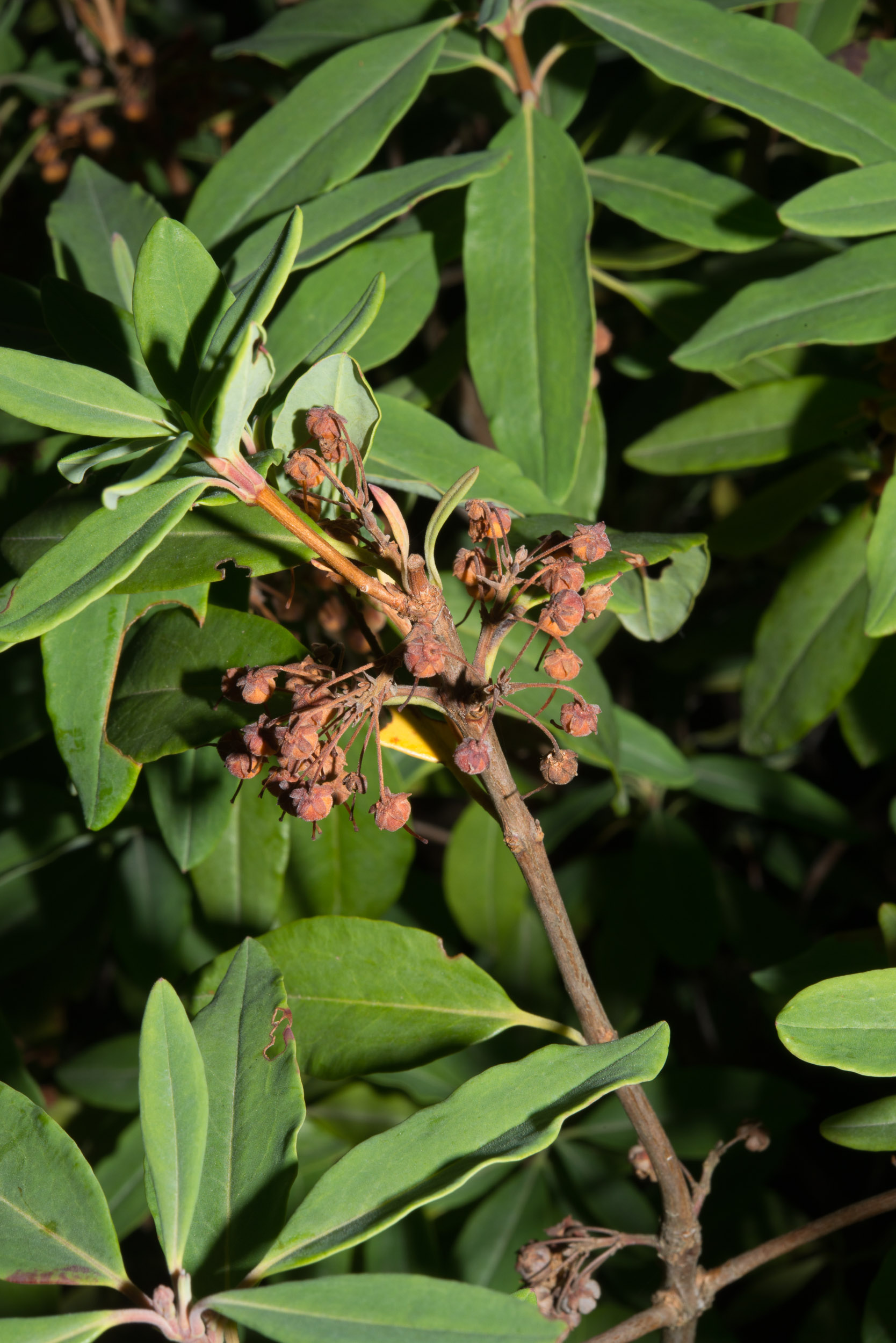
9/29/2013 · South Bubble Hike, Acadia National Park, Bar Harbor, Maine · ≈ 5 × 8″ (12 × 19 cm) 

6/23/2013 · Rocky Ridge Trail, Beaver Brook Conservation Area, Hollis, New Hampshire · ≈ 5 × 4½″ (13 × 11 cm) 
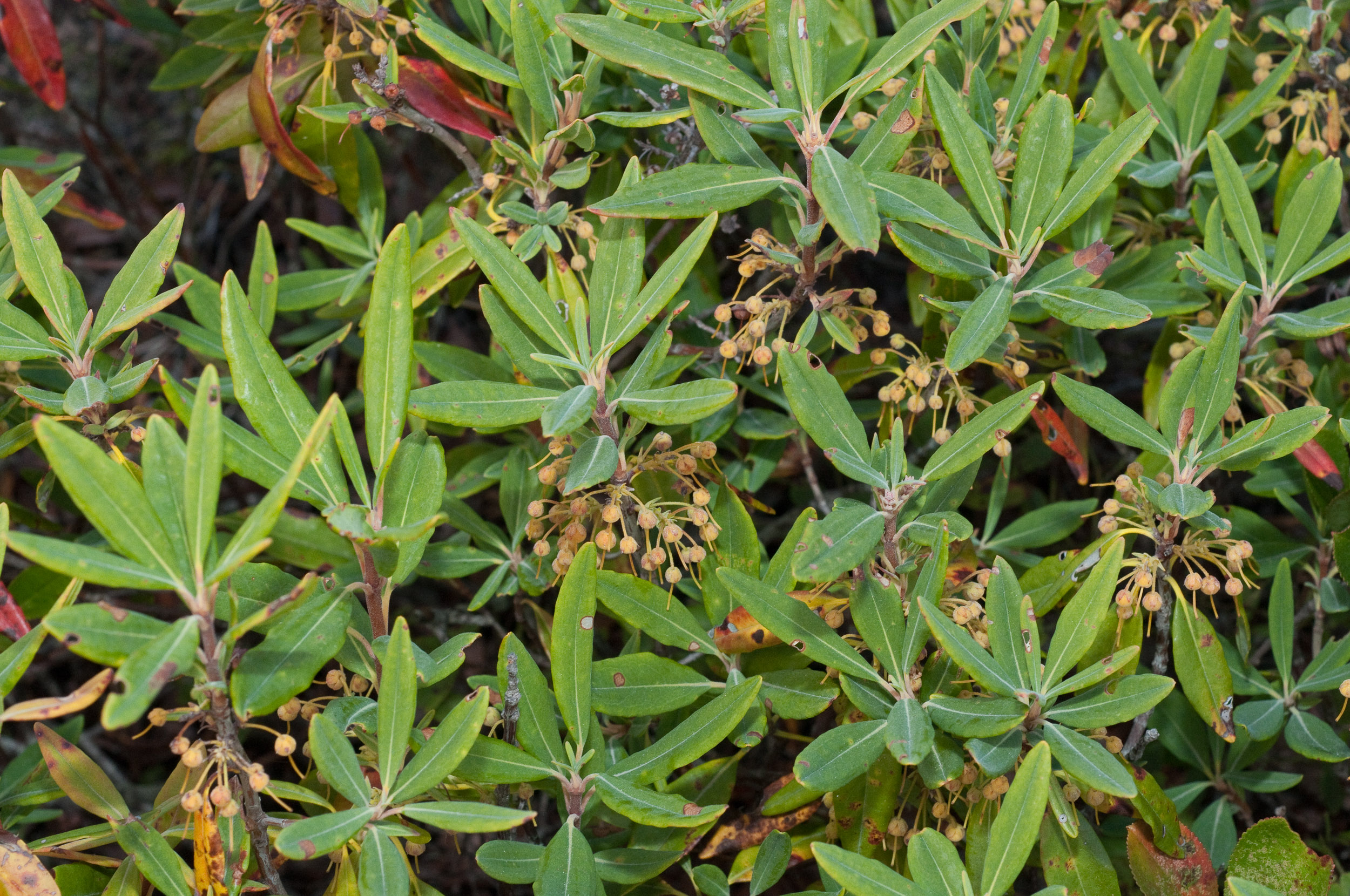
9/19/2009 · Acadia National Park, Bar Harbor, Maine · ≈ 11 × 7″ (27 × 18 cm) ID is uncertain 

6/7/2010 · Nashua River Rail Trail, Pepperell, Massachusetts · ≈ 9 × 7″ (24 × 17 cm) 
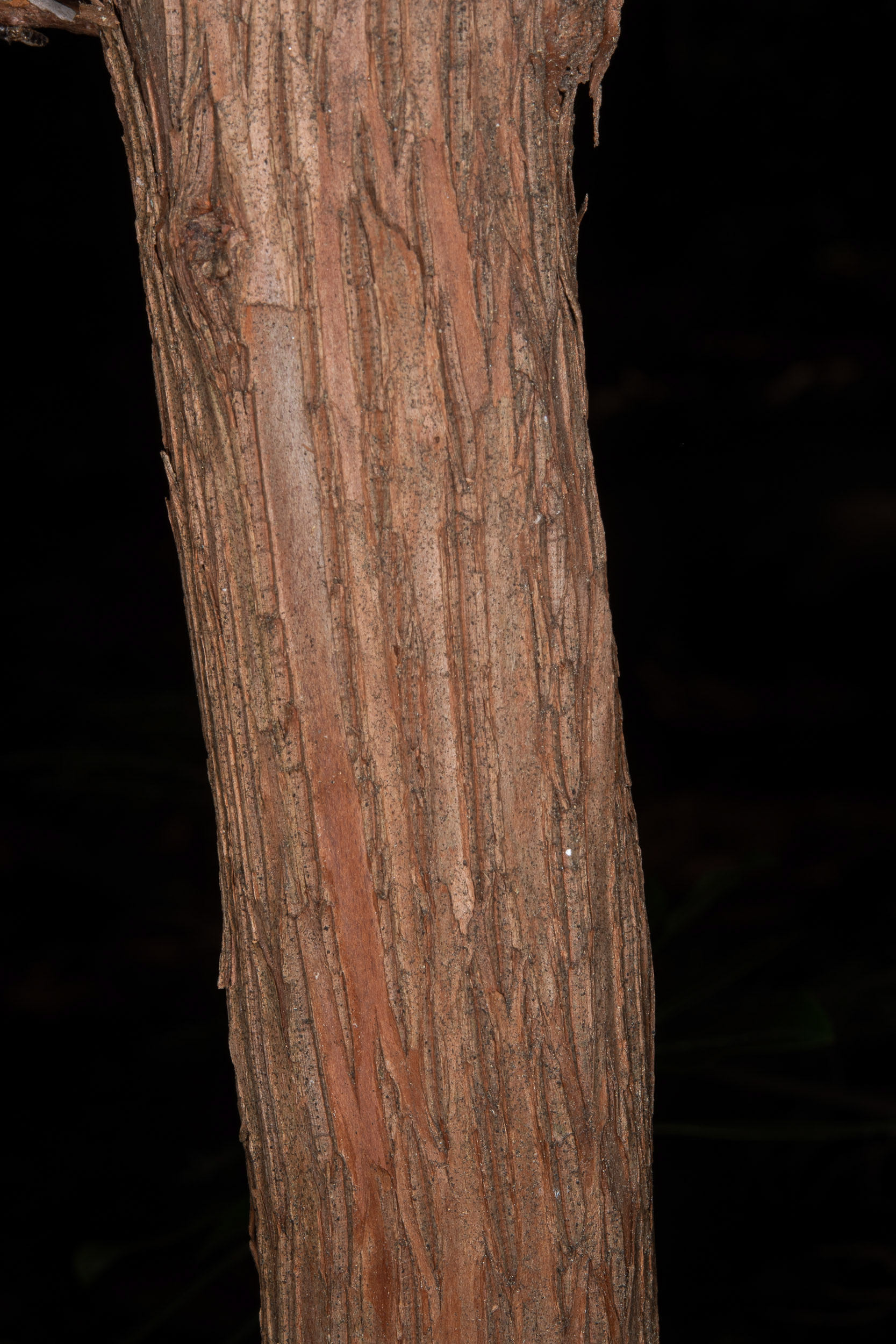
8/25/2019 · Blue Trail, Willard Brook State Park, Ashby, Massachusetts 

9/28/2011 · Groton Place and Sabine Woods, Groton, Massachusetts · ≈ 11 × 7″ (27 × 18 cm) 
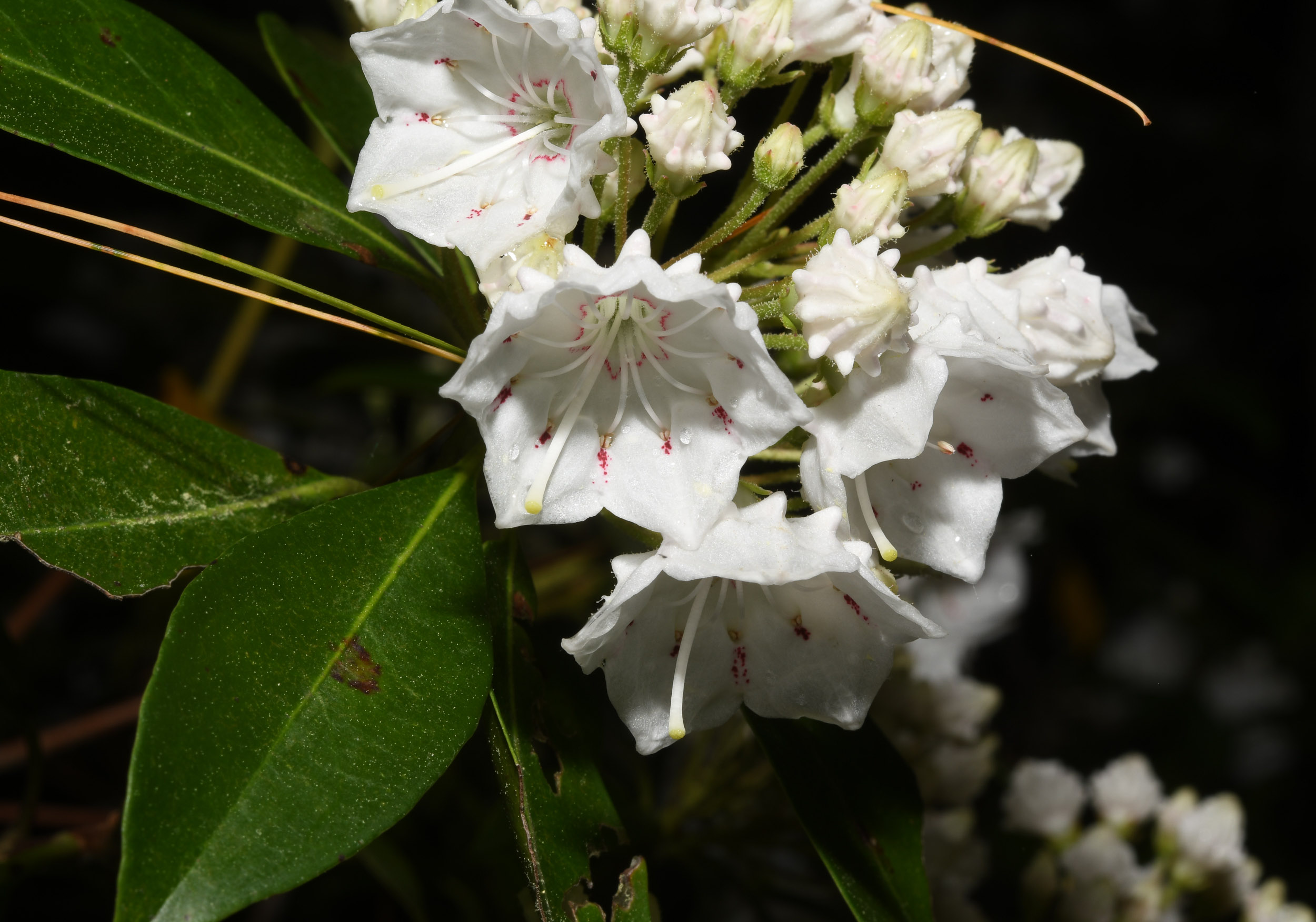
6/6/2016 · Andres Institute of Art, Big Bea, Brookline, New Hampshire 

7/1/2023 · Pocahontas State Park, Chesterfield, Virginia 

6/9/2019 · Big Bear Mountain, Brookline, New Hampshire 

1/1/2011 · MacDonald-Zachos’ · ≈ 7 × 4½″ (17 × 11 cm) 

9/19/2009 · Acadia National Park, Bar Harbor, Maine · ≈ 9 × 6″ (23 × 15 cm) ID is uncertain 

6/7/2010 · Nashua River Rail Trail, Pepperell, Massachusetts · ≈ 15 × 12″ (37 × 29 cm) 

9/16/2016 · Cadillac Mountain South Ridge Tr, Bar Harbor, Maine 
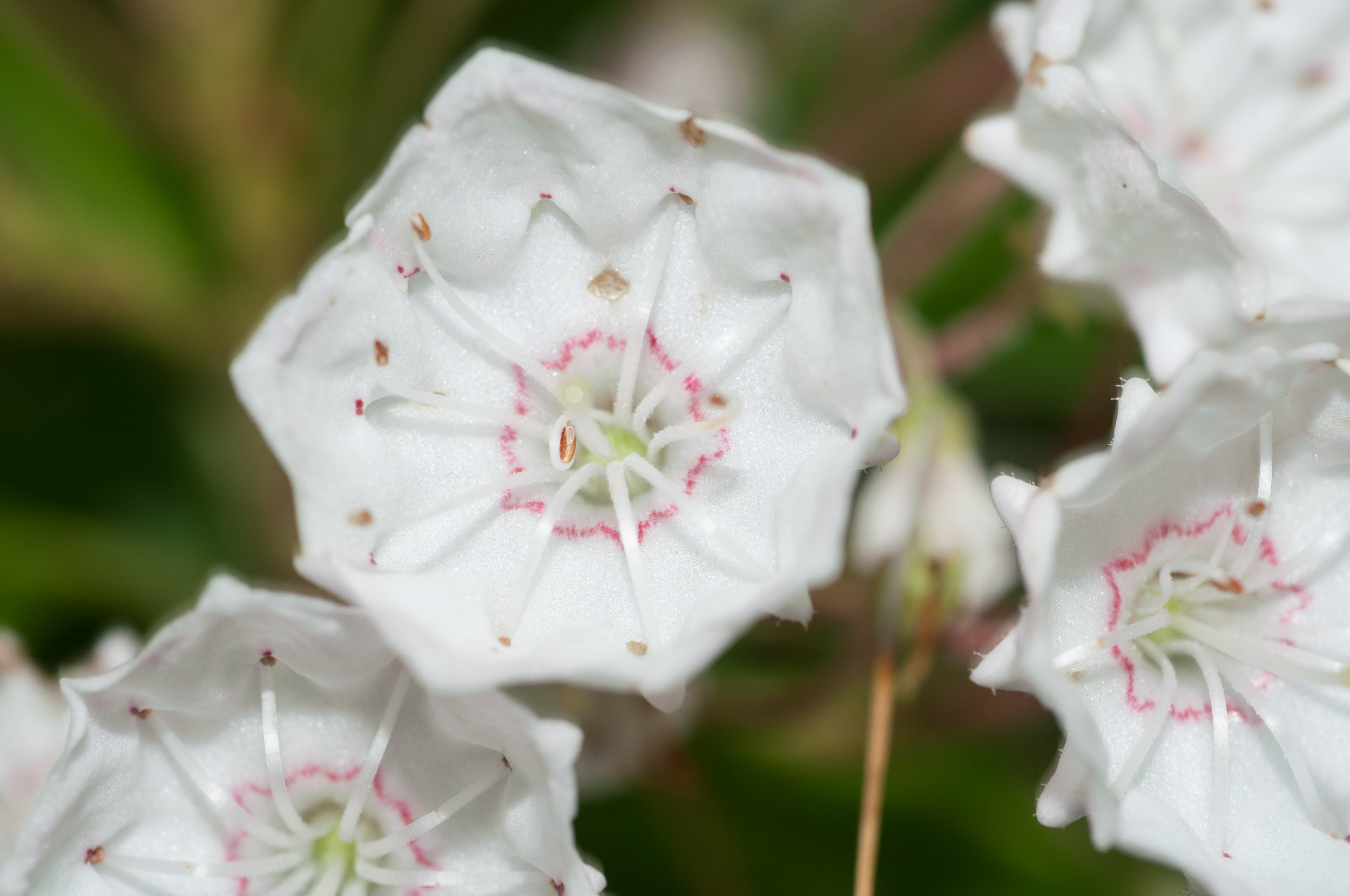
6/10/2012 · Nashua River Rail Trail, Groton Center, Groton, Massachusetts · ≈ 3½ × 2½″ (9.8 × 6.6 cm) 

6/14/2009 · By Jacquelyn Boyt 
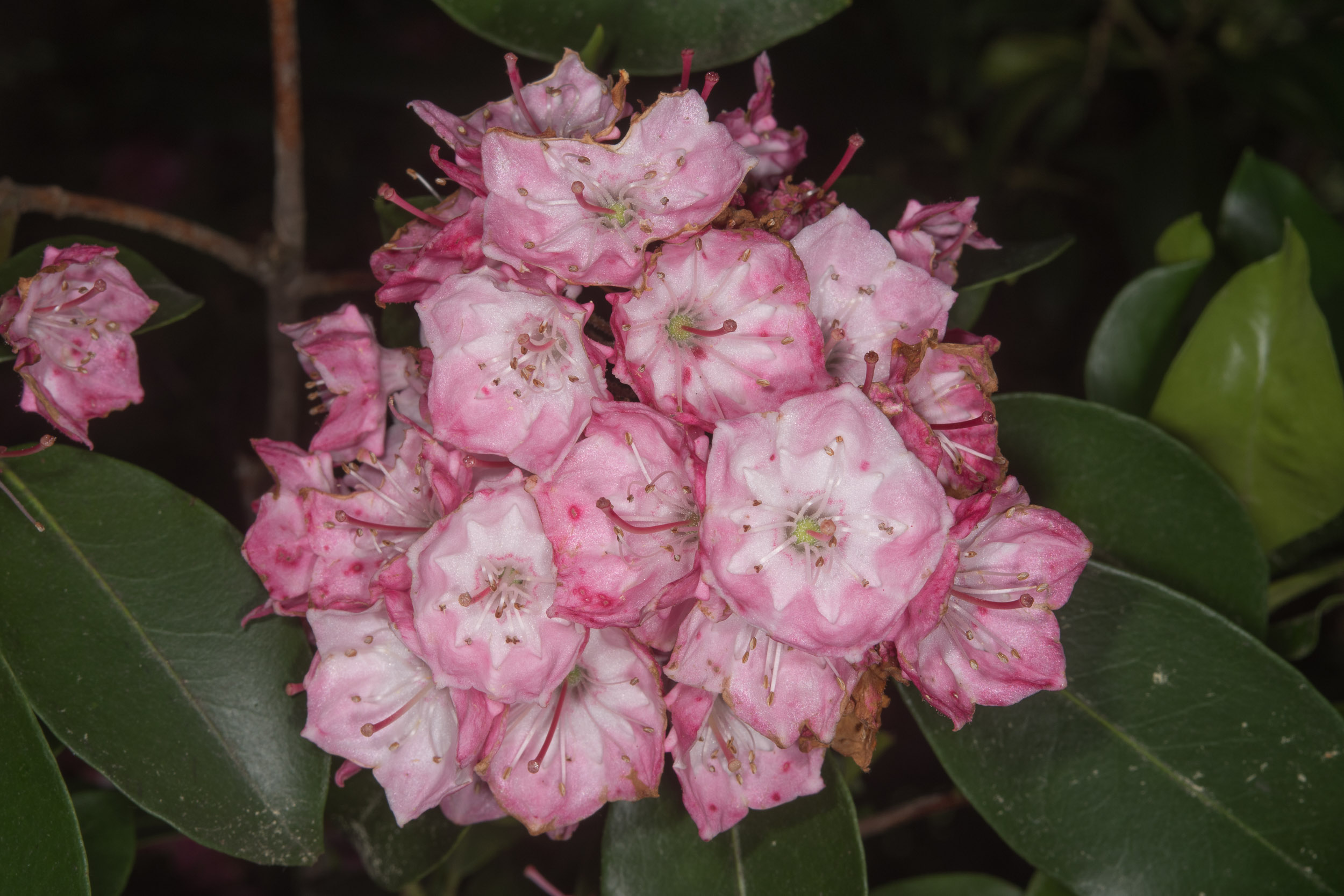
6/22/2017 · Garden in the Woods, Framingham, Massachusetts · ≈ 7 × 4½″ (18 × 12 cm) ID is uncertain 
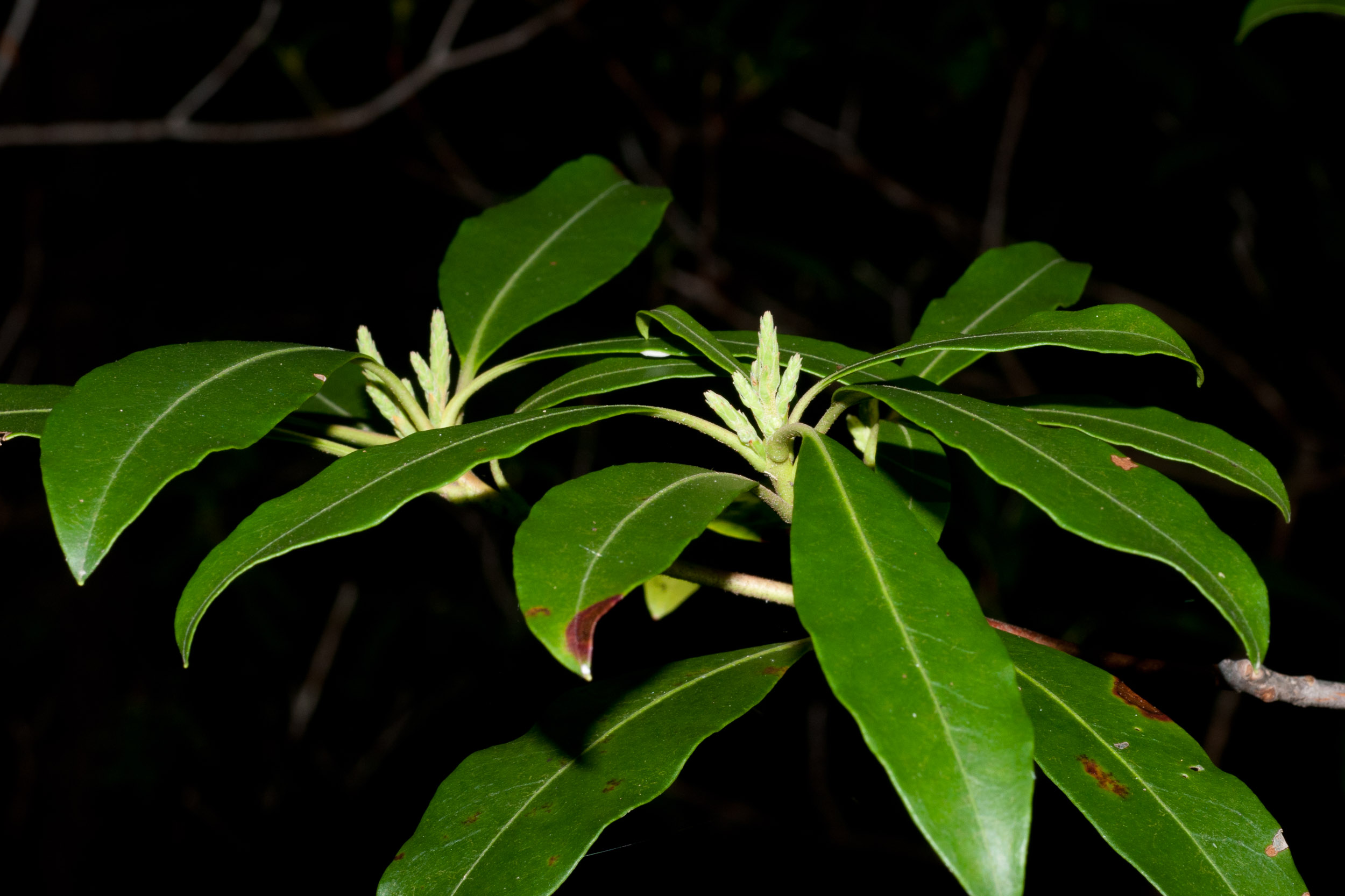
10/3/2010 · Tarkill Interpretive Trail, Rte 402, Poconos, Peck’s Pond, Pennsylvania · ≈ 8 × 5″ (19 × 13 cm) 
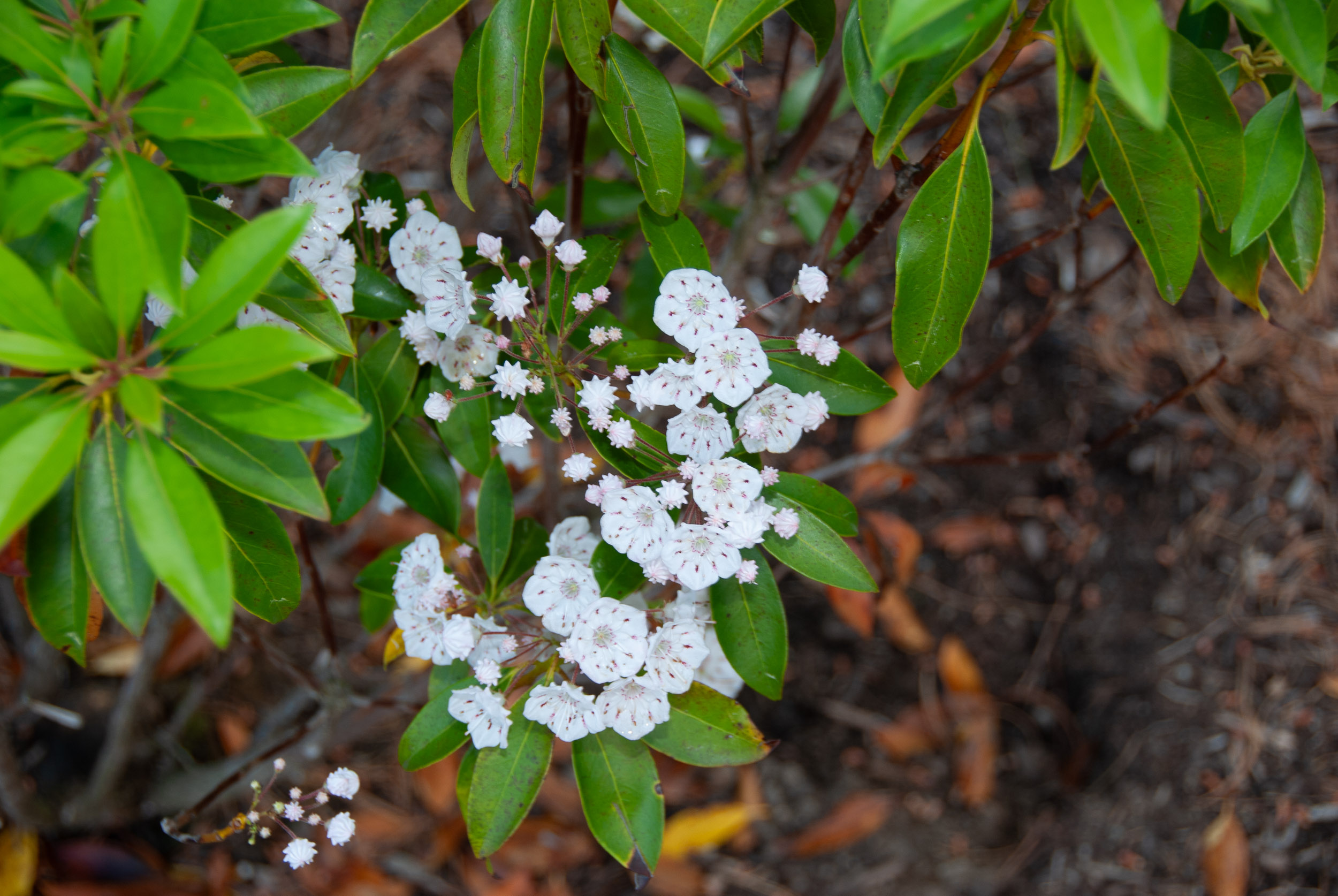
6/20/2007 · Pepperell, Massachusetts 
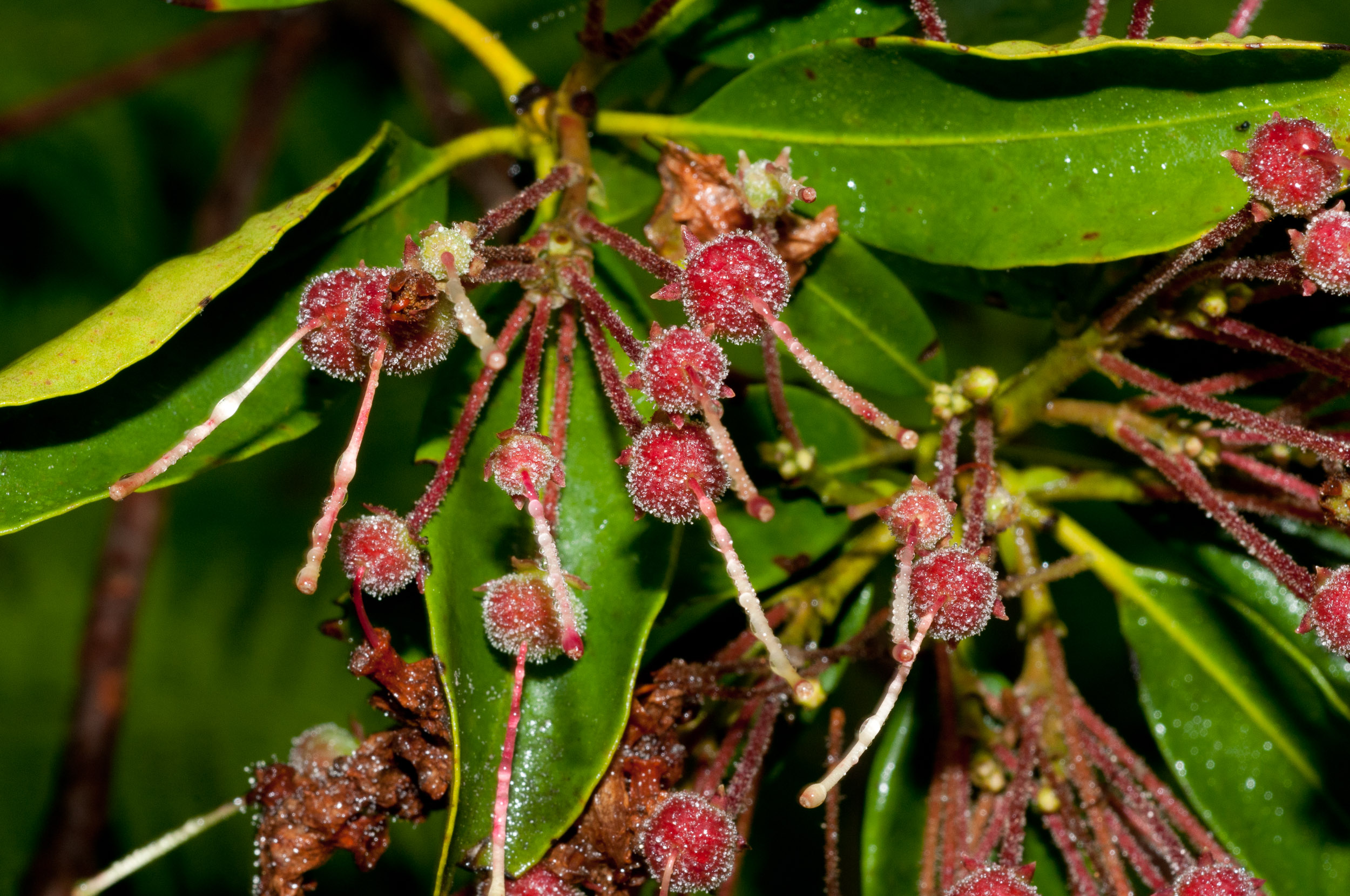
7/4/2011 · Mike and Ellen’s, Milford, Pennsylvania · ≈ 4½ × 3″ (11 × 7.9 cm) 
| Kingdom | Plantae | Plants, but not fungi, lichens, or algae (from Stearn's Botanical Latin) |
| Subkingdom | Tracheobionta | Vascular plants—plants with a “circulatory system” for delivering water and nutrients |
| Division | Magnoliophyta | Flowering plants, also known as angiosperms |
| Class | Magnoliopsida | Dicotyledons—plants with two initial seed leaves |
| Subclass | Asteridae | A large class that encompasses asters |
| Order | Ericales | Tea, persimmon, blueberry, Brazil nut, azalea, many others |
| Family | Ericaceae | Heath or heather family |
| Genus | Kalmia | Named by Linnaeus to honour his friend the Finnish botanist Pehr Kalm |
| Species | latifolia | Latin for “wide to broad leaves” |
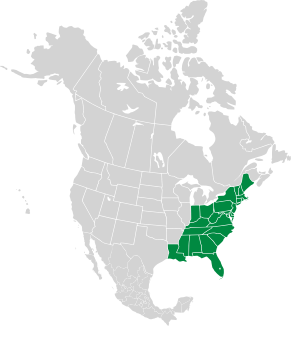
Kalmia latifolia description by Thomas H. Kent, not updated.

© FloraFinder.org. All rights reserved.