Armeria maritima (Mill.) Willd.
Sea thrift, sea pink, common thrift, thrift seapink
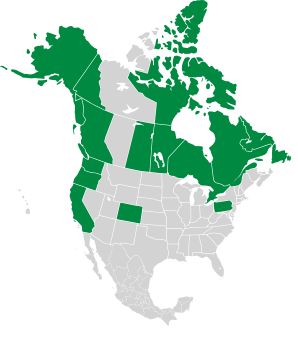
Sea thrift has a fondness for sunny, salty environments, but it is also at home in mountain areas. It occurs in most of the northern hemisphere, in Europe and North and South America.
Plants: Sea thrift thrives in dry, infertile soils where few other plants can compete. It shows up along coastal beaches. Plants are 6–12″ (15–30 cm) in size.
Leaves: Long, straight, stiff, sharp, and dark green, looking like blades of grass.
Flowers: Globular clusters ¾–1″ (1.9–2.5 cm) around, filled with tiny flowers, appear atop naked stalks that rise above the foliage. Blooms appear in April and May; they are pink, and sometimes white or red.
Fruits: Papery seed heads contain a single seed in each capsule.
Habitats: Dry, sandy, saline conditions such as coastal cliffs, grassland and salt marshes, salted roadsides and inland on mountain rocks.
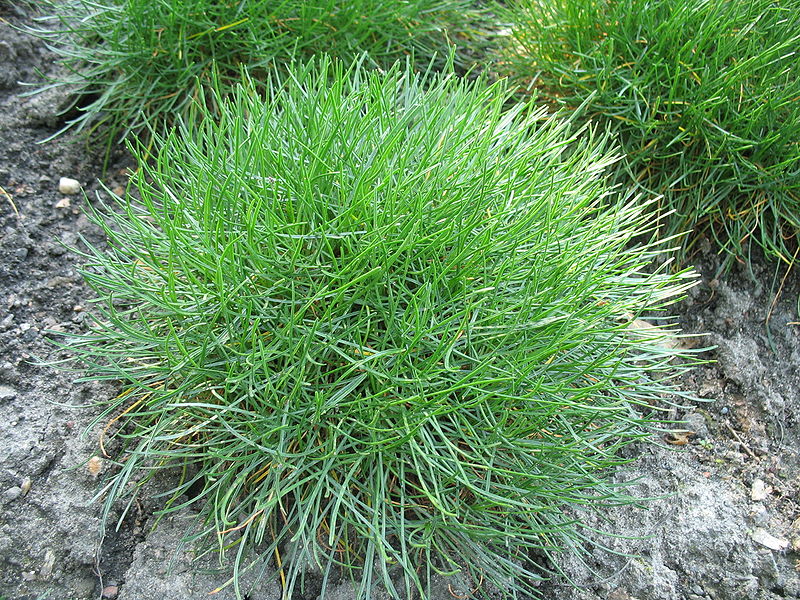
Sea thrift leaves resemble tufts of grass, but they are sharper. By Tomasz “Nemo5576” Górny 
Edibility: Poisonous.  All parts of the plant are
poisonous if eaten, and some people are allergic to the pollen.
All parts of the plant are
poisonous if eaten, and some people are allergic to the pollen.
Online References:
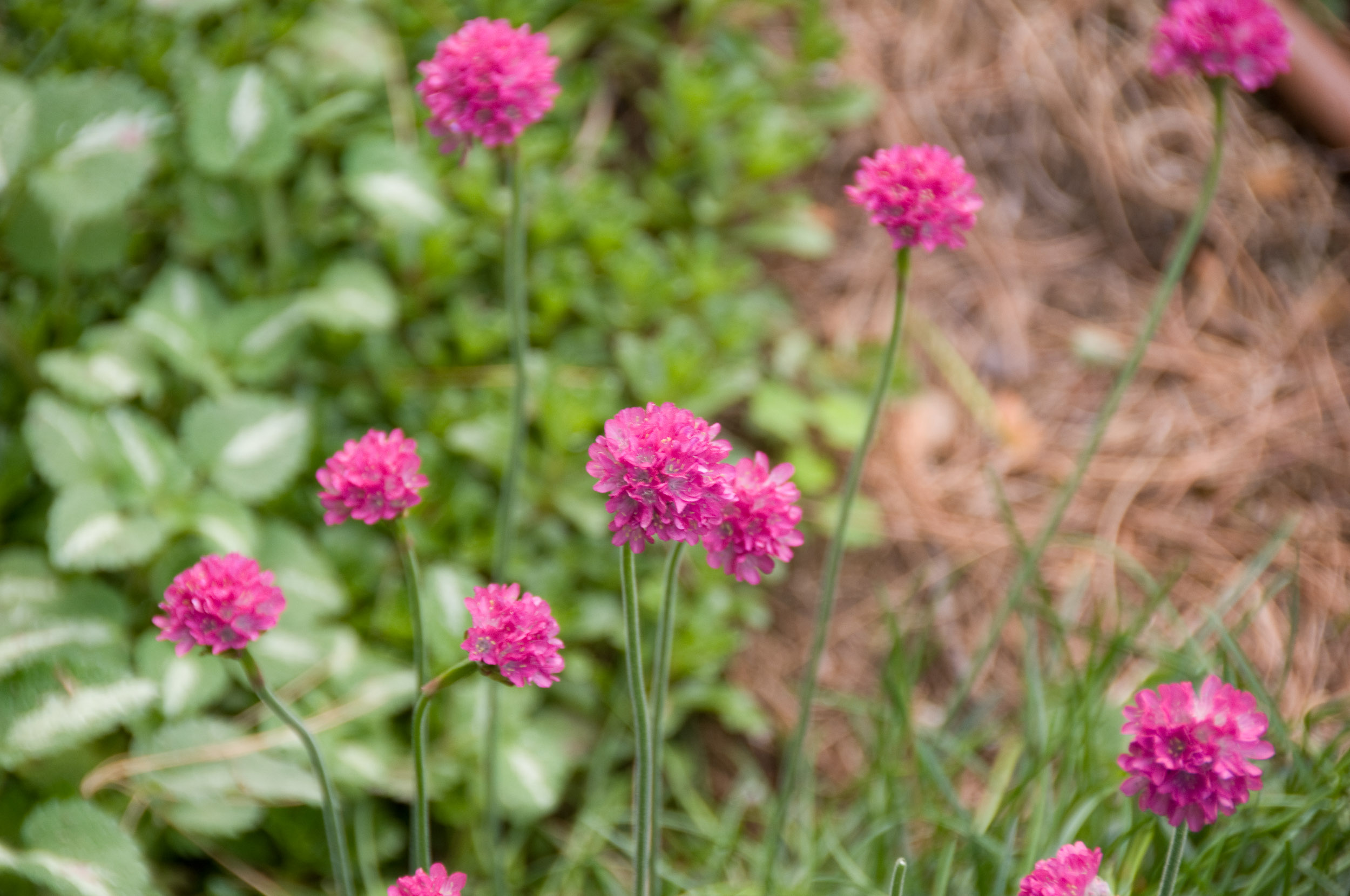
6/14/2008 · Stan and Connie’s, Falmouth, Maine 
| Kingdom | Plantae | Plants, but not fungi, lichens, or algae |
| Subkingdom | Tracheobionta | Vascular plants—plants with a “circulatory system” for delivering water and nutrients |
| Division | Magnoliophyta | Flowering plants, also known as angiosperms |
| Class | Magnoliopsida | Dicotyledons—plants with two initial seed leaves |
| Subclass | Caryophyllidae | Cacti, many other succulents, carnivorous plants, and leadworts |
| Order | Plumbaginales | A relatively small order of shrubby or herbaceous plants |
| Family | Plumbaginaceae | Includes the leadwort and plumbago families |
| Genus | Armeria | Latinized from the old French name armoires for a cluster-headed dianthus, this is also the Latin name for the Dianthus |
| Species | maritima | Of the sea |
Armeria maritima description by Thomas H. Kent, last updated 14 Feb 2025.

© FloraFinder.org. All rights reserved.