Astilbe biternata (Vent.) Britton
False goatsbeard, Appalachian false goat’s beard
False goatsbeard is so named because it bears an uncanny resemblance to “real” goatsbeard, Aruncus dioicus. Both names refer to the flower masses, whose shape somewhat resembles a goat’s beard. False goatsbeard is native to North America.
Plants: Plants are 2–6′ (60–182 cm) high, and dioecious, having separate male and female plants.
Leaves: Bright green, coarse, up to 2′ (60 cm) long, bipinnate or tripinnate, with ovate leaflets. Leaflets are 3–6 ⨉ 1½–6″ (8–15 ⨉ 4–15 cm). Leaf edges are toothed: sharply serrate to crenate. The terminal leaflet has three lobes.
Flowers: Long, thin, feathery cream-colored or yellowish sprays of tiny florets, like white fireworks displays. Florets have 5 petals, and ten stamens. Blooms appear from late spring to early summer.
Fruits: Fruits usually have two carpels, and are ~⅛″ (3.5–4 mm) in size.
Habitats: Shady habitats and damp soil.
 |
Similar but unrelated species, often found in similar habitats. |
Online References:
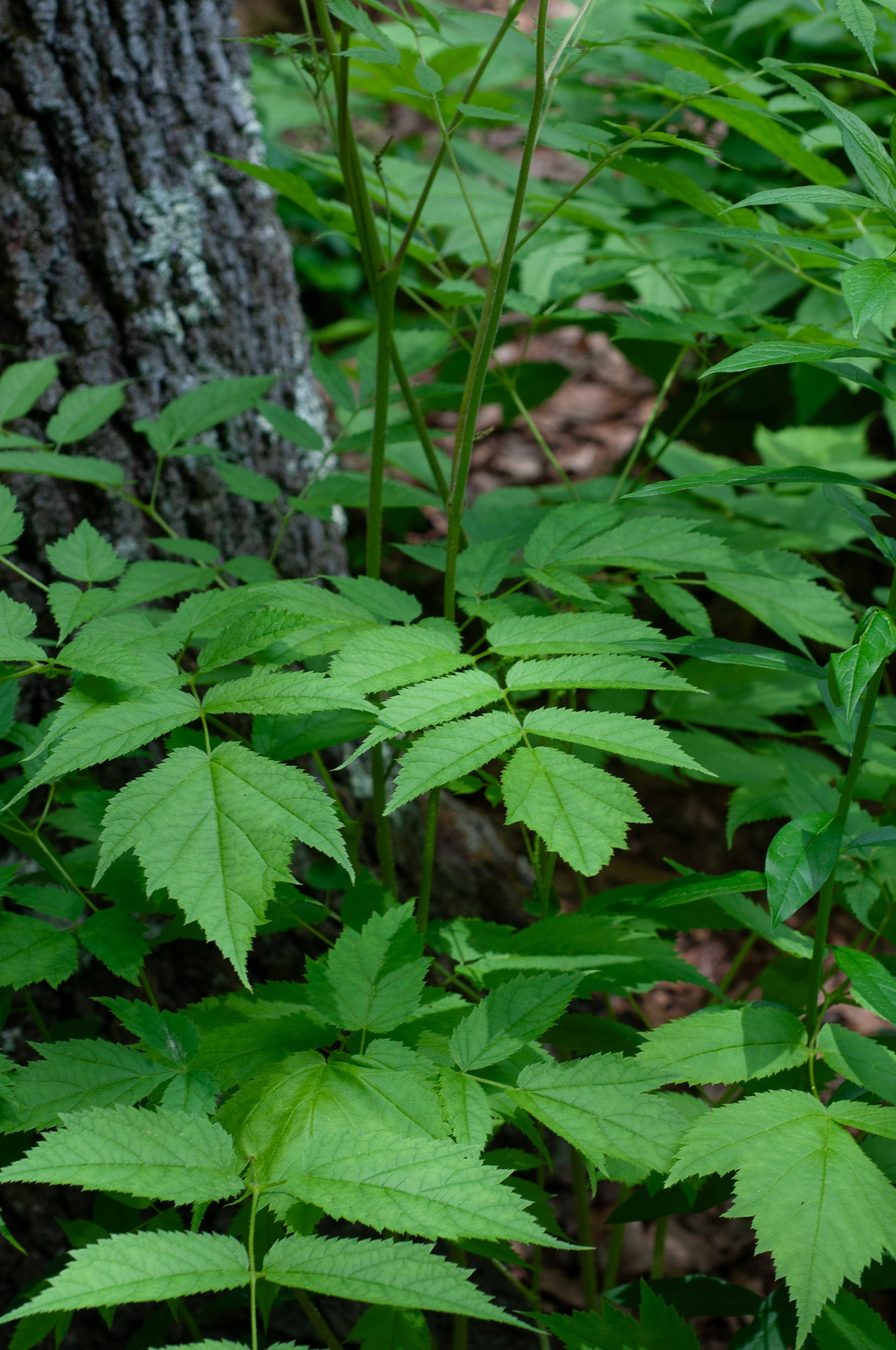
5/22/2010 · Garden in the Woods, Framingham, Massachusetts · ≈ 2 × 1½′ (71 × 47 cm) 
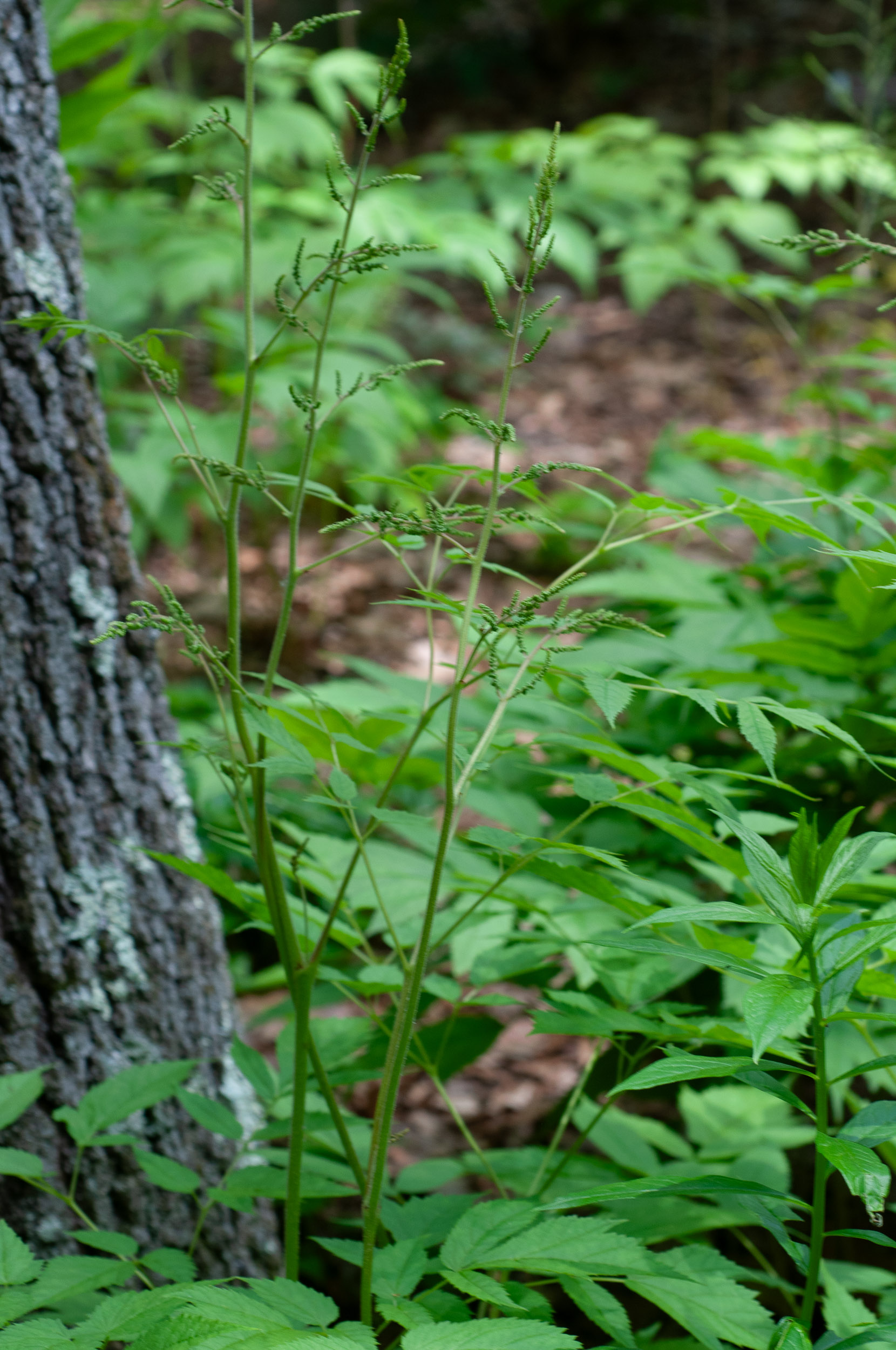
5/22/2010 · Garden in the Woods, Framingham, Massachusetts · ≈ 1 × 1½′ (34 × 52 cm) 
| Kingdom | Plantae | Plants, but not fungi, lichens, or algae (from Stearn's Botanical Latin) |
| Subkingdom | Tracheobionta | Vascular plants—plants with a “circulatory system” for delivering water and nutrients |
| Division | Magnoliophyta | Flowering plants, also known as angiosperms |
| Class | Magnoliopsida | Dicotyledons—plants with two initial seed leaves |
| Subclass | Rosidae | Roses, legumes, proteas, dogwoods, hydrangeas, mistletoes, euphorbias, grapes, many more |
| Order | Rosales | Rose family and eight others |
| Family | Saxifragaceae | Saxifrage family; means “stone-breaking” |
| Genus | Astilbe | Greek for “not shining” |
| Species | biternata | Refers to doubly-divided leaves |
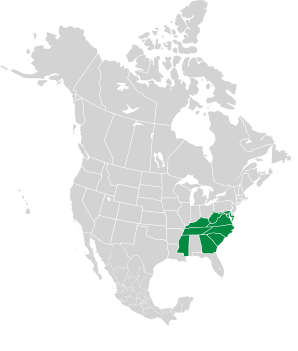
Astilbe biternata description by Thomas H. Kent, not updated.

© FloraFinder.org. All rights reserved.