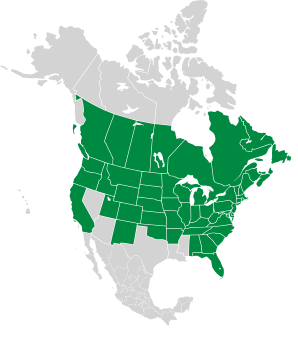
This native of Europe has become naturalized and widespread in North America after
its introduction here.
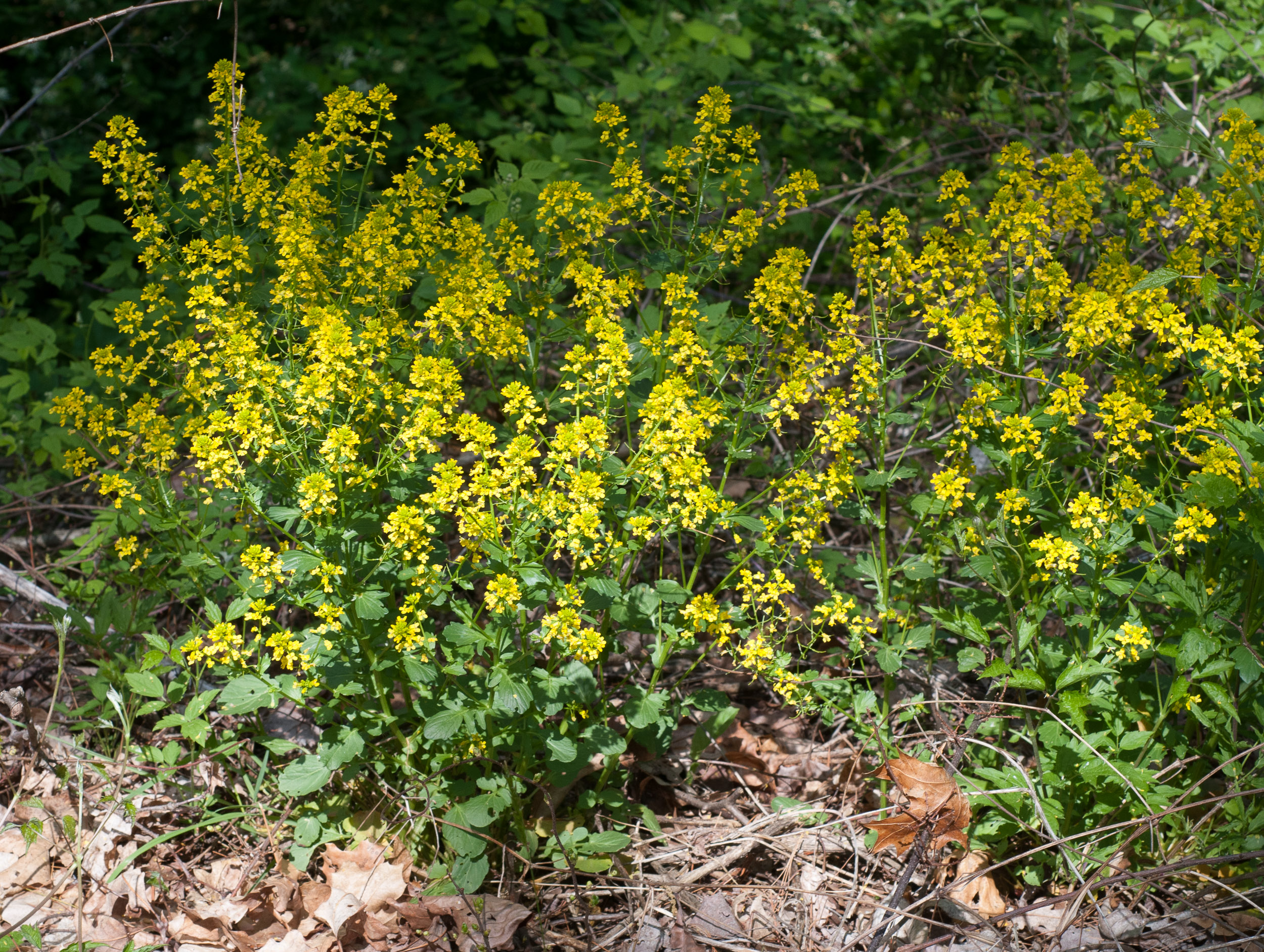
Plants: Winter cress is common sight in disturbed
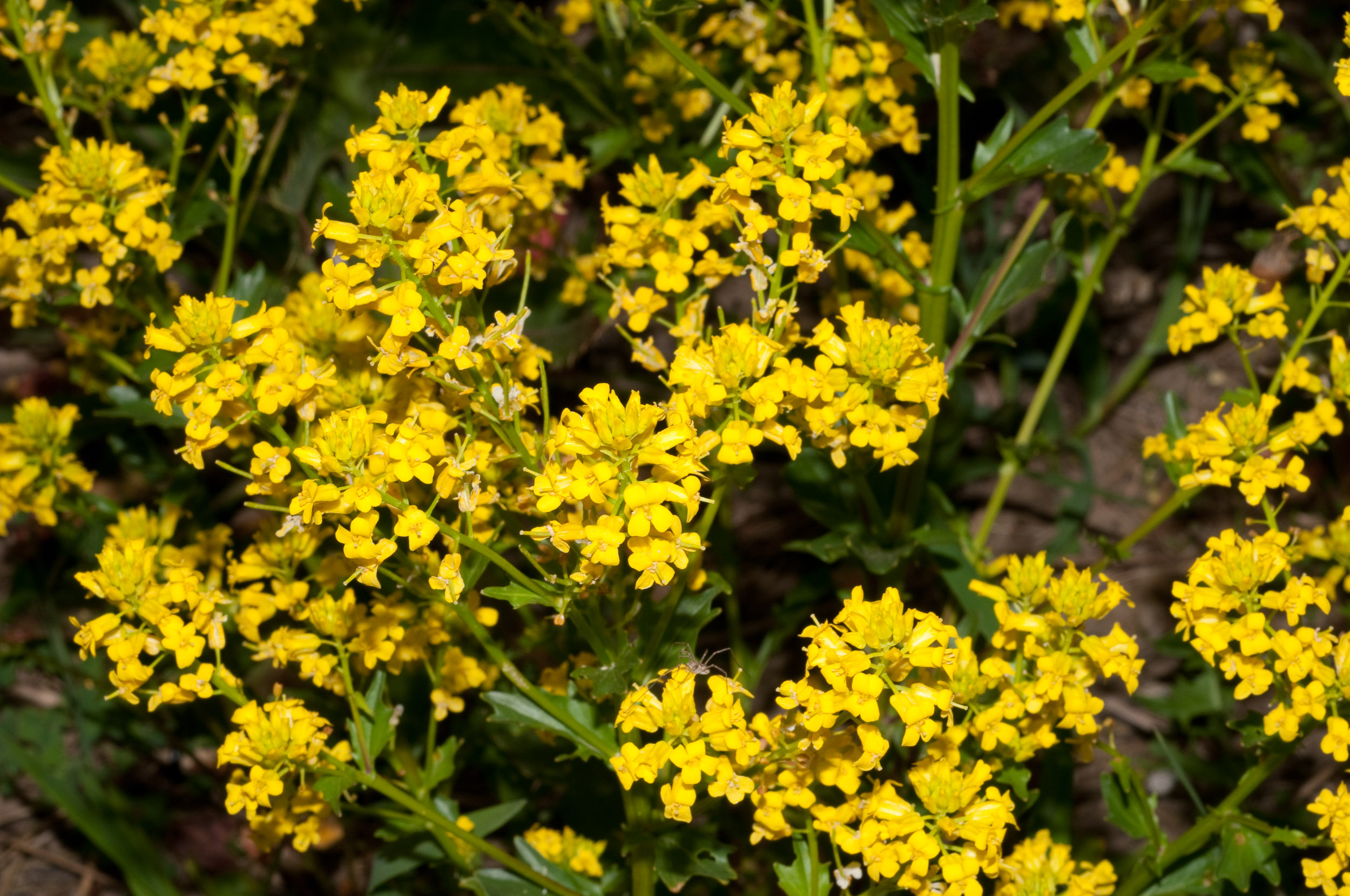
fields, such as borders of croplands. It flowers early, producing dense clusters of bright yellow flowers. Plants reach
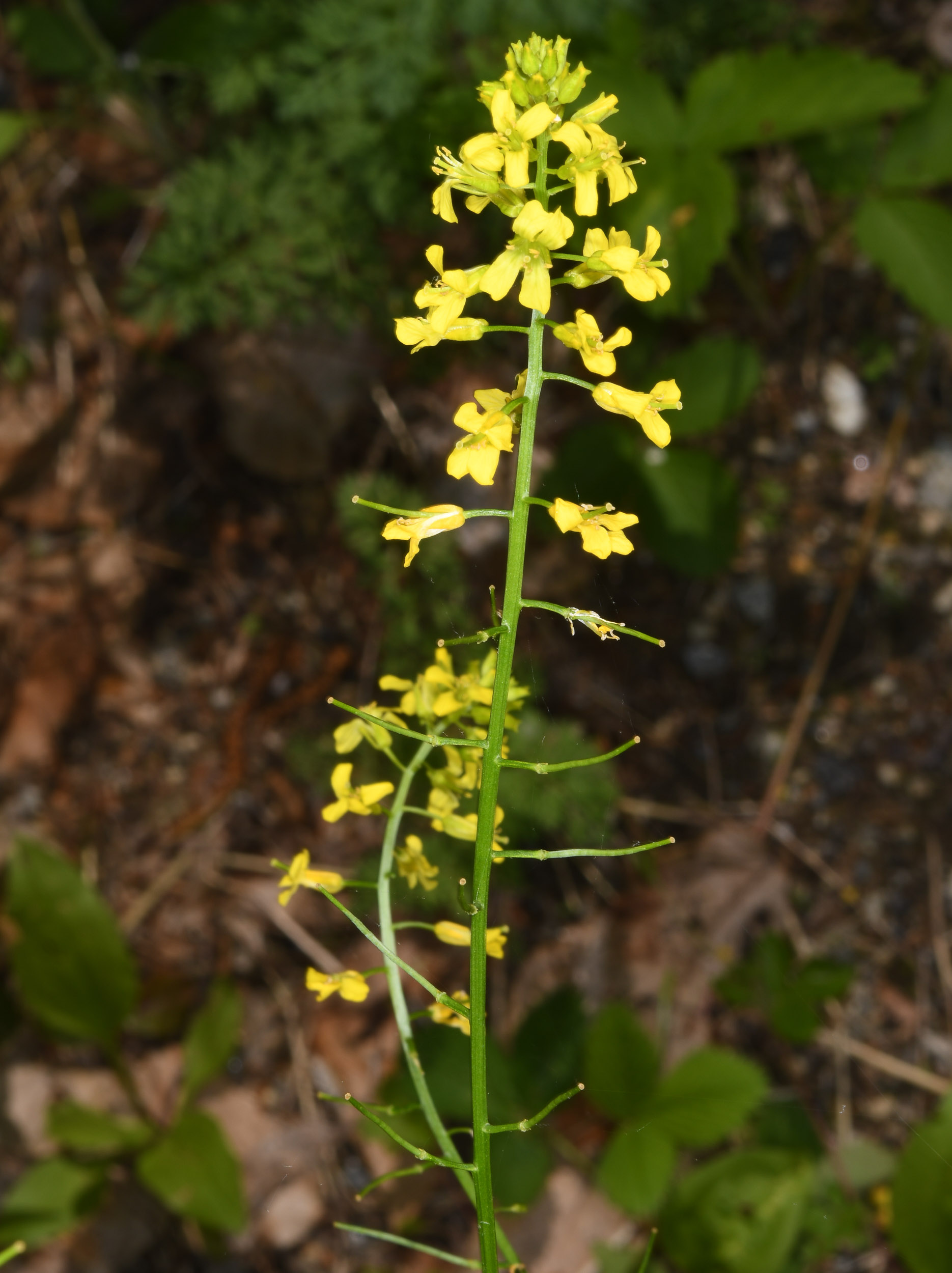
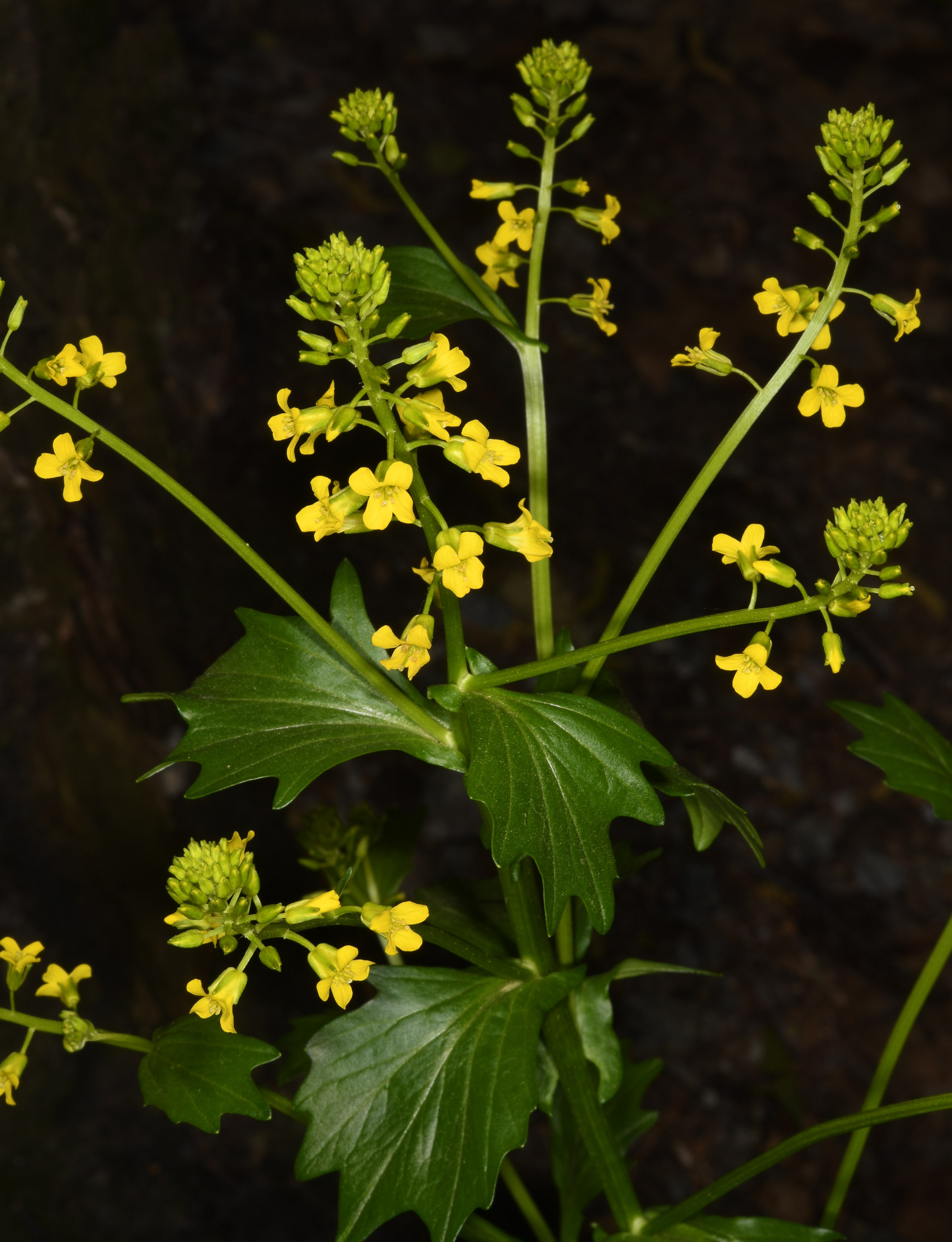
heights of 8–32″ (20–81 cm). Stems are often branched, ribbed, and green, often tinged with purple.
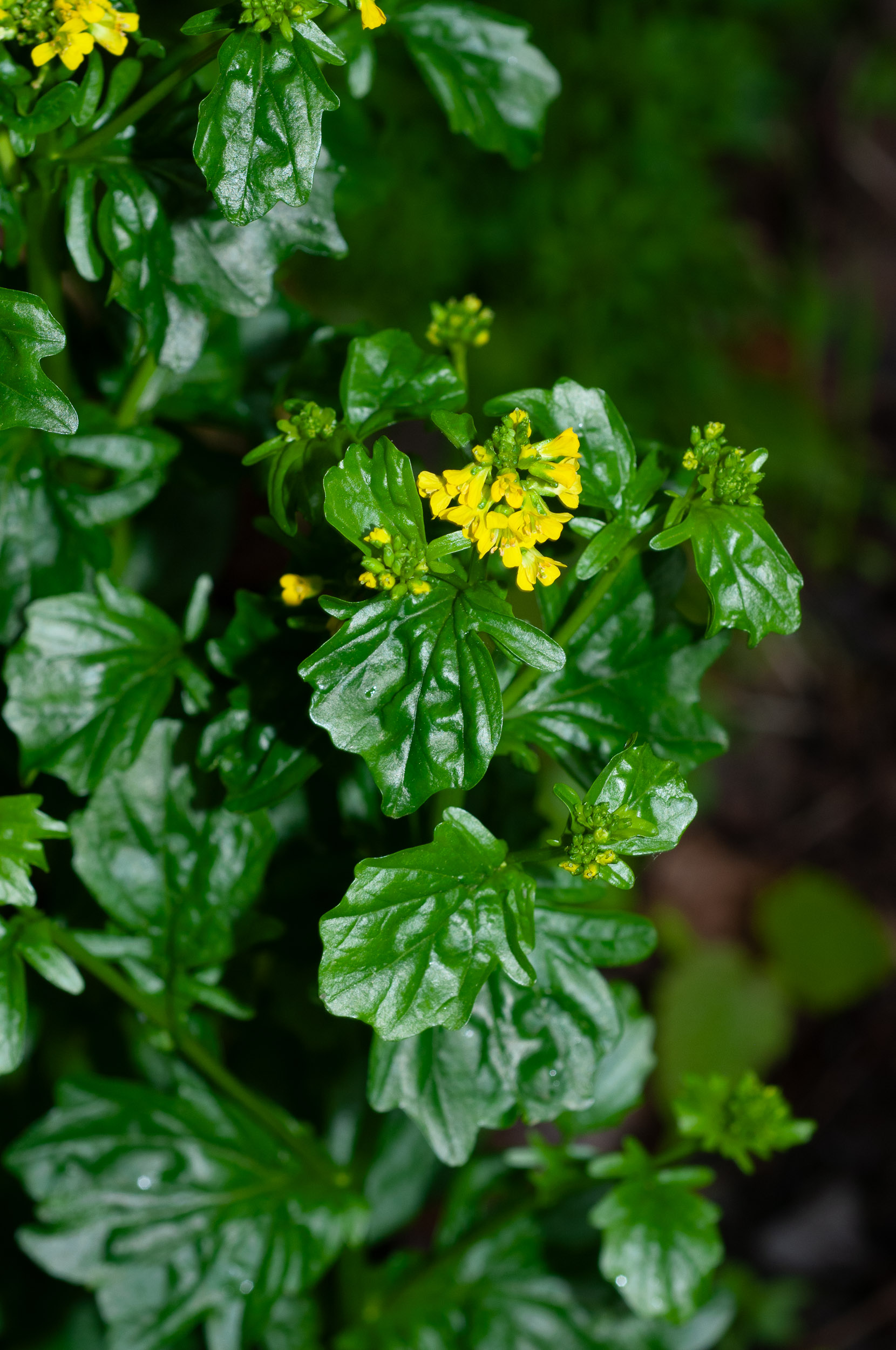
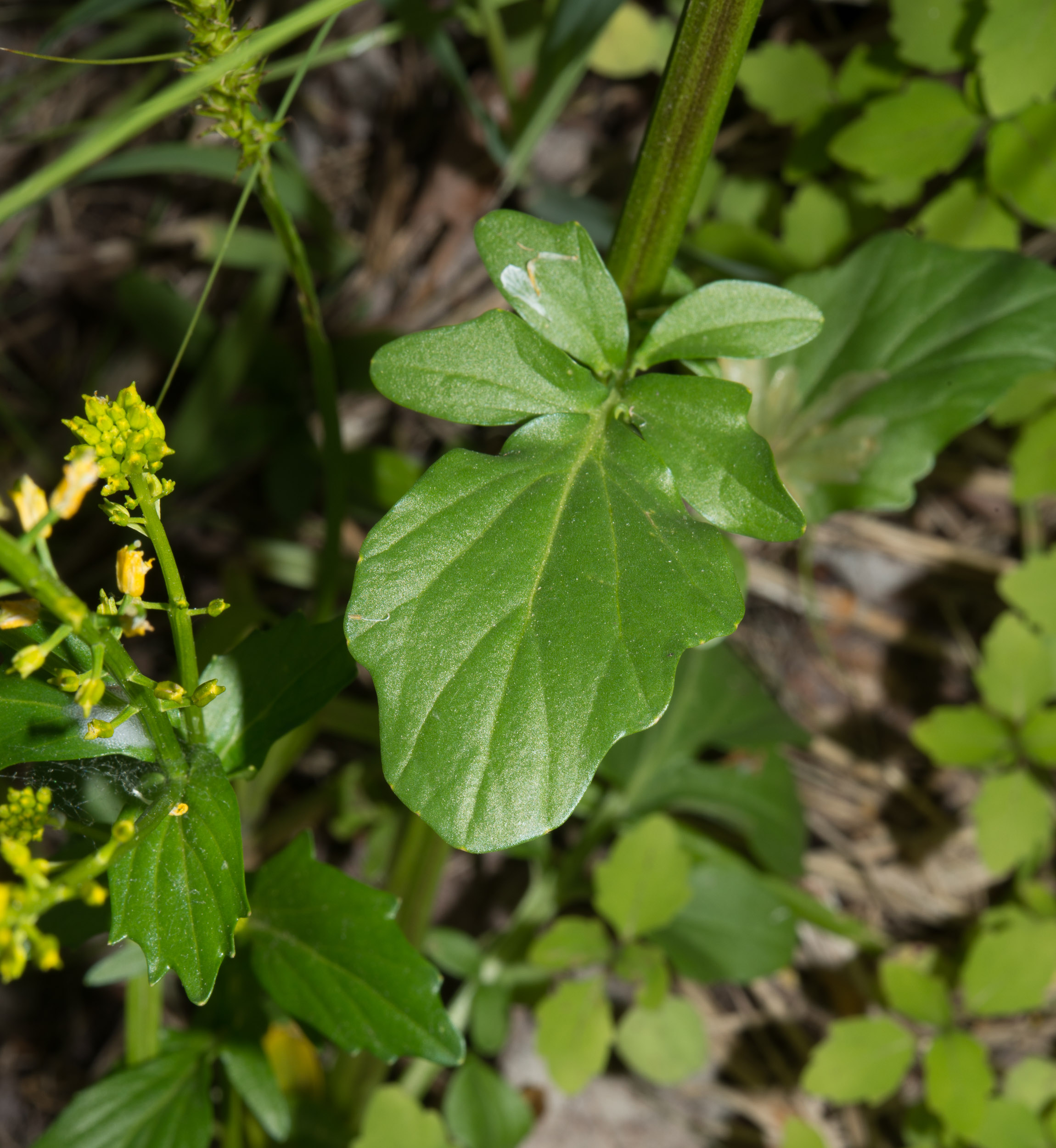
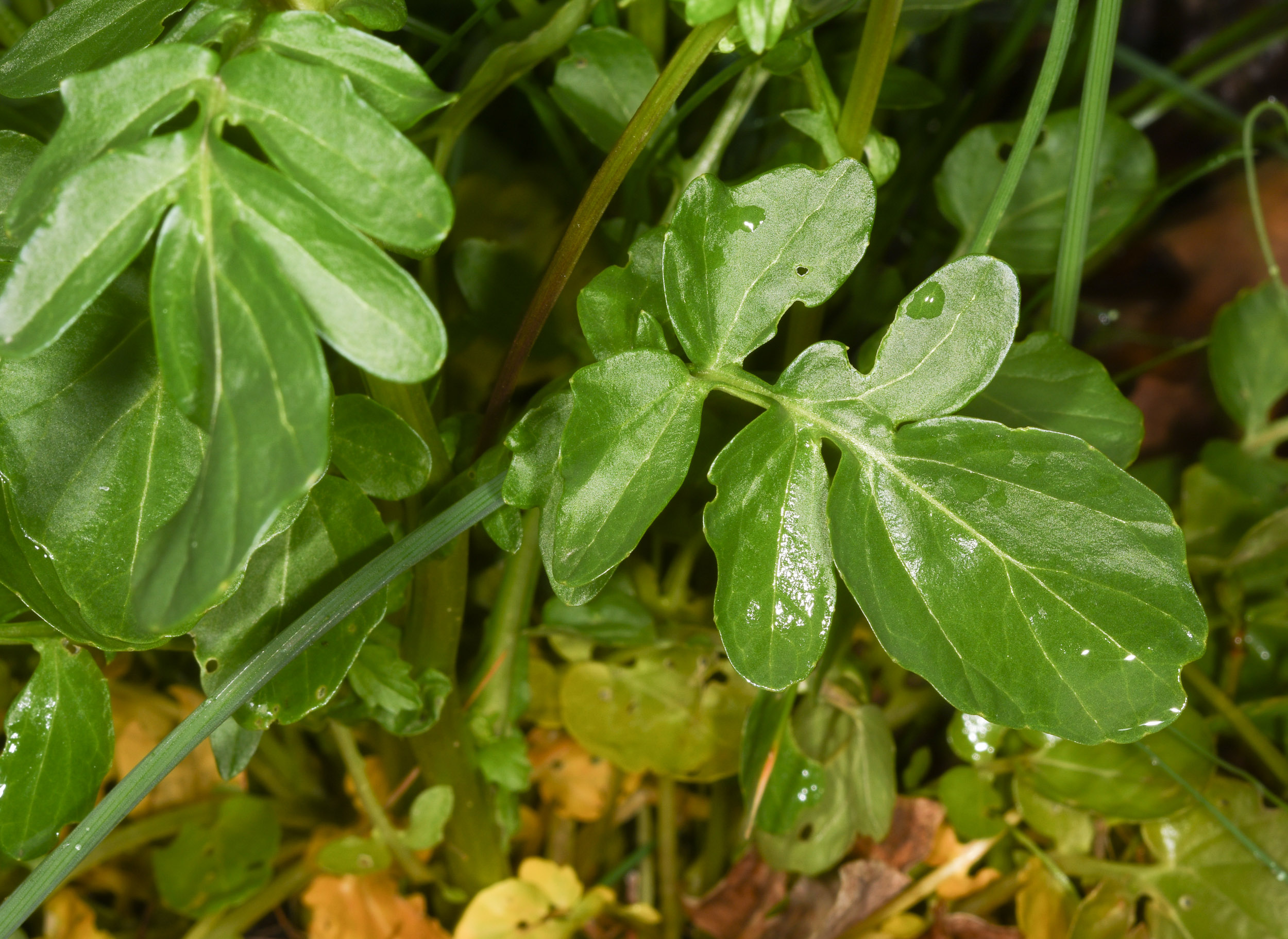
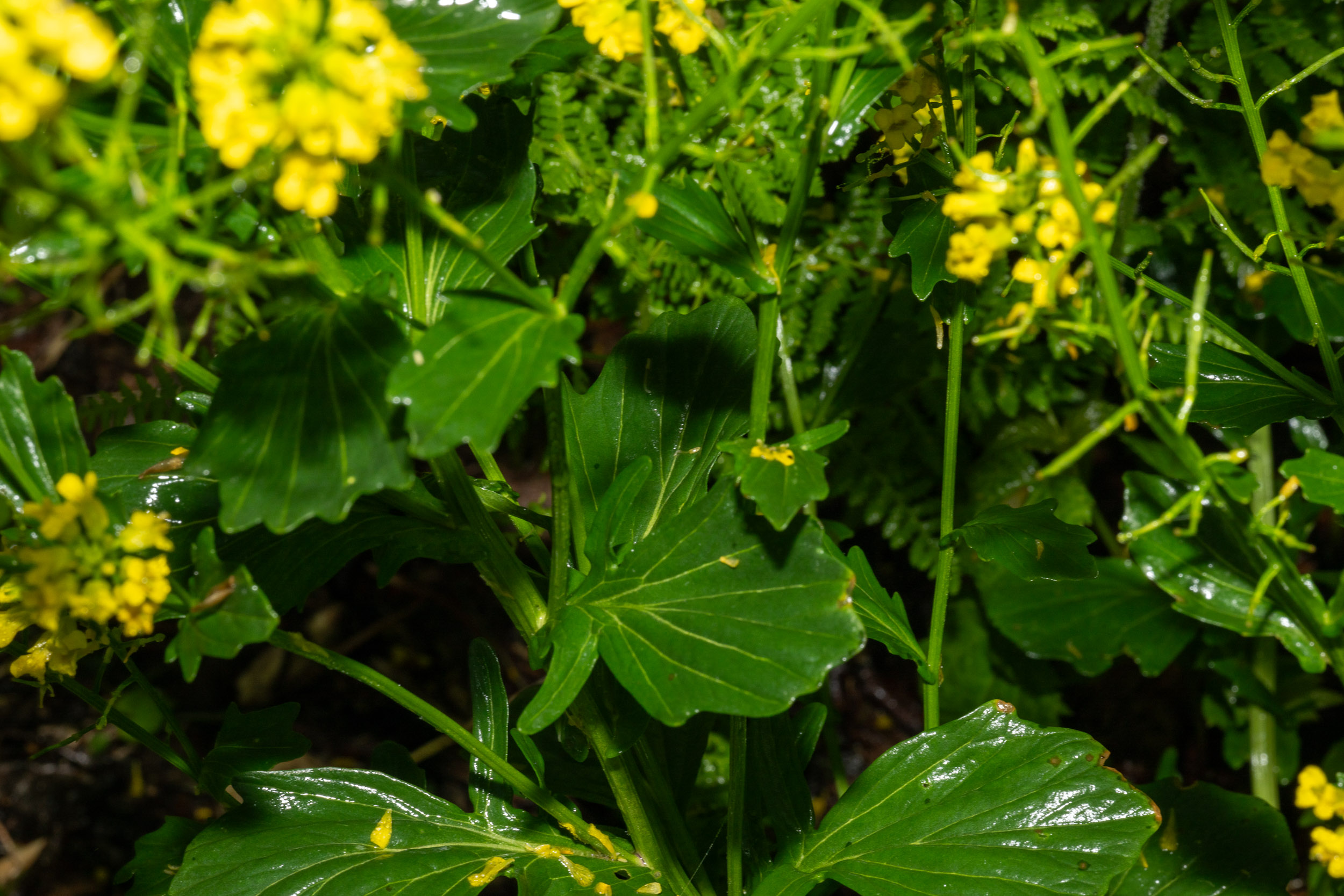
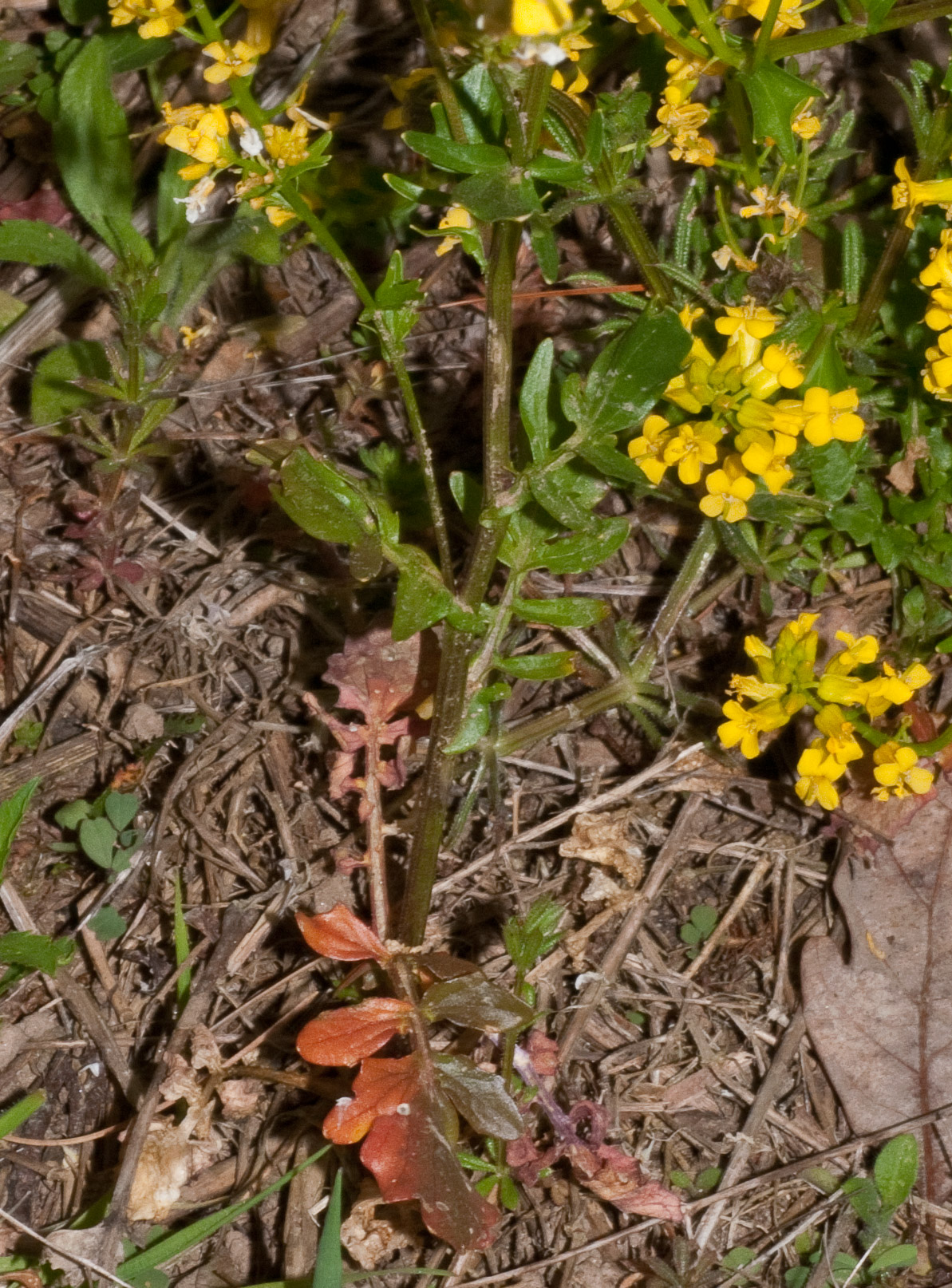
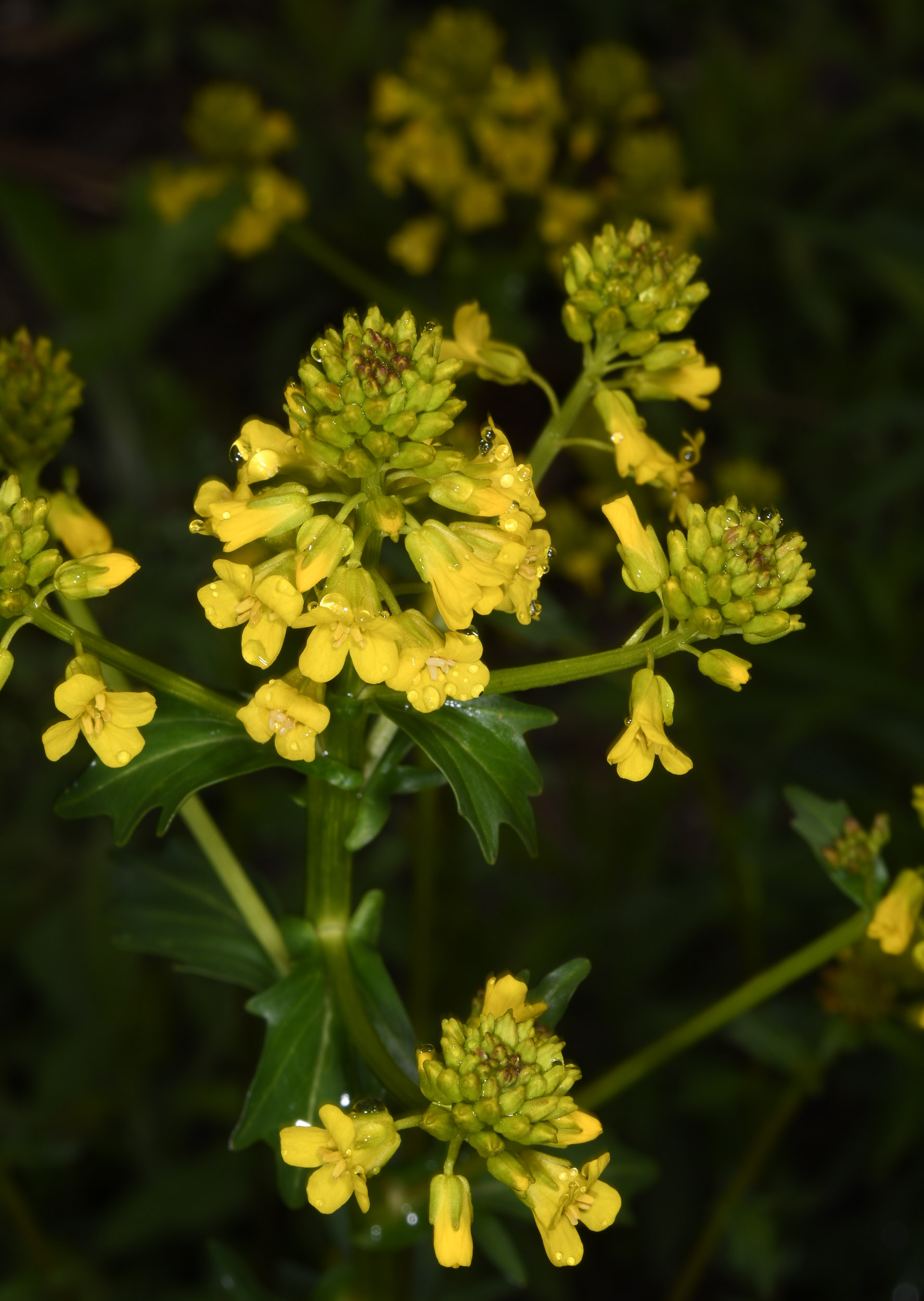
Leaves: Leaves near the base of the plant are deeply lobed, with the largest
portion of the leaf at the tip, up to 8″ (20 cm) long. Leaves above the base are small and inconspicuous.
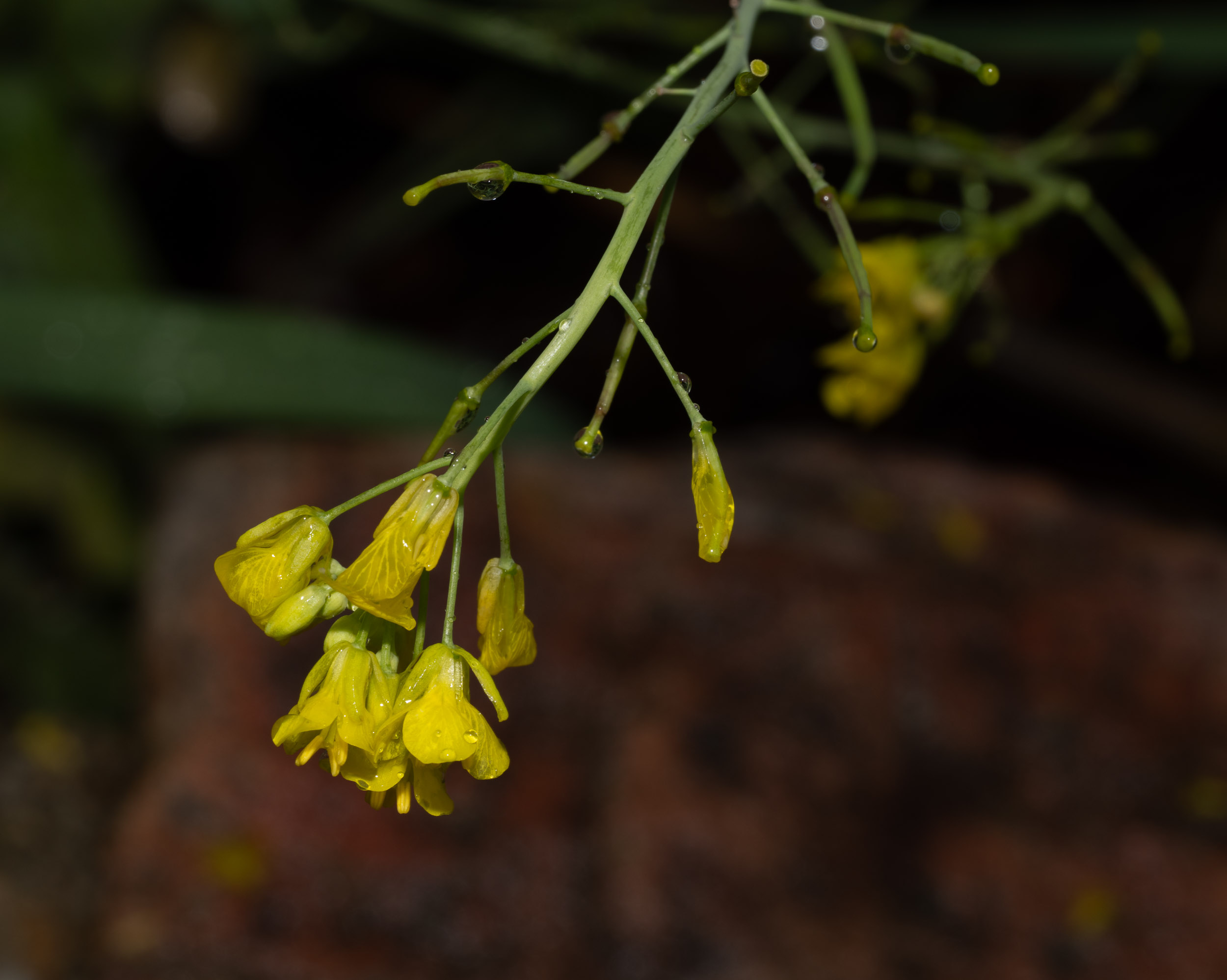
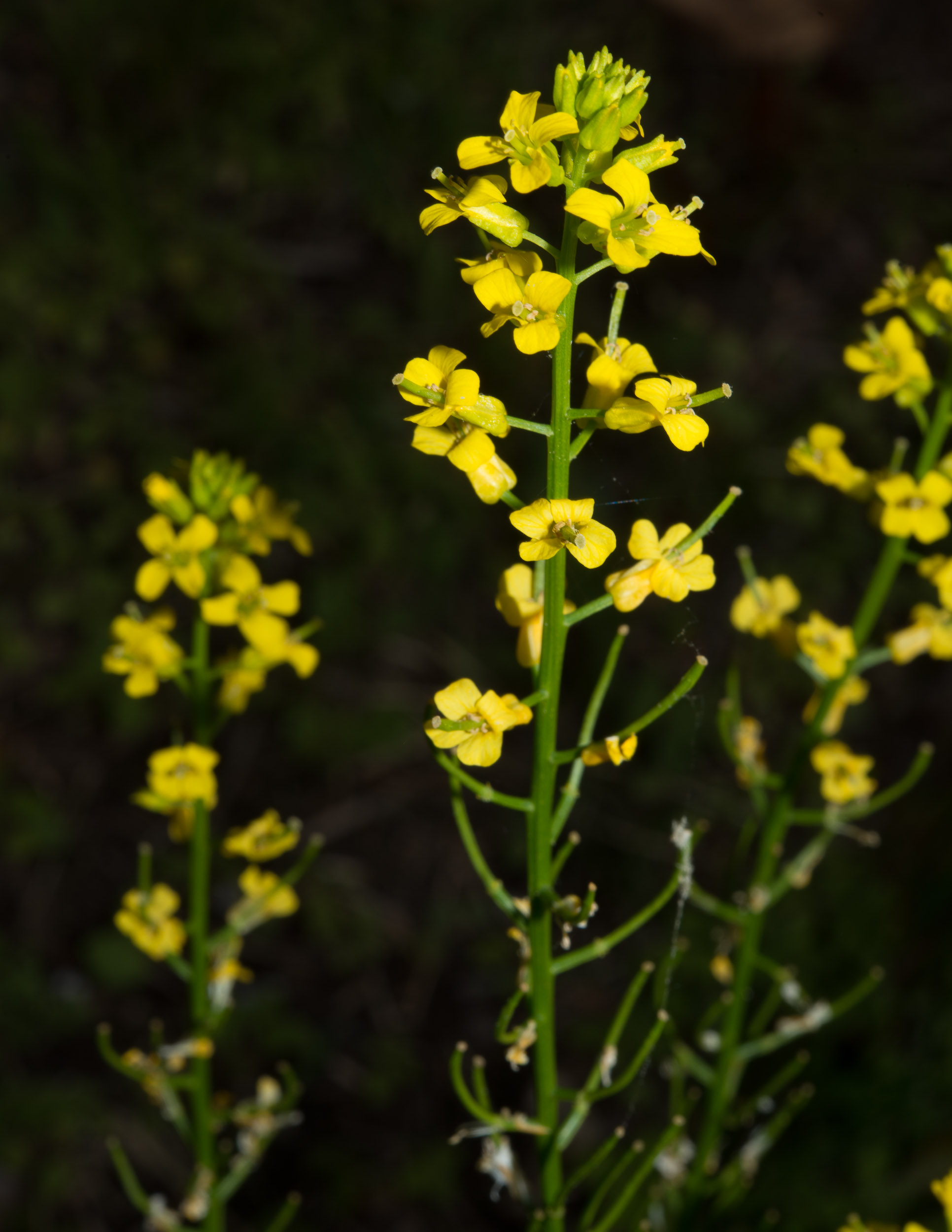
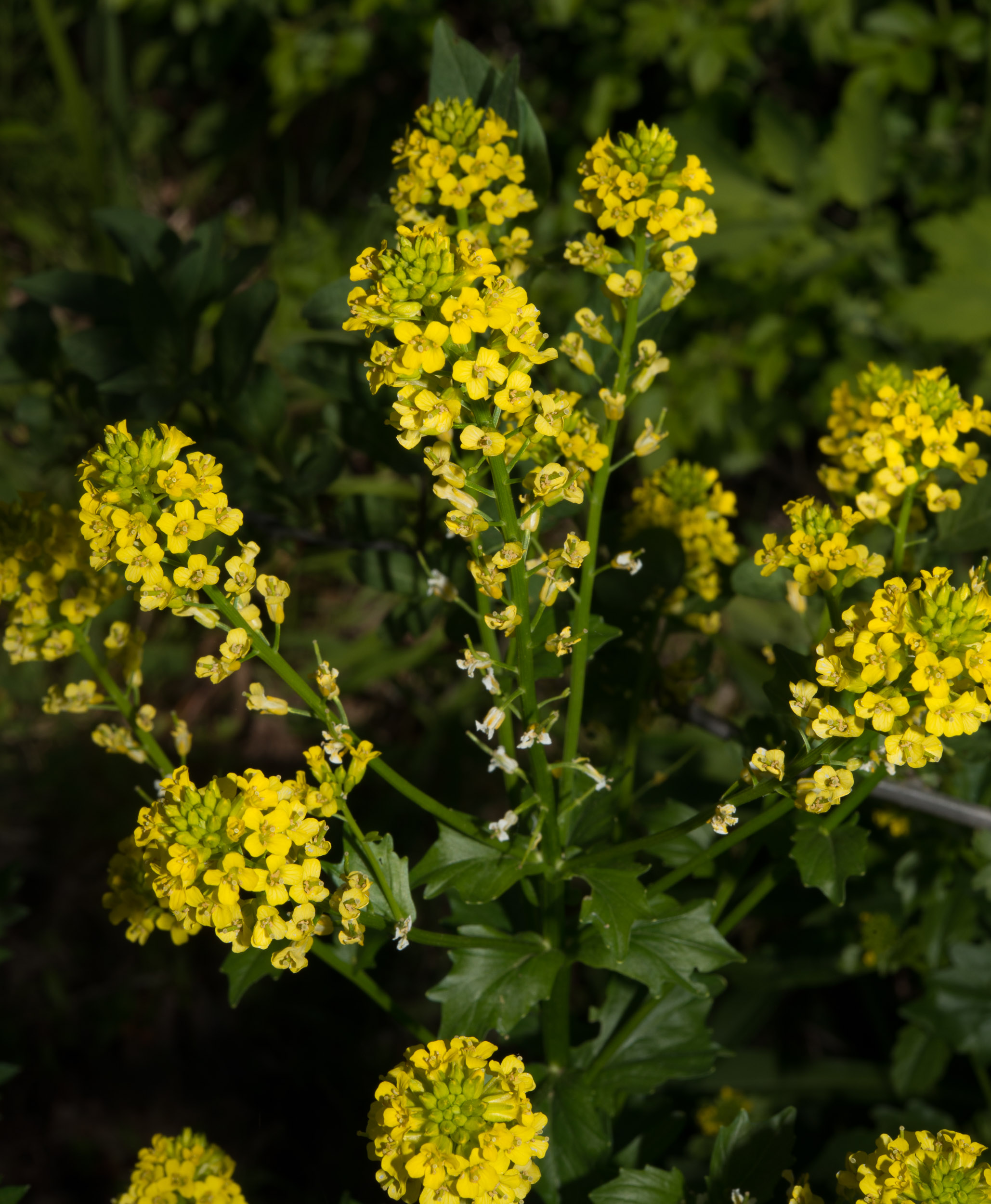
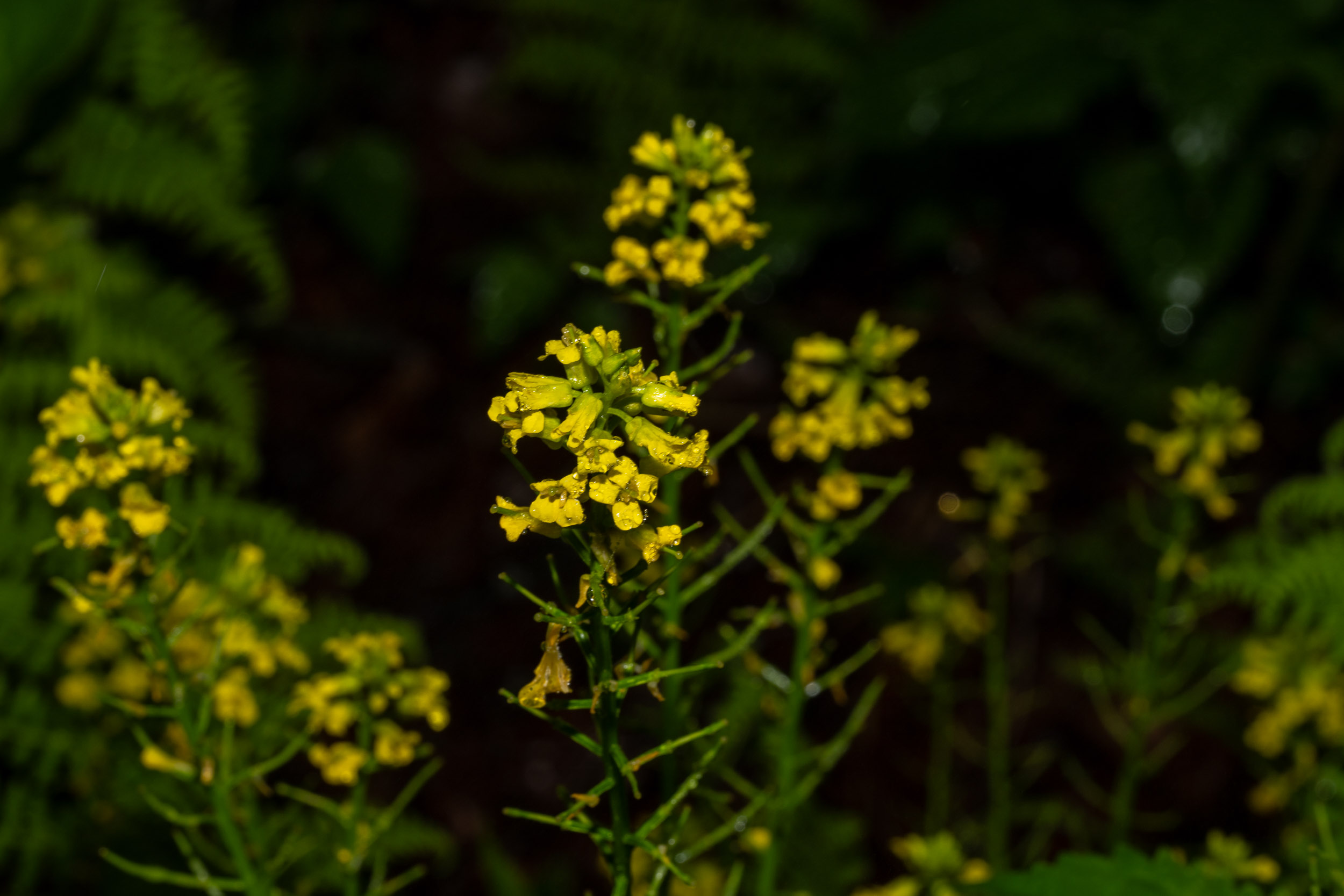
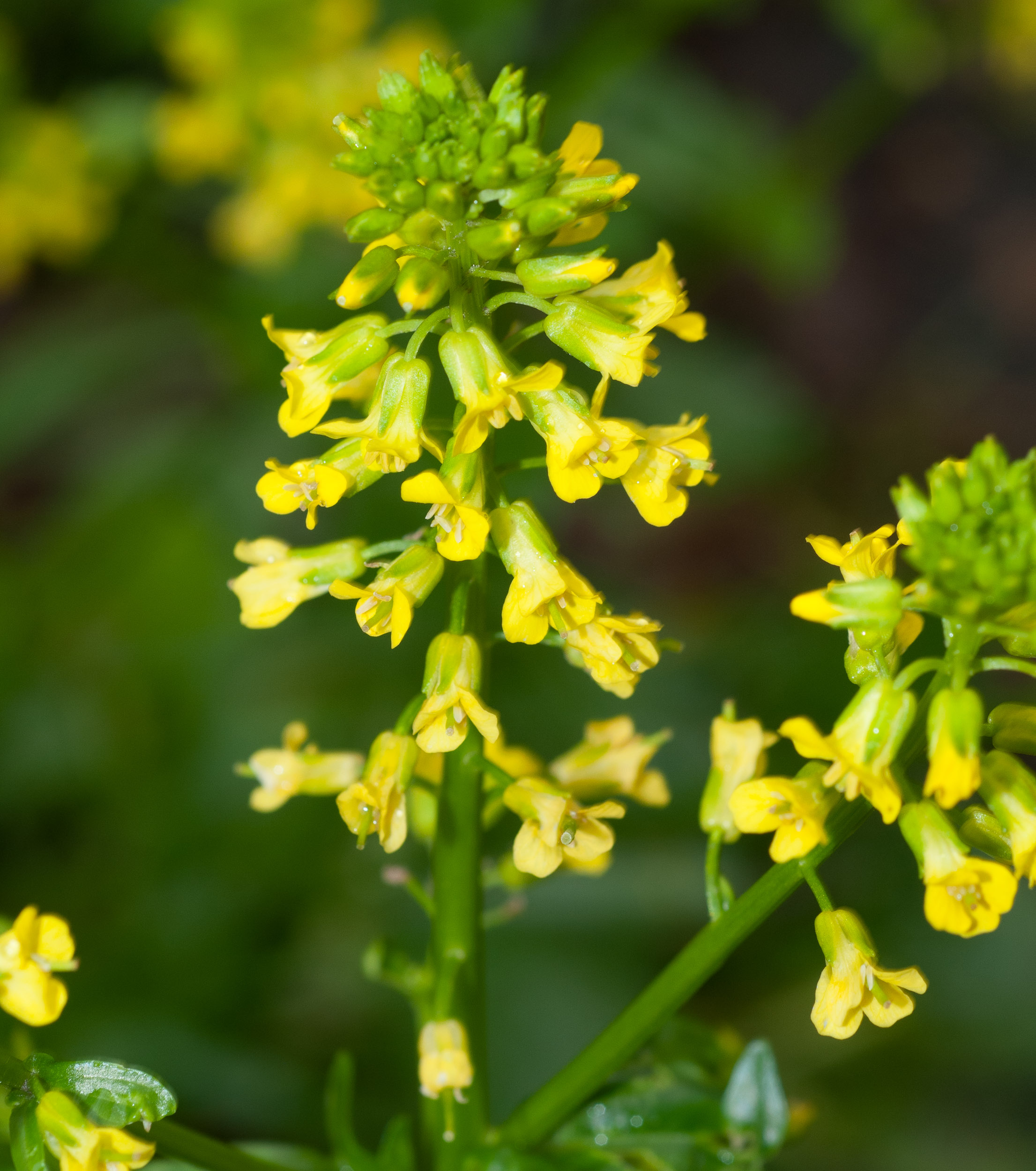
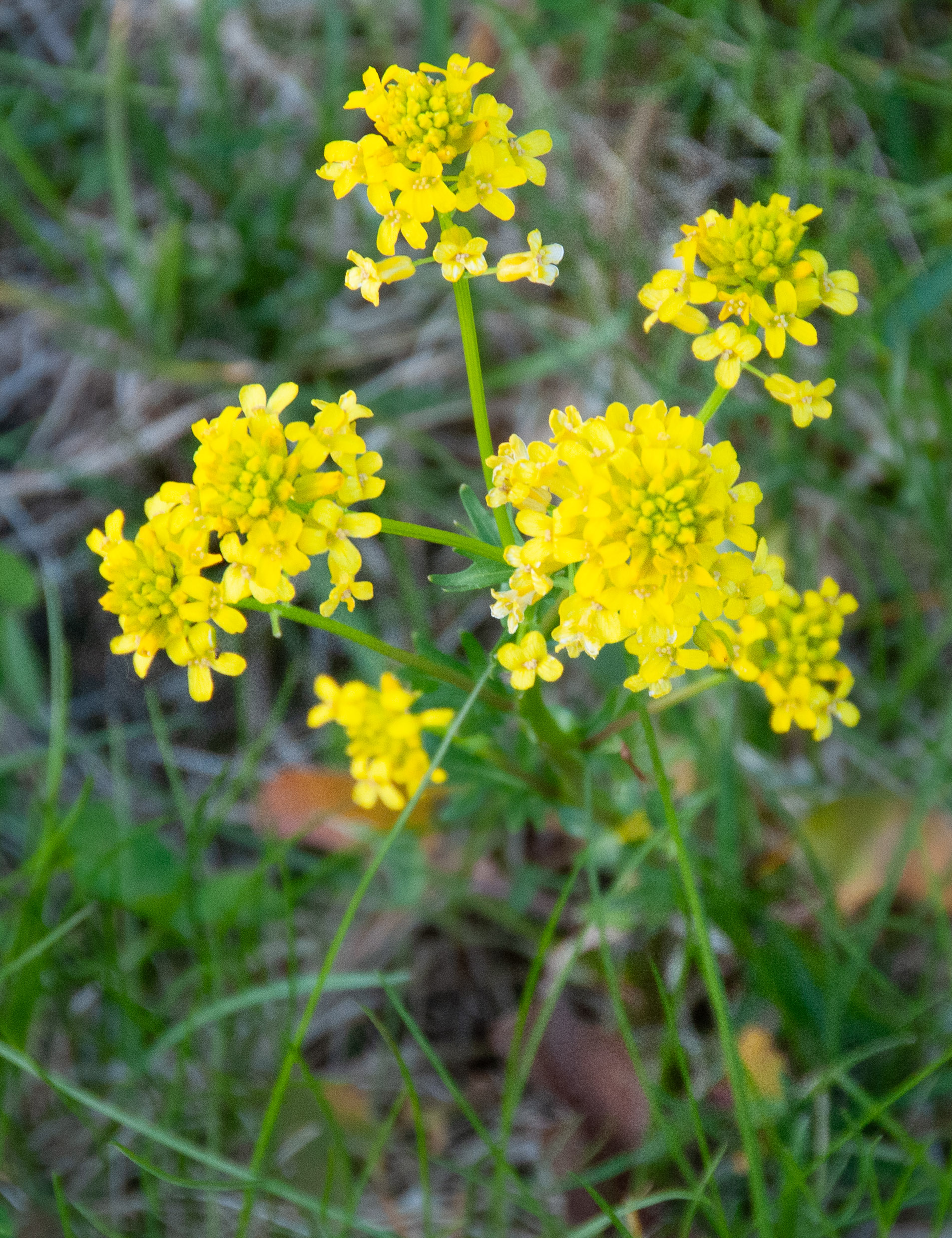
Flowers: Dense clusters of bright yellow flowers appear
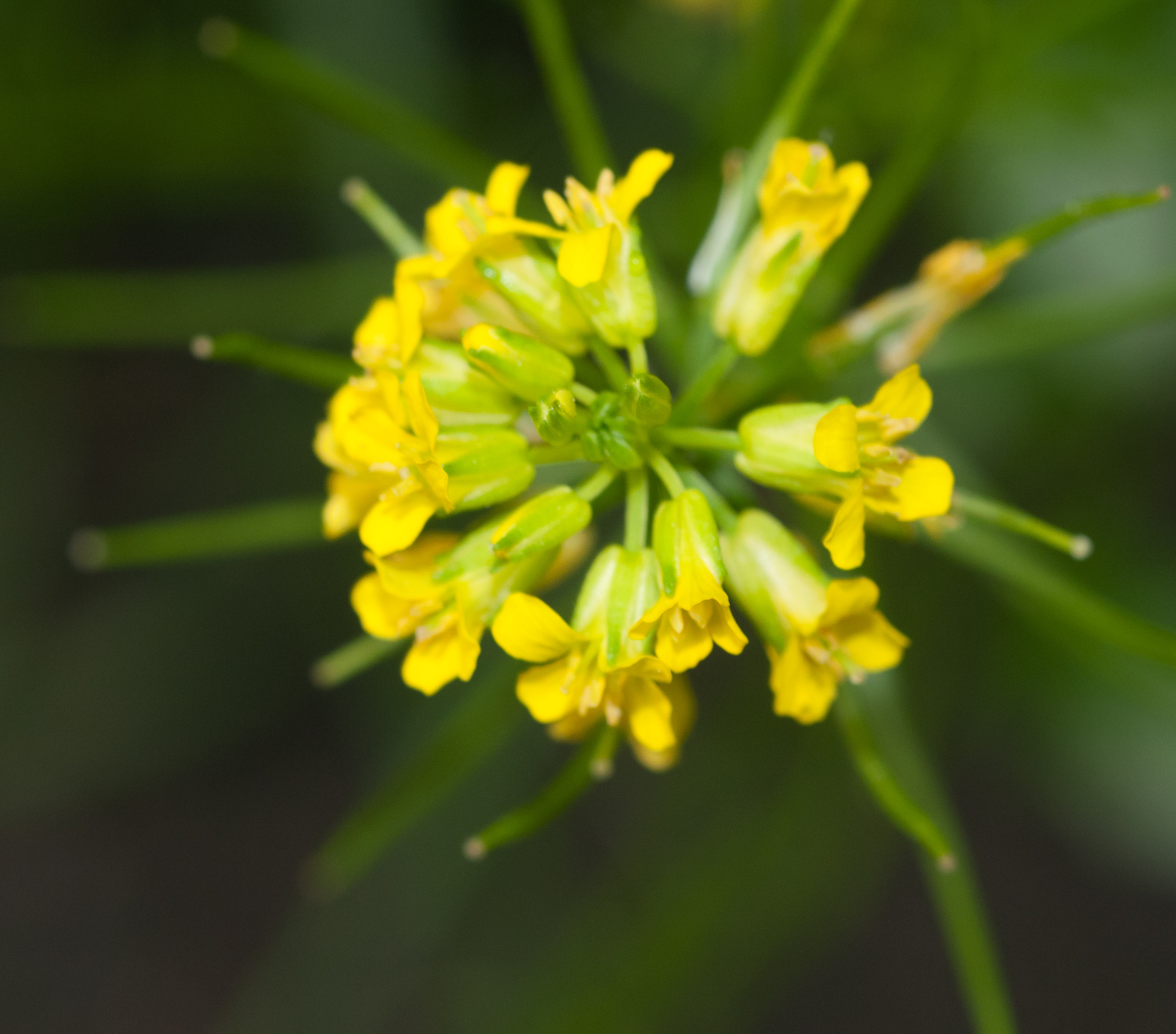
above the foliage. Each flower is ¼–5/16″ (7–9 mm) in size, with four petals. They appear
from April to July.
Fruits: Pods ½–1″ (1.5–3 cm) long.
Habitats: Found near wetlands or rivers, below 3281′ (1 km).
Edibility: Young leaves may be eaten raw in salads. Older
leaves become increasingly bitter, requiring boiling in several changes of water. By the time
flower buds appear, the leaves are too bitter to eat, but the buds may be boiled for five minutes
in two changes of water.
Barbarea arcuata (Opiz ex J. Presl & C. Presl) Rchb. Barbarea stricta auct. non Andrz. Barbarea vulgaris W.T. Aiton var. arcuata (Opiz ex J. Presl & C. Presl) Fr. Barbarea vulgaris W.T. Aiton var. brachycarpa Rouy & Foucaud Barbarea vulgaris W.T. Aiton var. longisiliquosa Carion Barbarea vulgaris W.T. Aiton var. sylvestris Fr. Campe barbarea (L.) W. Wight ex Piper Campe stricta auct. non (Andrz.) W. Wight ex Piper
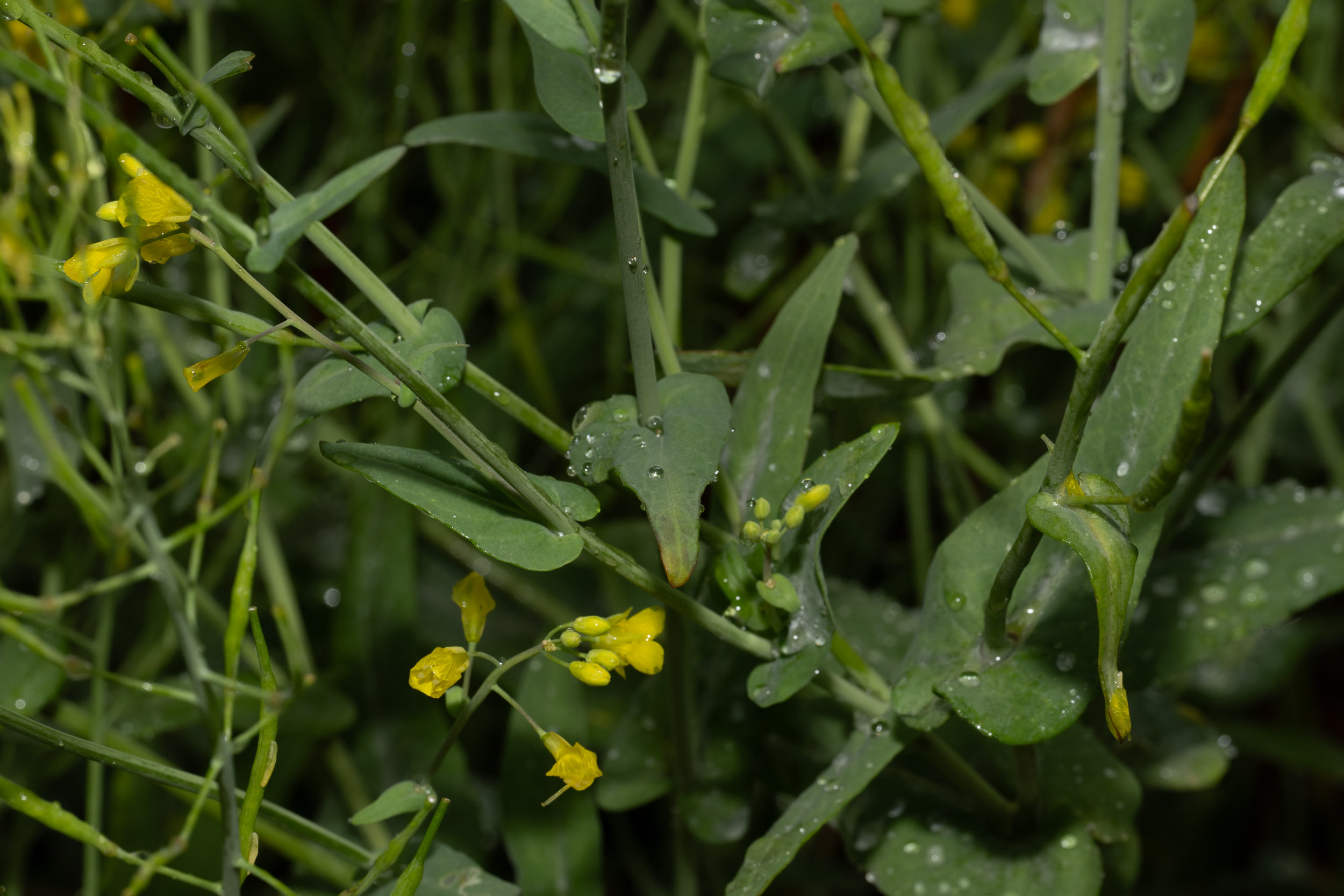
5/22/2026 · Skyline Drive, Shenandoah National Park, Virginia · ≈ 8 × 5″ (19 × 12 cm)
5/22/2026 · Skyline Drive, Shenandoah National Park, Virginia · ≈ 10 × 6″ (24 × 16 cm)
5/2/2010 · Nashua River Rail Trail, Groton Center, Groton, Massachusetts · ≈ 4 × 6″ (11 × 14 cm)
5/9/2012 · Nashua River Rail Trail, Groton Center, Groton, Massachusetts · ≈ 3½ × 4″ (9.2 × 10 cm)
Named after St. Barbara and once generally known as her herb, or the Herba Sanctae Barbarae. According to legend, St. Barbara was beheaded by her own father, a wealthy heathen named Dioscorus, for expressing a belief in Christ











 ID is uncertain