Berberis vulgaris L.
Common barberry, barberry, berbery, European barberry, jaundice-berry, pipperidge bush
Similar barberry species
Berberis koreana
Berberis thunbergii
Berberis vulgaris


|
Berberis vulgaris L. Common barberry, barberry, berbery, European barberry, jaundice-berry, pipperidge bush Similar barberry species | |||
Berberis koreana |
Berberis thunbergii |
You are here Berberis vulgaris |
|
|---|---|---|---|
| Common Name | |
|
|
| Plant | Shrubs are 3–6′ (91–182 cm) around, with multiple smooth-barked spiny branches. | 3–6′ (91–182 cm) high. Stems are woody and grooved. There are ¼″ (6.3 mm) thorns along the branches, which arch and overlap each other. | 3–9½′ (1–3 m) in height, with grooved stems. There are ¼″ (6.3 mm) thorns along the branches. |
| Leaves | ⅞–2½″ (2.5–7 cm) long, medium to dark green, alternate, edged with spiny teeth. In the fall, leaves are red-purple. | Bright green and spatula-shaped, much wider at the ends, about ¾″ (1.9 cm) long and ¼″ (6.3 mm) wide. In the fall, the leaves turn orange, deep red, or purple in color. | Oval, ¾–1¾″ (2–5 cm) × ⅜–¾″ (1–2 cm), finely toothed, in clusters that include a spine ⅛–¼″ (3–8 mm) long and 2-5 leaves. |
| Flowers | This shrub doesn’t just flower, it lights up like a searchlight! Flowers are ⅛″ (5 mm), bell-shaped, in dense bright yellow racemes on reddish branches. It flowers from May to June. (In the two specimens I have seen, the duration of flowering was short, a few days.) | ¼″ (6.3 mm) around and yellow, distributed along branches. | Yellow, ⅛–3/16″ (4–6 mm) across, in panicles 1–2″ (3–6 cm) long. |
| Fruit | Dense clusters of egg-shaped berries ripen to yellow and bright red. Berries are ⅛–¼″ (5–7.6 mm) long. | Berries are bright red, with a distinctive oval shape, ¼–⅜″ (7–10 mm) long and 1/16–3/16″ (3–5 mm) in diameter, distributed fairly evenly along branches. | Berries are bright red, with a distinctive oval shape, ¼–⅜″ (7–10 mm) long and 1/16–3/16″ (3–5 mm) in diameter, hanging in tight clusters. |
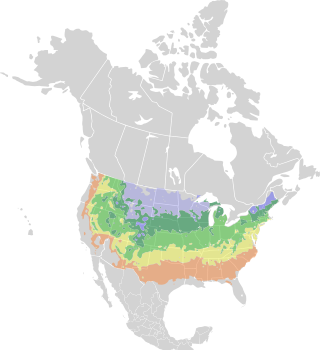
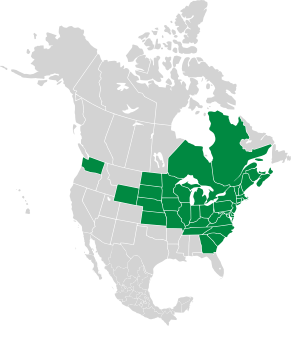
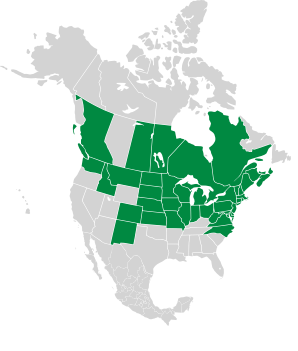
| Range/ Zones |
|
|
|
| Habitats | Anthropogenic (man-made or disturbed habitats), forest edges. | Man-made or disturbed habitats, river or stream floodplains, forest edges, forests, meadows and fields. | Anthropogenic (man-made or disturbed habitats), forest edges, forests, meadows and fields. |
Berberis vulgaris description by Thomas H. Kent, not updated.
© FloraFinder.org. All rights reserved.