Betula alleghaniensis Britton
Yellow birch
Yellow birch is a North American native.
Plants: Trees are 60–70′ (18–21 m) tall, rarely reaching 100′ (30 m). Tree shape is pyramidal in young trees, and usually uneven in mature trees. The yellowish-bronze bark, easily peeled as with other birches, is unique in appearance; the inner bark has a slight odor of wintergreen.
Leaves: Alternate and unlobed, 2–4½″ (6–12 cm) long and half as wide.
Flowers: Yellow birches have both male and female flowers on the same tree. Male flowers are catkins near twig ends, 1″ (2.5 cm) long and reddish green. Female flowers point upright. They are ⅝″ (1.7 cm) long and reddish-green.
Fruits: Fruits resemble small cones, ¾–1¼ ⨉ ¼–⅜″ (1.9–3.2 cm ⨉ 6.3–9.5 mm).
Habitats: Cool, somewhat moist climates, typically at higher elevations.
Edibility: The sap may be harvested and processed like that from sugar maples, though the sugar content is much lower. The inner bark can be cooked or dried, then powdered and used as an ingredient in making bread. Twigs and leaves can be used to produce a tea.
Online References:
References:
Little, Elbert L., National Audubon Society Field Guide to North American Trees, Eastern Region, Alfred A. Knopf, 1980, p. 180, 487, 617, 364
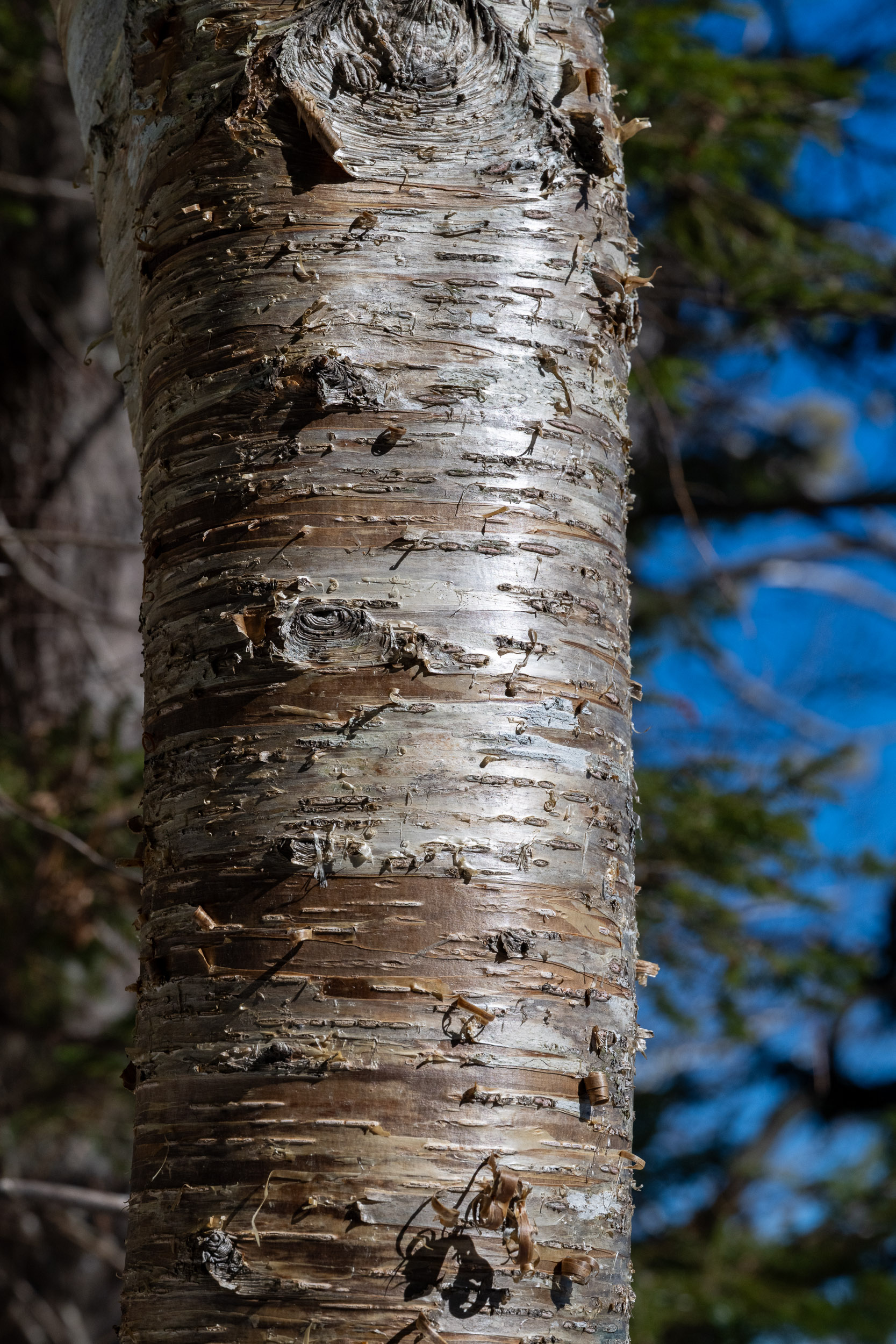
2/28/2025 · Wolfe's Neck Woods State Park, Freeport, Maine · ≈ 1 × 1½′ (32 × 48 cm) 

4/3/2010 · Birch Point Beach State Park, Owl’s Head, Maine  ID is uncertain


6/18/2012 · Vaughn Woods, South Berwick, Maine · ≈ 1 × 2′ (41 × 62 cm) 

4/24/2016 · Blue Trail, Willard Brook State Park, Ashby, New Hampshire 

10/6/2011 · Pack Monadnock, 2200', Peterborough, New Hampshire · ≈ 5 × 8″ (13 × 19 cm) 

9/14/2010 · Garden in the Woods, Framingham, Massachusetts · ≈ 11 × 7″ (27 × 18 cm) 

10/2/2010 · Hackers Trail, Cliff Park, Delaware Water Gap National Recr, Pennsylvania · ≈ 9 × 6″ (22 × 14 cm) ID is uncertain 

4/19/2013 · Squannacook River Wildlife Area, Townsend, Massachusetts · ≈ 7 × 11″ (18 × 27 cm) 
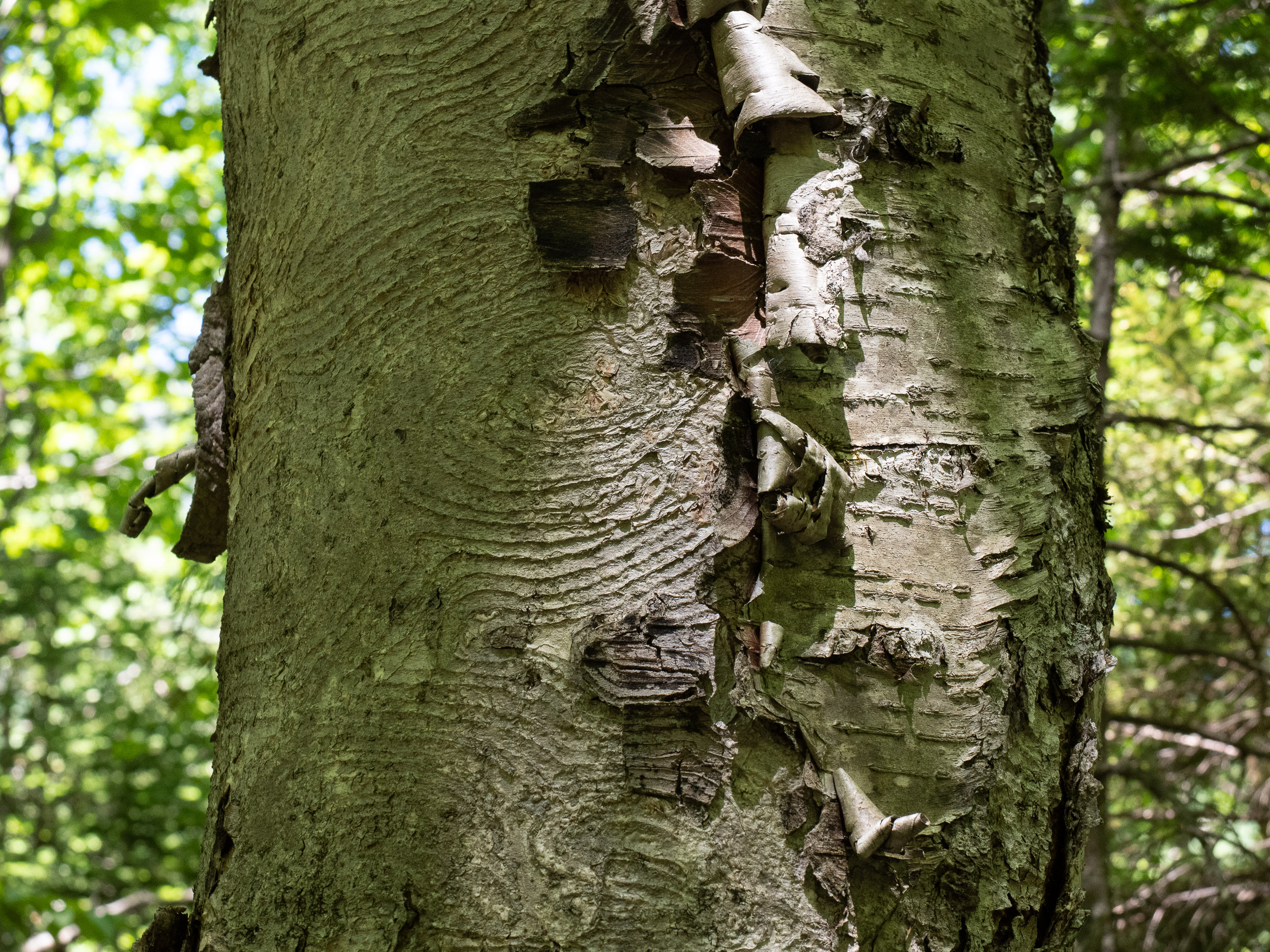
What caused the striations? · 6/9/2026 · Ladies Lookout, Pinkham Notch, New Hampshire 

10/2/2010 · Hackers Trail, Cliff Park, Delaware Water Gap National Recr, Pennsylvania · ≈ 8 × 5″ (19 × 13 cm) ID is uncertain 

6/18/2012 · Vaughn Woods, South Berwick, Maine 

4/19/2013 · Squannacook River Wildlife Area, Townsend, Massachusetts · ≈ 9 × 14″ (23 × 35 cm) 

10/2/2010 · Hackers Trail, Cliff Park, Delaware Water Gap National Recr, Pennsylvania · ≈ 6 × 4″ (15 × 10 cm) ID is uncertain 
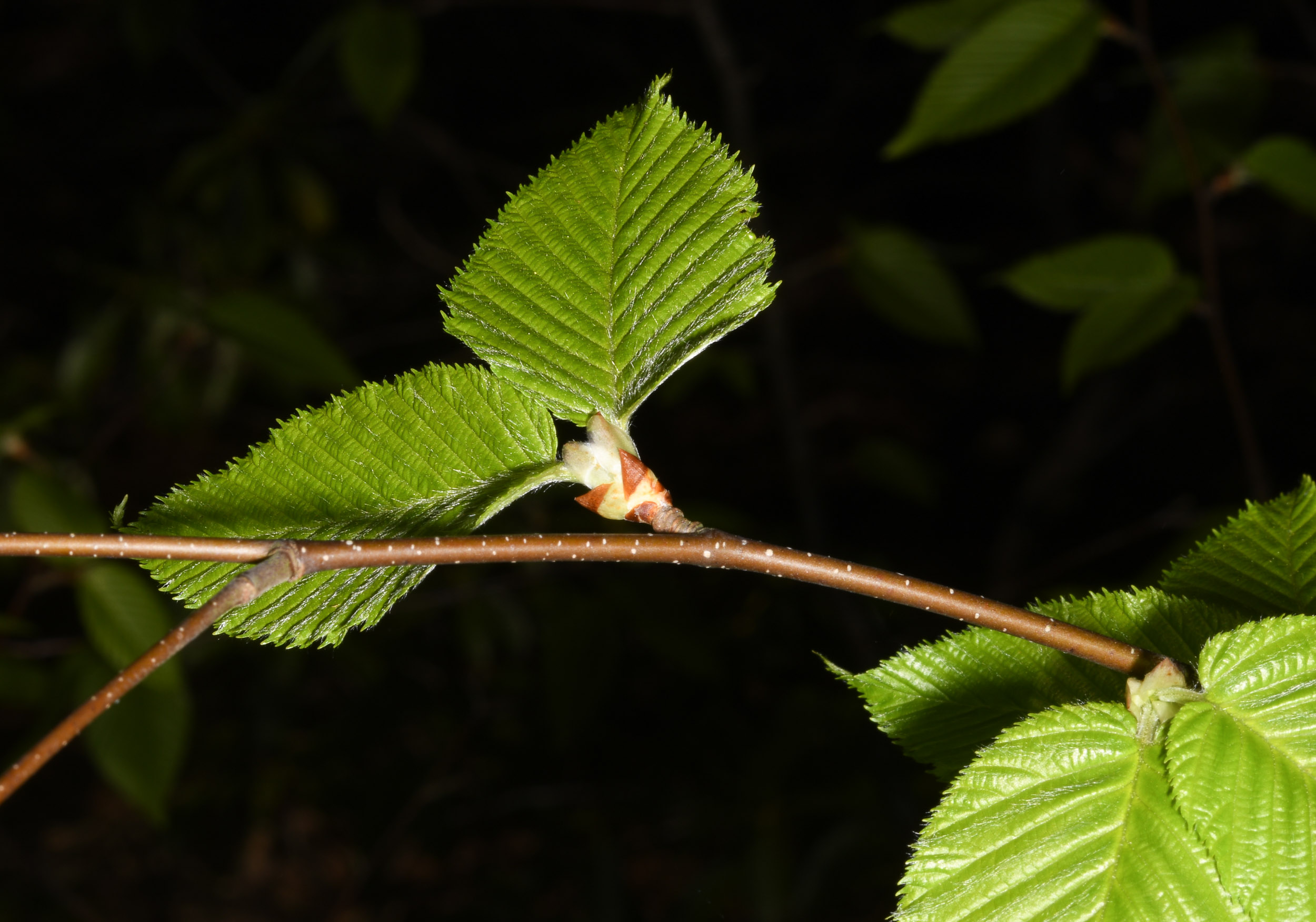
5/12/2016 · Wildlife Pond Trail, Beaver Brook Association, Hollis, New Hampshire 

9/14/2010 · Garden in the Woods, Framingham, Massachusetts · ≈ 2 × 1′ (62 × 41 cm) 

4/17/2013 · Leominster State Forest, Leominster, Massachusetts · ≈ 9 × 14″ (23 × 35 cm) 

10/6/2011 · Pack Monadnock, 2200', Peterborough, New Hampshire · ≈ 9 × 14″ (23 × 35 cm) 

11/5/2020 · Highland Green, Topsham, Maine 

10/6/2011 · Pack Monadnock, 2200', Peterborough, New Hampshire · ≈ 8 × 12″ (20 × 31 cm) 

4/17/2013 · Leominster State Forest, Leominster, Massachusetts · ≈ 10 × 15″ (26 × 39 cm) 

9/14/2010 · Garden in the Woods, Framingham, Massachusetts 

3/18/2024 · Kelsey Trail, East Freeport, Maine 

4/24/2016 · Blue Trail, Willard Brook State Park, Ashby, New Hampshire 

5/12/2016 · Wildlife Pond Trail, Beaver Brook Association, Hollis, New Hampshire 
| Kingdom | Plantae | Plants, but not fungi, lichens, or algae (from Stearn's Botanical Latin) |
| Subkingdom | Tracheobionta | Vascular plants—plants with a “circulatory system” for delivering water and nutrients |
| Division | Magnoliophyta | Flowering plants, also known as angiosperms |
| Class | Magnoliopsida | Dicotyledons—plants with two initial seed leaves |
| Subclass | Rosidae | Roses, legumes, proteas, dogwoods, hydrangeas, mistletoes, euphorbias, grapes, many more |
| Order | Fagales | Birch, she-oak, beech, walnut, bayberry, others |
| Family | Betulaceae | Birch family: birches, alders, hazels, hornbeams and hop-hornbeams |
| Genus | Betula | Birch |
| Species | alleghaniensis | Found in the vicinity of the Allegheny River and mountains |

Betula alleghaniensis description by Thomas H. Kent, not updated.

© FloraFinder.org. All rights reserved.