Betula lenta L.
Black birch, cherry birch, sweet birch, mahogany birch, spice birch
Black birch is a North American native. Many of its common names, such as sweet birch and spice birch, derive from the oil of wintergreen released from its twigs. The tree was once used as a source of birch beer and oil of wintergreen.
Plants: A mid-sized deciduous tree up to 82′ (25 m) high, with a trunk that can reach 2′ (60 cm) around. Twigs release the scent of wintergreen (methyl salicylate) when scraped. Bark is reddish brown to black. Trees are quite often infected with nectria canker.
Leaves: Alternate, ovate, simple, 1¾–4 ⨉ 1–3″ (5–10 ⨉ 3–8 cm), with finely serrated margins. The leaves contain many roughly parallel veins, emerging from the leaf spine and tilted forward about 45°.
Flowers: Male flowers are hanging catkins ¾–1″ (1.9–2.5 cm) long. Female catkins are ½–¾″ (1.3–1.9 cm), and erect, green tinged with red.
Fruits: In the fall, the catkins produce cone-like aggregates comprised of multiple tiny winged seeds. Typically trees do not produce seeds until they are at least 40 years old.
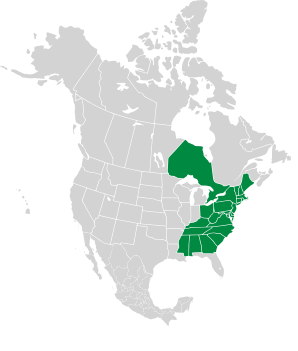
Habitats: Moist, cool, forested slopes as well as rockier, more exposed areas.
Online References:
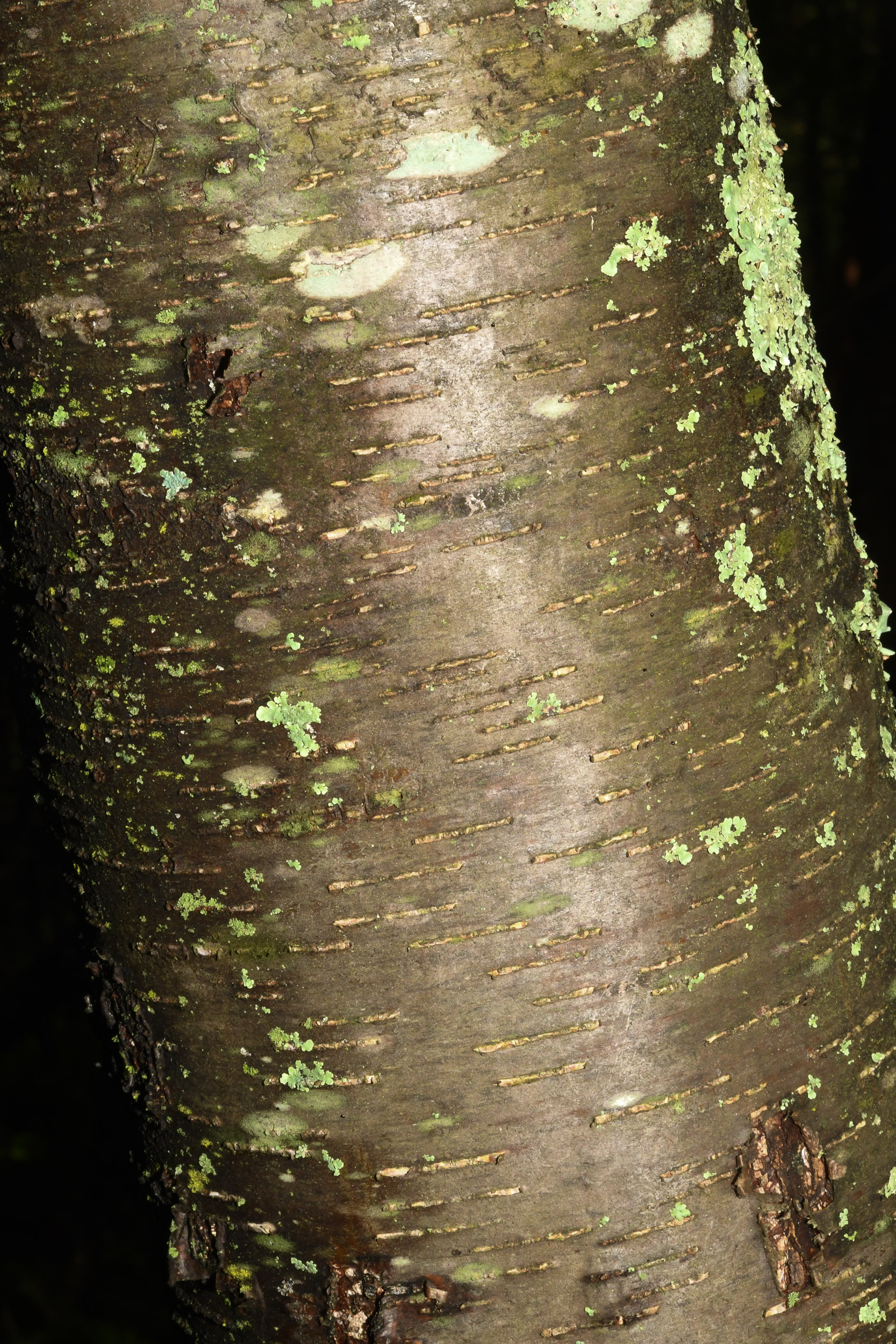
7/31/2016 · Skyline Drive, Shenandoah National Park, Virginia 
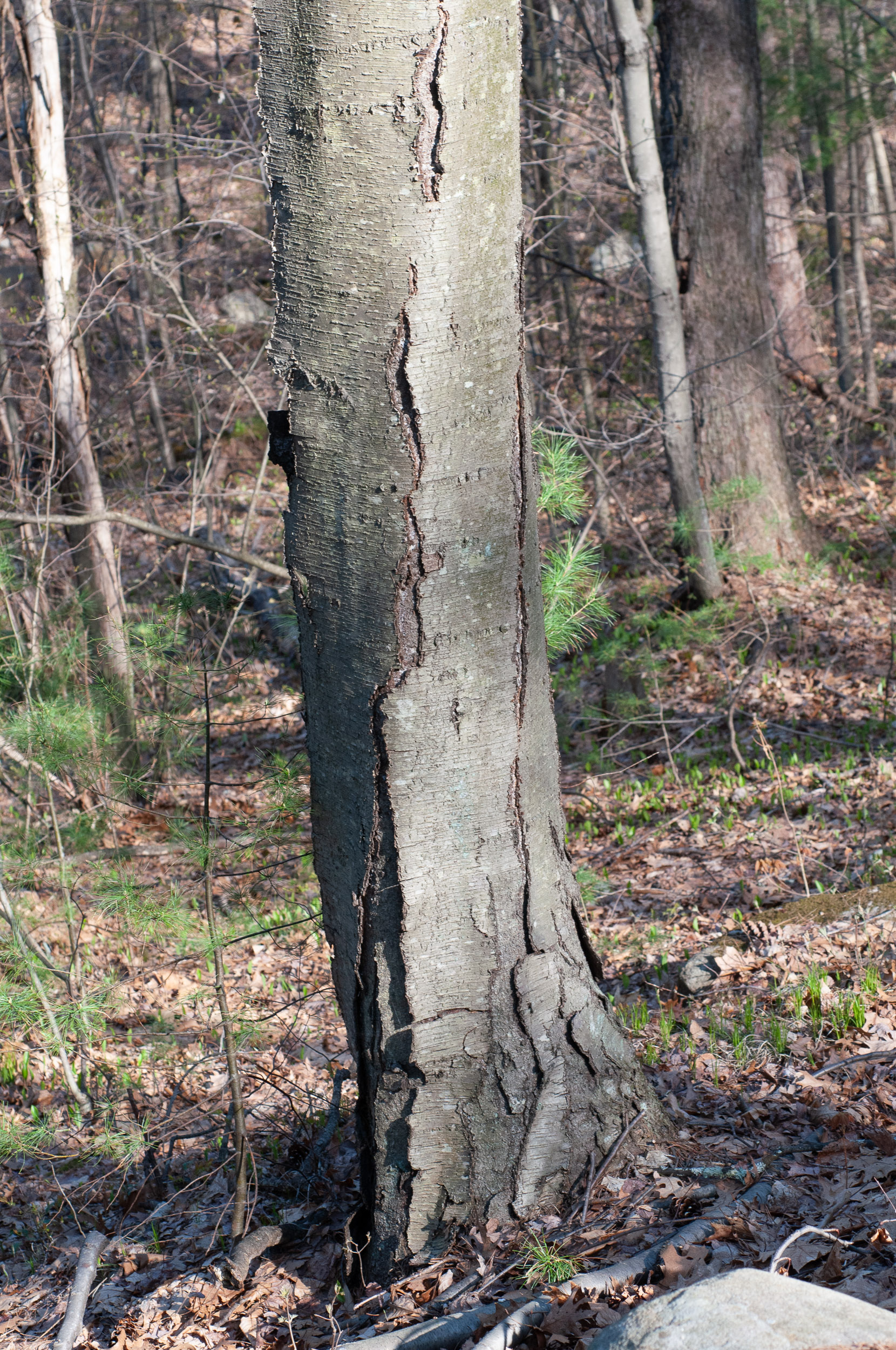
4/14/2010 · Mt. Lebanon St., Pepperell, Massachusetts 
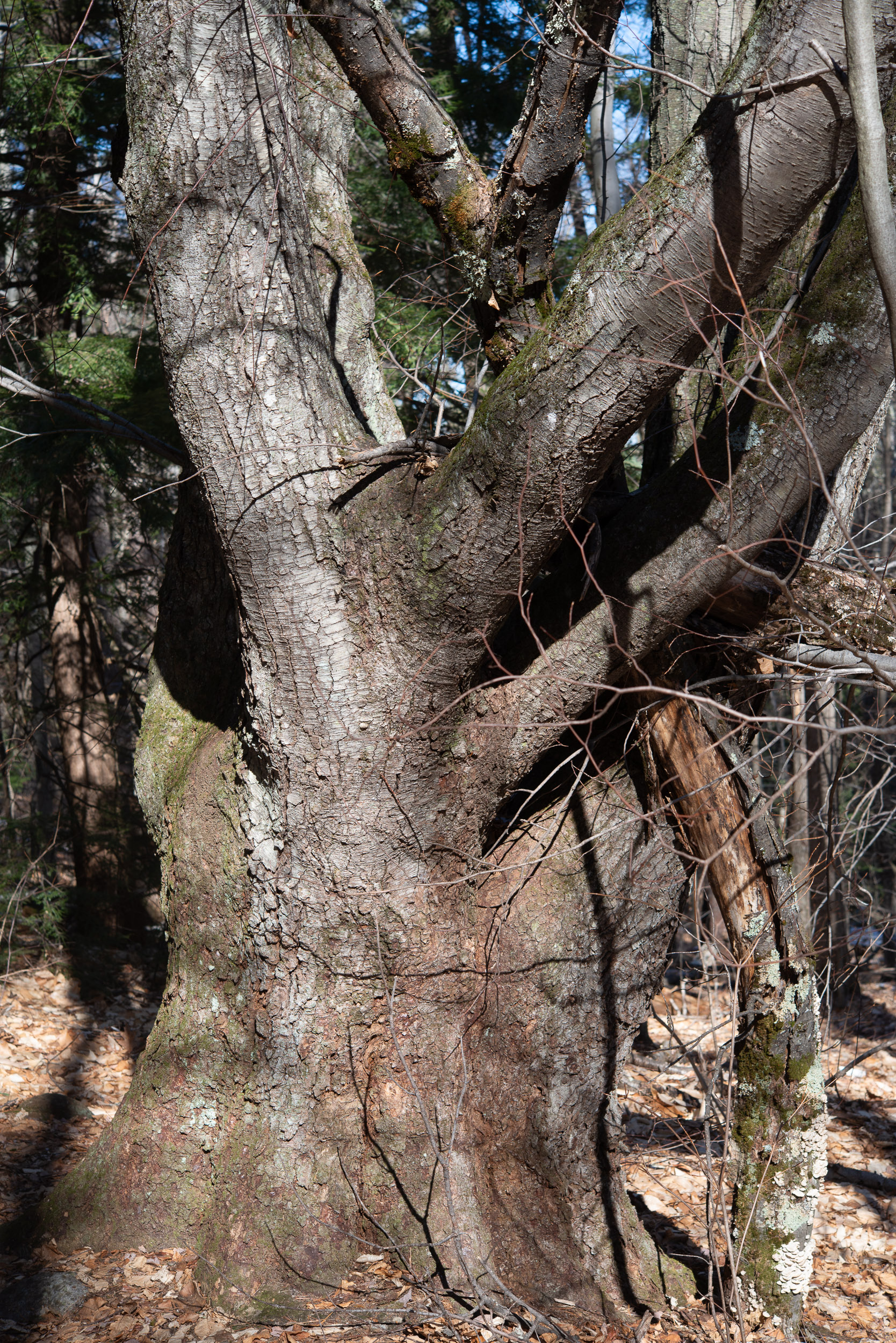
I rarely see this tree much bigger than 12 inches in diameter. This one is over three feet. · 3/6/2016 · Sheldrick Forest Preserve, Wilton, New Hampshire 

8/27/2015 · Beaver Brook Conservation Area, Hollis, New Hampshire · ≈ 15 × 10″ (37 × 25 cm) 
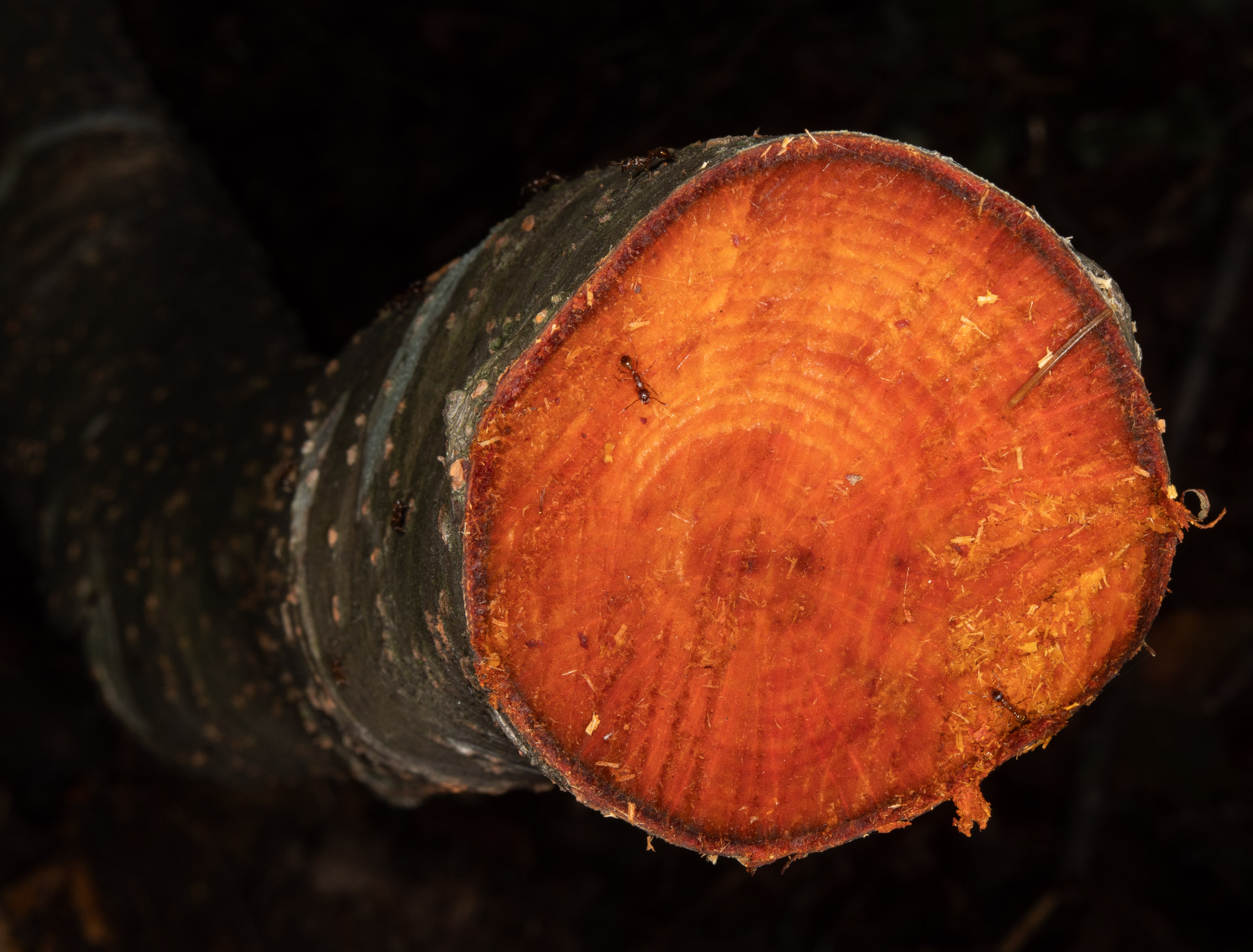
9/3/2020 · Mitchell Field, Harpswell, Maine · ≈ 6 × 4″ (14 × 10 cm)  ID is uncertain
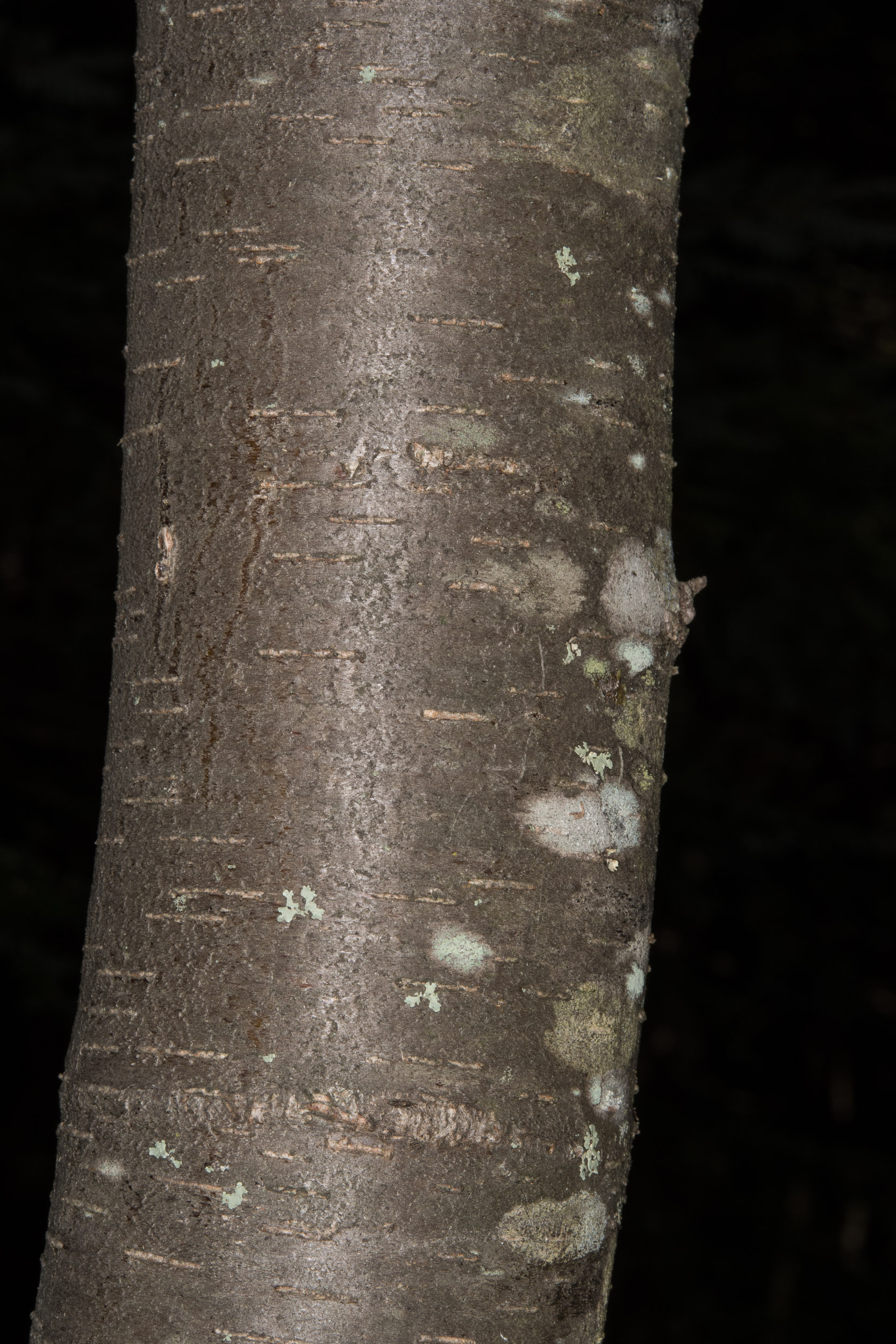
9/24/2017 · Andres Institute of Art, Big Bear Mountain, Brookline, New Hampshire · ≈ 4 × 6″ (11 × 16 cm) 
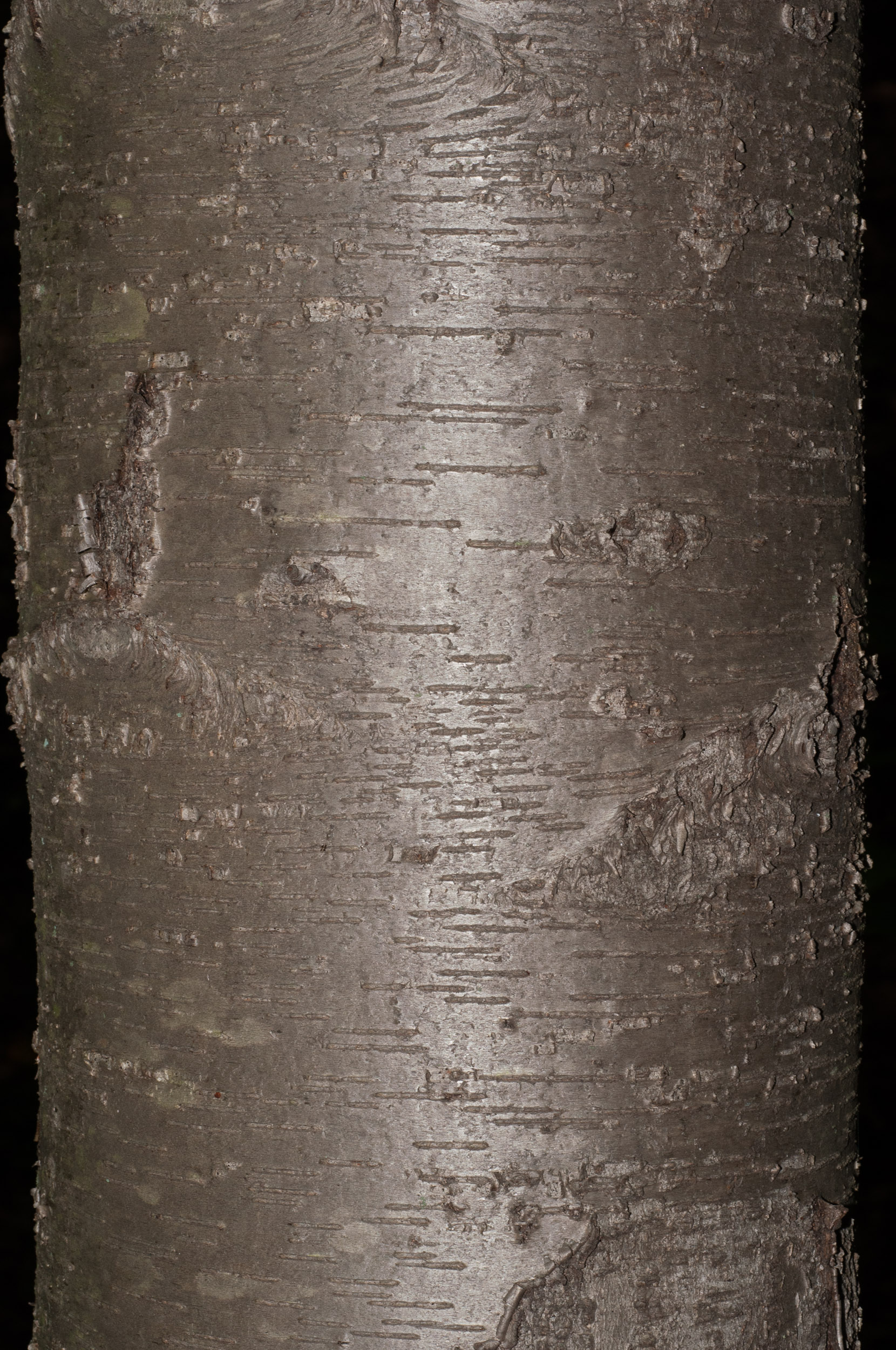
8/16/2012 · Mt. Tom State Reservation, Dynamite Trail, Holyoke, Massachusetts · ≈ 9 × 14″ (23 × 35 cm) 
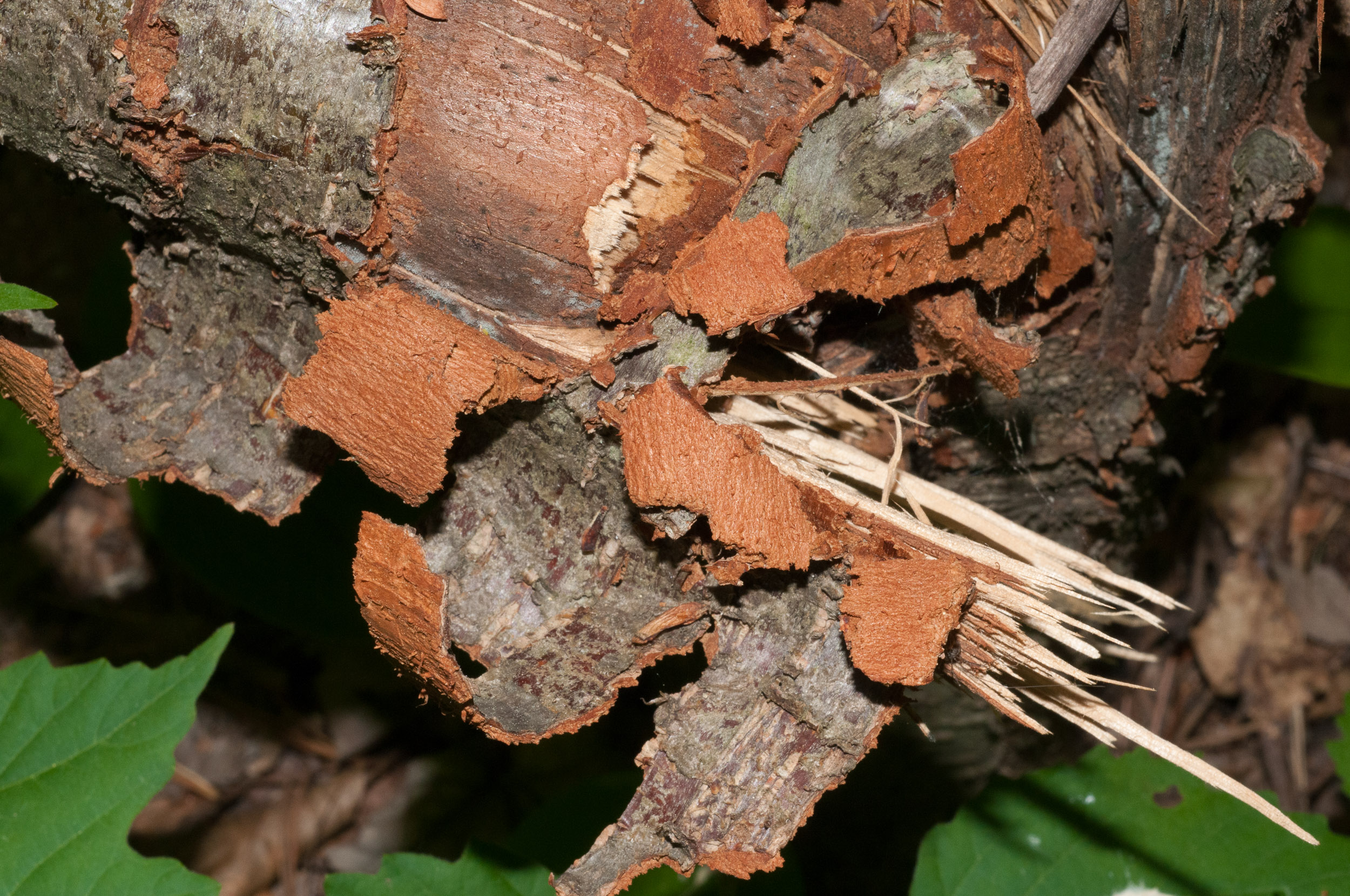
A storm-damaged tree, showing the orange color of the inner bark. · 6/7/2015 · Oak Hill, Tophet Chasm Trail, Littleton, Massachusetts · ≈ 8 × 5″ (19 × 13 cm) 
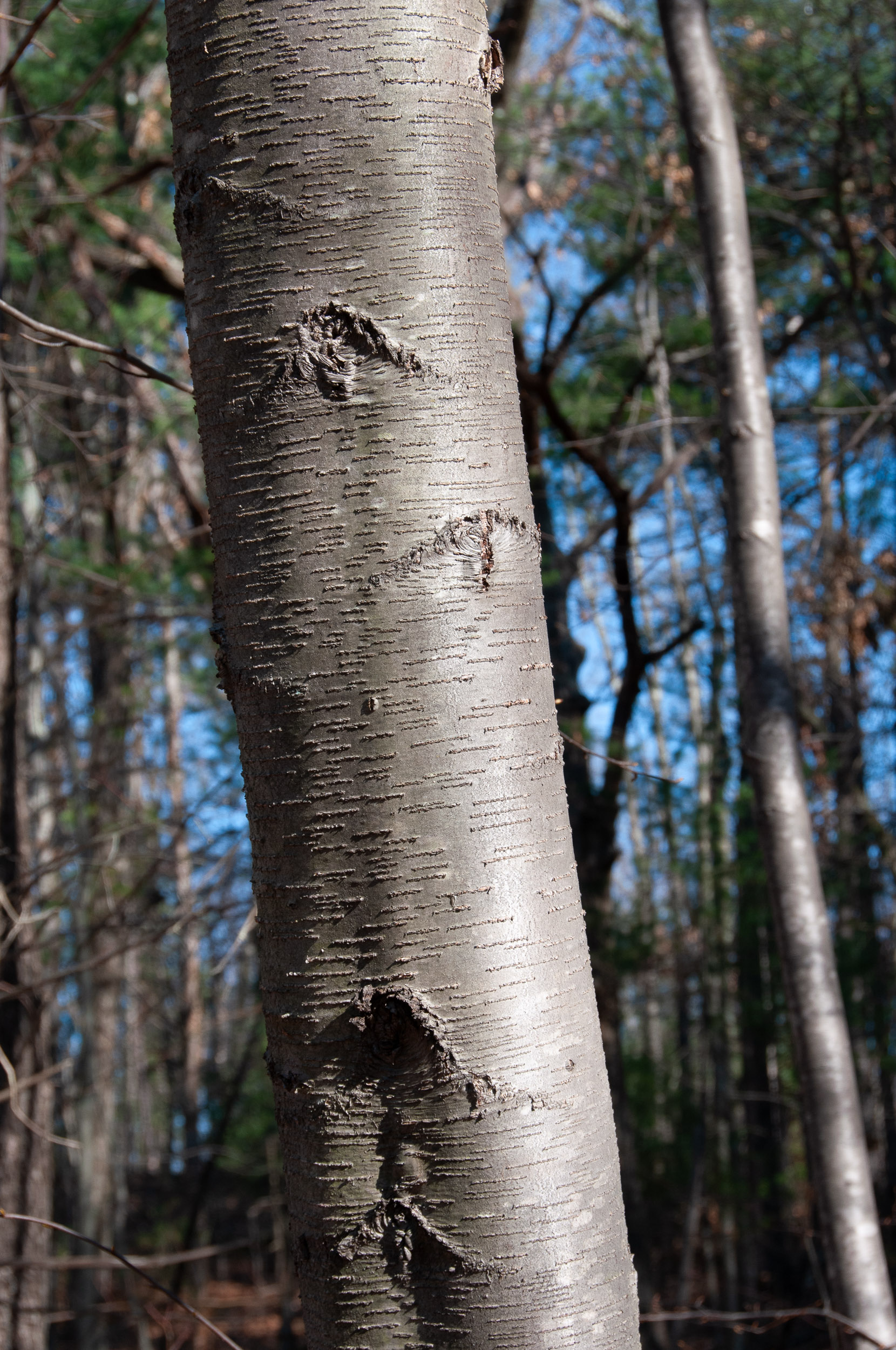
11/26/2011 · Nashua River Rail Trail, East Pepperell, Massachusetts · ≈ 1½ × 2′ (47 × 70 cm) 
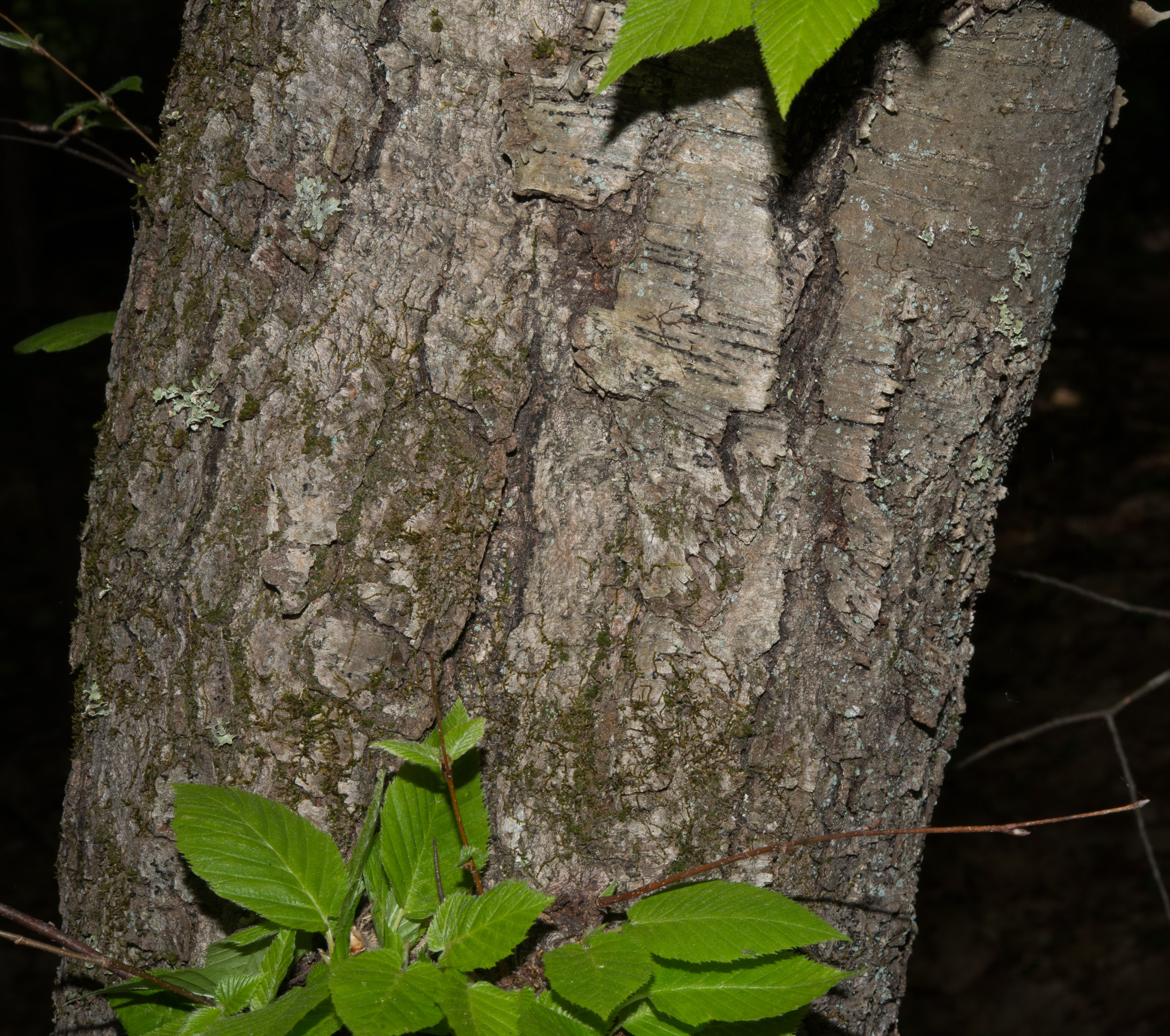
5/21/2014 · Beaver Brook Conservation Area, Hollis, New Hampshire · ≈ 11 × 10″ (28 × 25 cm) 
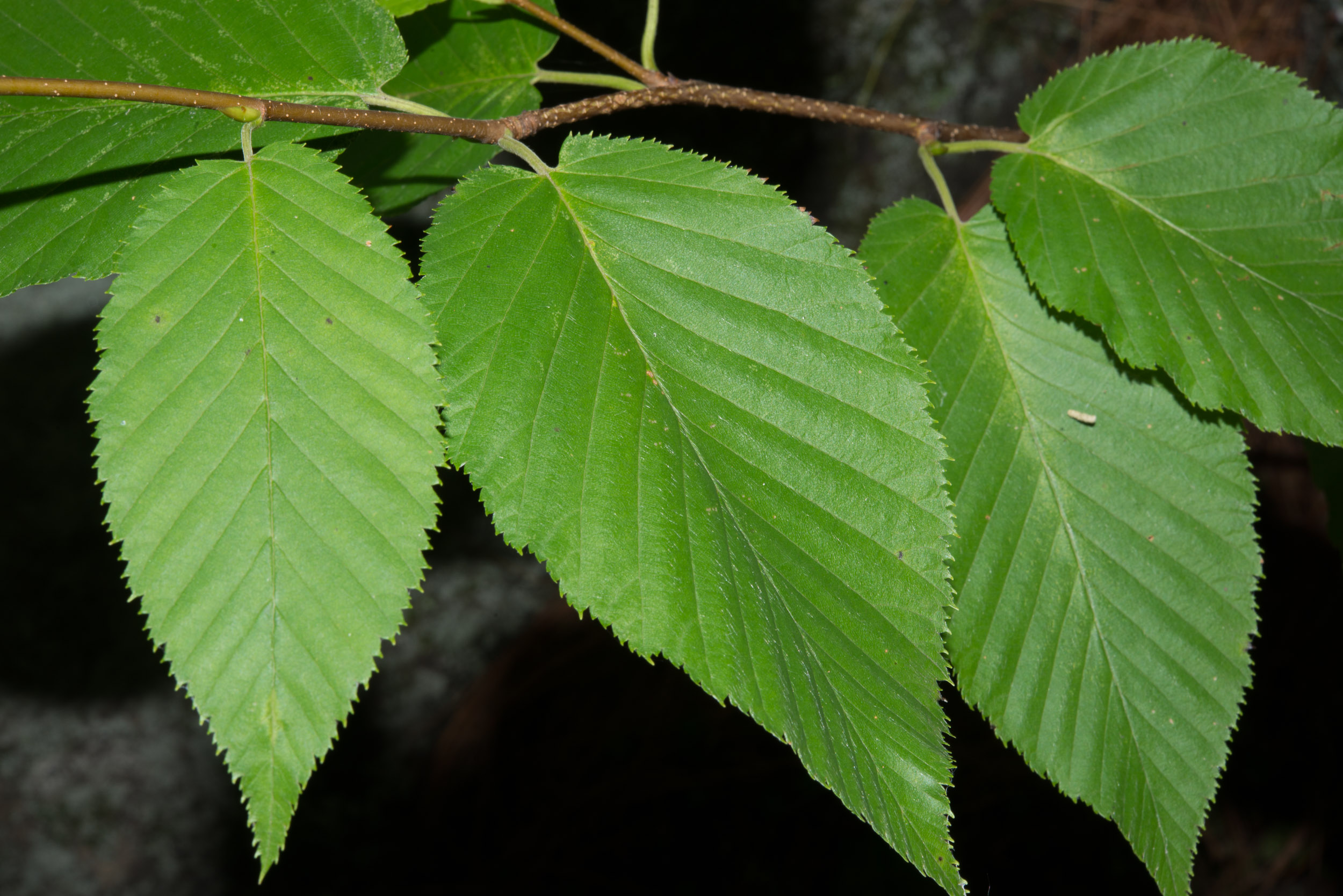
8/1/2015 · Andres Art Institute, Big Bear Mountain · ≈ 9 × 6″ (22 × 15 cm) 
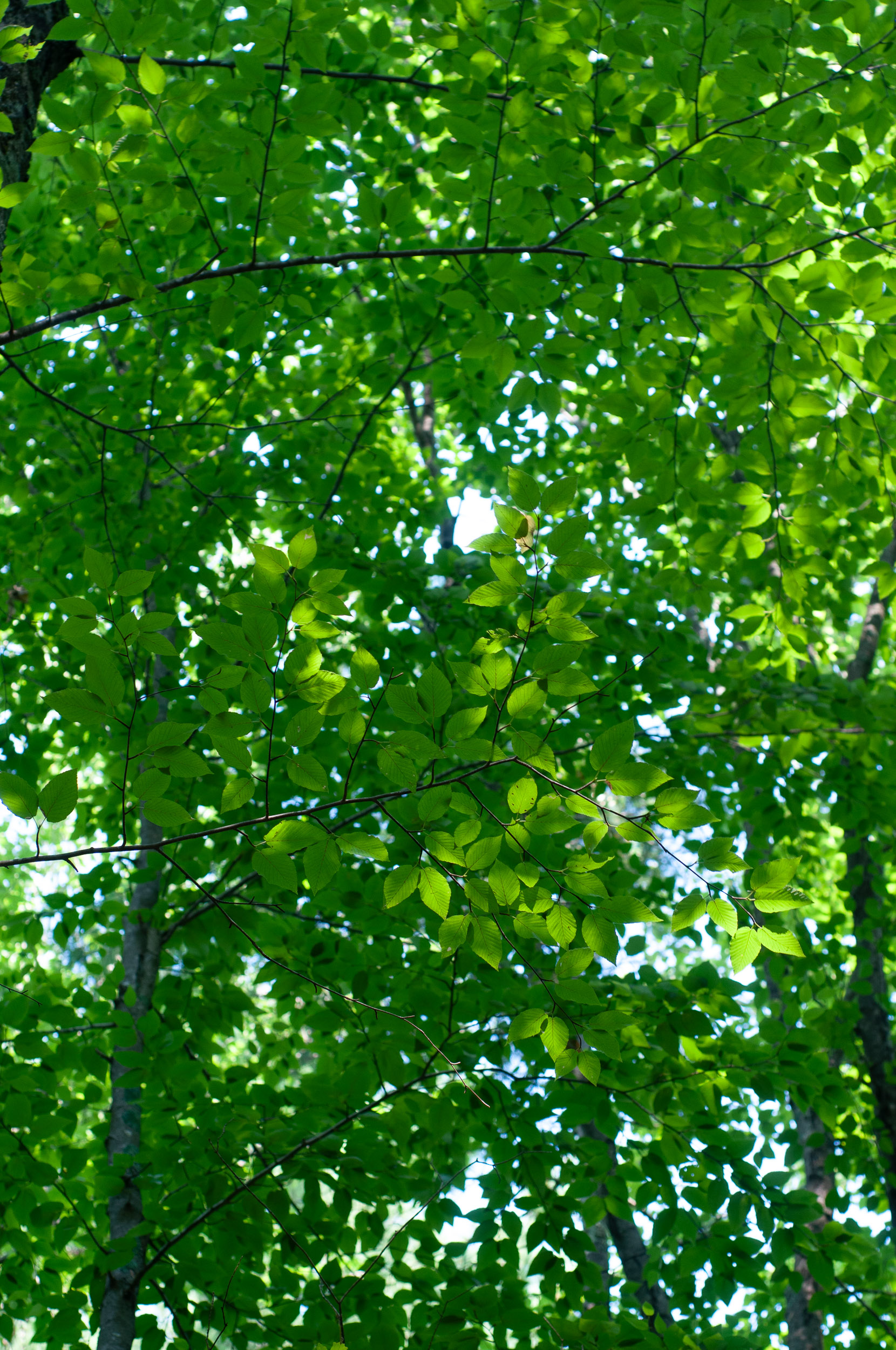
8/9/2012 · Big Tree Trail, Beaver Brook Conservation Area, Hollis, New Hampshire 

LAOWA Venus Lens Experiments · 2/18/2016 · Big Tree/Porcupine Trail, Beaver Brook Conservation Area, Hollis, New Hampshire 
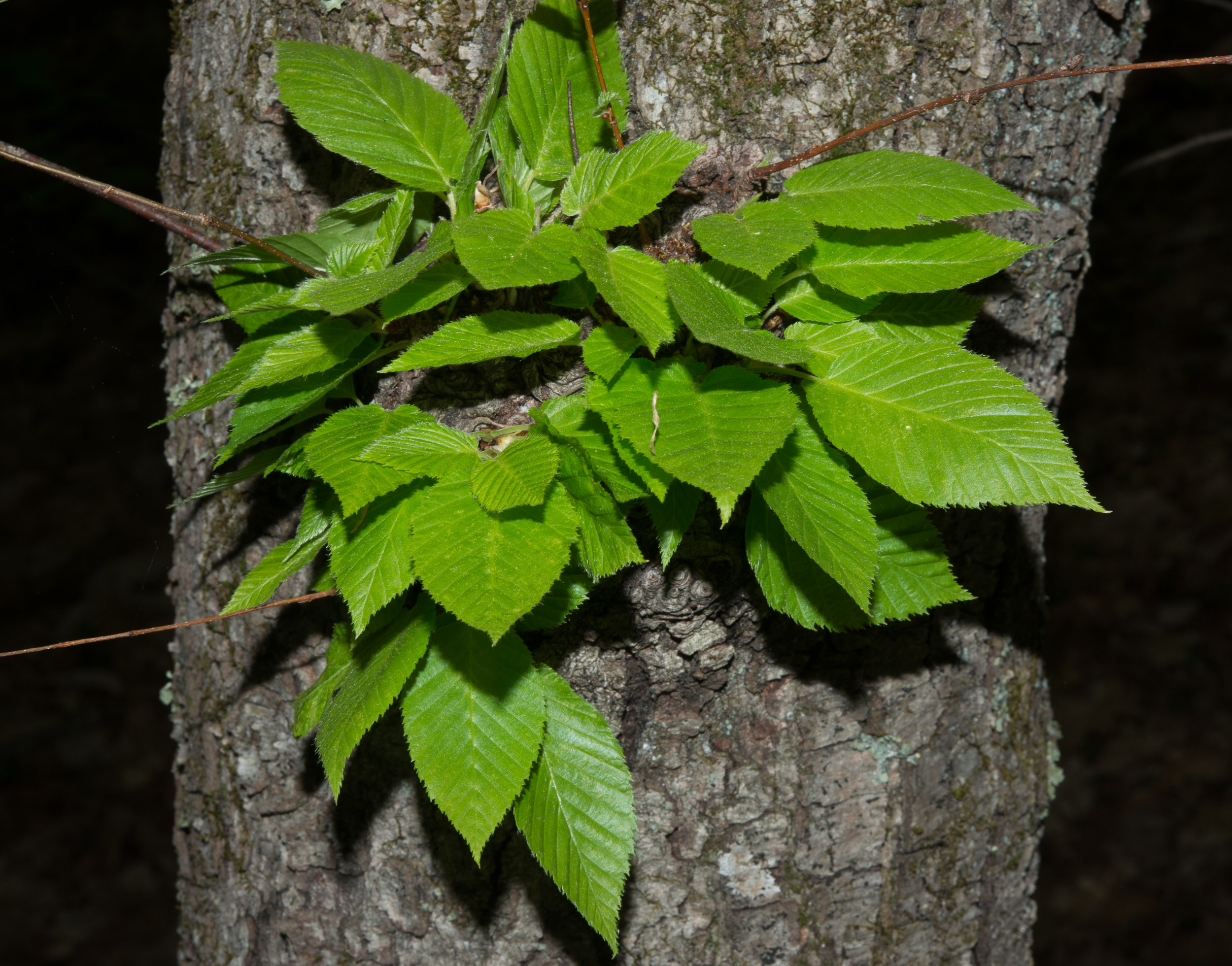
5/21/2014 · Beaver Brook Conservation Area, Hollis, New Hampshire · ≈ 11 × 8″ (27 × 21 cm) 
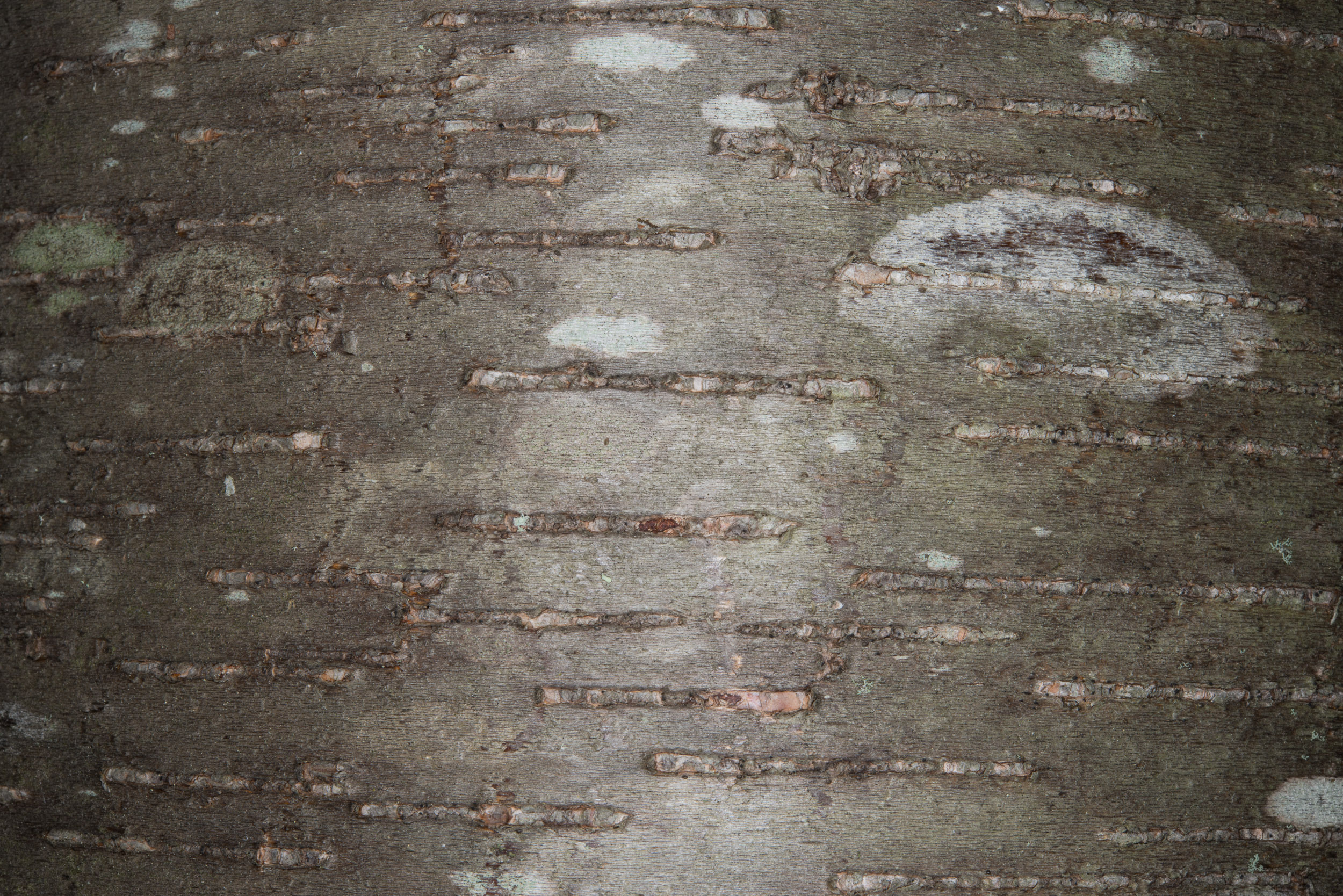
We think of trees as oxygen producers, but they also need some, which they absorb through these lenticels, horizontal pores that permit gas excahnge. · 6/18/2015 · Beaver Brook Conservation Area, Hollis, New Hampshire · ≈ 7 × 4½″ (18 × 12 cm) 
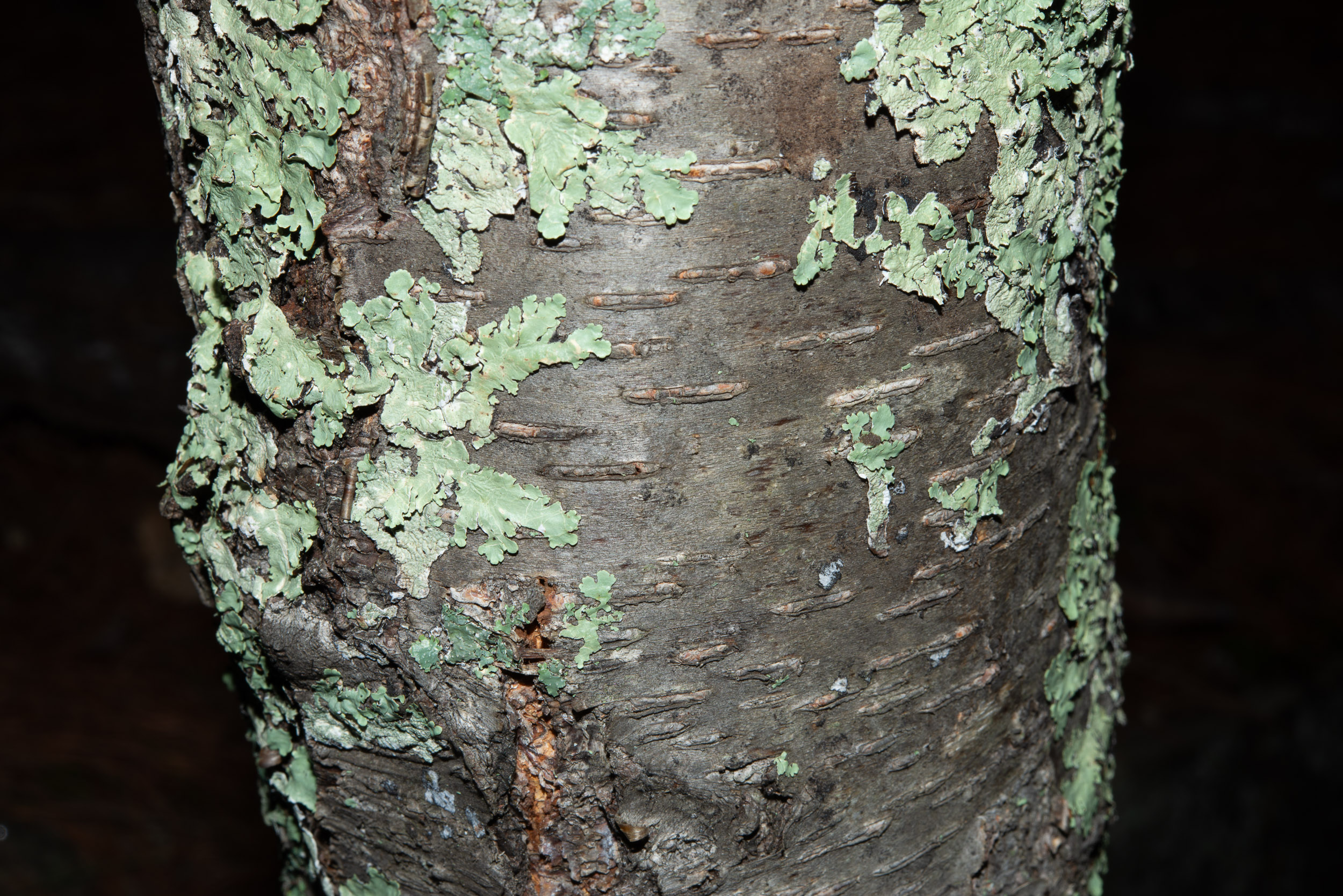
8/1/2015 · Andres Art Institute, Big Bear Mountain · ≈ 8 × 5″ (19 × 13 cm) 
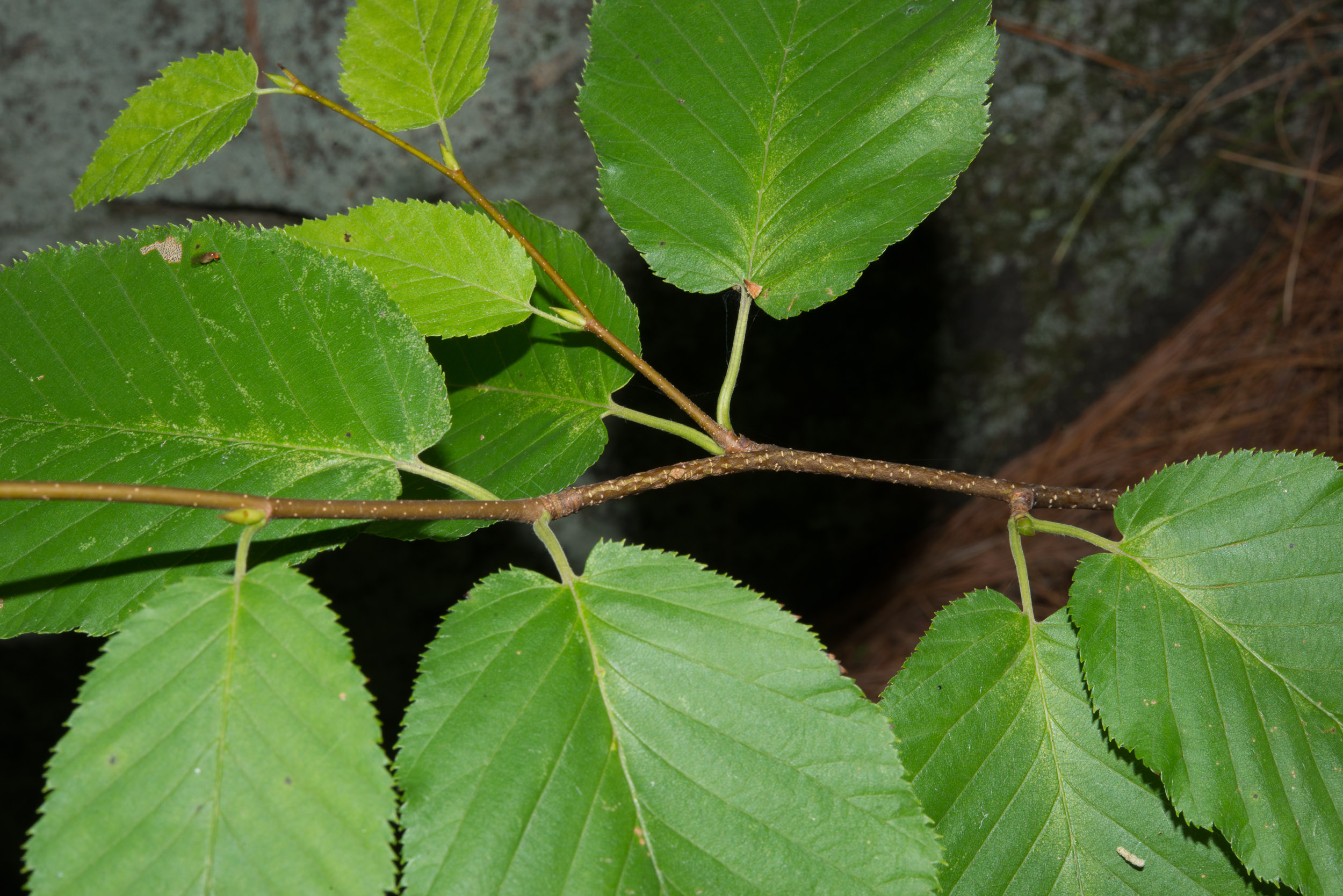
8/1/2015 · Andres Art Institute, Big Bear Mountain · ≈ 9 × 6″ (23 × 16 cm) 
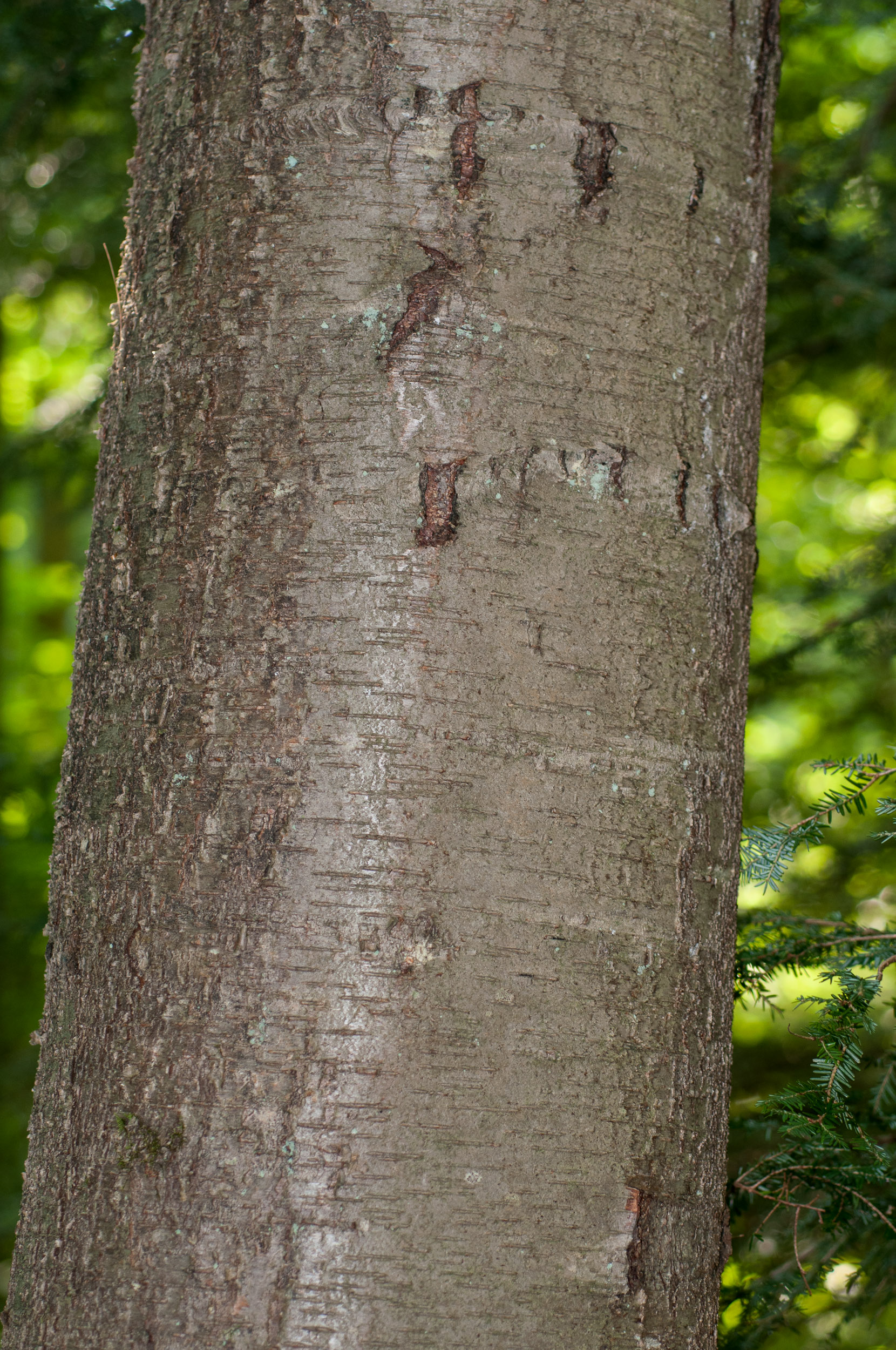
8/9/2012 · Big Tree Trail, Beaver Brook Conservation Area, Hollis, New Hampshire · ≈ 1 × 2′ (41 × 62 cm) 
| Kingdom | Plantae | Plants, but not fungi, lichens, or algae (from Stearn's Botanical Latin) |
| Subkingdom | Tracheobionta | Vascular plants—plants with a “circulatory system” for delivering water and nutrients |
| Division | Magnoliophyta | Flowering plants, also known as angiosperms |
| Class | Magnoliopsida | Dicotyledons—plants with two initial seed leaves |
| Subclass | Rosidae | Roses, legumes, proteas, dogwoods, hydrangeas, mistletoes, euphorbias, grapes, many more |
| Order | Fagales | Birch, she-oak, beech, walnut, bayberry, others |
| Family | Betulaceae | Birch family: birches, alders, hazels, hornbeams and hop-hornbeams |
| Genus | Betula | Birch |
| Species | lenta | Strong, but flexible |
Betula lenta description by Thomas H. Kent, not updated.

© FloraFinder.org. All rights reserved.