Coptis trifolia (L.) Salisb. ssp. groenlandica (Oeder) Hultén
Coptis trifolia (L.) Salisb. var. groenlandica (Oeder) Fassett
Coptis trifolia (L.) Salisb.
Goldthread, threeleaf goldthread, canker-root, tisavoyanne
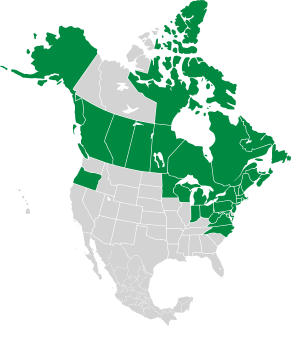
Threeleaf goldthread is native to eastern Eurasia, Greenland, Saint Pierre and Miquelon, Canada, and the United States.
Plants: These plants hug the forest floor, at 3–6″ (7.6–15 cm) in height. The roots of these plants are long and golden yellow, hence the “goldthread” part of the name.
Leaves: Each plant is comprised of a single glossy evergreen leaf, though it is so deeply lobed that it looks like three distinct leaves, hence the “threeleaf” part of the name. The three leaves together form a rough rounded triangle. Leaf tips are scalloped. The leaf emerges on a very short stem.
Flowers: Each plant produces a single, rather beautiful flower atop a long, thin stem. It is ¼–½″ (8.3–12 mm) in diameter. The things that look like five to seven white petals are actually sepals. Inside the sepals, not looking the least bit like petals, are 4 to 7 tiny yellow petals, shaped like diminutive spoons, with a drop of nectar in each spoon. There are many white-tipped threadlike stamens. Flowers appear in May, and are easy to miss, since they don’t persist for very long.
Fruits: A small array of 4-7 pods, each ¼″ (8.5 mm) long, reminiscent of a candelabra.
Habitats: Cool, moist habitats in pine and spruce forests.
Medical: Indigenous peoples and colonists chewed the bitter yellow roots of these plants to relieve canker sores, hence the common name canker-root. The Physician’s Desk Reference for Herbal Medicines lists treatment of digestive disorders among its unproven uses.
Online References:
References:
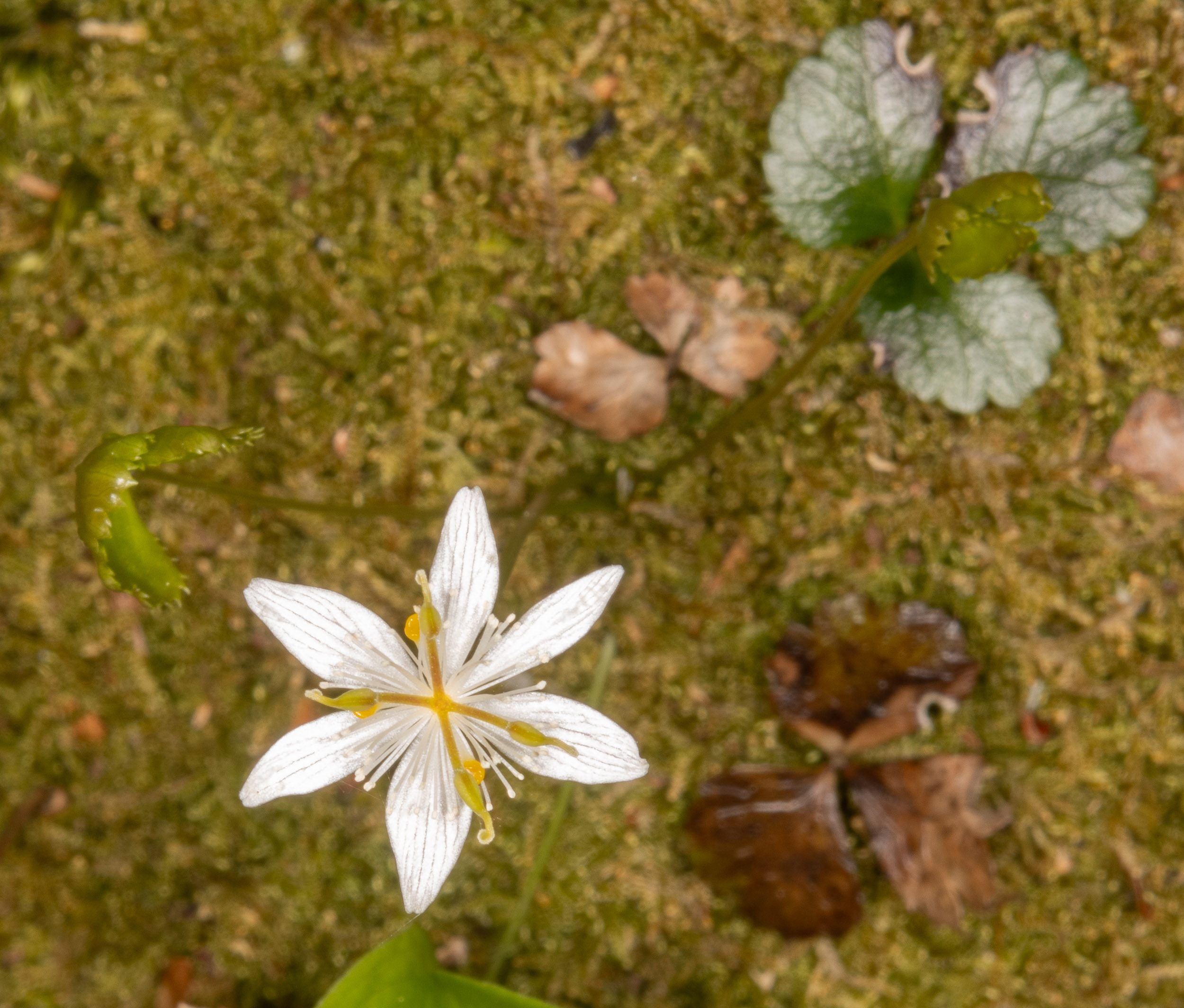
5/7/2021 · Long Reach Preserve, Harpswell, Maine · ≈ 2½ × 2″ (7 × 6 cm) 
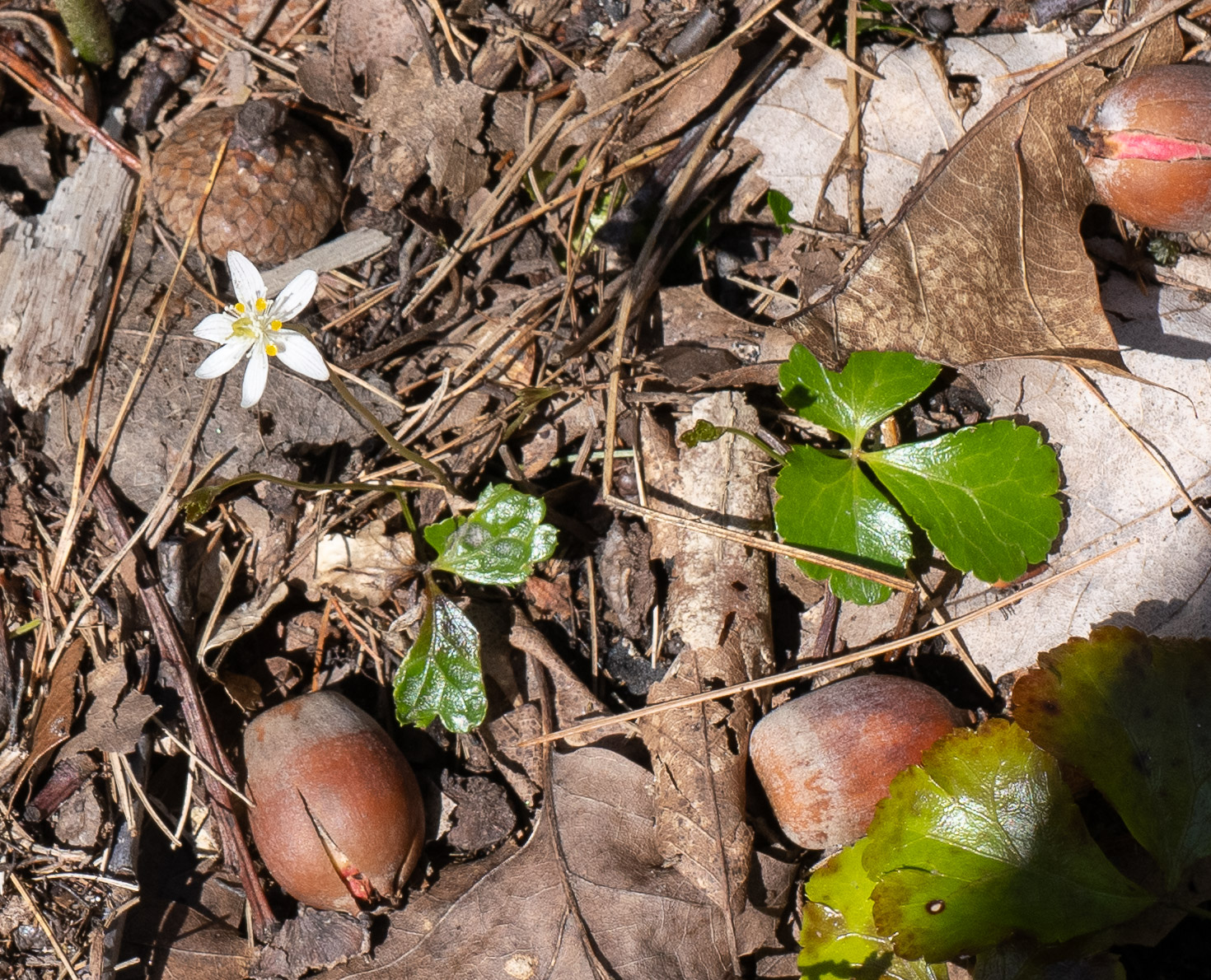
5/6/2023 · Higgins Mountain, Georgetown, Maine 
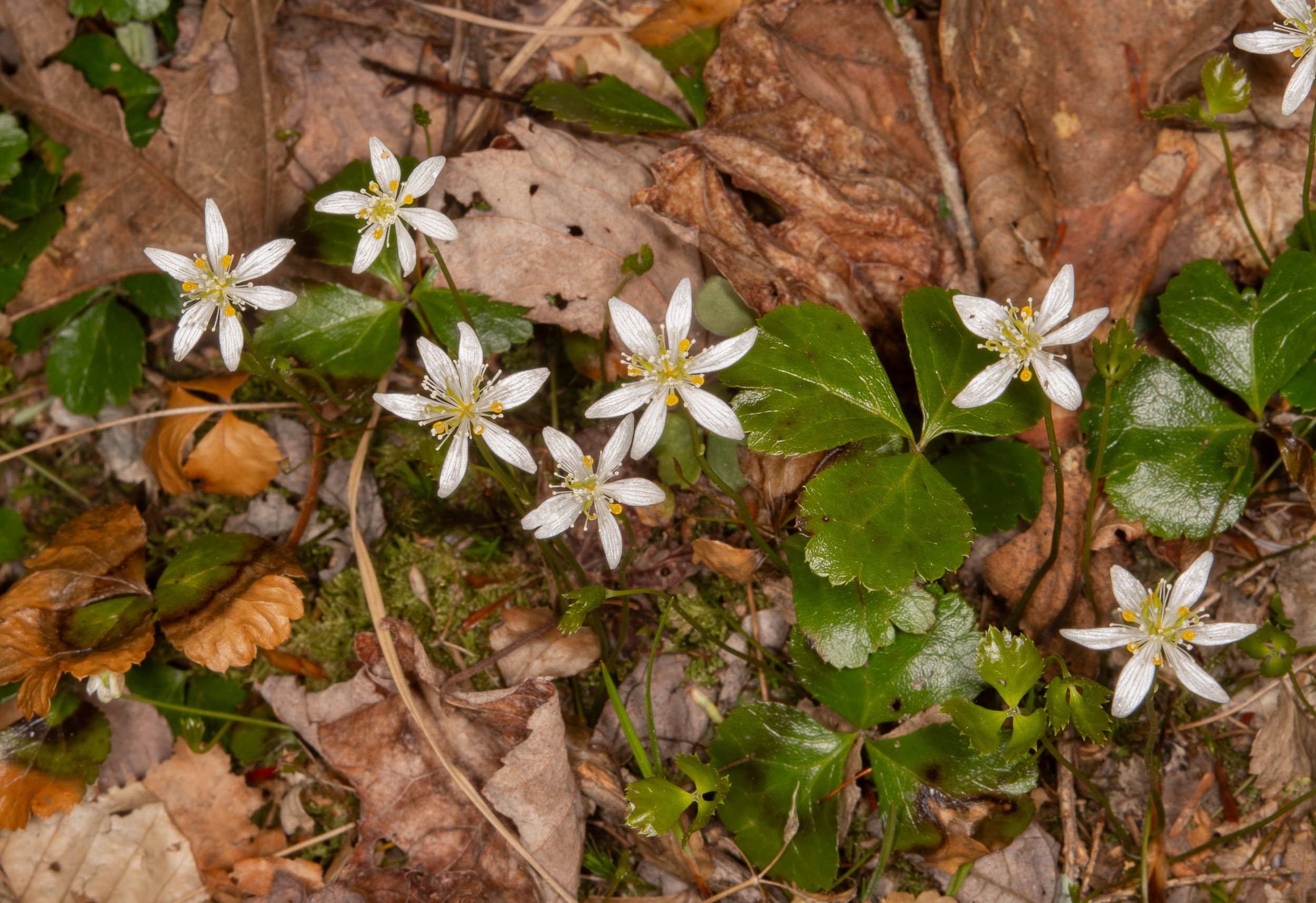
5/7/2021 · Long Reach Preserve, Harpswell, Maine · ≈ 6 × 4″ (16 × 11 cm) 
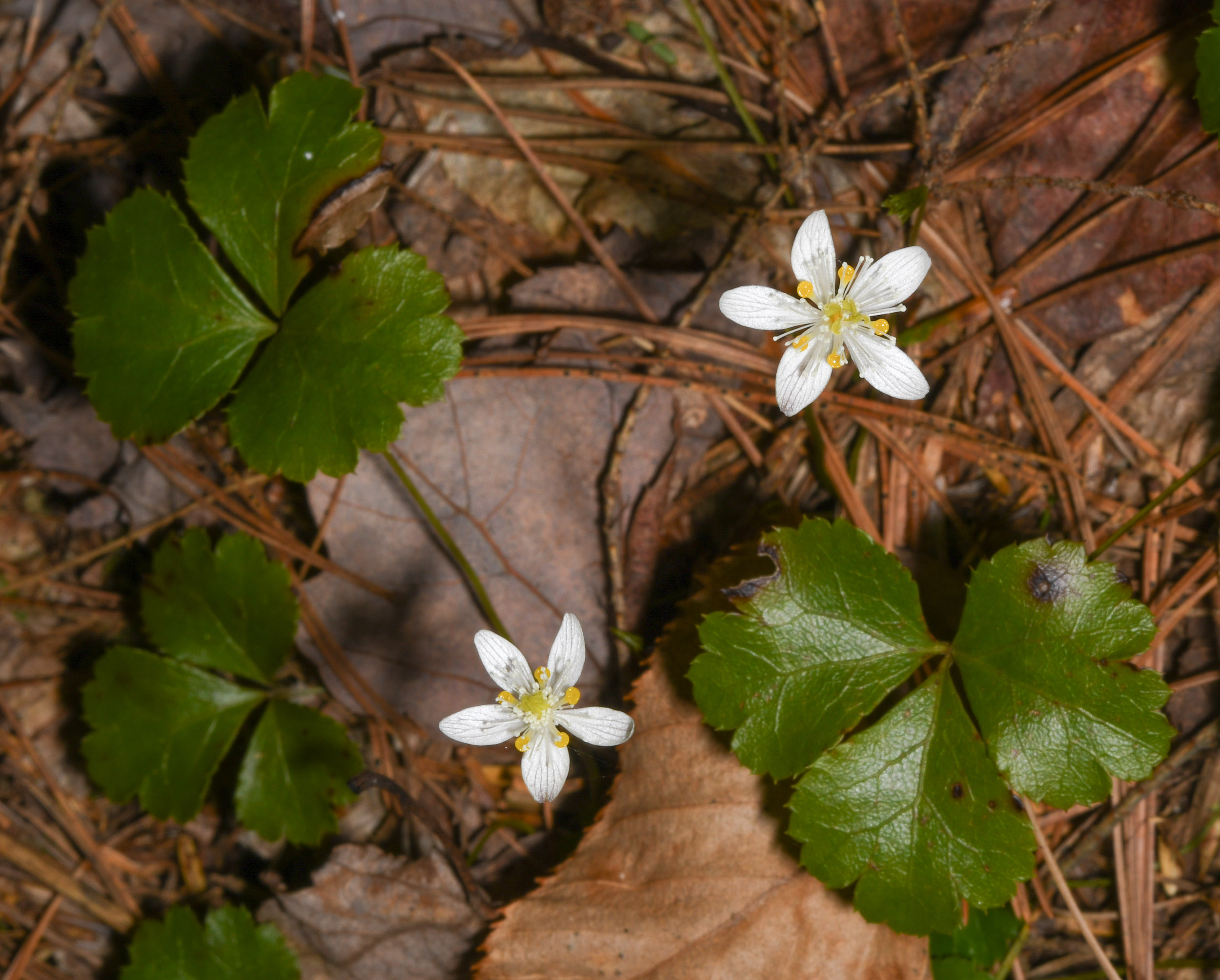
5/10/2016 · Old Long Loop, Beaver Brook Cons, Hollis, New Hampshire 

5/3/2025 · Merritt Mountain, Phippsburg, Maine · ≈ 5 × 3″ (12 × 8.5 cm) 
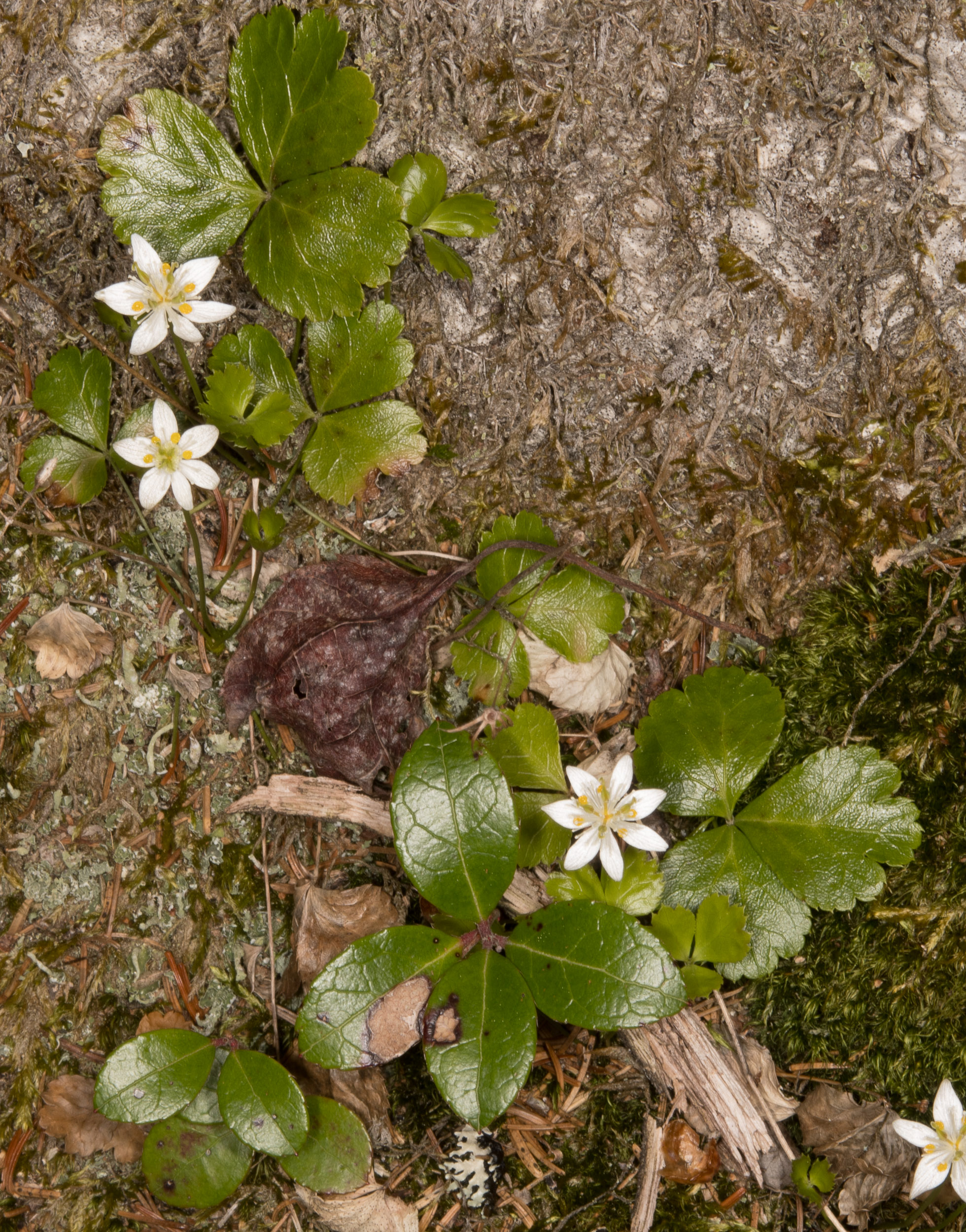
5/11/2021 · Hackett and Minot Trails, Harpswell, Maine · ≈ 5 × 6″ (13 × 16 cm) 

4/27/2016 · Pearl Hill State Park, Townsend, Massachusetts 
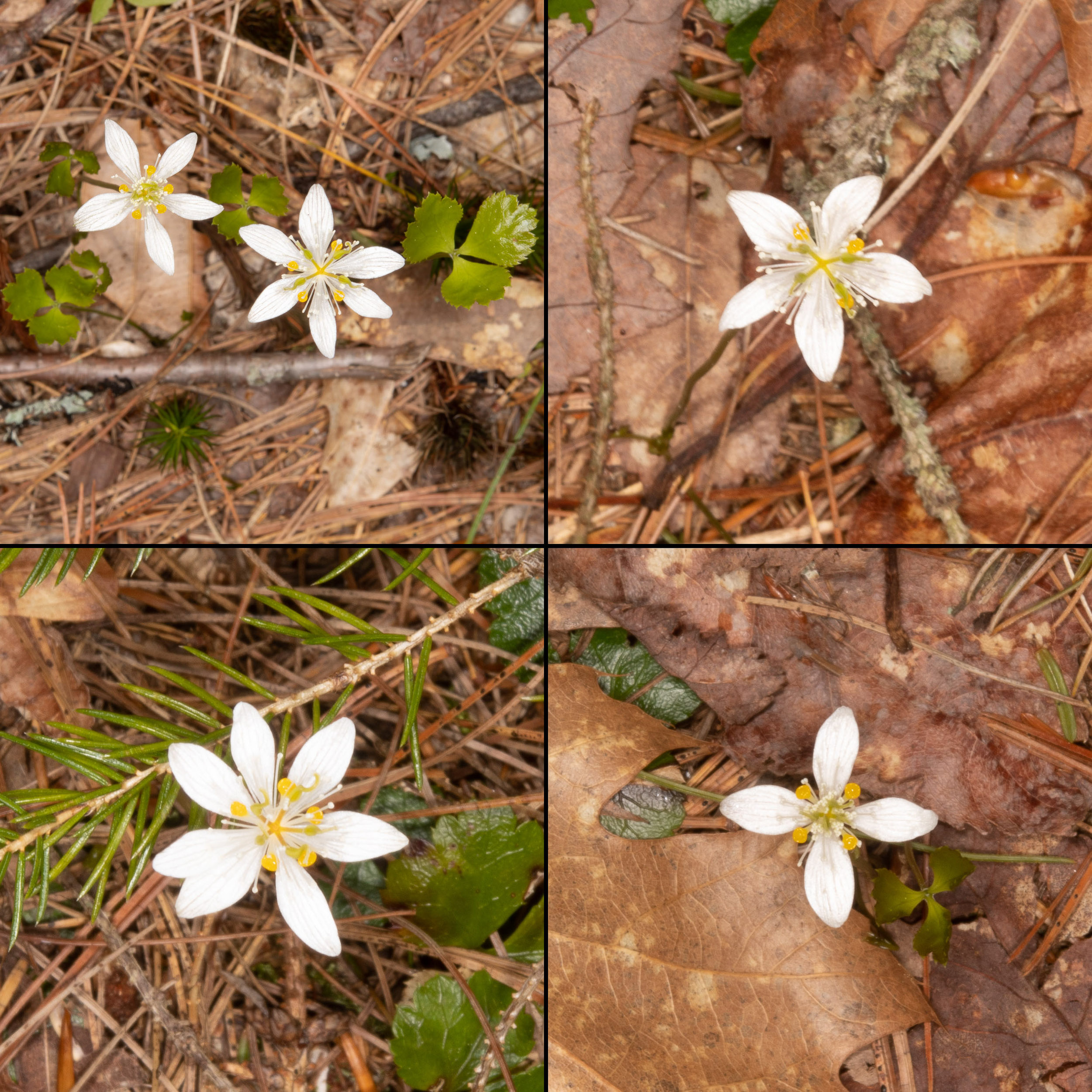
Goldthread flowers usually have six petals. Usually. · 5/10/2021 · Gamble and Kennebec Trails, Berry Woods Preserve, Georgetown, Maine 
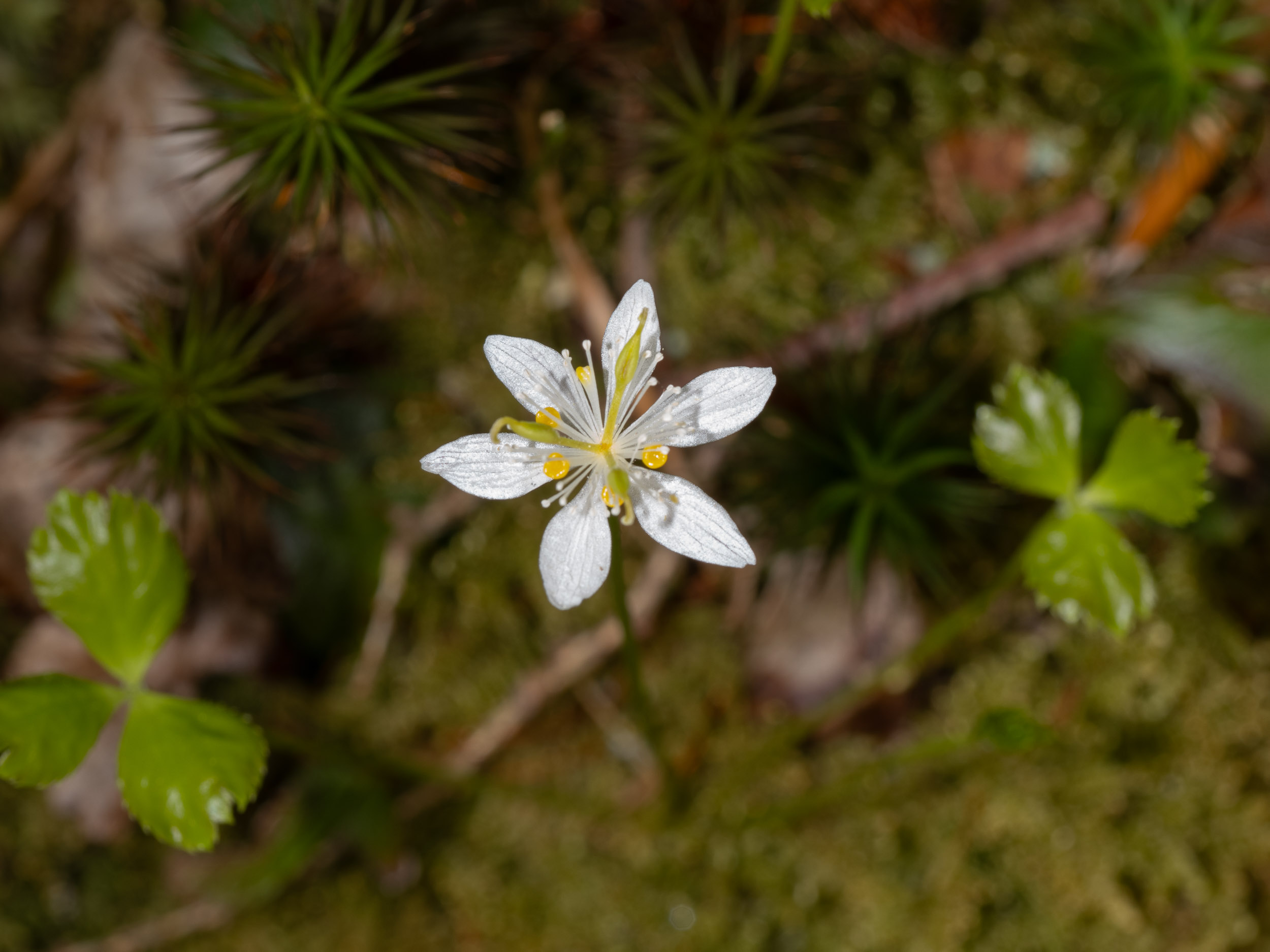
5/12/2023 · Long Reach Preserve, Harpswell, Maine 
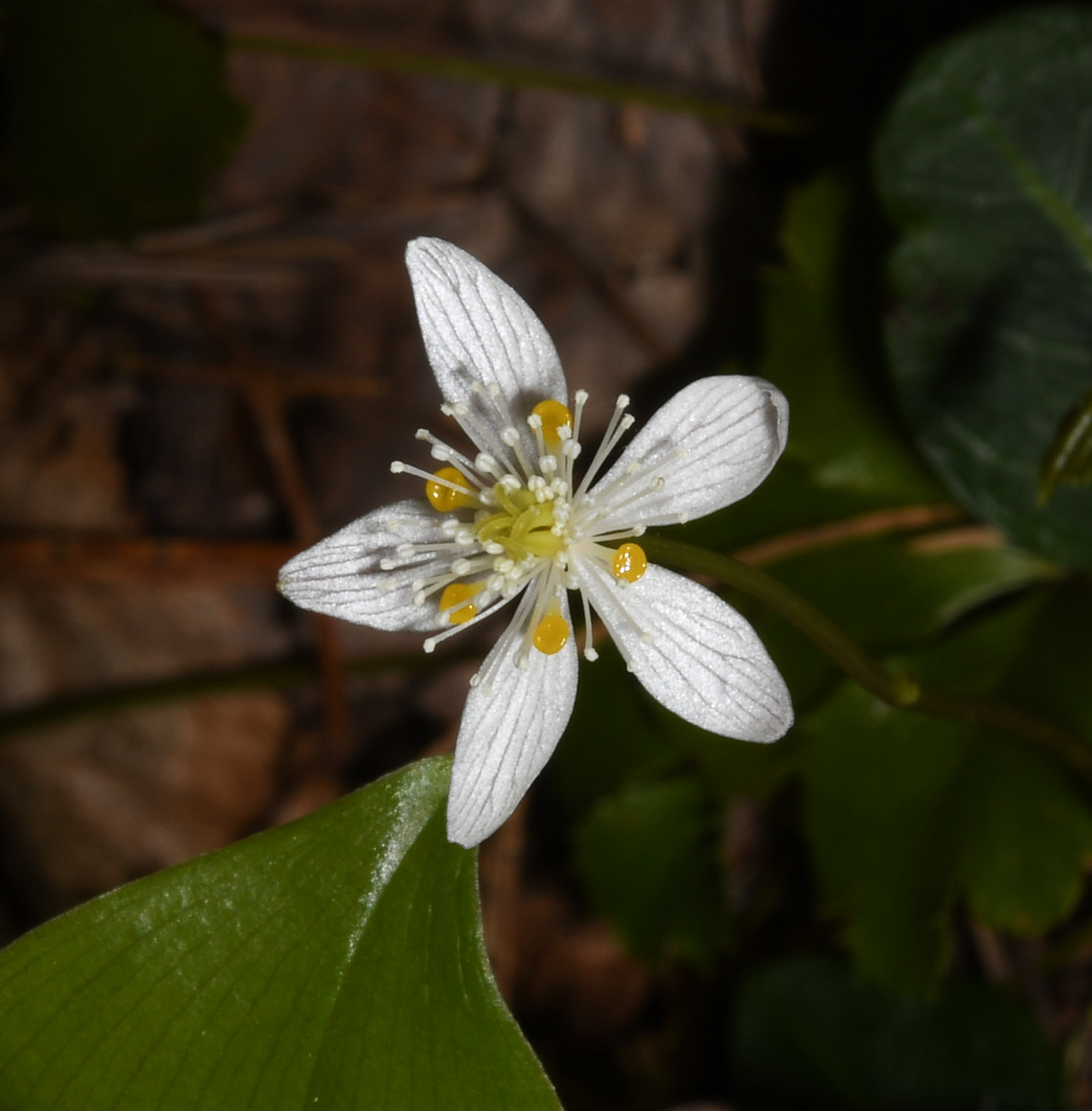
5/10/2016 · Old Long Loop, Beaver Brook Cons, Hollis, New Hampshire 
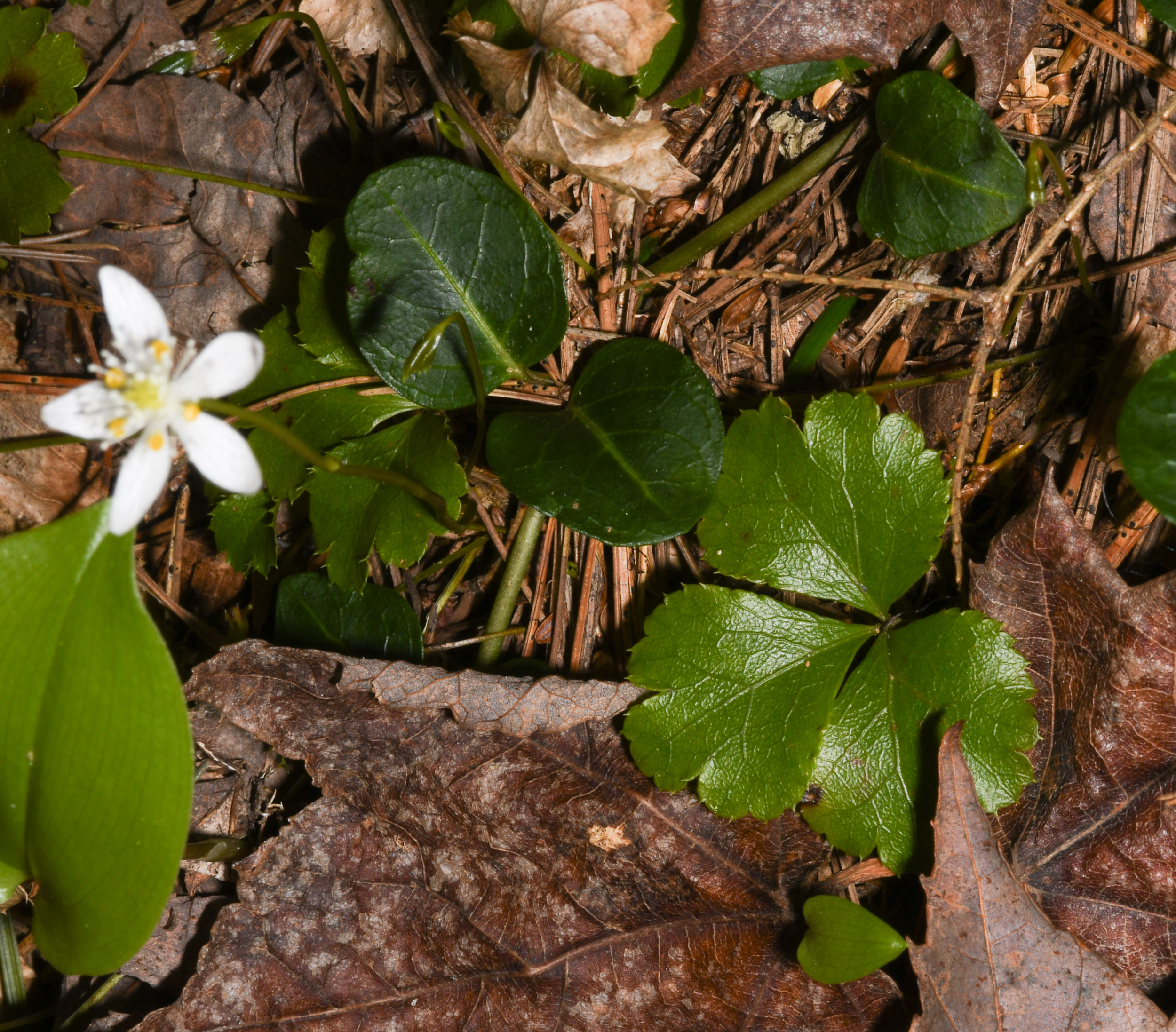
5/10/2016 · Old Long Loop, Beaver Brook Cons, Hollis, New Hampshire 
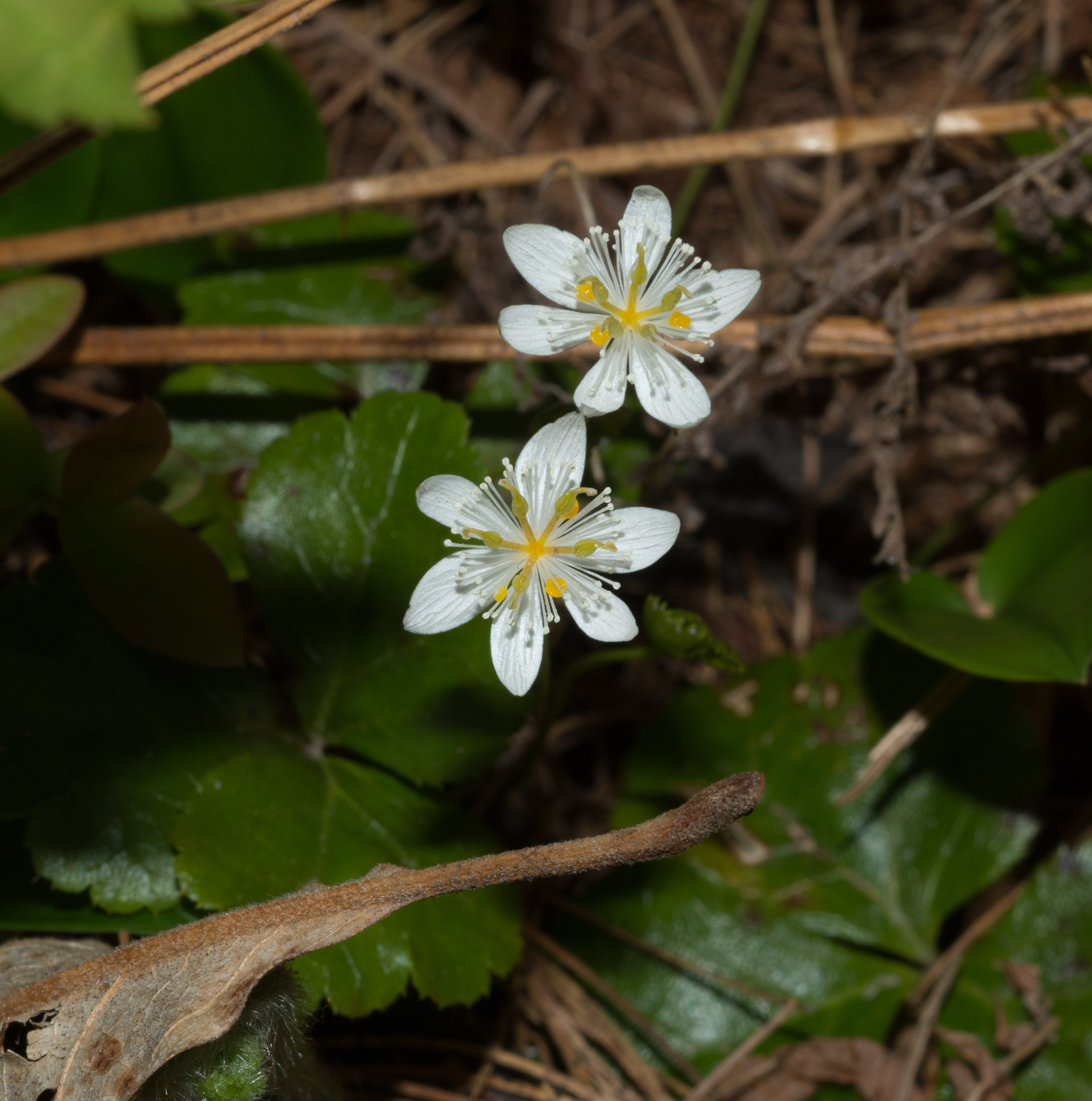
5/7/2013 · J. Harry Rich Dirt Road, Groton, Massachusetts · ≈ 3½ × 3½″ (9 × 9.1 cm) 
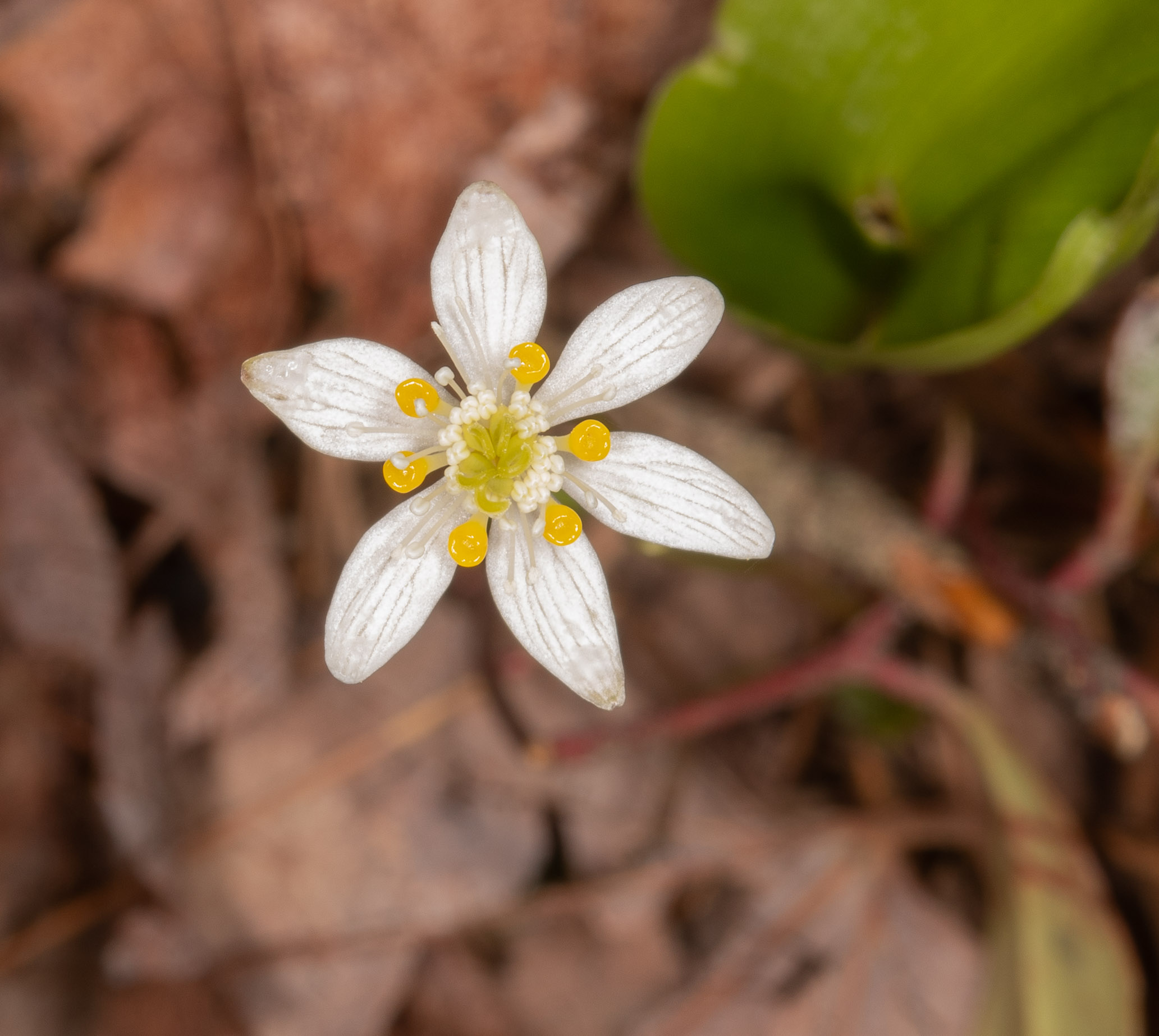
5/2/2021 · Maquoit Bay, Brunswick, Maine · ≈ 1¾ × 1½″ (4.7 × 4.2 cm) 
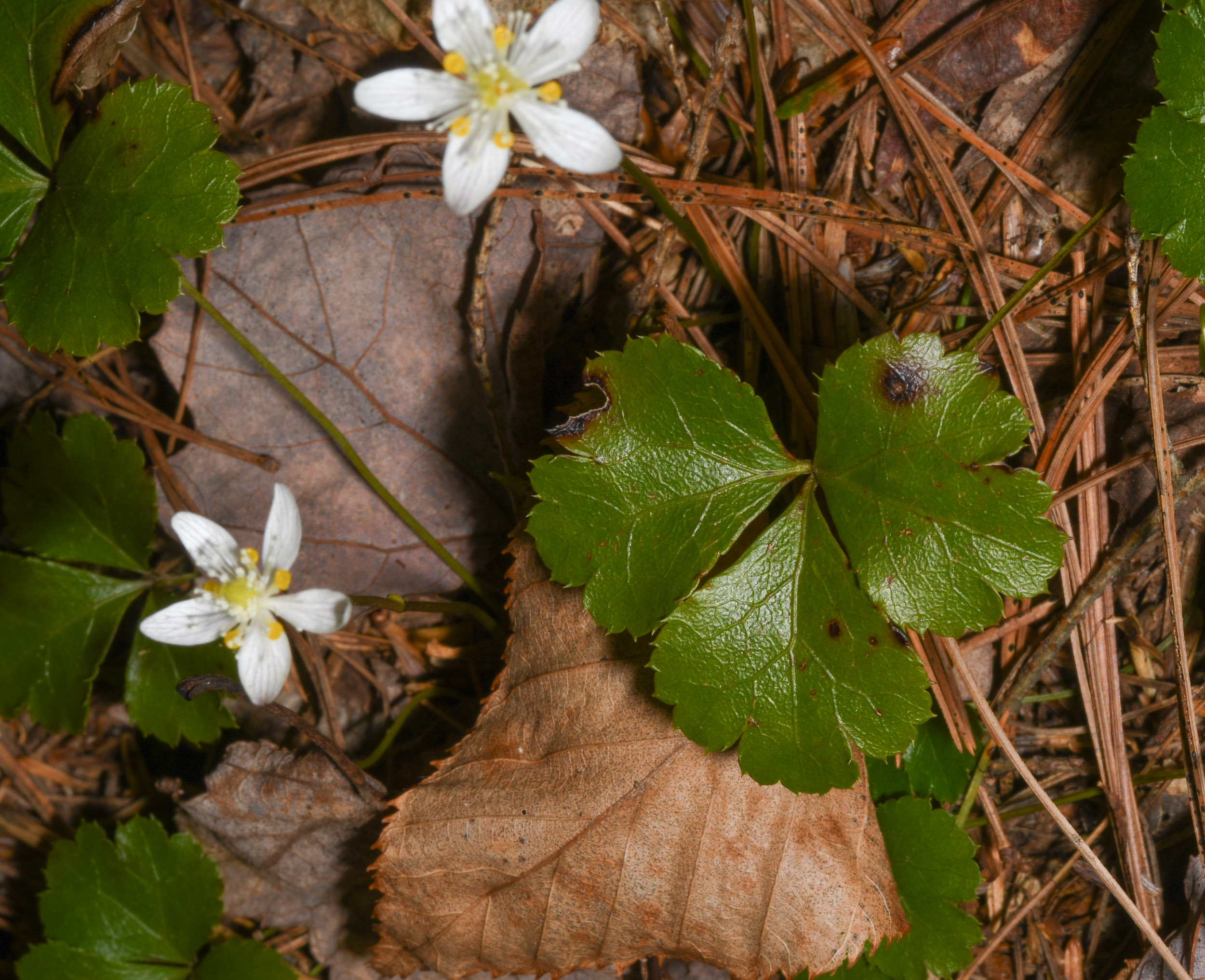
5/10/2016 · Old Long Loop, Beaver Brook Cons, Hollis, New Hampshire 
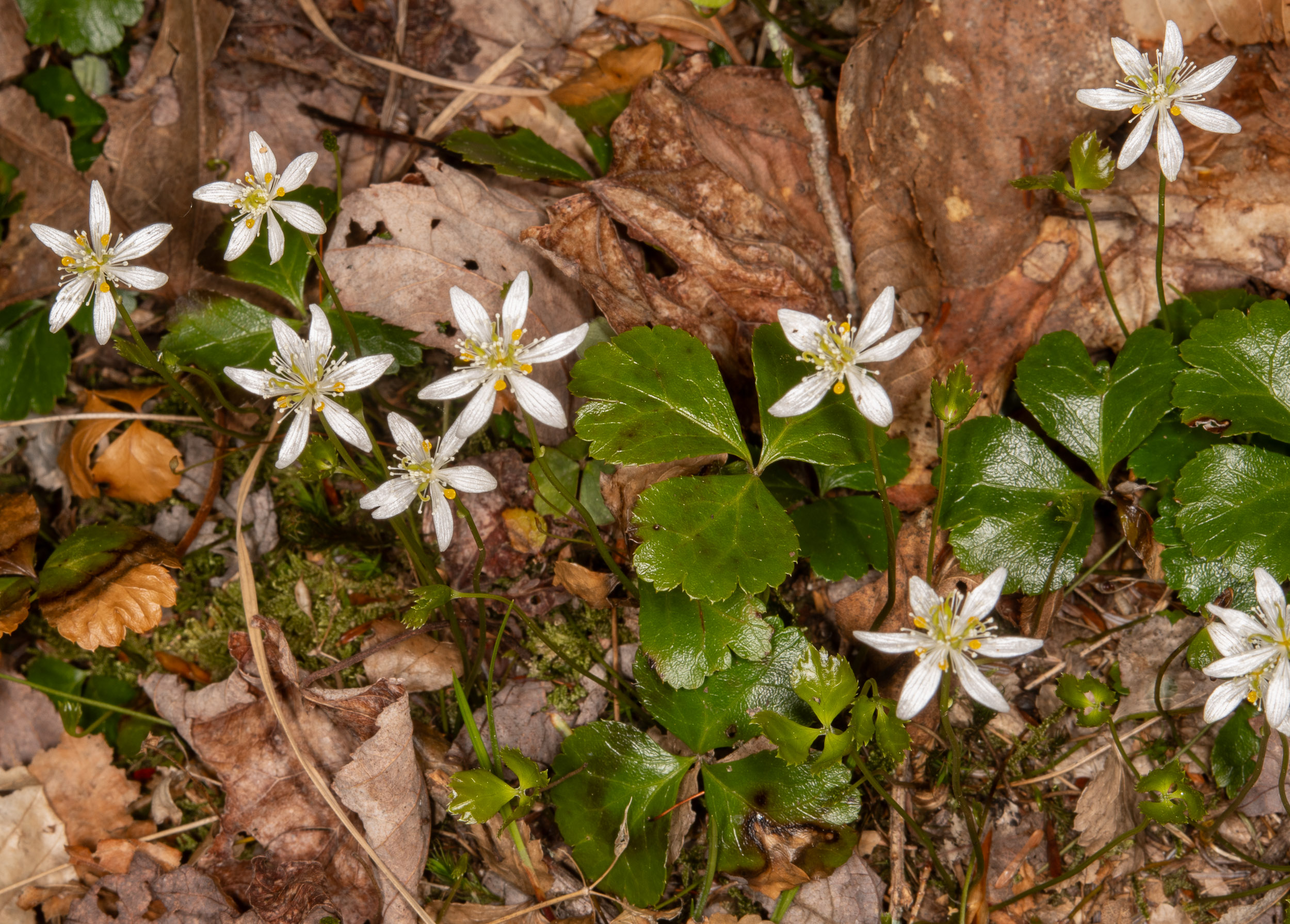
5/7/2021 · Long Reach Preserve, Harpswell, Maine · ≈ 7 × 4½″ (16 × 12 cm) 

5/7/2013 · J. Harry Rich Dirt Road, Groton, Massachusetts · ≈ 4 × 4″ (10 × 9.9 cm) 

5/17/2024 · Robert P. Tristam Coffin Wildflower Preserve, Woolwich, Maine · ≈ 3½ × 4″ (9.8 × 10 cm) 
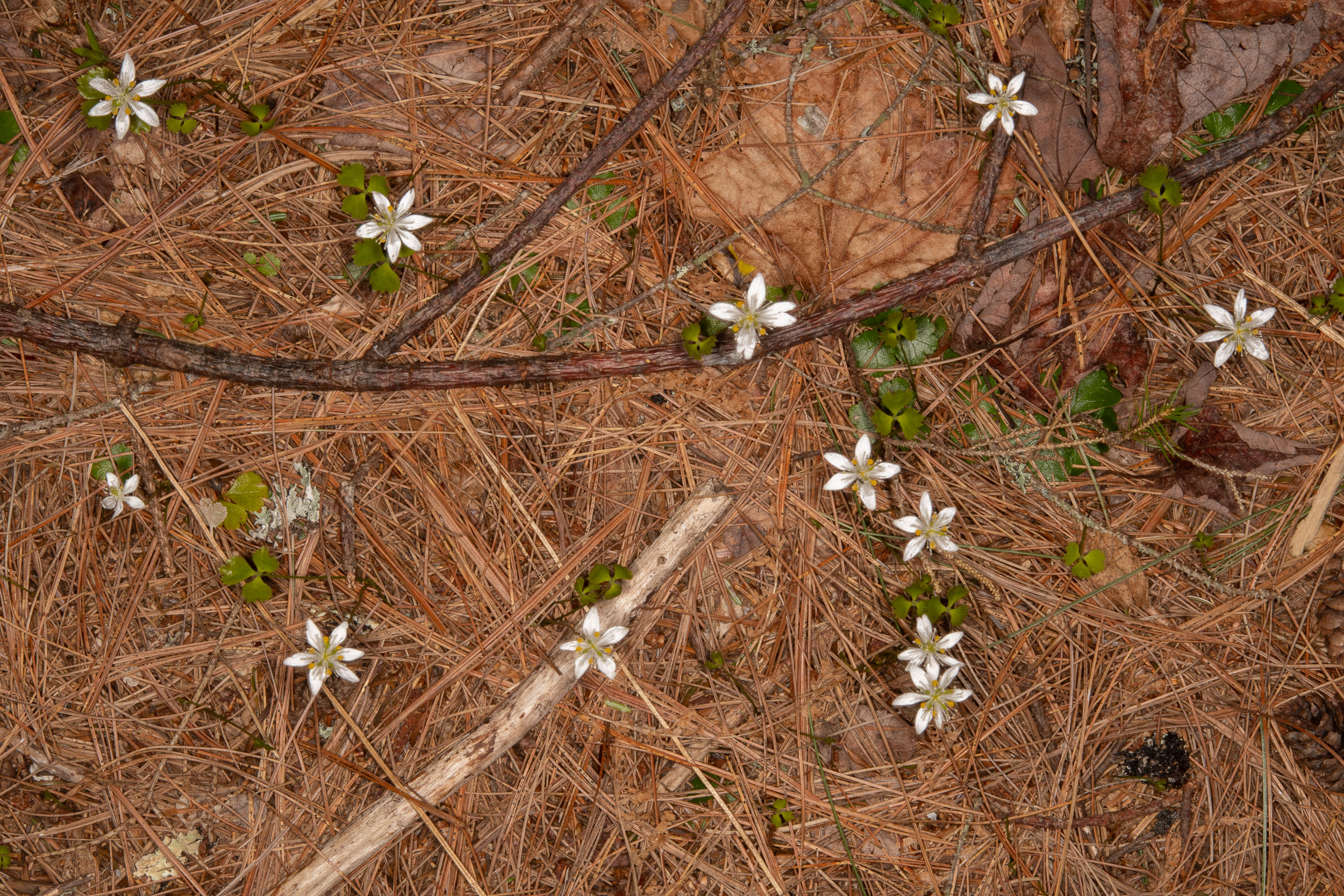
5/10/2021 · Gamble and Kennebec Trails, Berry Woods Preserve, Georgetown, Maine · ≈ 12 × 8″ (31 × 20 cm) 
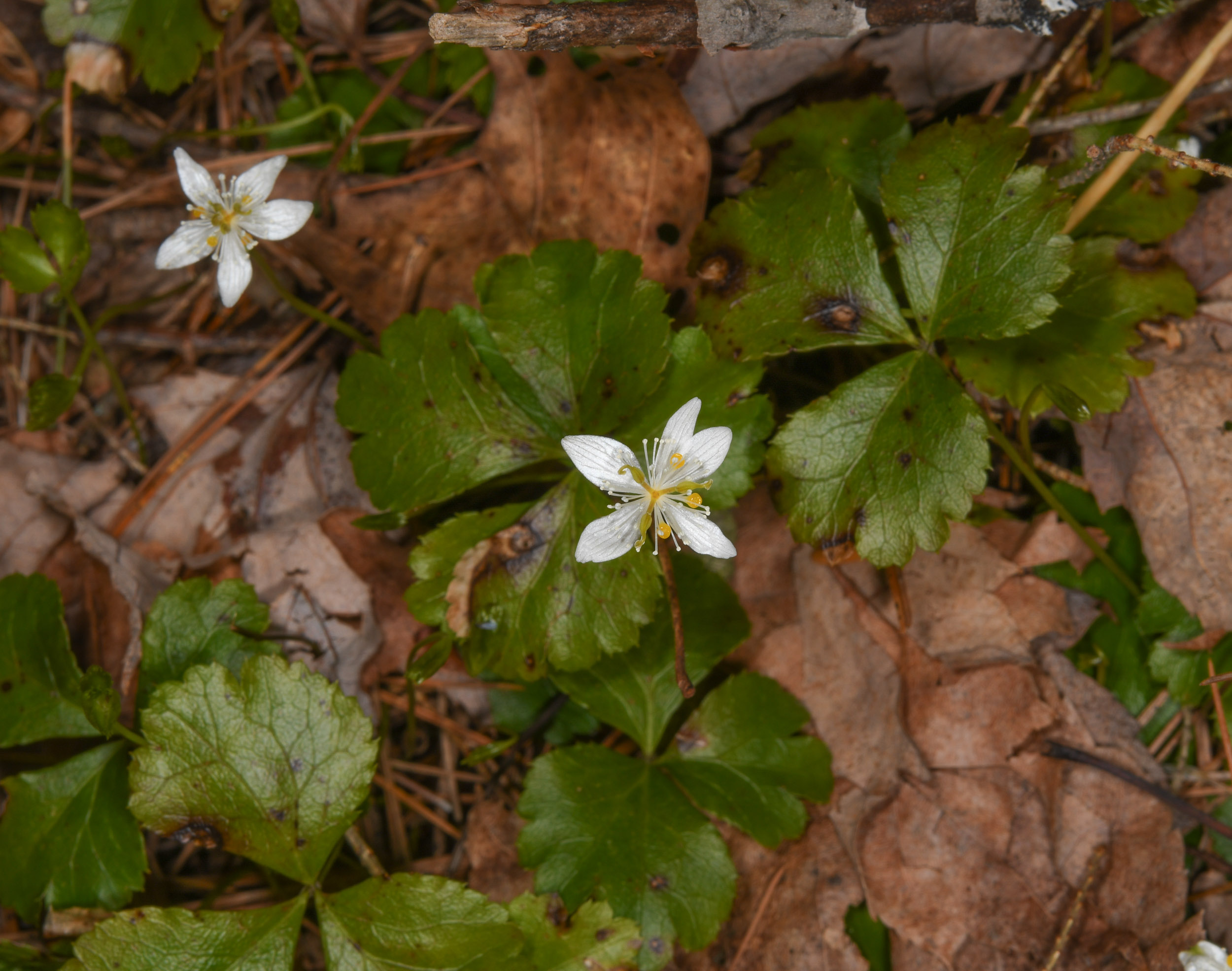
4/27/2016 · Pearl Hill State Park, Townsend, Massachusetts 
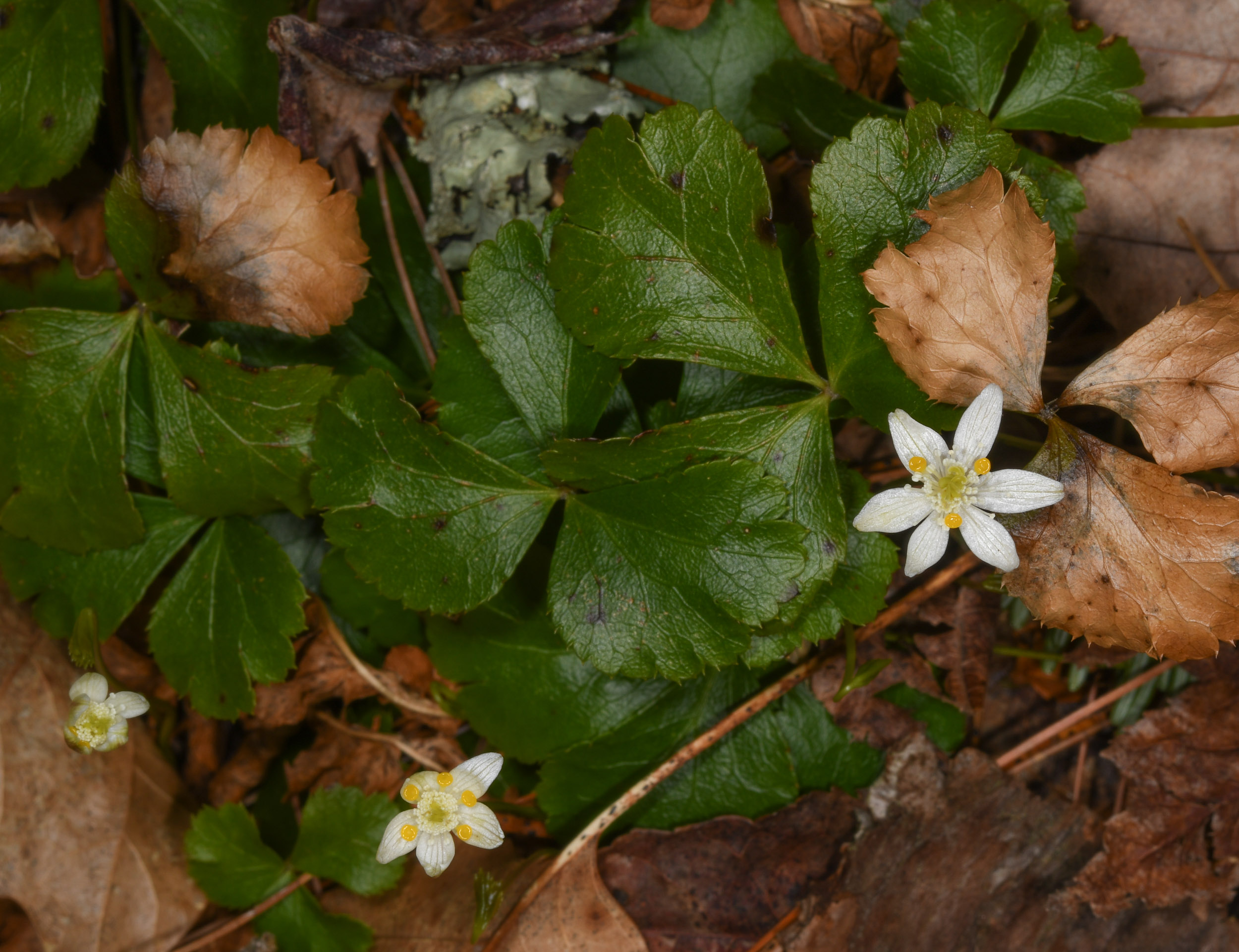
4/27/2016 · Pearl Hill State Park, Townsend, Massachusetts 
| Kingdom | Plantae | Plants, but not fungi, lichens, or algae (from Stearn's Botanical Latin) |
| Subkingdom | Tracheobionta | Vascular plants—plants with a “circulatory system” for delivering water and nutrients |
| Division | Magnoliophyta | Flowering plants, also known as angiosperms |
| Class | Magnoliopsida | Dicotyledons—plants with two initial seed leaves |
| Subclass | Magnoliidae | Includes magnolias, nutmeg, bay laurel, cinnamon, avocado, black pepper, and many others |
| Order | Ranunculales | Basal (evolved earlier) eudicots, also called “true dicots” |
| Family | Ranunculaceae | Buttercup family |
| Genus | Coptis | From the Greek kopto, “to cut,” in reference to the deeply-incised leaves |
| Species | trifolia |
Coptis trifolia description by Thomas H. Kent, not updated.

© FloraFinder.org. All rights reserved.