Dipsacus fullonum L. ssp. sylvestris (Huds.) Clapham
Dipsacus sylvestris Huds.
Dipsacus fullonum L.
Wild teasel, Fuller’s teasel
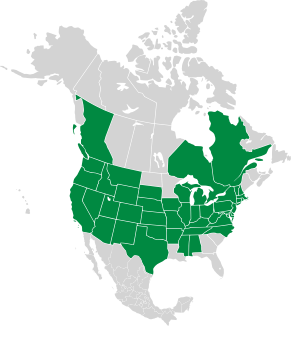
Wild teasel is native to Eurasia and North Africa, but well established in the Americas, southern Africa, Australia, and New Zealand.
Plants: Biennial, and 3–8′ (1–2.5 m) tall. During the first year, the plant is a basal rosette of leaves. In the second year, a tall prickly stem shoots up. After flowering, the stems become woody, persisting through the winter.
Leaves: Basal rosette leaves are puckered, with scalloped edges. Stem leaves are opposite, smaller and clasped cuplike around the stems. They may have wavy edges, and are lanceolate or oblong. Leaves have a prominent white vein, and are hairless.
Flowers: A cylindrical or ovoid flowerhead is 1½–4″ (4–10 cm) tall and 1–1¾″ (3–5 cm) in diameter. A ring of tiny flowers develops first roughly in the middle of the flowerhead. Next, the bands migrate both up and down the flower head. The diminutive flowers are tubular, and white, with four lobes that are lavendar or sometimes pink to purple. Stamens projecting from the tubes are purple-tipped.
Fruits: The flowerhead dries to form hundreds of seeds, each ⅛–3/16″ (4–6 mm) long.
Habitats: Sunny and open sites, such as riparian areas, meadows, grasslands, savannas, forest openings, roadsides, and disturbed sites.
 |
Similar species. |
Online References:
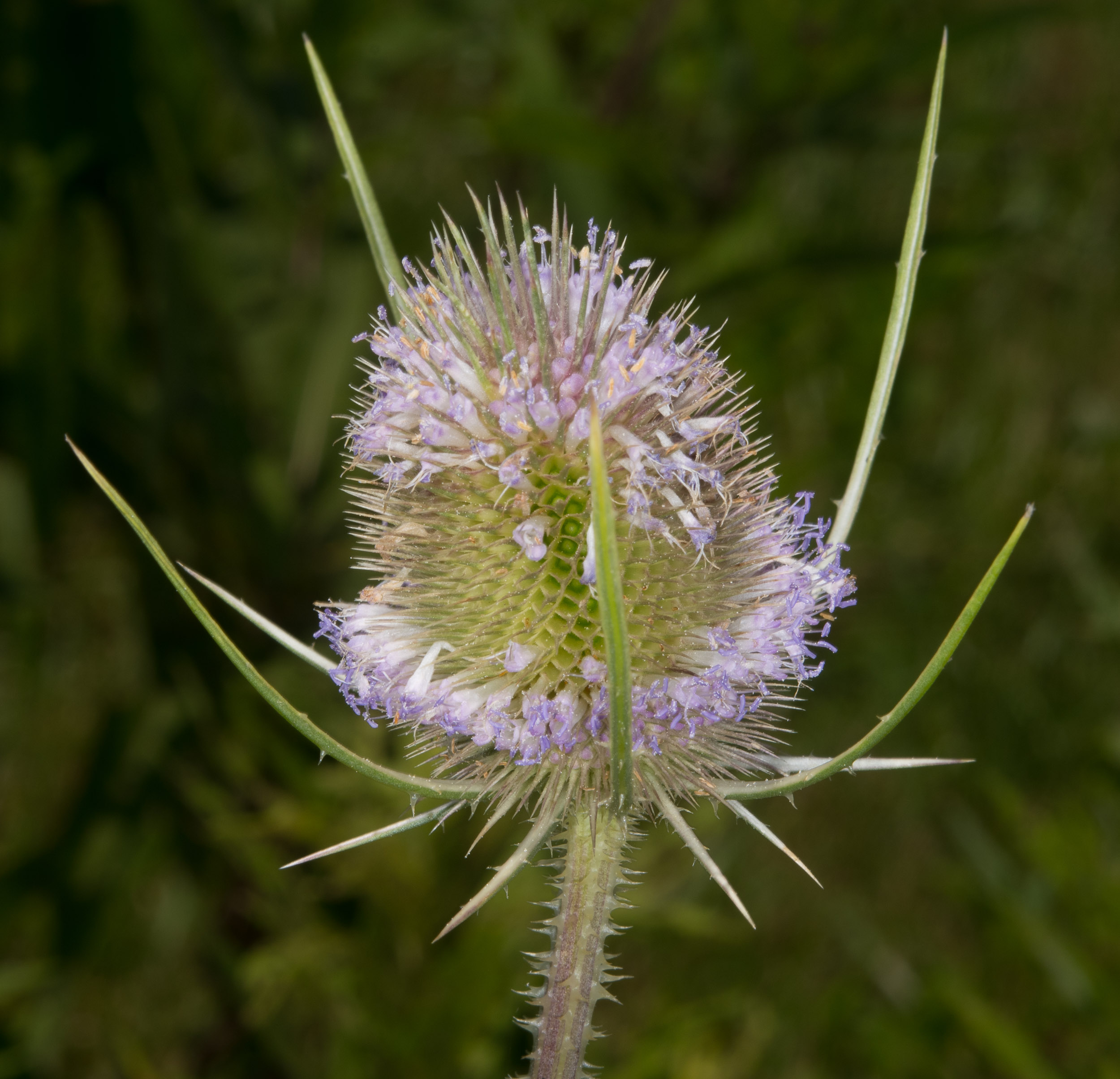
7/19/2017 · West Virginia · ≈ 4 × 4″ (10 × 10 cm) 
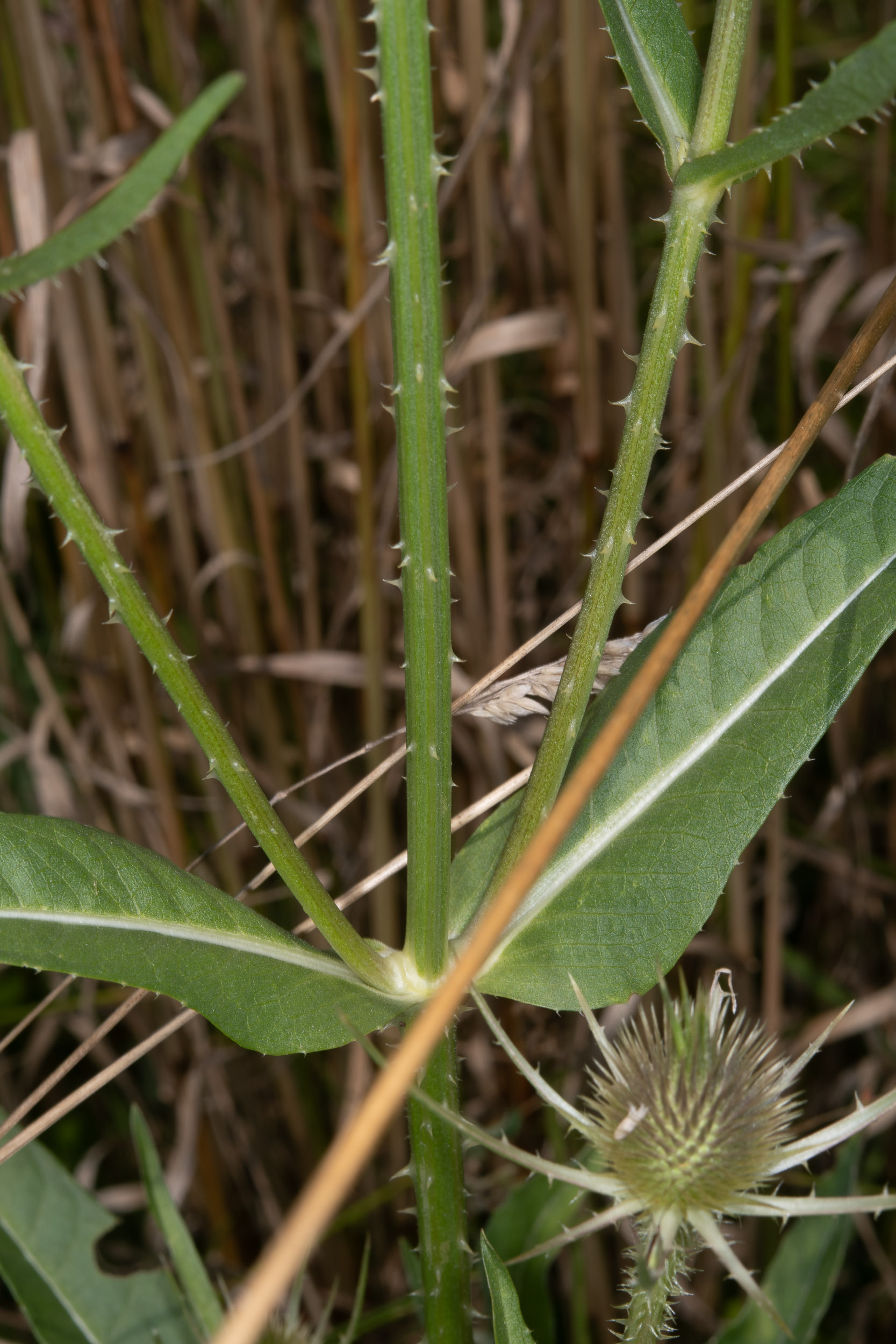
7/19/2017 · West Virginia · ≈ 4 × 6″ (10 × 15 cm) 
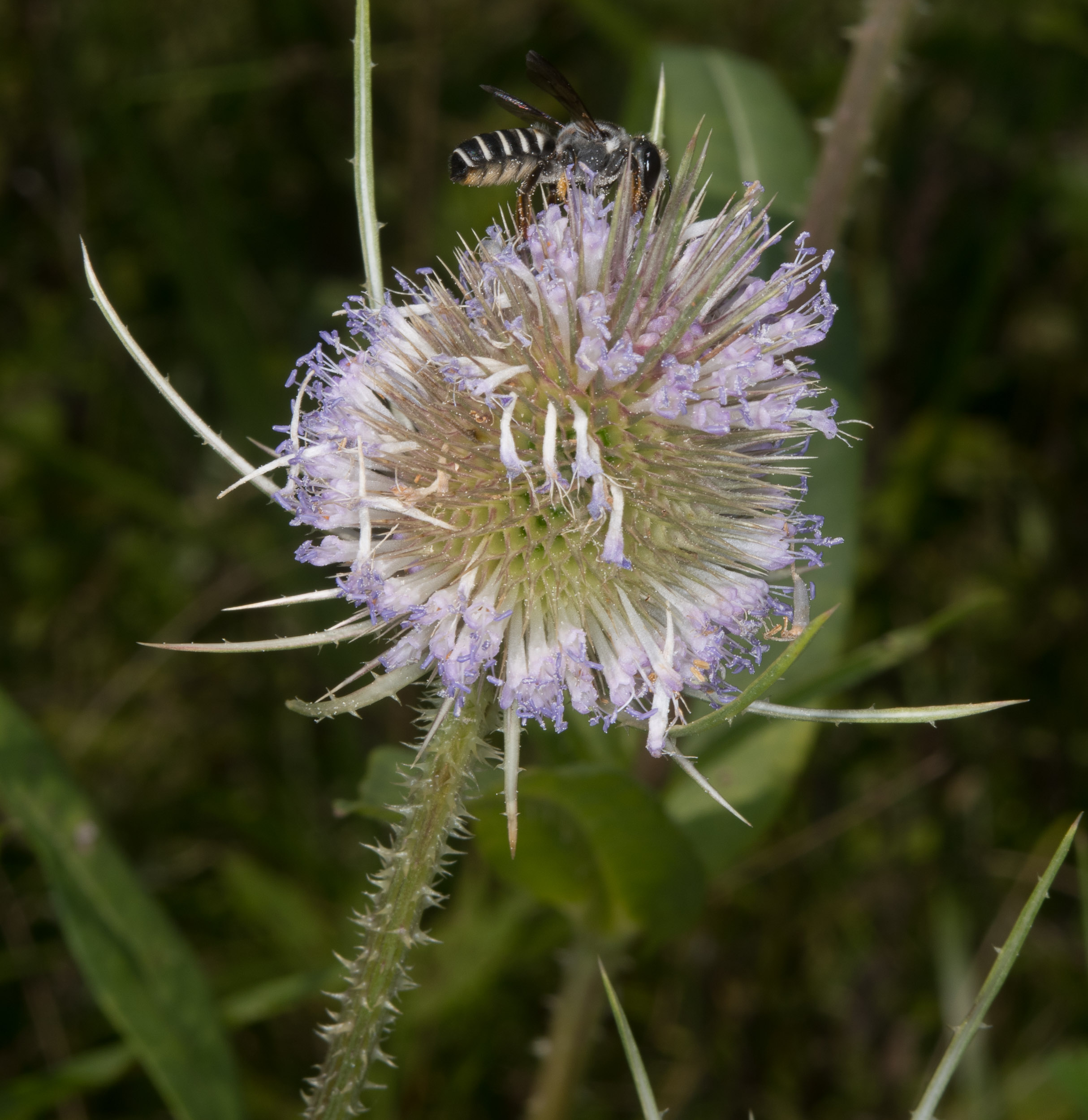
7/19/2017 · West Virginia · ≈ 4 × 4″ (10 × 10 cm) 

7/23/2014 · Beaver Brook Conservation Area, Hollis, New Hampshire · ≈ 6 × 9″ (16 × 23 cm) 

7/23/2014 · Beaver Brook Conservation Area, Hollis, New Hampshire · ≈ 7 × 11″ (18 × 28 cm) 

7/23/2014 · Beaver Brook Conservation Area, Hollis, New Hampshire · ≈ 6 × 9″ (16 × 23 cm) 
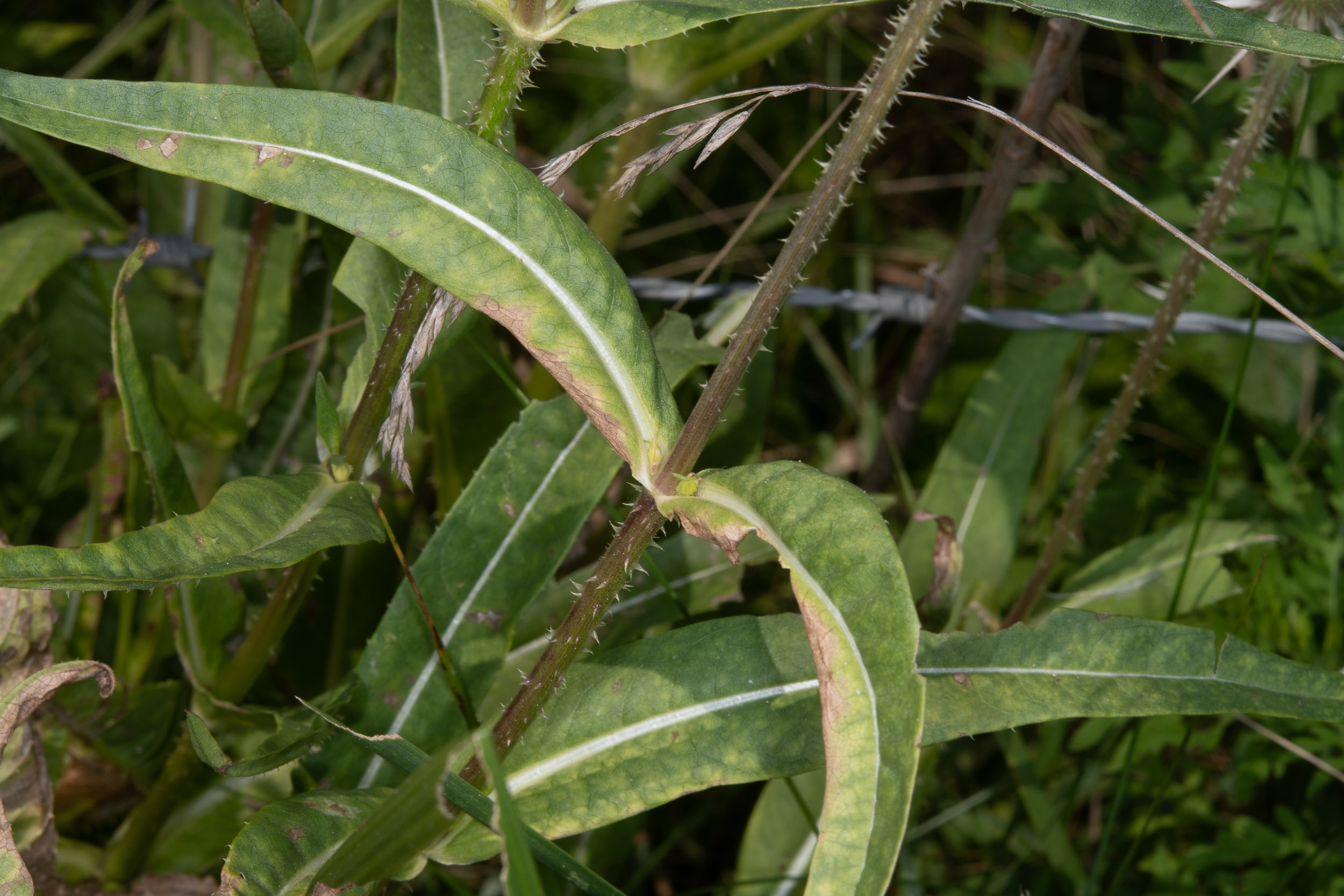
7/19/2017 · West Virginia · ≈ 7 × 4½″ (18 × 12 cm) 

7/24/2010 · Acton Arboretum, Acton, Massachusetts · ≈ 8 × 10″ (20 × 24 cm) 
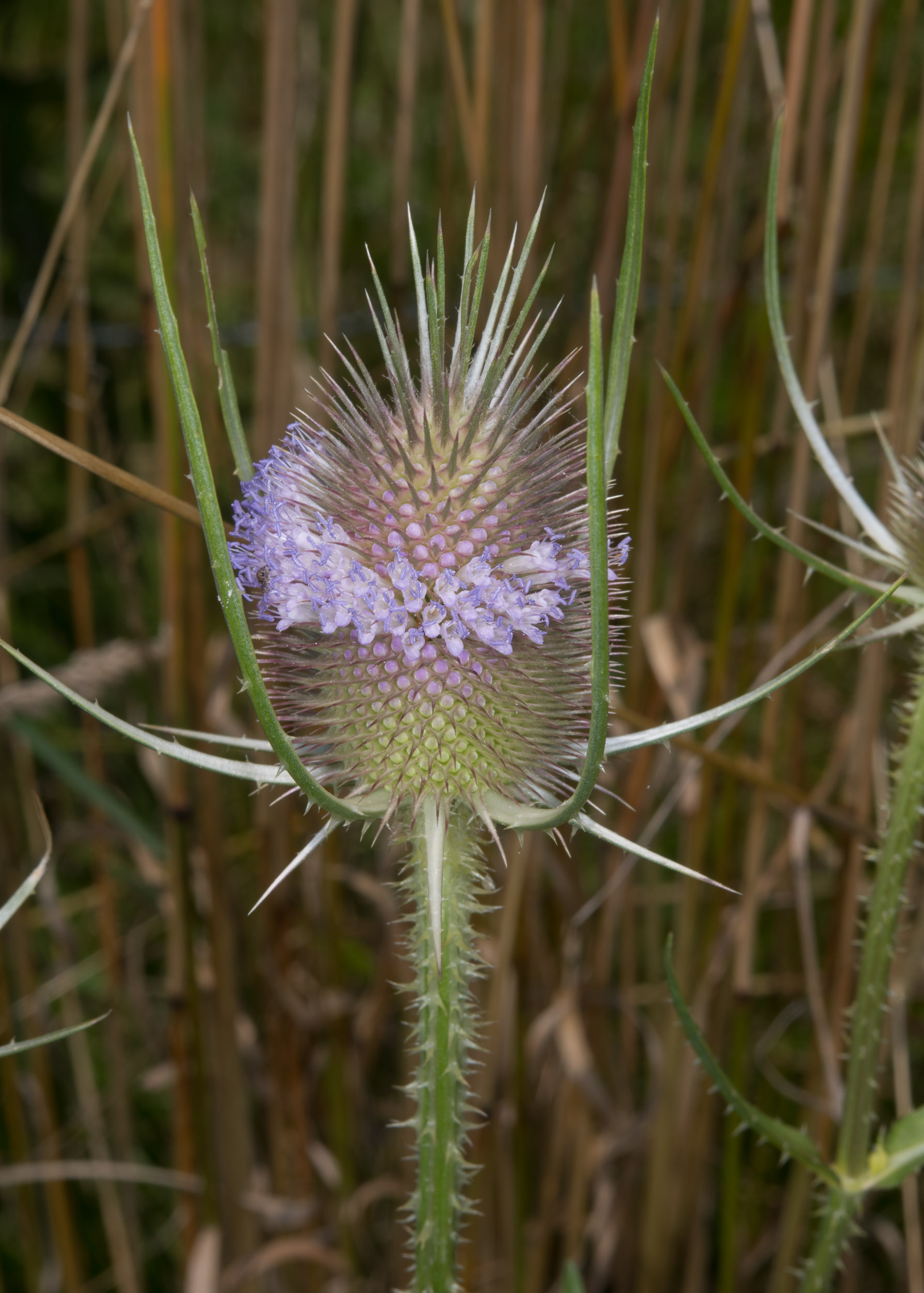
7/19/2017 · West Virginia · ≈ 4 × 6″ (11 × 15 cm) 

7/19/2017 · West Virginia · ≈ 6 × 4″ (14 × 11 cm) 

7/23/2014 · Beaver Brook Conservation Area, Hollis, New Hampshire · ≈ 12 × 8″ (31 × 21 cm) 

7/24/2010 · Acton Arboretum, Acton, Massachusetts · ≈ 1 × 1½′ (41 × 42 cm) 
| Kingdom | Plantae | Plants, but not fungi, lichens, or algae (from Stearn's Botanical Latin) |
| Subkingdom | Tracheobionta | Vascular plants—plants with a “circulatory system” for delivering water and nutrients |
| Division | Magnoliophyta | Flowering plants, also known as angiosperms |
| Class | Magnoliopsida | Dicotyledons—plants with two initial seed leaves |
| Subclass | Asteridae | A large class that encompasses asters |
| Order | Dipsacales | Includes viburnum, honeysuckle, snowberry, beautybush, twinflower, many others |
| Family | Dipsacaceae | Teasel family |
| Genus | Dipsacus | From the Greek dipsa, “thirst,” from the connate (joined or attached) leaf bases that in some ssp. hold water |
| Species | fullonum | Relating to fullers or people who full cloth, a process of shrinking or thickening cloth by moistening, heating and pressing. This species is often referred to as fuller’s teasel, although interestingly the Jepson Manual calls it wild teasel and D. sativus as fuller’s teasel. The connection to fullers is that it has bristly flower heads used by fullers to raise the nap on cloth |
Dipsacus fullonum description by Thomas H. Kent, not updated.

© FloraFinder.org. All rights reserved.