Dirca mexicana G.L. Nesom & Mayfield
Dirca palustris L.
Eastern leatherwood, leatherwood
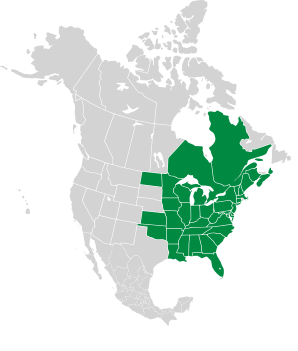
Eastern leatherwood is native to the eastern United States.
Plants: Deciduous, 3–6′ (91–182 cm) tall, with a single or few trunks and a branching pattern that looks a little like a candleabrum. Branches are extremely flexible, and difficult to break.
Leaves: Alternate, oval to elliptic, with very short leaf stalks (petioles), 1¾–3 ⨉ ⅞–2½″ (5–8 ⨉ 2.5–7 cm). They are hairy when young, hairless when mature. Leaves are yellow in the fall.
Flowers: Flowers are yellow, shaped like narrow bells, hanging in small clusters. Flowers emerge from leaf axils or branch tips. 8 orange-tipped stamens hang well below each flower, along with a longer style. Flowers appear from March to April.
Fruits: A drupe that changes from pale green to red or purplish-red. They are oval-shaped, up to ½″ (1.3 cm) long.
Habitats: Rich, moist deciduous woods.
Edibility: Poisonous  Leaves and branches contain calcium
oxalate, a poison and possible skin irritant.
Leaves and branches contain calcium
oxalate, a poison and possible skin irritant.
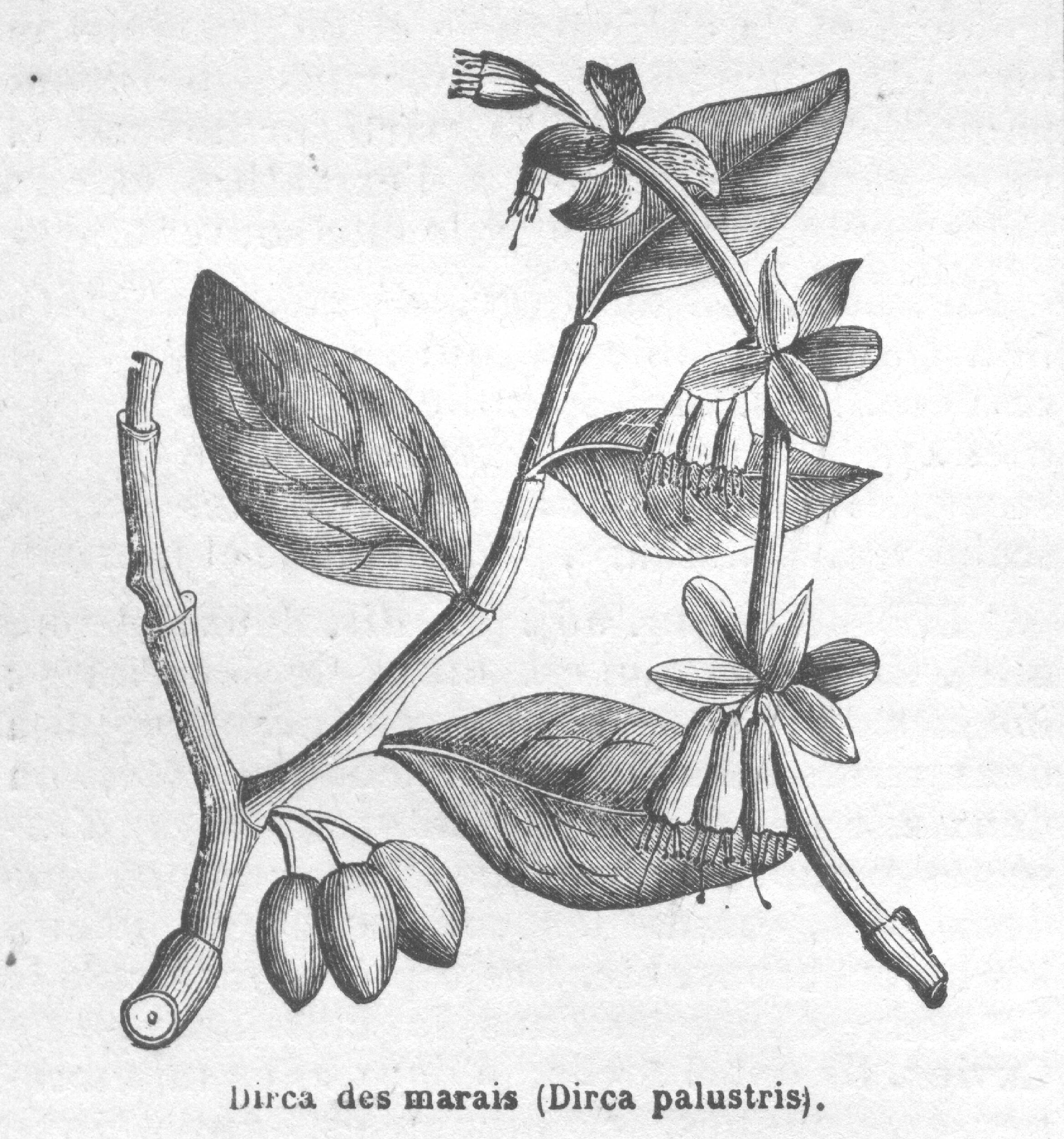
Branches of leatherwood (Dirca palustris), with flowers, fruit and leaves. 
Online References:
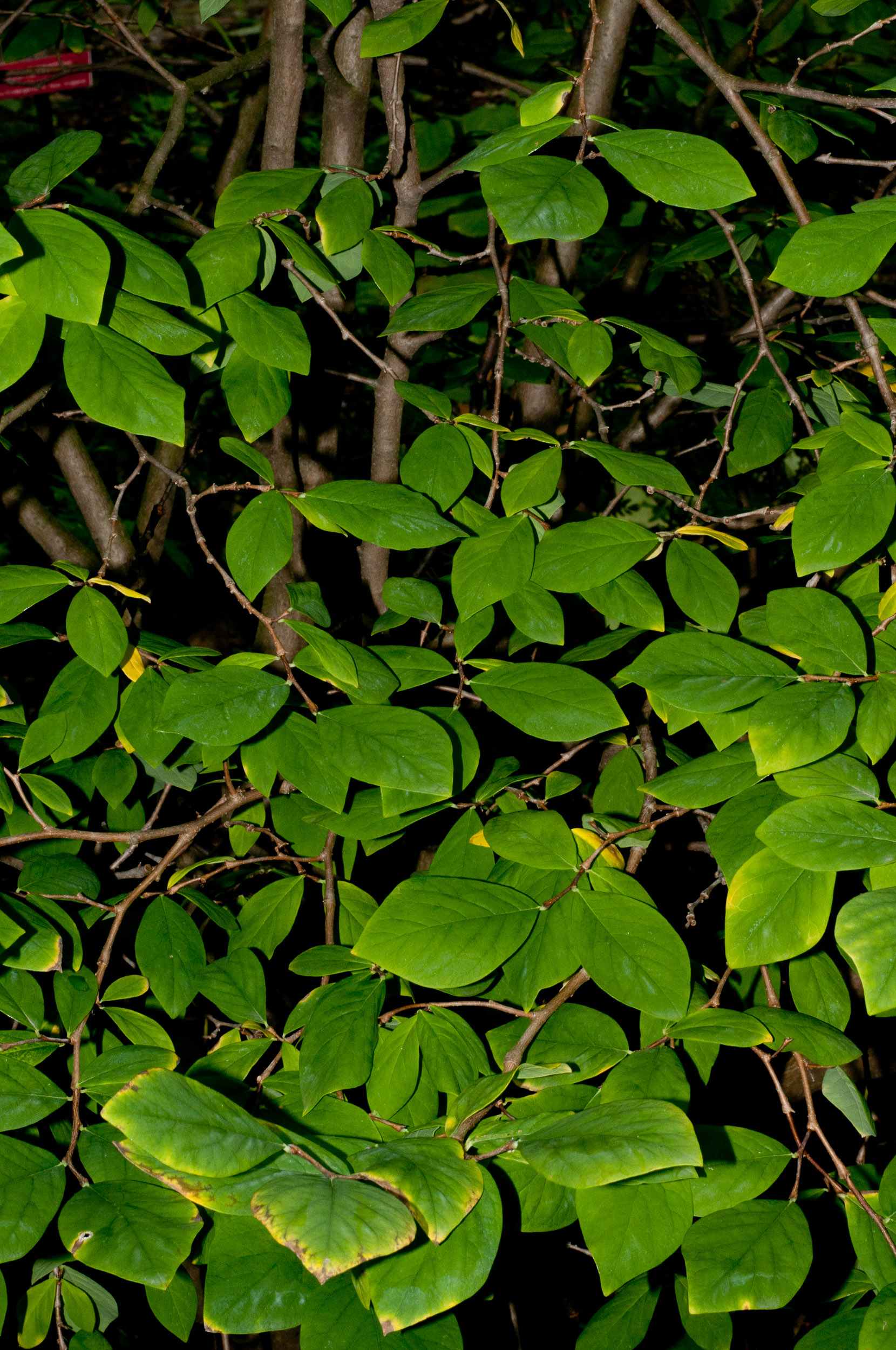
9/14/2010 · Garden in the Woods, Framingham, Massachusetts · ≈ 1 × 1½′ (34 × 52 cm) 
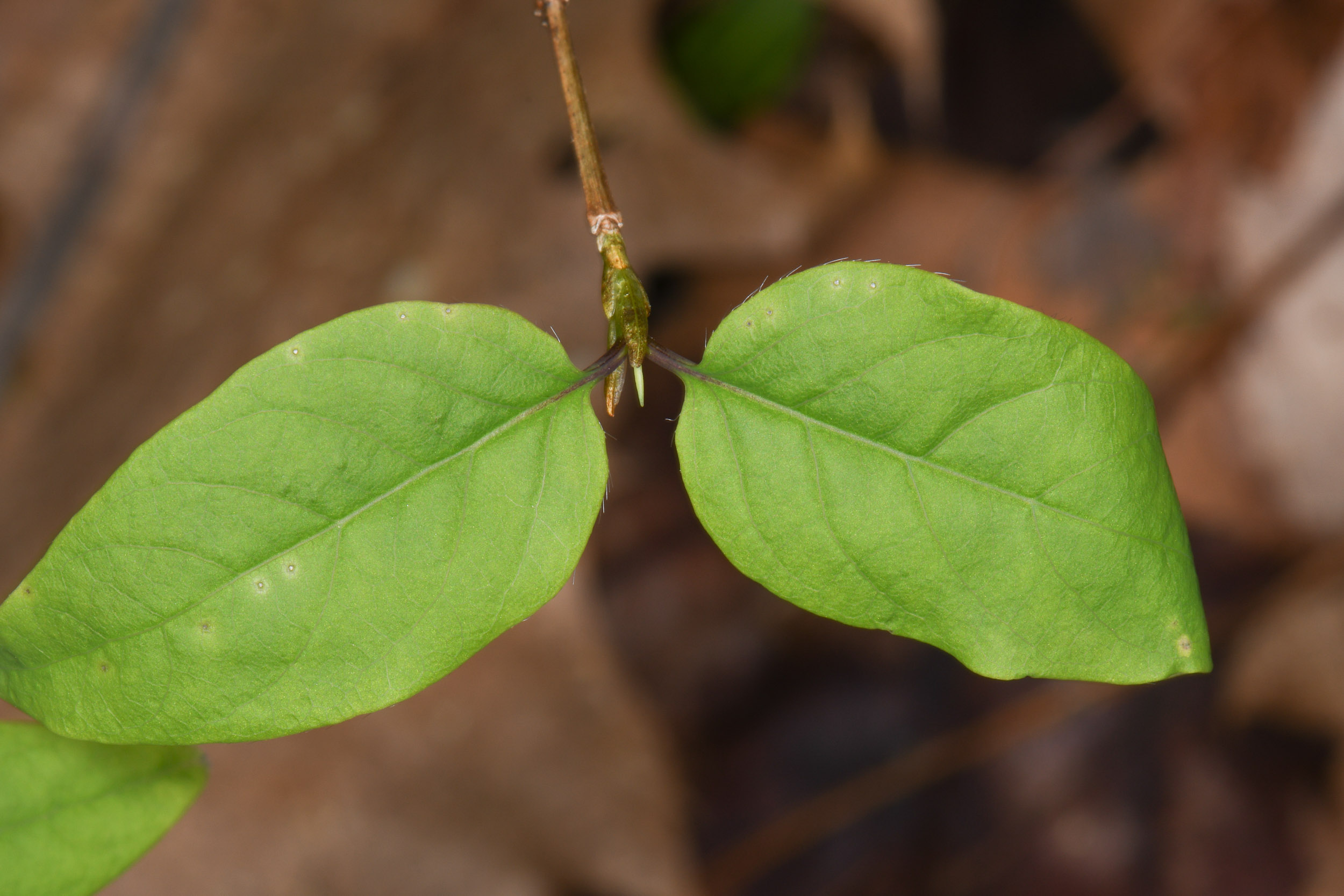
4/23/2016 · Big Tree/Porcupine Trail, Beaver Brook Conservation Area, Hollis, Massachusetts 
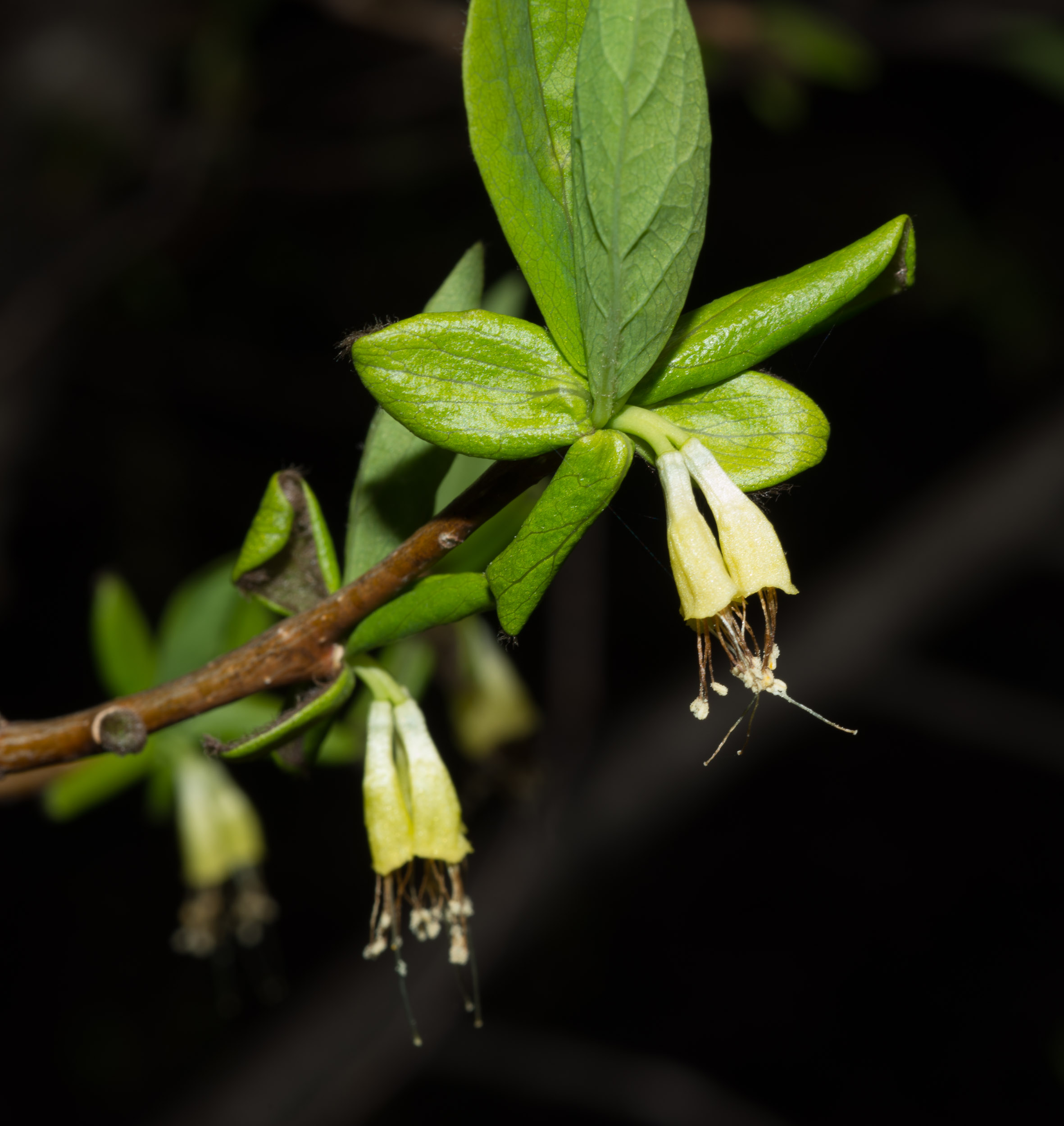
4/29/2013 · Beaver Brook Conservation Area, Hollis, New Hampshire · ≈ 3½ × 4″ (9.4 × 10 cm) 
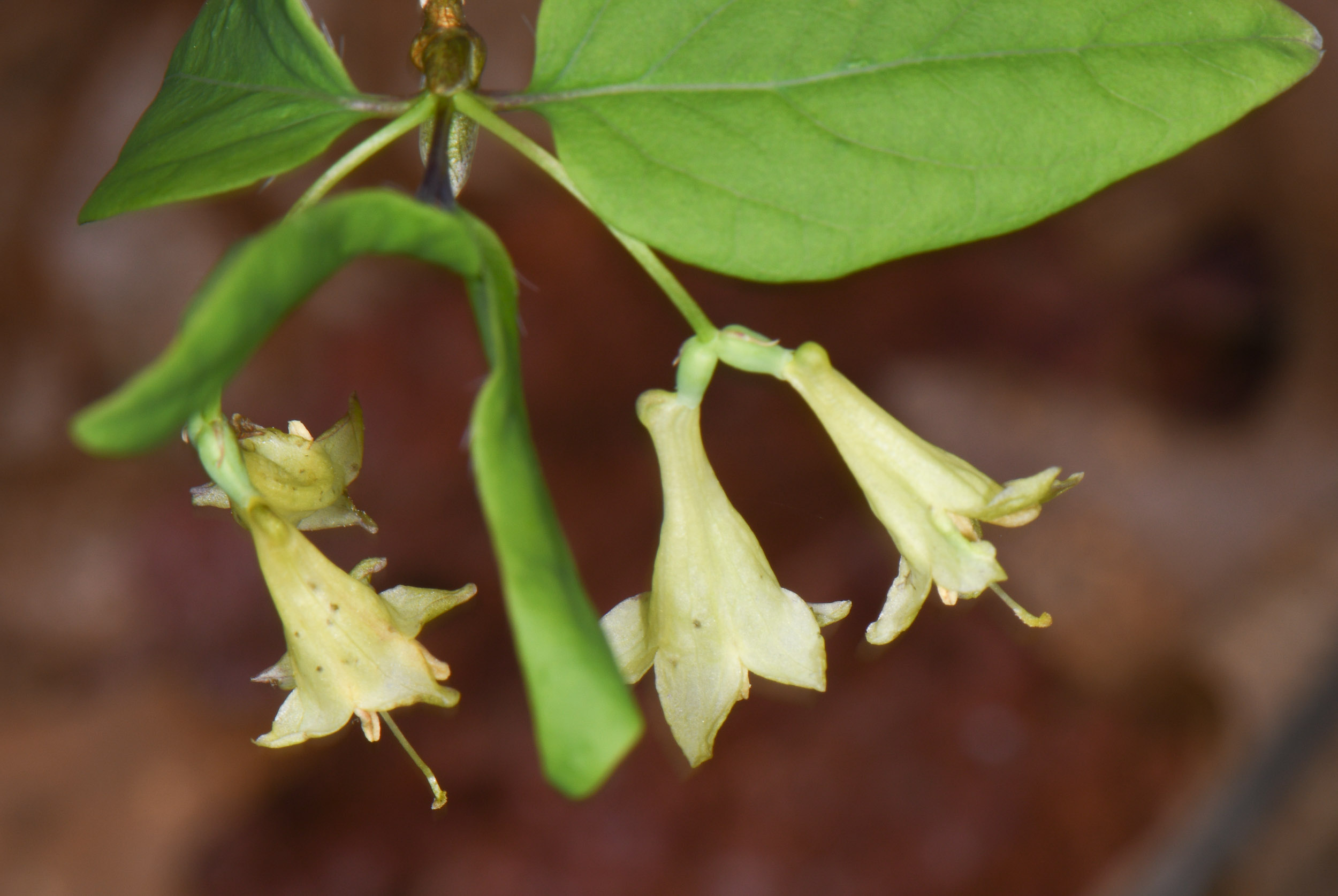
4/23/2016 · Big Tree/Porcupine Trail, Beaver Brook Conservation Area, Hollis, Massachusetts 
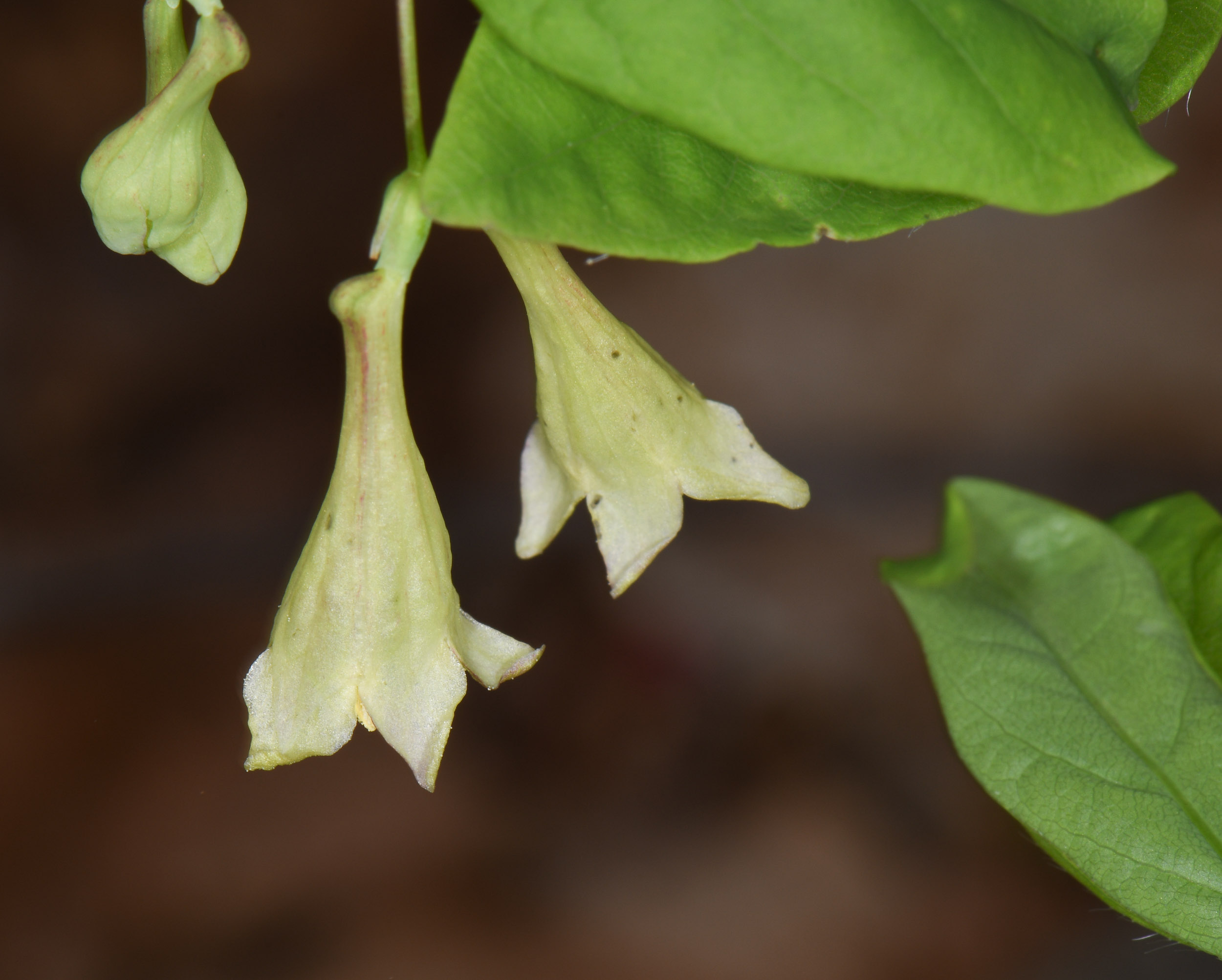
4/23/2016 · Big Tree/Porcupine Trail, Beaver Brook Conservation Area, Hollis, Massachusetts 
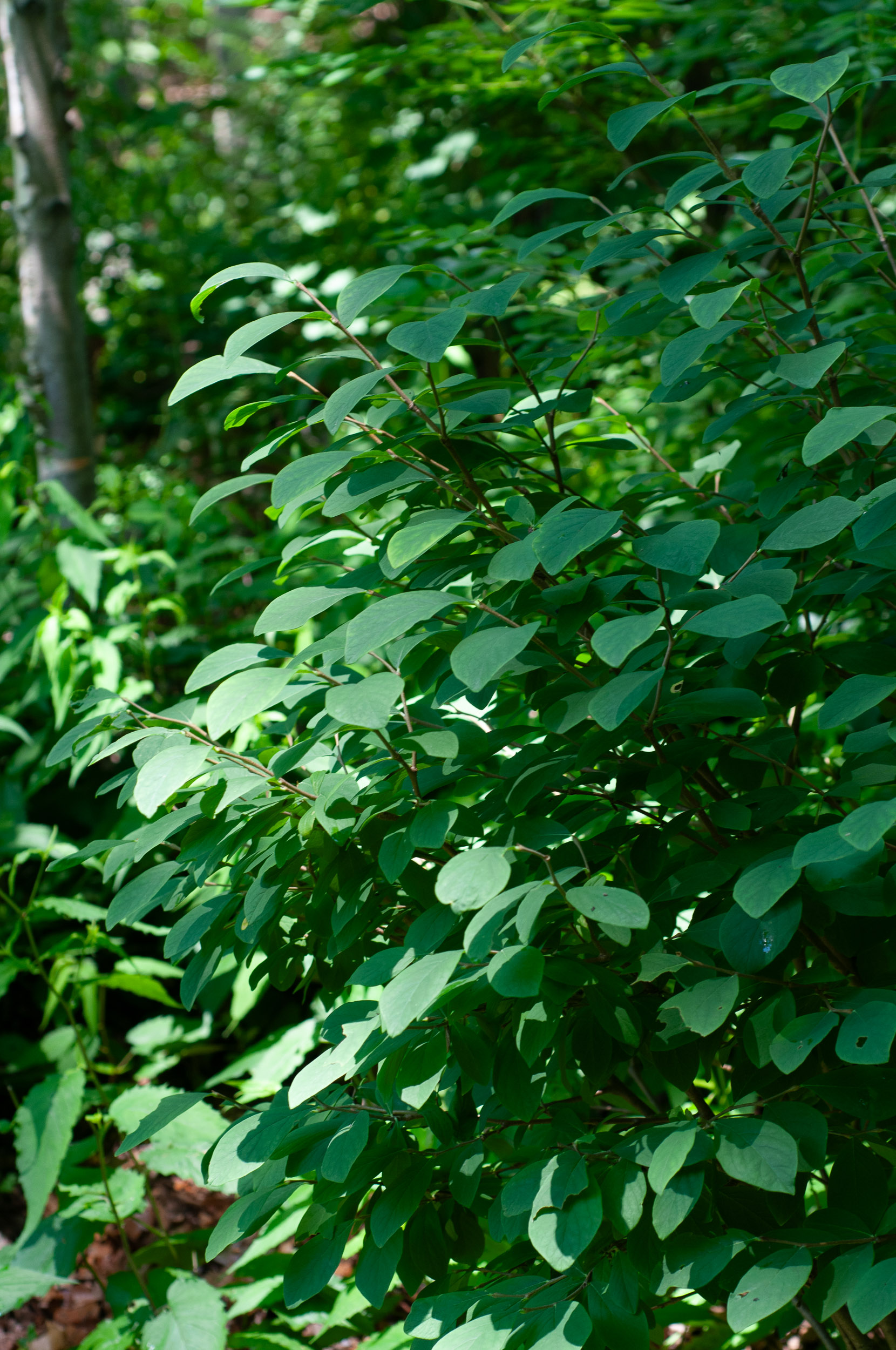
6/15/2010 · Garden in the Woods, Framingham, Massachusetts 
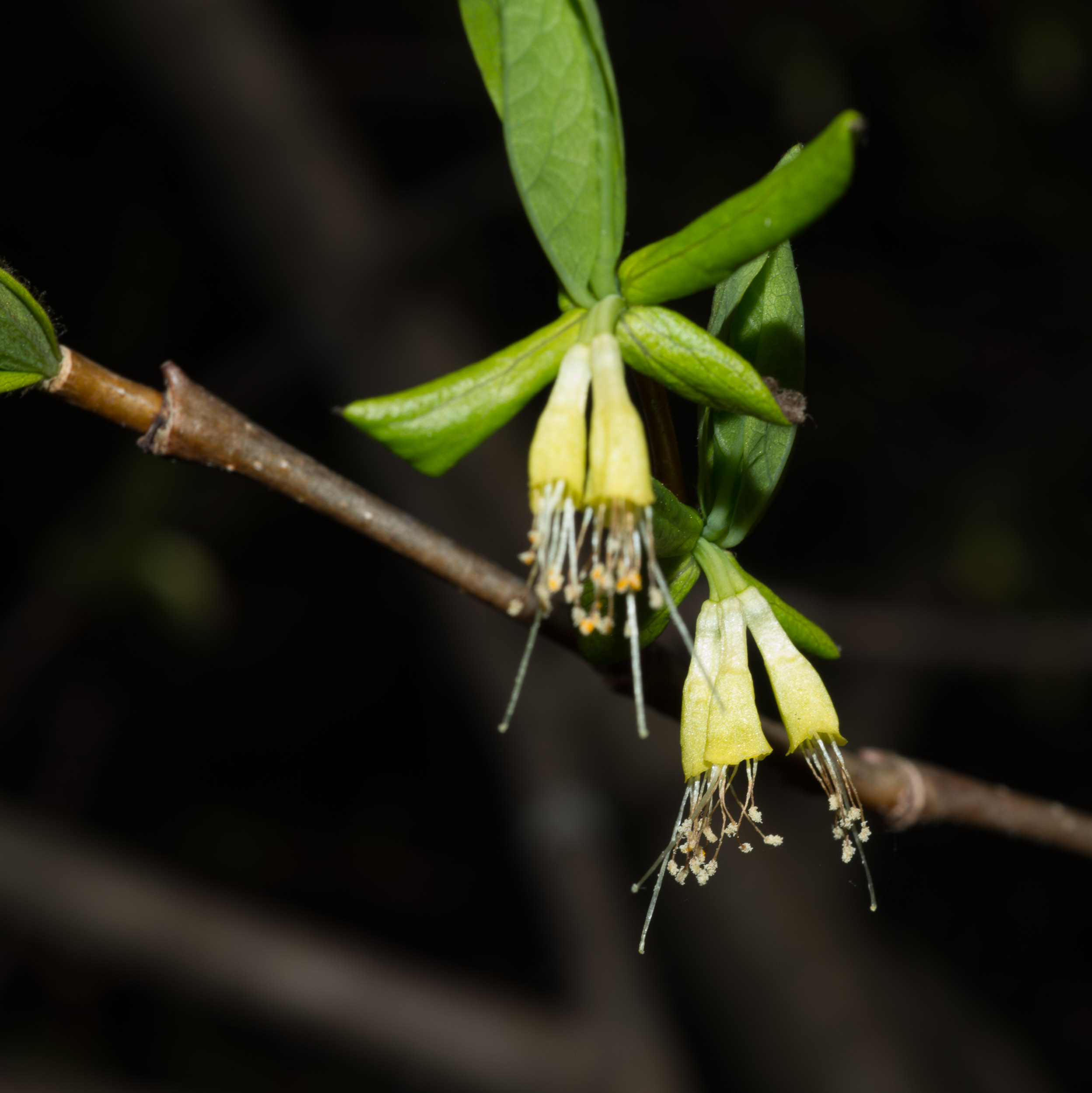
4/29/2013 · Beaver Brook Conservation Area, Hollis, New Hampshire · ≈ 4 × 4″ (10 × 10 cm) 
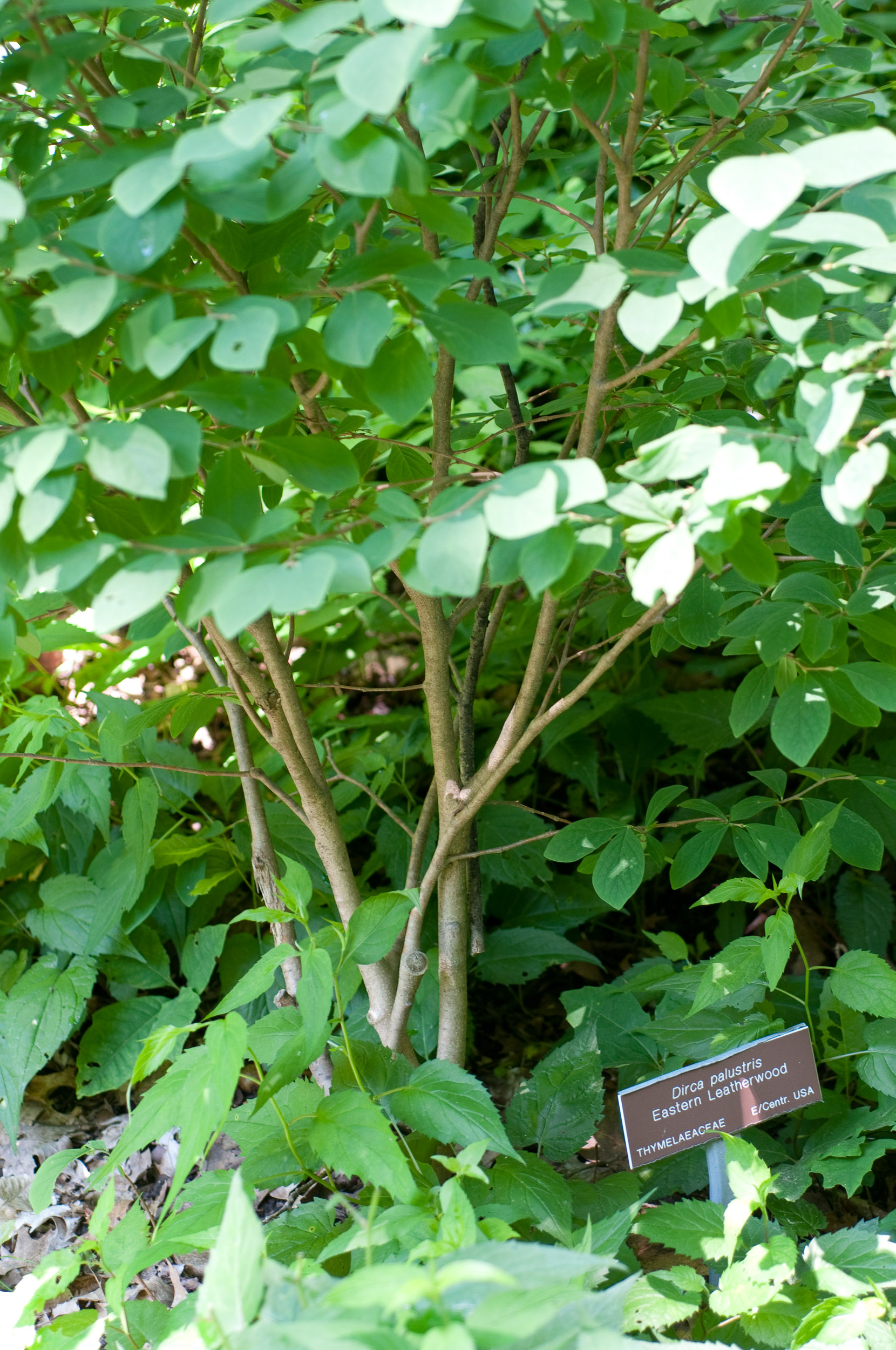
6/15/2010 · Garden in the Woods, Framingham, Massachusetts 
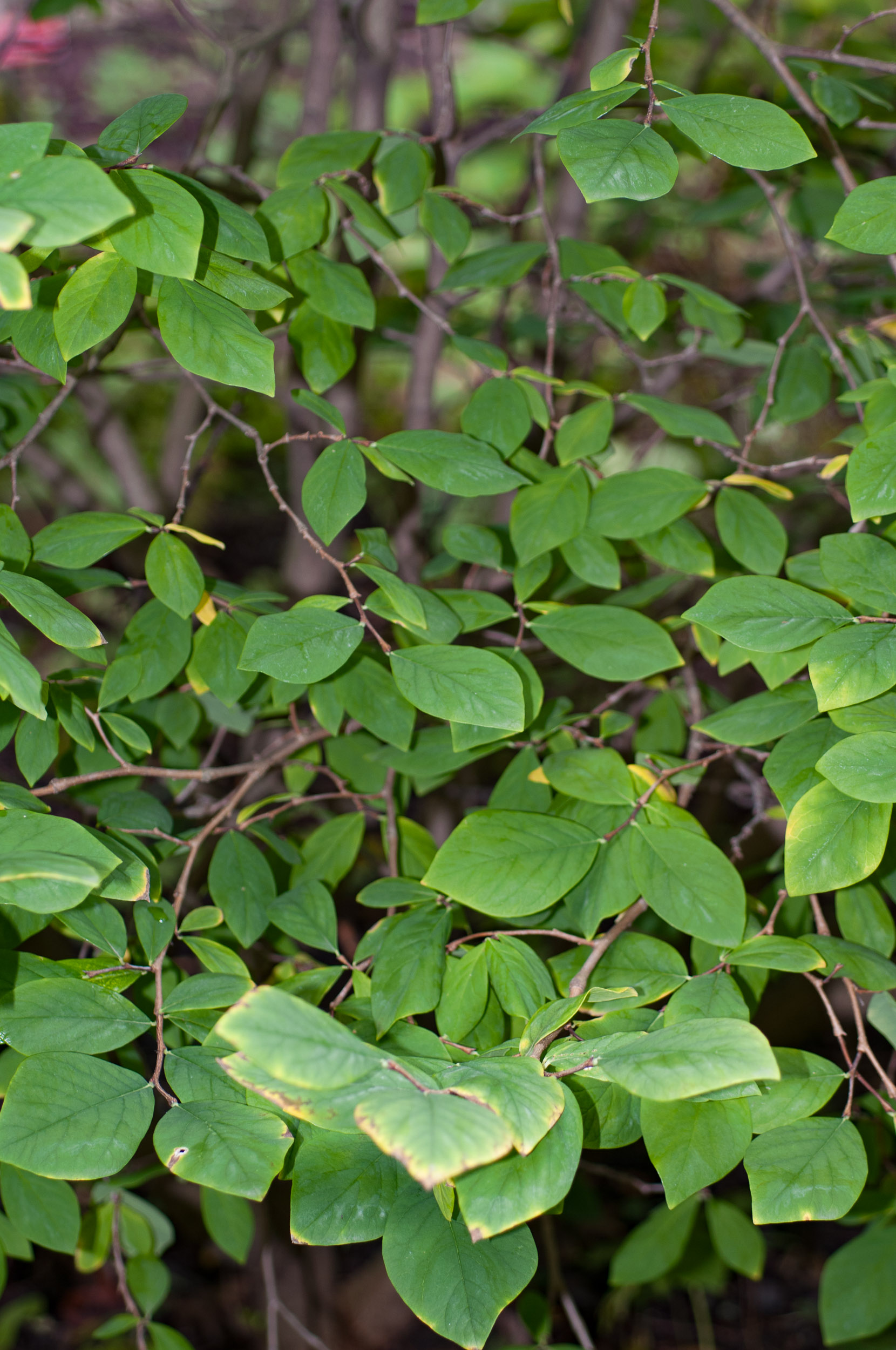
9/14/2010 · Garden in the Woods, Framingham, Massachusetts · ≈ 1 × 1½′ (34 × 52 cm) 

9/14/2010 · Garden in the Woods, Framingham, Massachusetts · ≈ 1½ × 1′ (52 × 34 cm) 
| Kingdom | Plantae | Plants, but not fungi, lichens, or algae (from Stearn's Botanical Latin) |
| Subkingdom | Tracheobionta | Vascular plants—plants with a “circulatory system” for delivering water and nutrients |
| Division | Magnoliophyta | Flowering plants, also known as angiosperms |
| Class | Magnoliopsida | Dicotyledons—plants with two initial seed leaves |
| Subclass | Rosidae | Roses, legumes, proteas, dogwoods, hydrangeas, mistletoes, euphorbias, grapes, many more |
| Order | Malvales | Includes cacao, balsa, lime, linden, basswood, daphnes, hibiscus, hollyhocks, okra, baobab, cotton, kapok, and many others |
| Family | Thymelaeaceae | Trees and perennial shrubs with fibrous bark, mostly tropical, mostly African |
| Genus | Dirca | From Greek dirke, “a fountain,” specifically a fountain northwest of Thebes in Boeotia, referring to its moist habitat |
| Species | palustris | “Growing in marshes” |
Dirca palustris description by Thomas H. Kent, not updated.

© FloraFinder.org. All rights reserved.