Gaylussacia brachycera (Michx.) A. Gray
Box-huckleberry, box-leaved whortleberry
Box huckleberry is a North American native species. This species propagates clonally, producing expanding colonies by sending out roots. This appears to be its only means of propagation, and with remaining populations dwindling and a low rate of propagation, it is considered a critically imperiled species. A colony in Pennsylvania is estimated at up to 8,000 years old, making it at least a contender for oldest woody plant east of the Rocky mountains. Another colony, also in Pennsylvania, is about 1,300 year old. A New Jersey colony spans 3.8 hectares and is estimated at up to 10,000 years in age.
Plants: These low evergreen shrubs are 6–18″ (15–45 cm) high. Leaves resemble boxwood leaves, the source of its common names. They do not have the resin glands found in other huckleberries (that is, huckleberries in the Gaylussacia genus; there are also some members of Vaccinium that are called huckleberries and lack resin glands.)
Leaves: Dark, glossy green, becoming bronze-colored or reddish-purple in the fall. They are ovate, with crenate or serrulate edges and leaf petioles (stems) 1/32–⅛″ (0.5–3 mm) long.
Flowers: White or pinkish, urn-shaped, about ⅛″ (4 mm) in size, appearing from May to June.
Fruits: Resemble blueberries, but with fewer, larger seeds. They are about ⅜″ (1.2 cm) in size.
Habitats: North-facing wooded slopes, usually in dry, sandy soil.
This Gaylussacia and Vaccinium comparison chart compares these closely related genera, both of which contain plants called huckleberries.
Edibility: Berries are edible, but tasteless.
Medical:
Online References:
Buxella brachycera (Michx.) Small
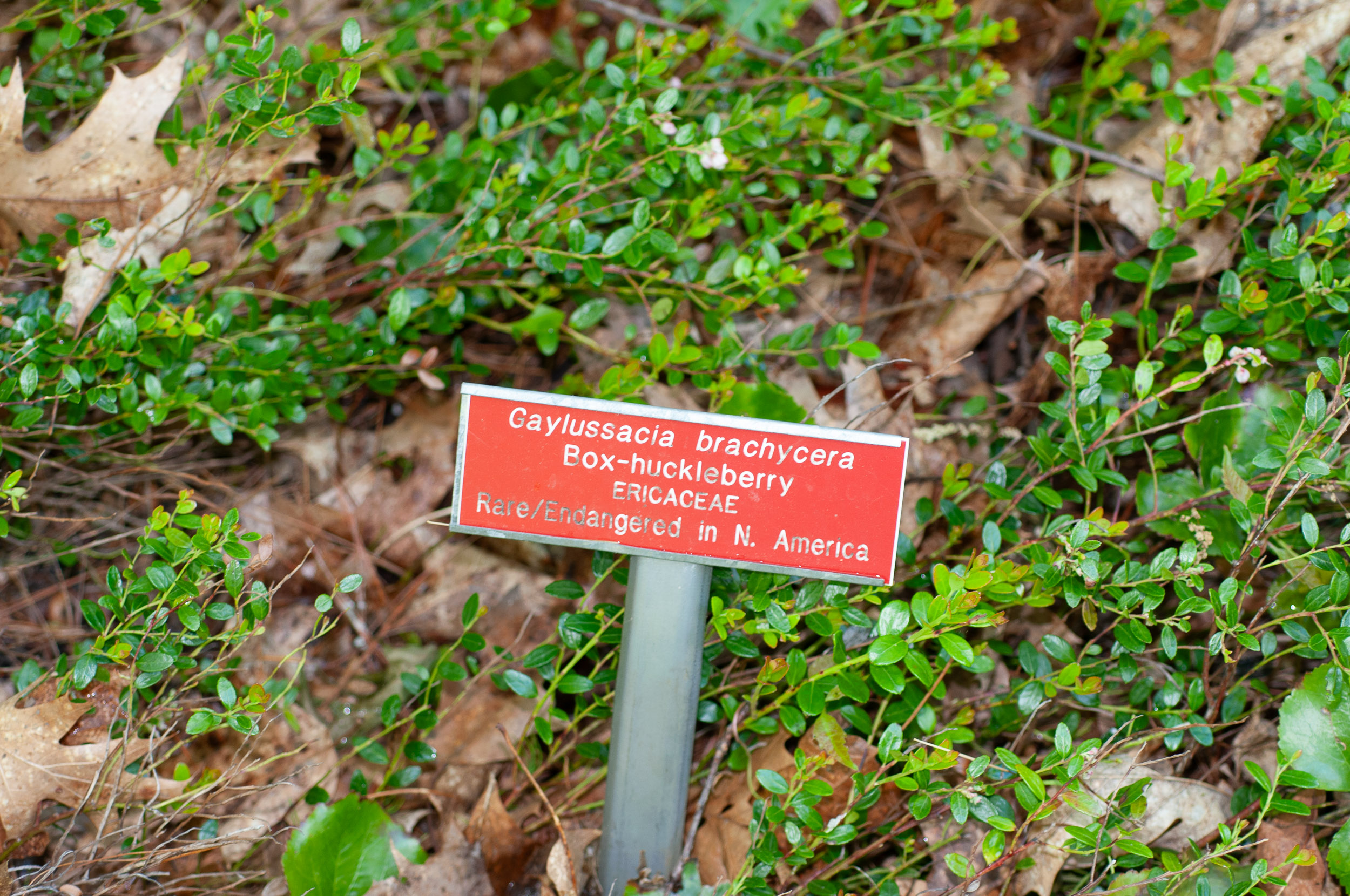
5/15/2010 · Garden in the Woods, Framingham, Massachusetts · ≈ 1½ × 1′ (52 × 34 cm) 
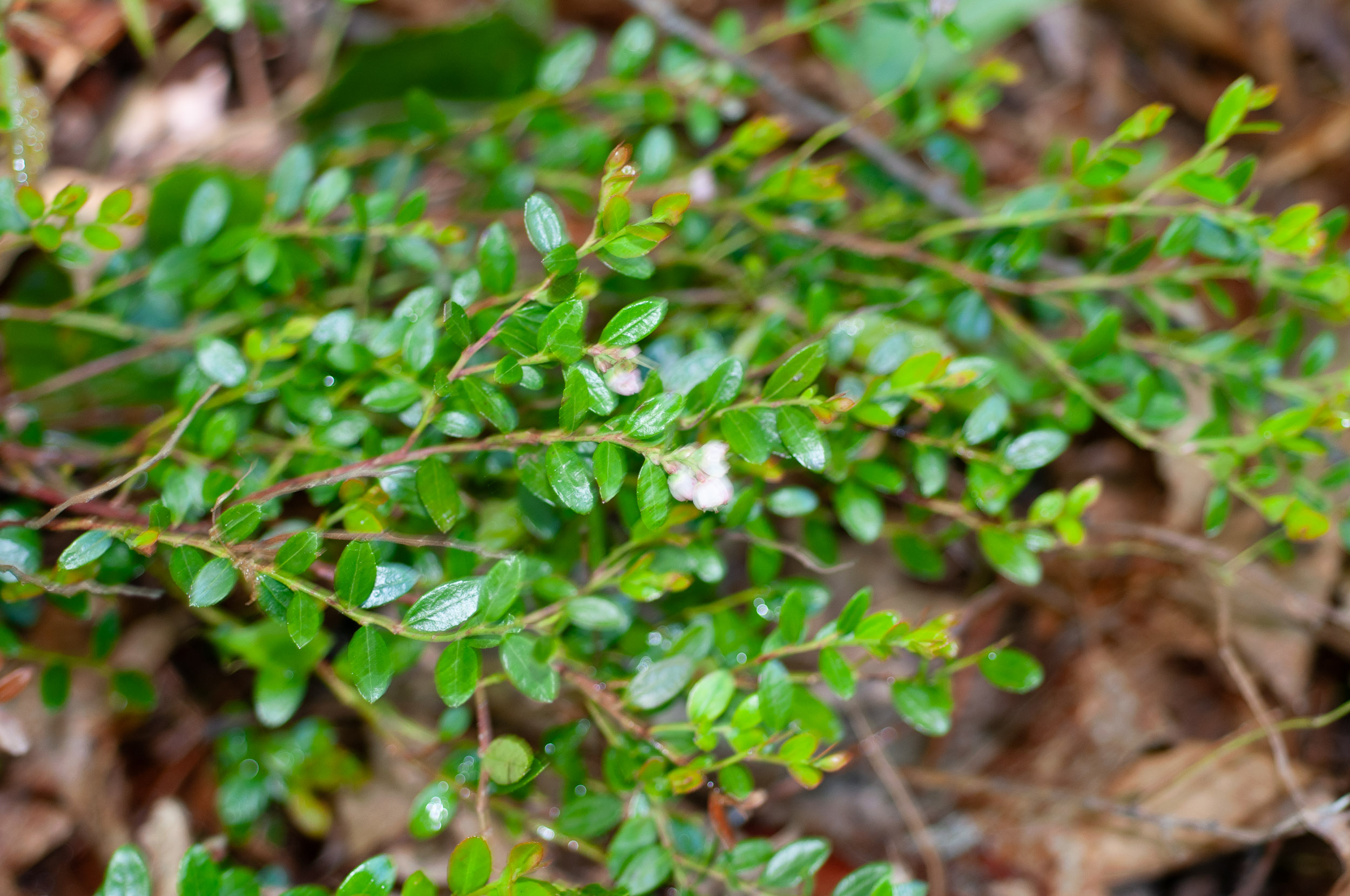
5/15/2010 · Garden in the Woods, Framingham, Massachusetts · ≈ 11 × 7″ (27 × 18 cm) 
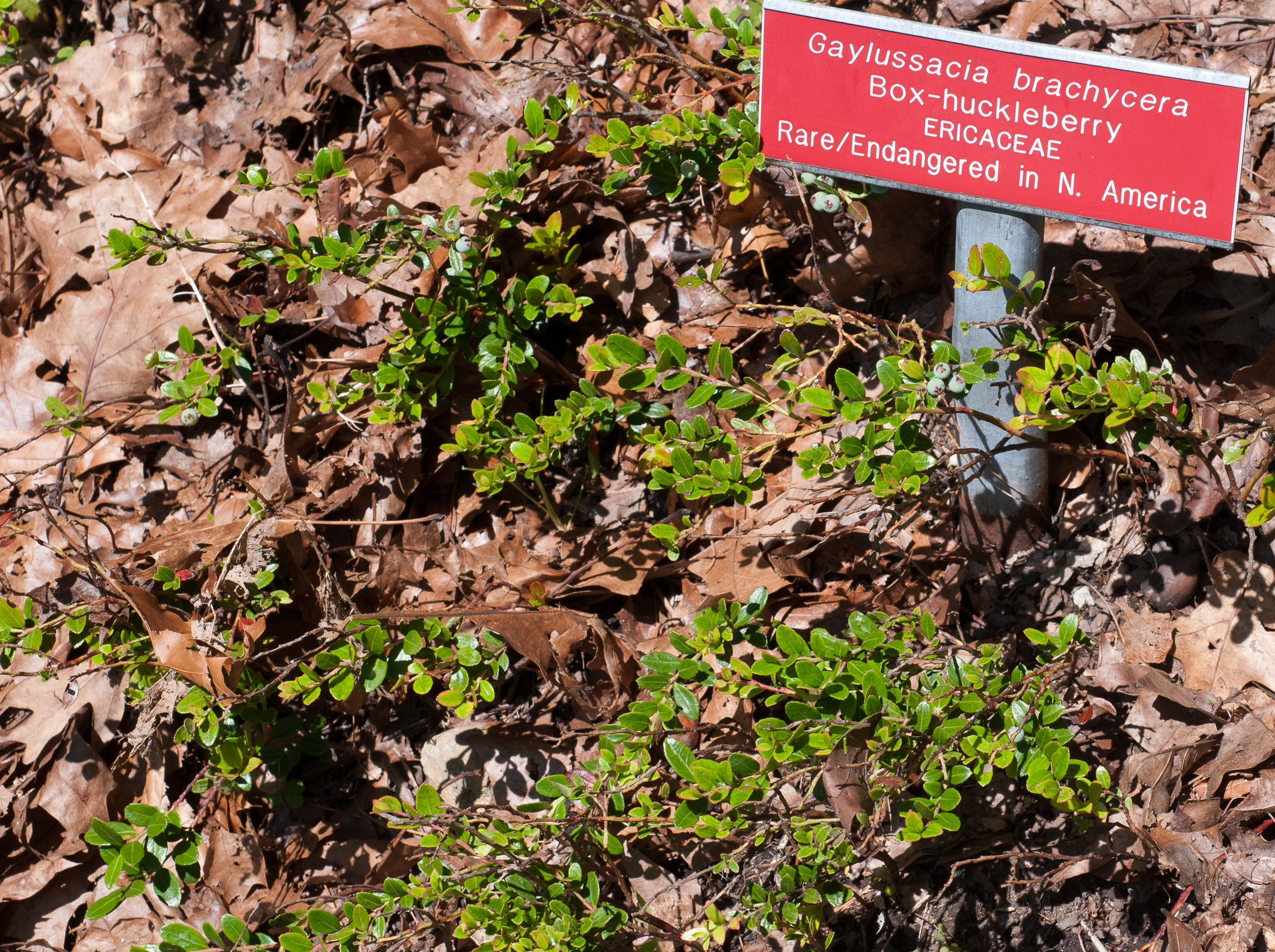
6/15/2010 · Garden in the Woods, Framingham, Massachusetts · ≈ 1 × 1′ (41 × 31 cm) 
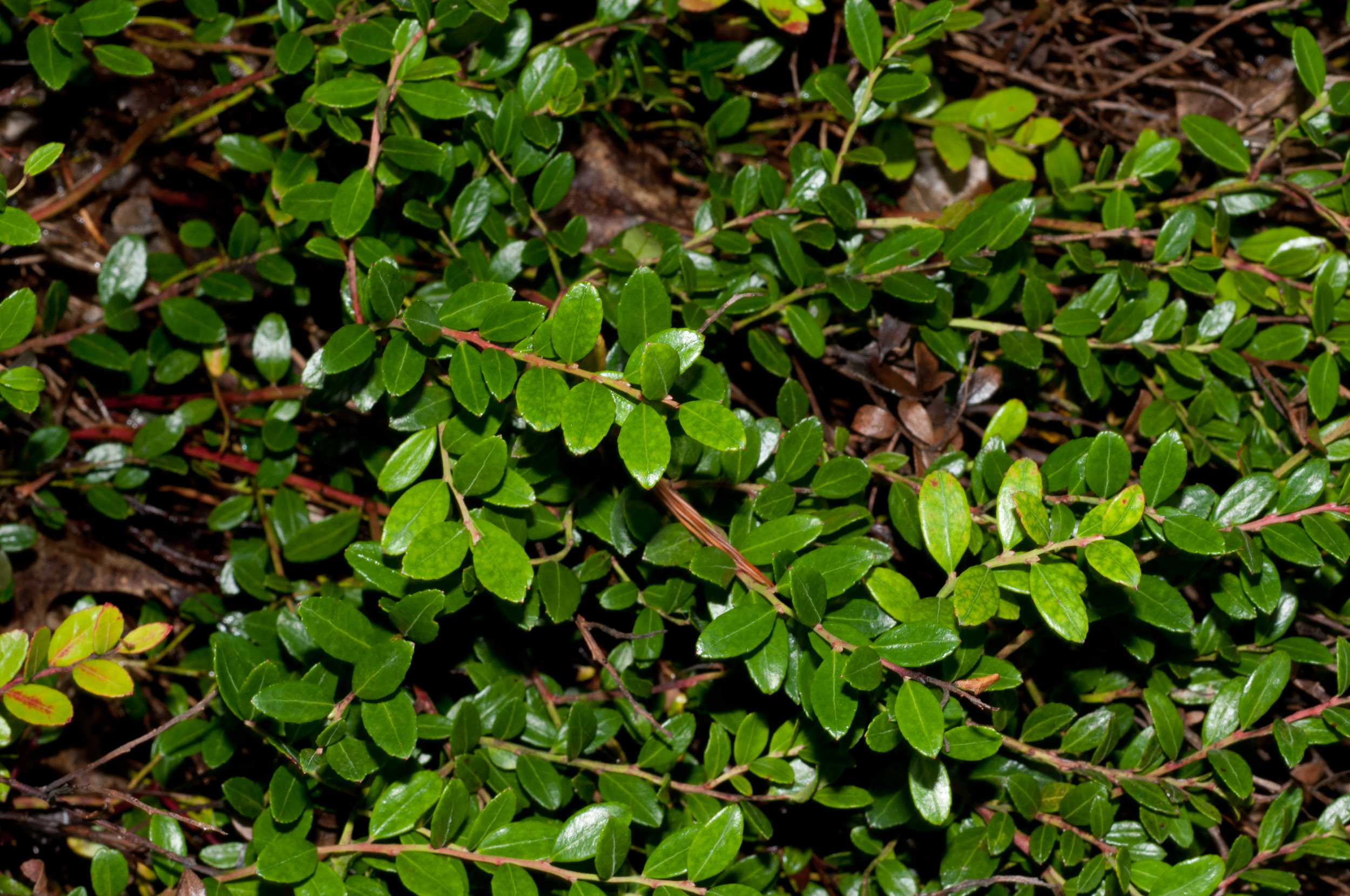
9/14/2010 · Garden in the Woods, Framingham, Massachusetts · ≈ 11 × 7″ (27 × 18 cm) 
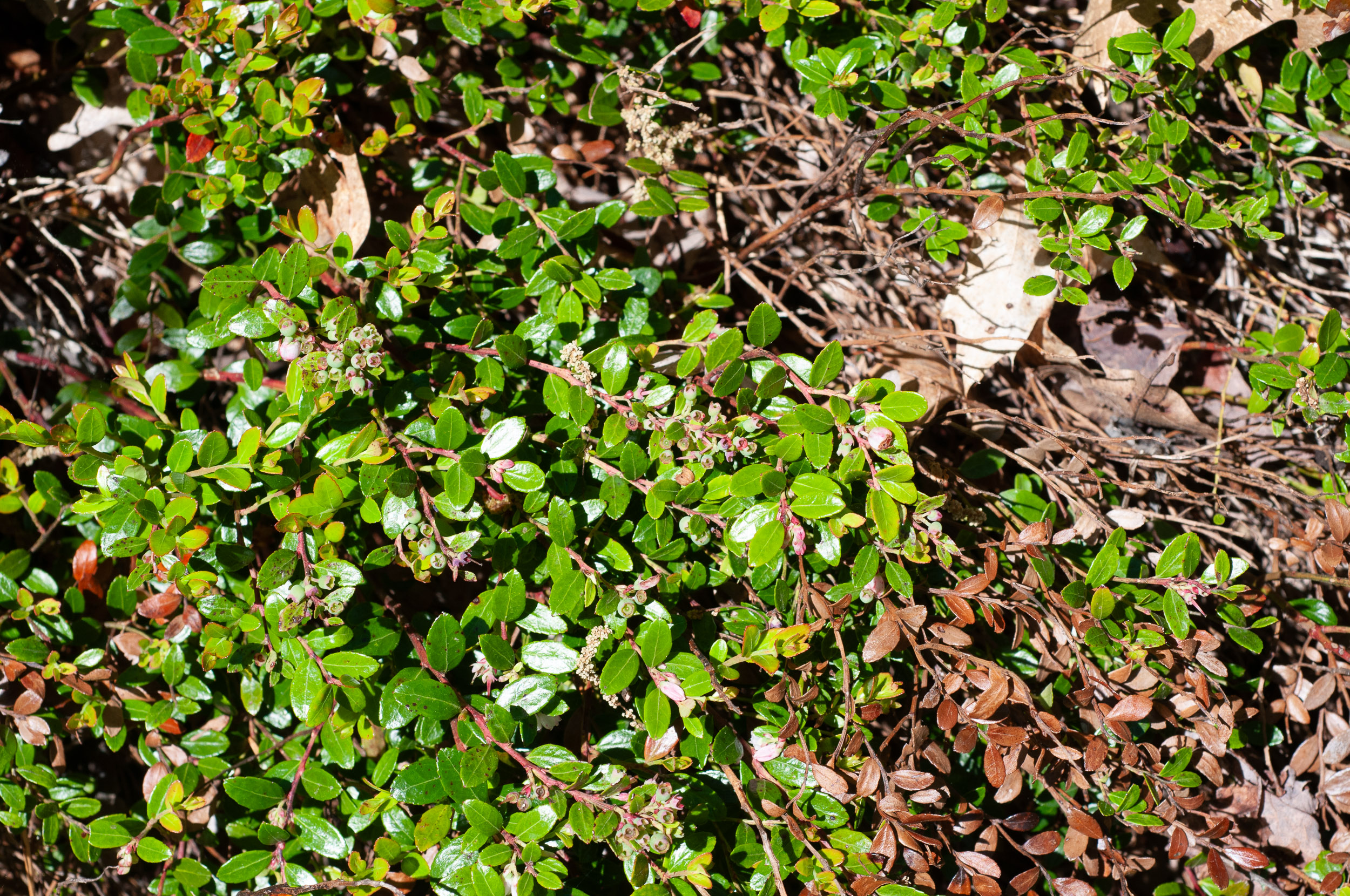
5/15/2010 · Garden in the Woods, Framingham, Massachusetts · ≈ 14 × 9″ (35 × 23 cm) 
| Kingdom | Plantae | Plants, but not fungi, lichens, or algae (from Stearn's Botanical Latin) |
| Subkingdom | Tracheobionta | Vascular plants—plants with a “circulatory system” for delivering water and nutrients |
| Division | Magnoliophyta | Flowering plants, also known as angiosperms |
| Class | Magnoliopsida | Dicotyledons—plants with two initial seed leaves |
| Subclass | Asteridae | A large class that encompasses asters |
| Order | Ericales | Tea, persimmon, blueberry, Brazil nut, azalea, many others |
| Family | Ericaceae | Heath or heather family |
| Genus | Gaylussacia | For chemist and physicist Joseph Louis Gay-Lussac |
| Species | brachycera | “Short-horned” |
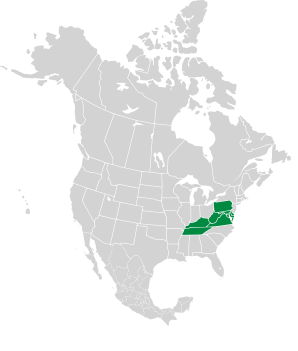
Gaylussacia brachycera description by Thomas H. Kent, not updated.

© FloraFinder.org. All rights reserved.