Geranium caespitosum James
Pineywoods geranium, crane’s bill, Fremont’s geranium, Parry’s geranium, purple wild geranium, tufted geranium, wild geranium
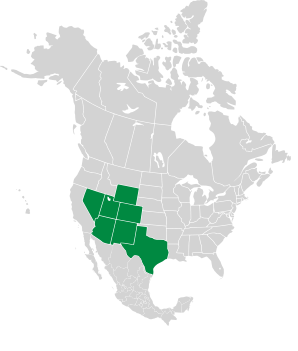
Pineywoods geranium is a herbacious perennial native to the southwestern United States.
Plants: A herb or subshrub 1–2 ⨉ 1–2′ (30–66 ⨉ 35–60 cm) in size, with profusely branched stems 8–28″ (20–70 cm) long.
Leaves: Opposite or basal, to 3″ (7.6 cm) in size, palmate, with 5 to 7 lobes.
Flowers: Purple to pink, in cymose clusters. Each flower is about 1½″ (3.8 cm) around, with 5 petals, 5 sepals, and 5 short stamens and 5 long stamens. Flowers appear from April to September, depending upon the climate.
Fruits: A schizocarp of 5 mericarps—that is, a seed pod with five seeds.
Habitats: Meadows, woodland clearings, and hillsides, usually at elevations of 5000–9000′ (1.5–2.7 km). It is common in coniferous forests and nearby streams, rivers, and canyons.
Medical: The plant was used as an astringent, and the roots were used for diarrhea, and ground into a paste for sores.
Online References:

8/26/2014 · El Malpais Information Center, National Parks Service, El Malpais, New Mexico · ≈ 12 × 8″ (31 × 21 cm) 
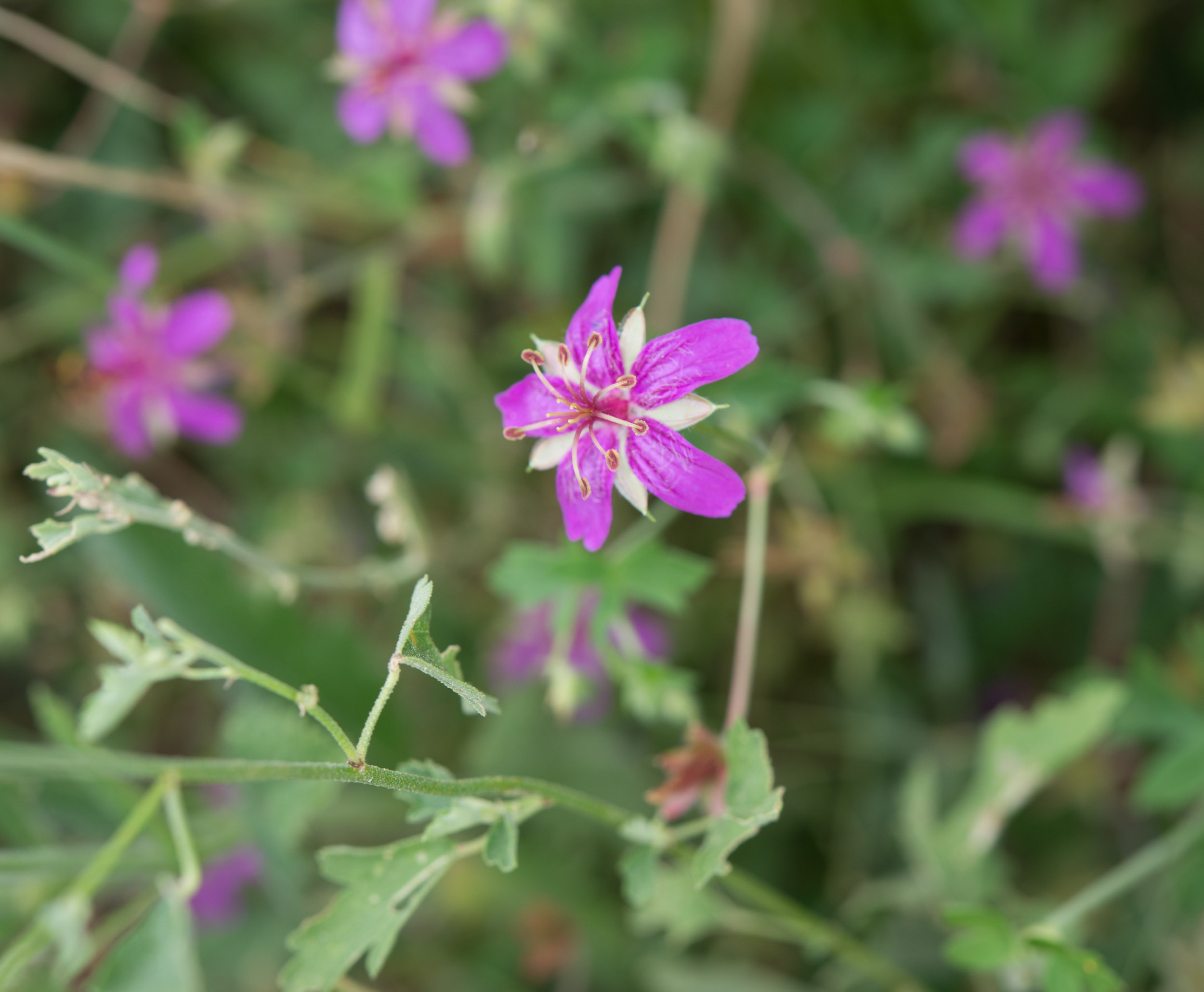
8/26/2014 · El Malpais Information Center, National Parks Service, El Malpais, New Mexico · ≈ 6 × 5″ (16 × 13 cm) 

9/1/2014 · Bandelier National Monument, New Mexico · ≈ 5 × 6″ (13 × 14 cm) 

8/30/2014 · New Mexico · ≈ 9 × 6″ (22 × 15 cm) 

8/26/2014 · El Malpais Information Center, National Parks Service, El Malpais, New Mexico · ≈ 8 × 6″ (20 × 14 cm) 

8/30/2014 · New Mexico · ≈ 8 × 5″ (19 × 12 cm) 

8/28/2014 · Town of Taos Visitor Center, Taos, New Mexico · ≈ 6 × 8″ (15 × 19 cm) 
| Kingdom | Plantae | Plants, but not fungi, lichens, or algae (from Stearn's Botanical Latin) |
| Subkingdom | Tracheobionta | Vascular plants—plants with a “circulatory system” for delivering water and nutrients |
| Division | Magnoliophyta | Flowering plants, also known as angiosperms |
| Class | Magnoliopsida | Dicotyledons—plants with two initial seed leaves |
| Subclass | Rosidae | Roses, legumes, proteas, dogwoods, hydrangeas, mistletoes, euphorbias, grapes, many more |
| Order | Geraniales | Balsams, mustards, geraniums, wood sorrels, nasturtiums, others |
| Family | Geraniaceae | Geranium or cranesbill family |
| Genus | Geranium | From the Greek γέρανος, géranos (or γερανός, geranós), “crane,” because some of the fruits resemble a crane’s bill |
| Species | caespitosum | Caespitose, having a densely-clumped, tufted or cushion-like growth form, with the flowers held above the clump or tuft, alternate spelling cespitose |
Geranium caespitosum description by Thomas H. Kent, not updated.

© FloraFinder.org. All rights reserved.