Geranium robertianum L.
Herb Robert, robert geranium, red robin
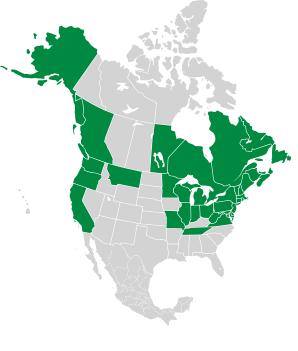
Herb robert is a native Europe, Asia, and north Africa. It may be native to North America as well. It is grown in gardens, but can become invasive in some habitats.

From Sturm, Johann Georg (Painter: Jacob Sturm), Deutschlands Flora in Abbildungen nach der Natur mit Beschreibungen, Nrnberg: Gedruckt auf Kosten des Verfassers, 1796. 
Plants: Forking stems (a) are up to 10″ (25 cm) long.
Leaves: Triangular in shape and deeply divided, like those of ferns. Grown in bright sunlight, stems and leaves may be bright red, or red-tinged. The crushed leaves produce an odor similar to that of burning tires, which is sometimes used as an insect repellent. For this reason it is sometimes called “Stinky Bob.”
Flowers: Small, attractive pink flowers have five rounded petals (c) that ¼–⅜″ (7–10 mm) long; flowers are ⅜–¾″ (1–2 cm) in diameter.
Fruits: Small capsules (f); seeds (g) are brown, 1/16″ (2 mm) long. Fruit capsules of this plant (e), like many other cranesbills, grow a spring-loaded beak-shaped column that triggers suddenly, spreading the seeds.
Habitats: Moist forests, grasslands, woodlands, and dry rocky outcrops.
Medical: Herb robert has been used to treat nosebleeds and toothaches.
Online References:

6/10/2016 · Monhegan Island, Maine 

6/10/2016 · Monhegan Island, Maine 

6/10/2016 · Monhegan Island, Maine 
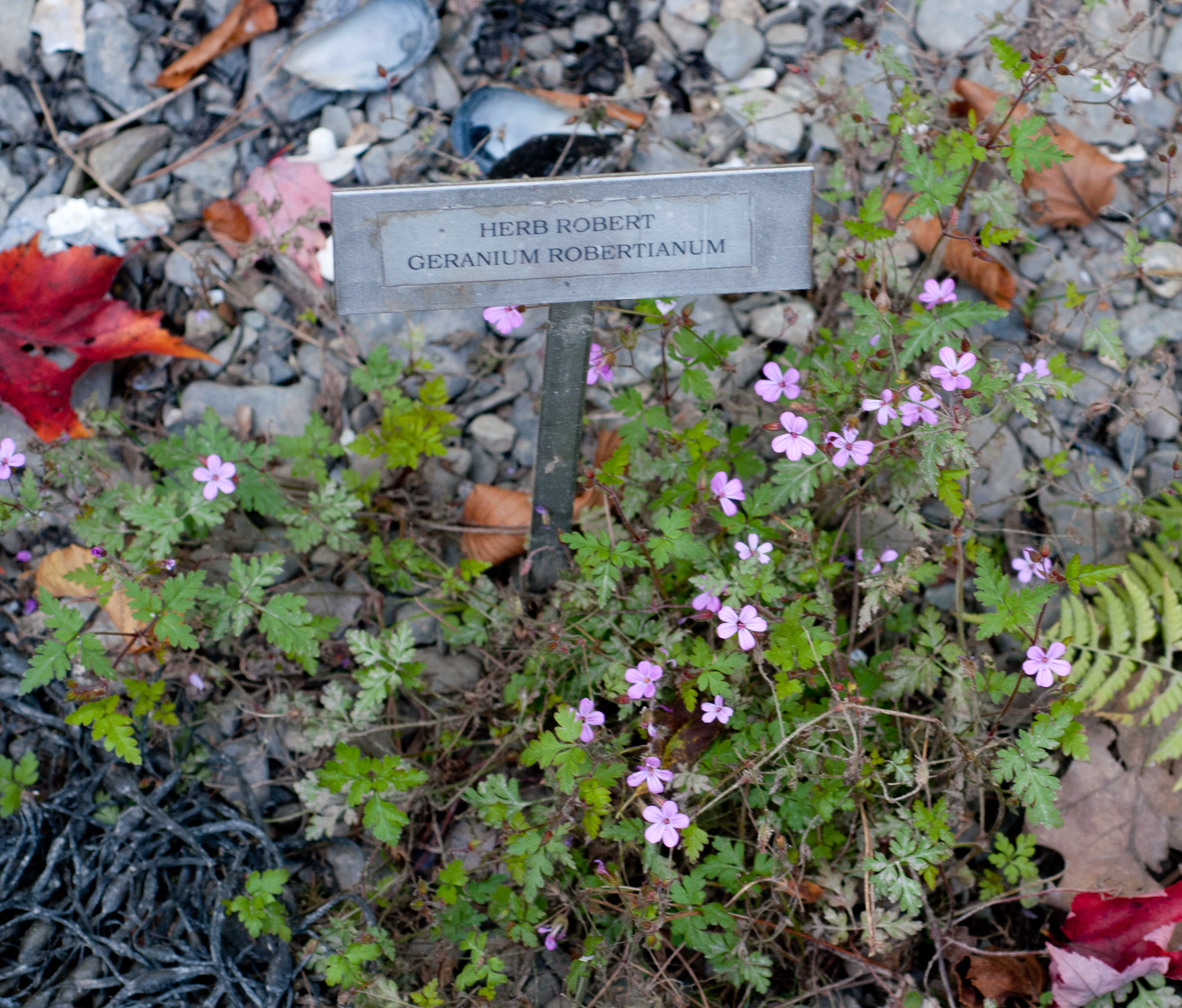
9/20/2009 · Wild Gardens of Acadia, Acadia National Park, Bar Harbor, Maine · ≈ 14 × 12″ (34 × 29 cm) 
| Kingdom | Plantae | Plants, but not fungi, lichens, or algae (from Stearn's Botanical Latin) |
| Subkingdom | Tracheobionta | Vascular plants—plants with a “circulatory system” for delivering water and nutrients |
| Division | Magnoliophyta | Flowering plants, also known as angiosperms |
| Class | Magnoliopsida | Dicotyledons—plants with two initial seed leaves |
| Subclass | Rosidae | Roses, legumes, proteas, dogwoods, hydrangeas, mistletoes, euphorbias, grapes, many more |
| Order | Geraniales | Balsams, mustards, geraniums, wood sorrels, nasturtiums, others |
| Family | Geraniaceae | Geranium or cranesbill family |
| Genus | Geranium | From the Greek γέρανος, géranos (or γερανός, geranós), “crane,” because some of the fruits resemble a crane’s bill |
| Species | robertianum | Derives from the medieval Latin name herba roberti after Robertus (Saint Robert), a French ecclesiastic who was the founder of the Carthusians and died in 1067. It has also been suggested that the name relates to [St.?] Rupert, Archbishop of Salszburg who died 717 or to Robert, Duke of Normandy |
Geranium robertianum description by Thomas H. Kent, not updated.

© FloraFinder.org. All rights reserved.