Hieracium caespitosum Dumort.
Field hawkweed, yellow hawkweed, meadow hawkweed, king devil, yellow paintbrush, devil’s paintbrush, yellow devil, yellow fox-and-cubs, yellow king-devil
Field hawkweed is native to temperate Europe, but introduced to North America, where it is found in the Pacific northwest and the eastern United States and Canada. It is hardy, and often considered invasive.
Plants: Plants consist of a basal rosette with 3-8 or more leaves, and tall, thin relatively bare flower stems 8–30″ (20–75 cm) high. Stems, leaves, and stolons exude a milky latex when cut. Stems have dense blackish hairs 1/32–⅛″ (1–4 mm) long, softer toward the bottom, stiffer toward the top.
Leaves: The basal leaves are 1¼–4½ ⨉ ½–1¼″ (3.5–12 ⨉ 1.3–3.2 cm). They are variable in appearance, oblong lanceolate to elliptic in shape, with blunt or pointed tips, sometimes toothed, and densely hairy.
Flowers: Each stem is topped with a flat-topped or umbrella-shaped cluster of 5-40 yellow flowers. Each flower is about ⅜″ (1 cm) in diameter. It is really a full-blown inflorescence, since each of its 25-50 petals forms its own seed, making it, technically at least, a flower. Flowers appear from May to early July.
Fruits: Shiny black seeds (cypselae) are 1/32–1/16″ (1.5–1.8 mm) long. Each seed is equipped with a tuft of hairs for air distribution, form a spherical seed head about ⅜″ (1 cm) in diameter.
Habitats: Fields, disturbed areas, roadsides, sparse woodlands.
Online References:
Hieracium pratense Tausch
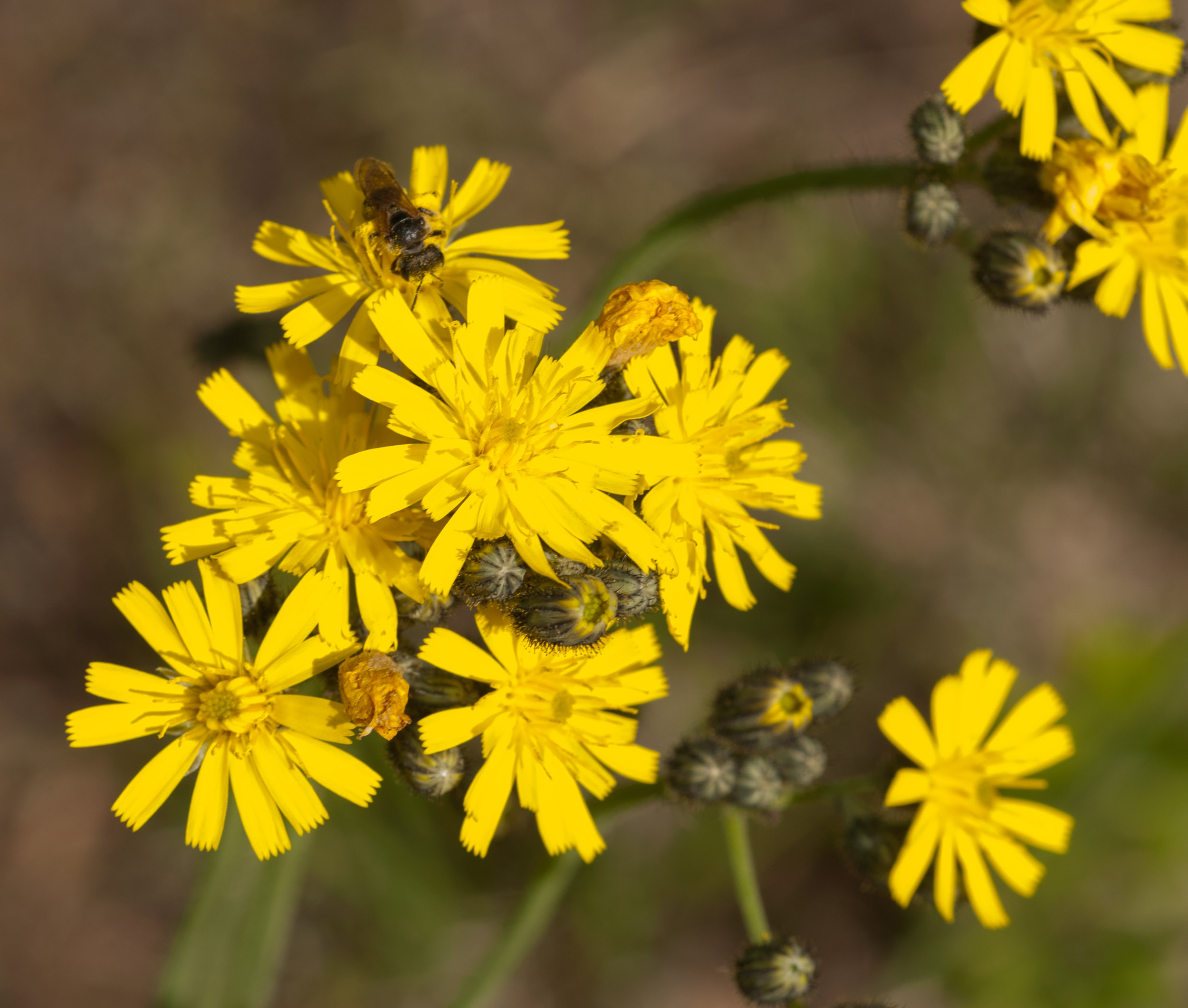
5/24/2012 · Nashua River Rail Trail, Groton Center, Groton, Massachusetts · ≈ 4 × 3½″ (10 × 9.2 cm)  ID is uncertain
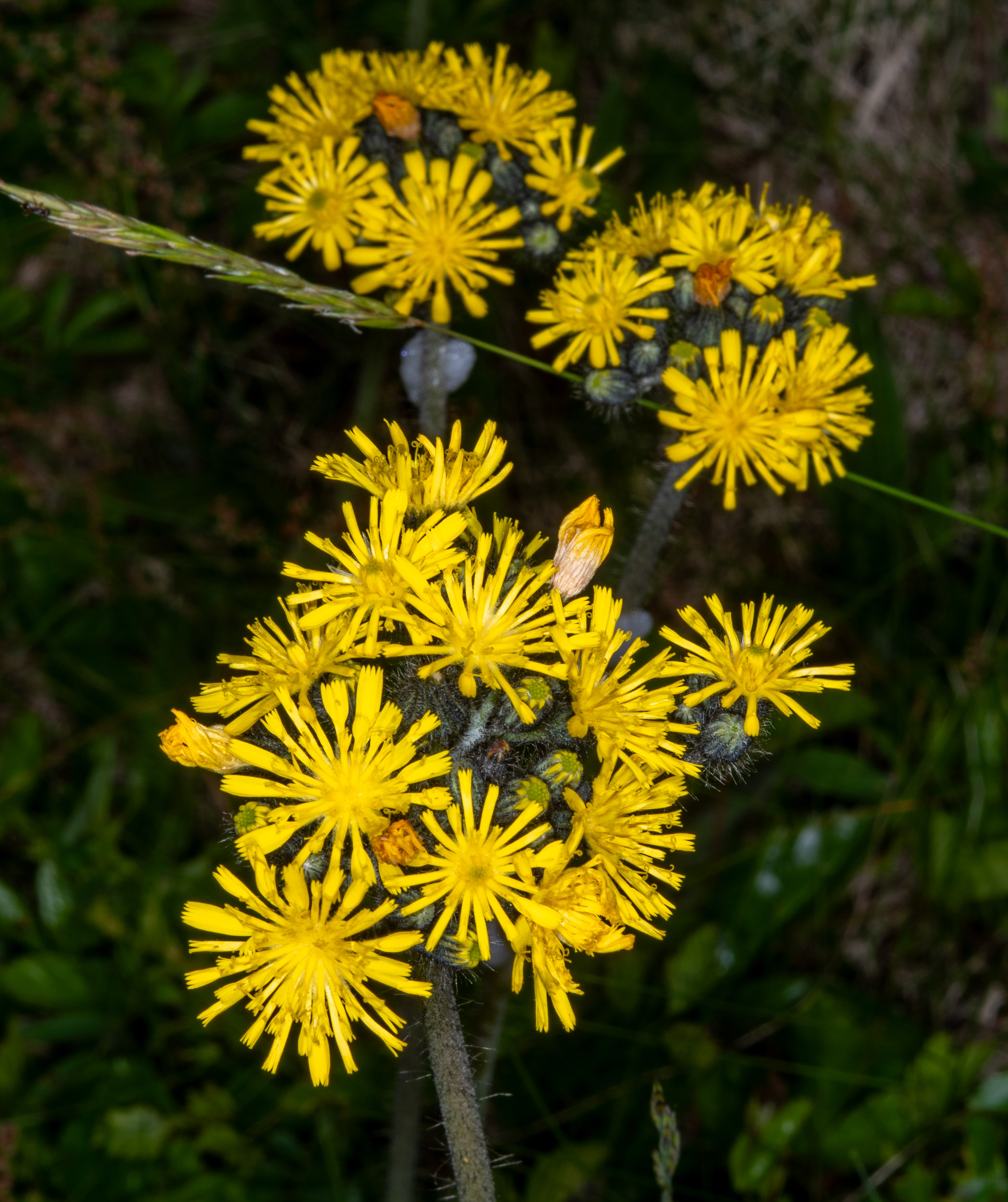
6/9/2025 · Curtis Farm Preserve, Harpswell, Maine · ≈ 4 × 5″ (11 × 13 cm) 

5/24/2012 · Nashua River Rail Trail, Groton Center, Groton, Massachusetts · ≈ 4½ × 5″ (11 × 13 cm) ID is uncertain 
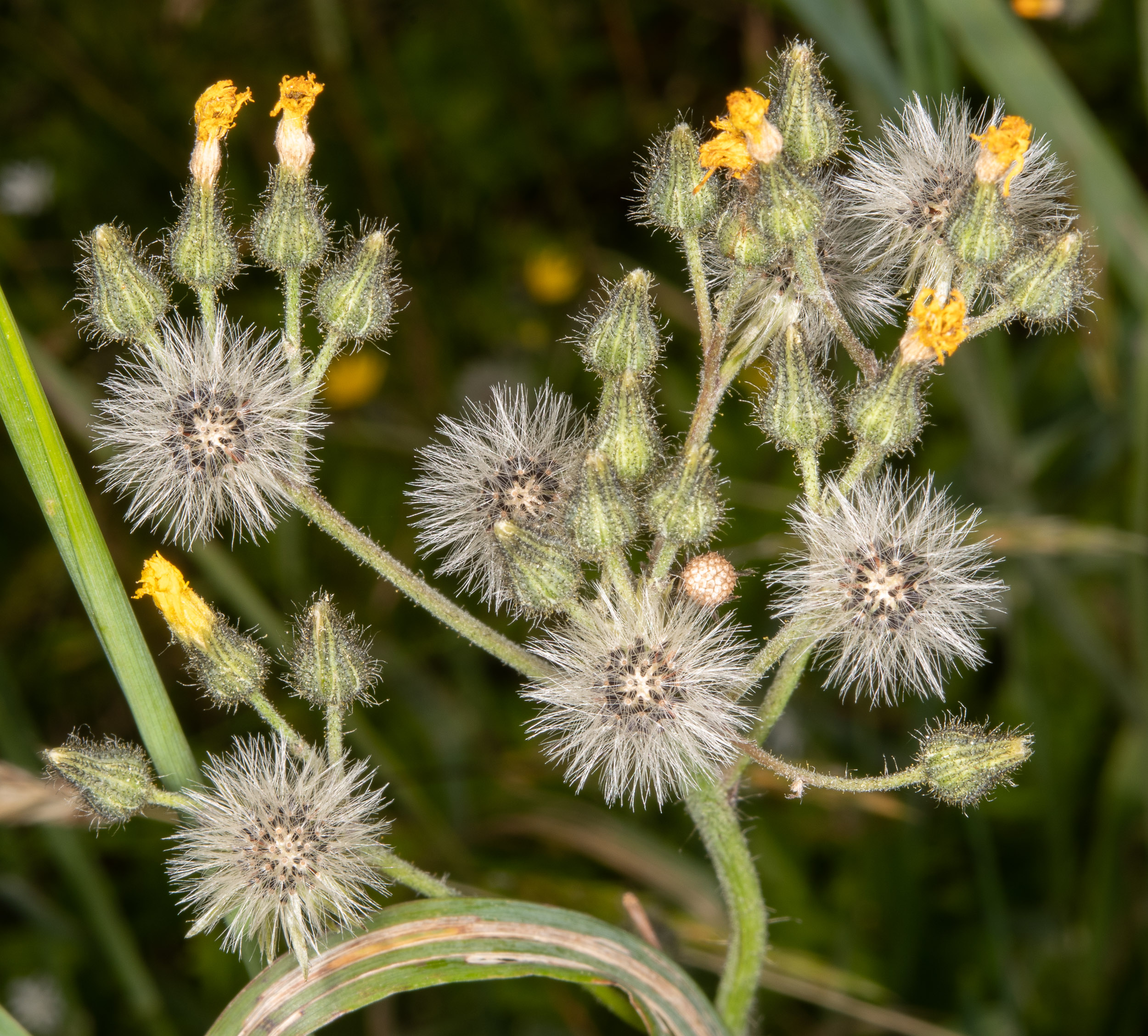
6/19/2024 · Red Rose Preserve, Bowdoinham, Maine · ≈ 4 × 3½″ (9.9 × 8.9 cm) ID is uncertain 

6/3/2018 · Mt. Watatic, Ashby, Massachusetts · ≈ 7 × 6″ (18 × 16 cm) 
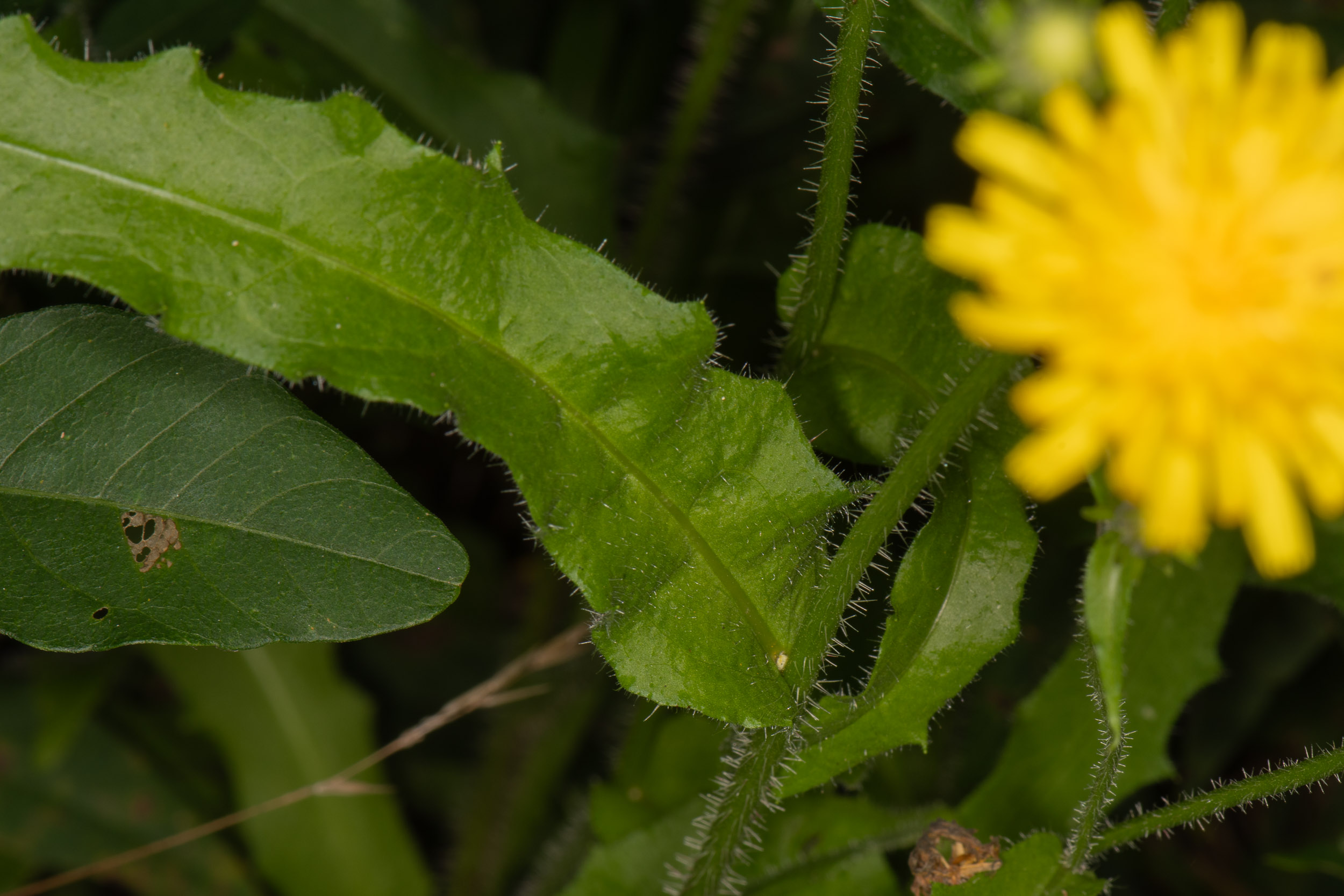
8/27/2021 · Hackett and Minot Trails, Harpswell, Maine · ≈ 6 × 4″ (16 × 10 cm) 

8/20/2010 · Nashua River Rail Trail, Ayer, Massachusetts · ≈ 4½ × 6″ (11 × 14 cm) ID is uncertain 
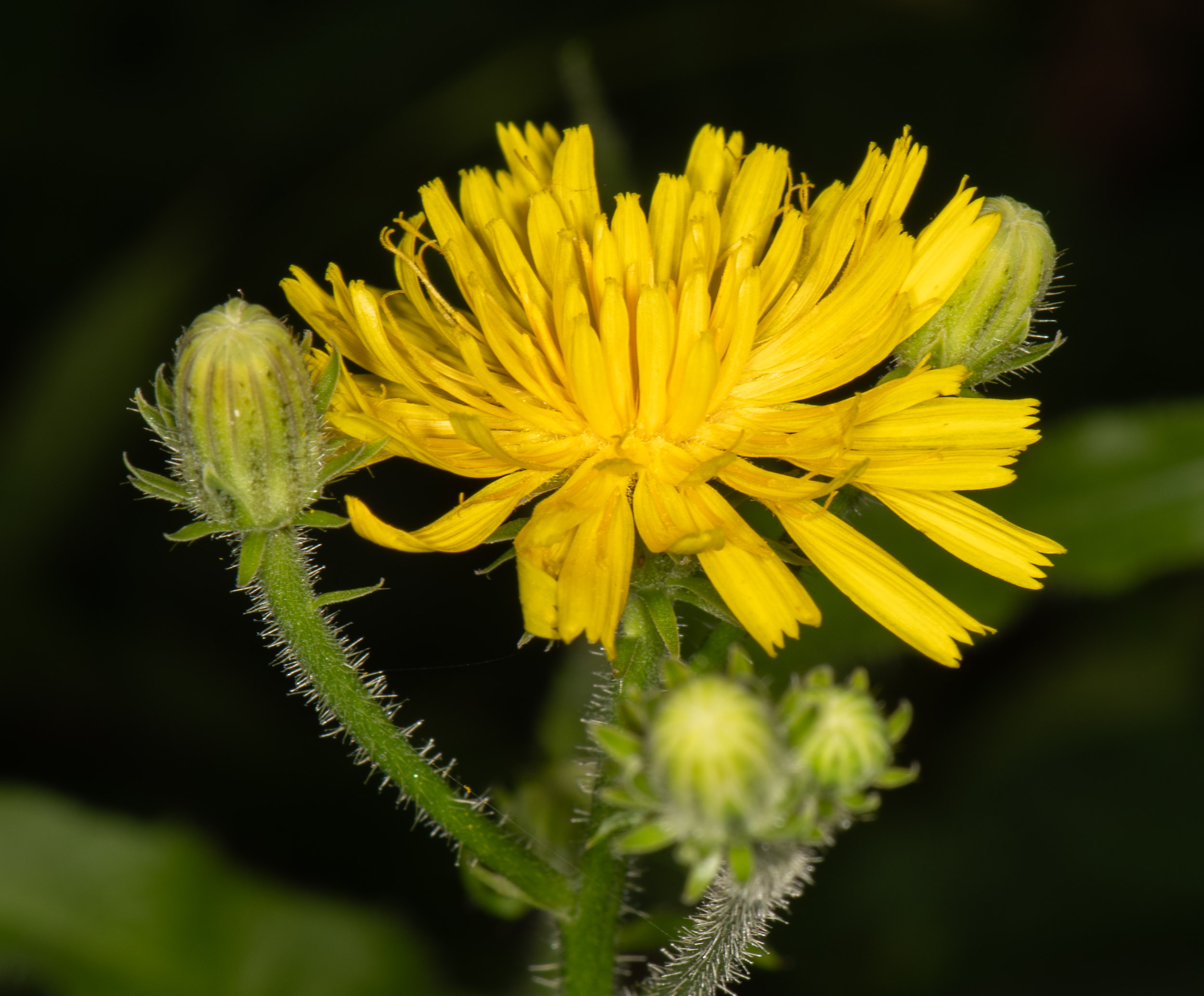
8/27/2021 · Hackett and Minot Trails, Harpswell, Maine · ≈ 3 × 2½″ (7.8 × 6.5 cm) 
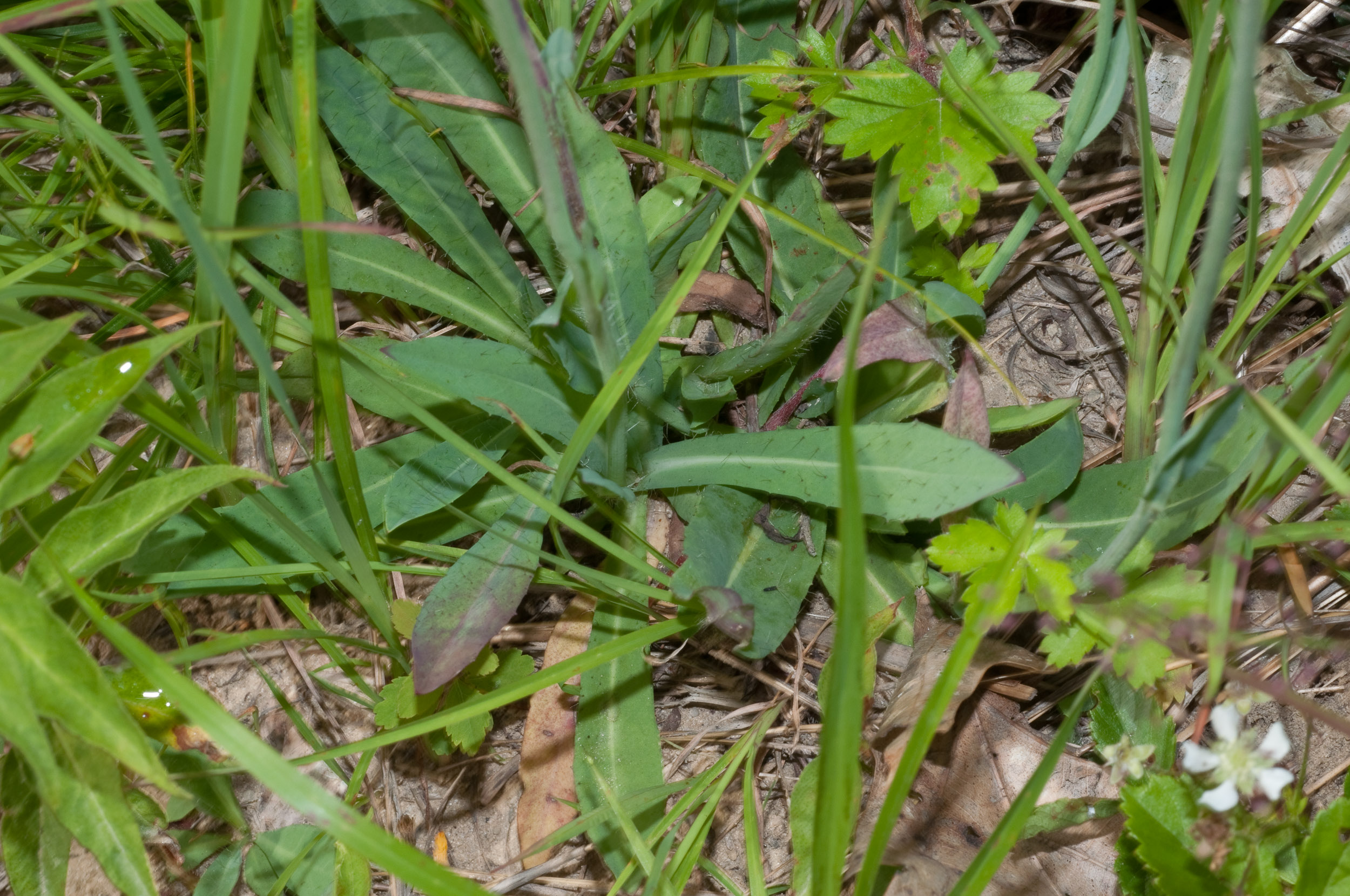
6/22/2010 · Nashua River Rail Trail, Ayer, Massachusetts · ≈ 9 × 6″ (22 × 14 cm) ID is uncertain 

6/10/2021 · Otter Brrok Preserve, Harpswell Heritage Land Trust, Harpswell, Maine · ≈ 14 × 9″ (35 × 23 cm) 

6/21/2017 · Pearl Hill State Park, Townsend, Massachusetts · ≈ 10 × 6″ (24 × 16 cm) 
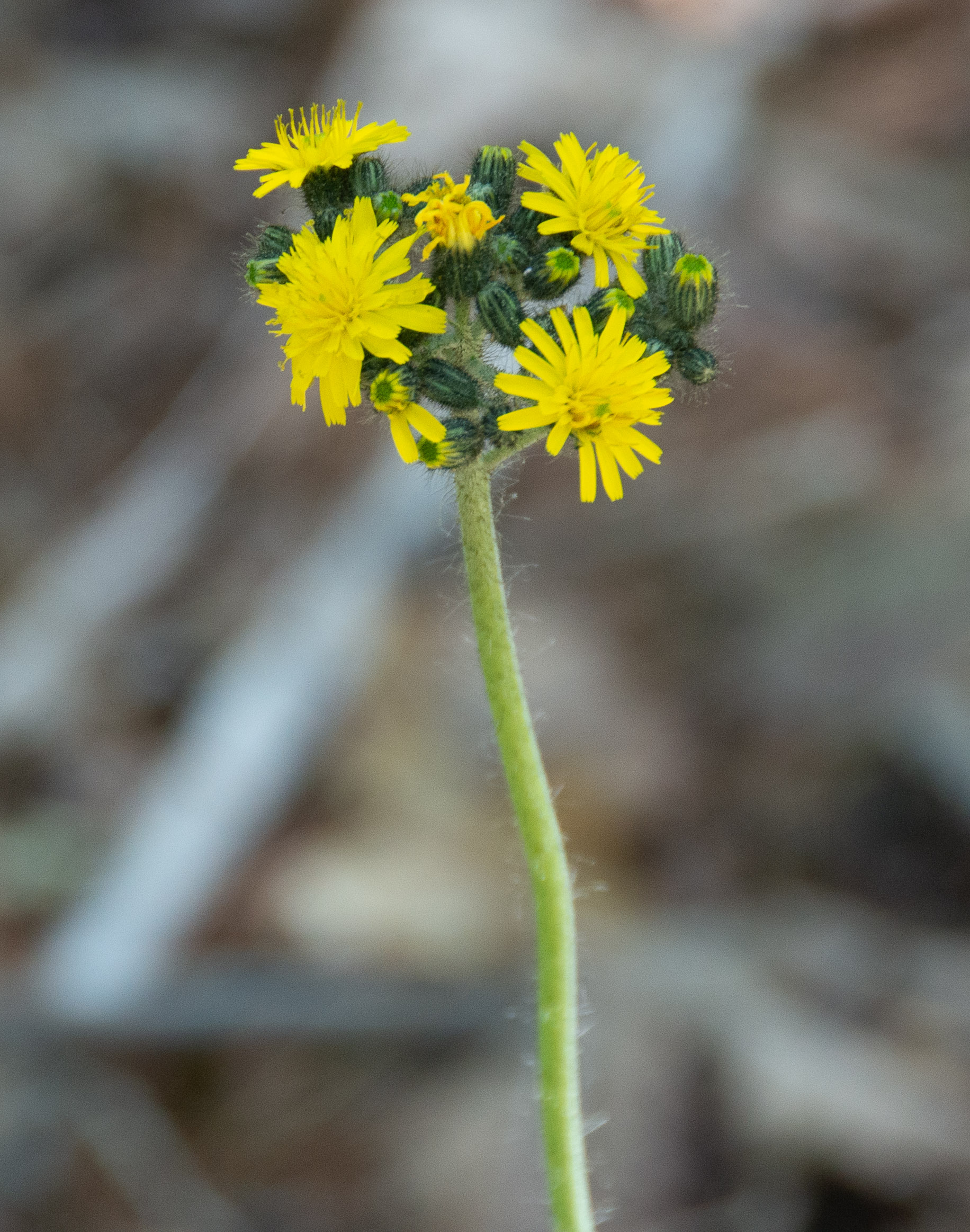
6/10/2021 · Otter Brrok Preserve, Harpswell Heritage Land Trust, Harpswell, Maine · ≈ 4 × 5″ (10 × 13 cm) 
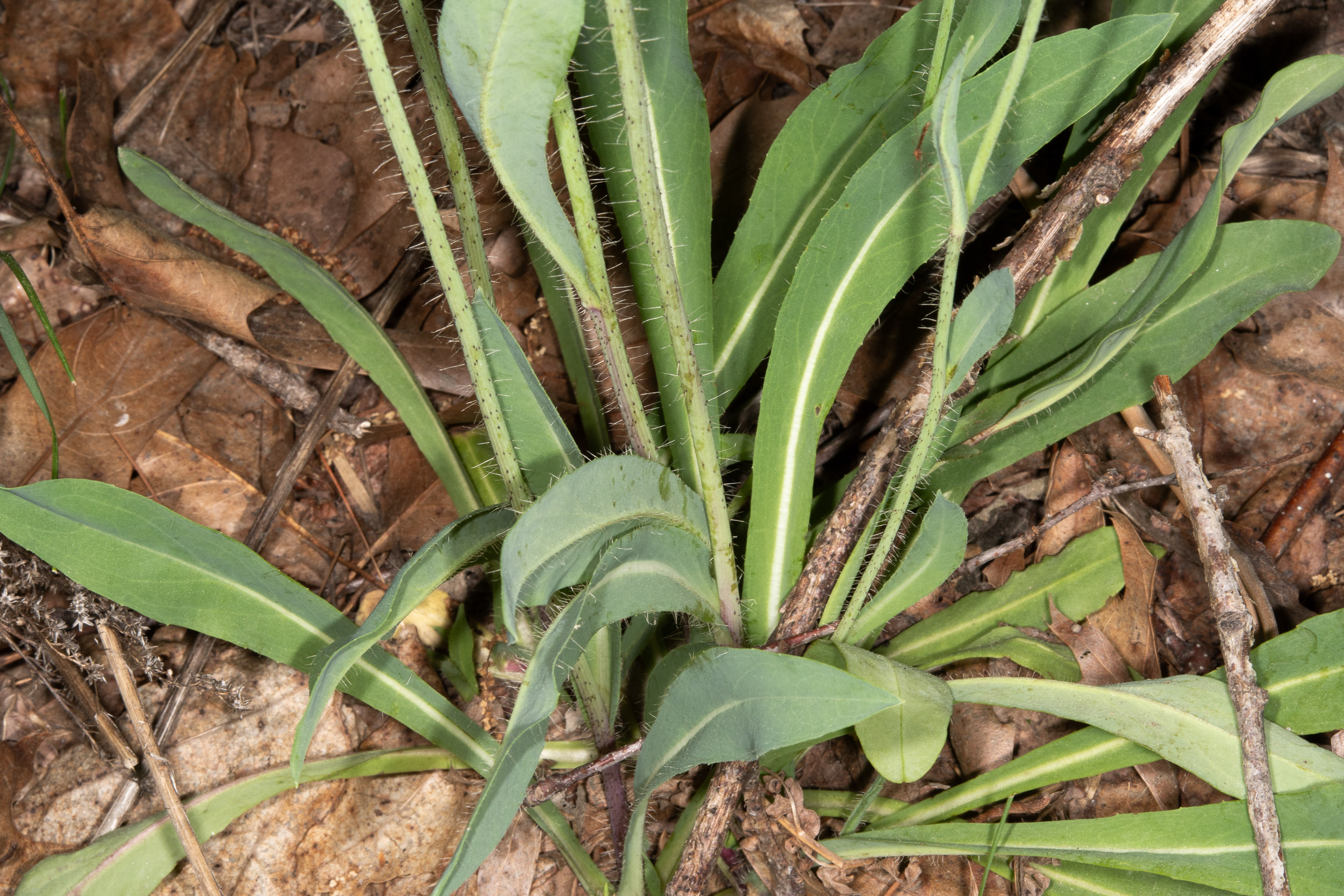
6/3/2018 · Mt. Watatic, Ashby, Massachusetts · ≈ 10 × 6″ (24 × 16 cm) 
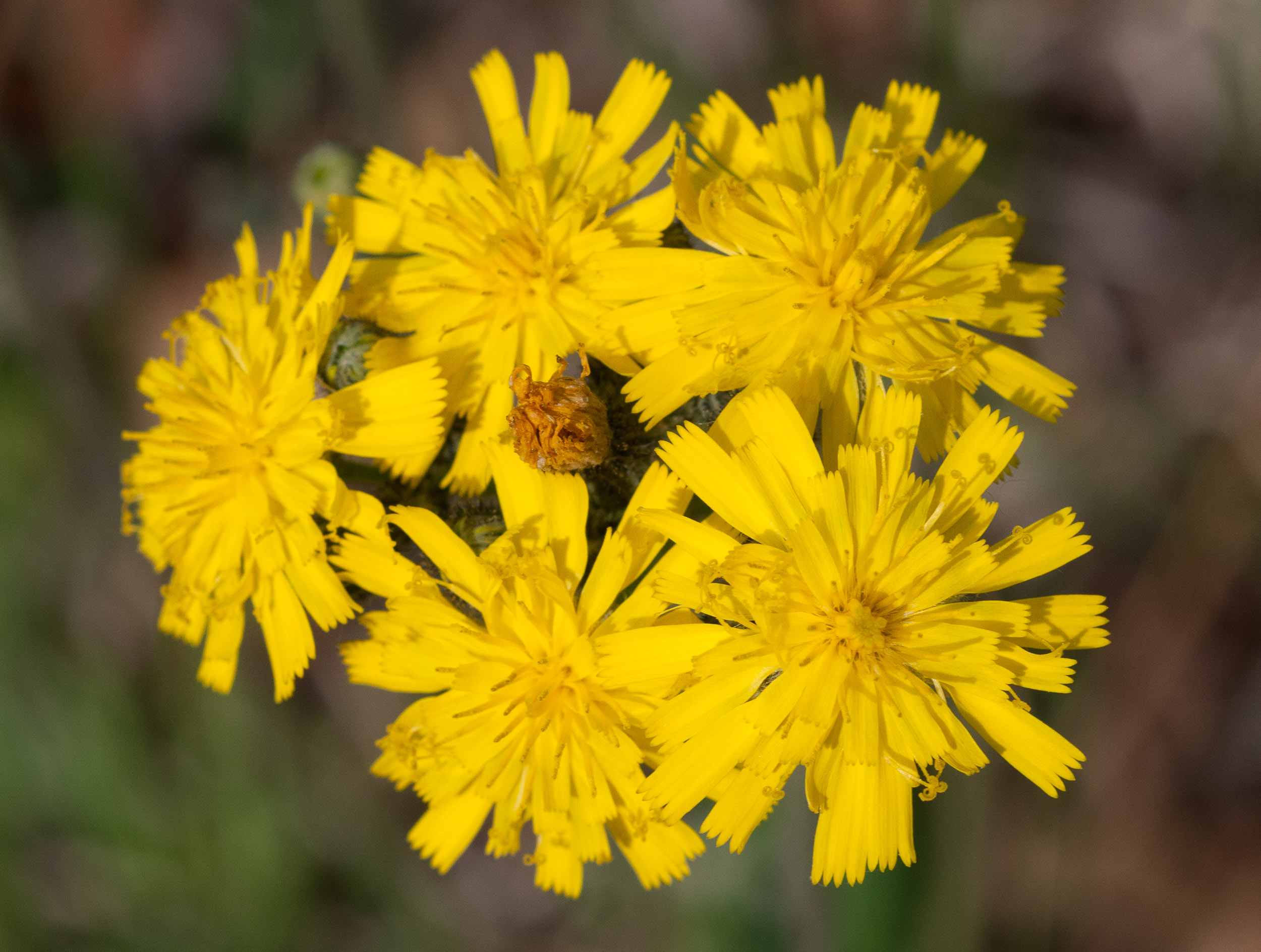
5/22/2010 · Nashua River Rail Trail, Groton Center, Groton, Massachusetts · ≈ 3½ × 2½″ (9.5 × 7.2 cm) ID is uncertain 
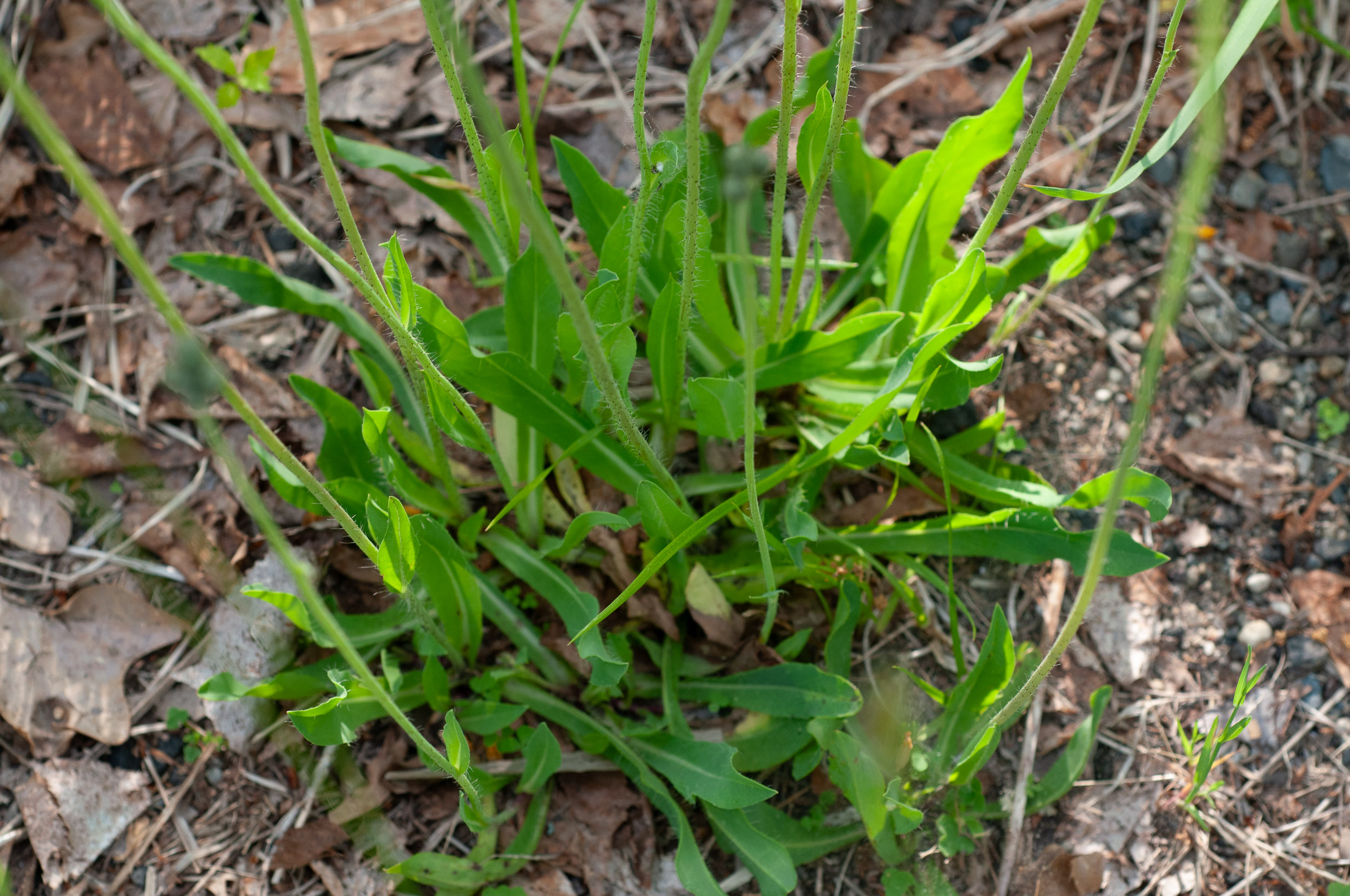
6/1/2010 · Nashua River Rail Trail, Groton Center, Groton, Massachusetts · ≈ 12 × 8″ (31 × 20 cm) ID is uncertain 

6/3/2018 · Mt. Watatic, Ashby, Massachusetts · ≈ 3½ × 3″ (9.7 × 7.6 cm) 

6/9/2025 · Curtis Farm Preserve, Harpswell, Maine · ≈ 6 × 6″ (16 × 16 cm) 
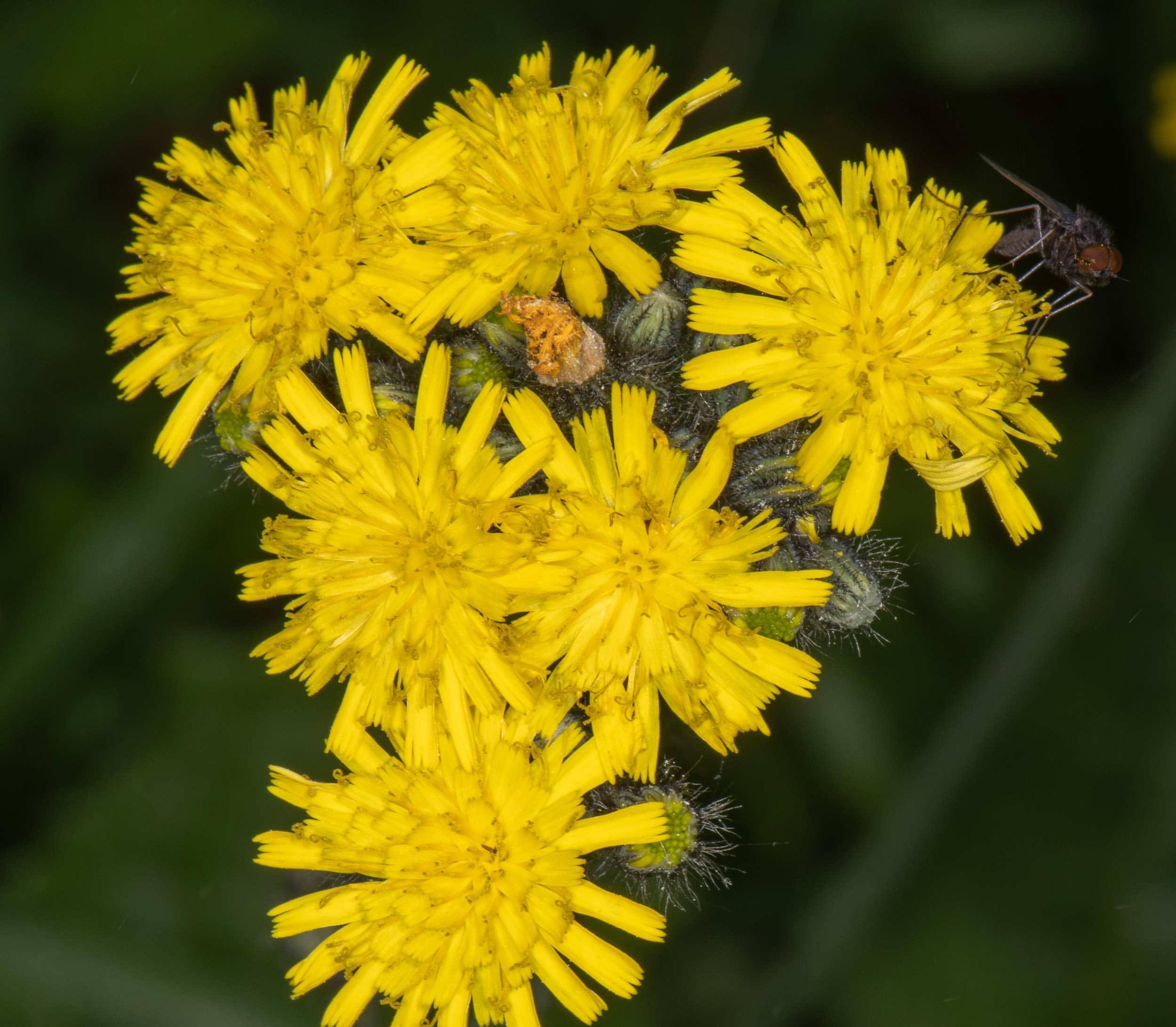
6/10/2021 · Otter Brrok Preserve, Harpswell Heritage Land Trust, Harpswell, Maine · ≈ 3 × 2½″ (7.9 × 6.9 cm) 
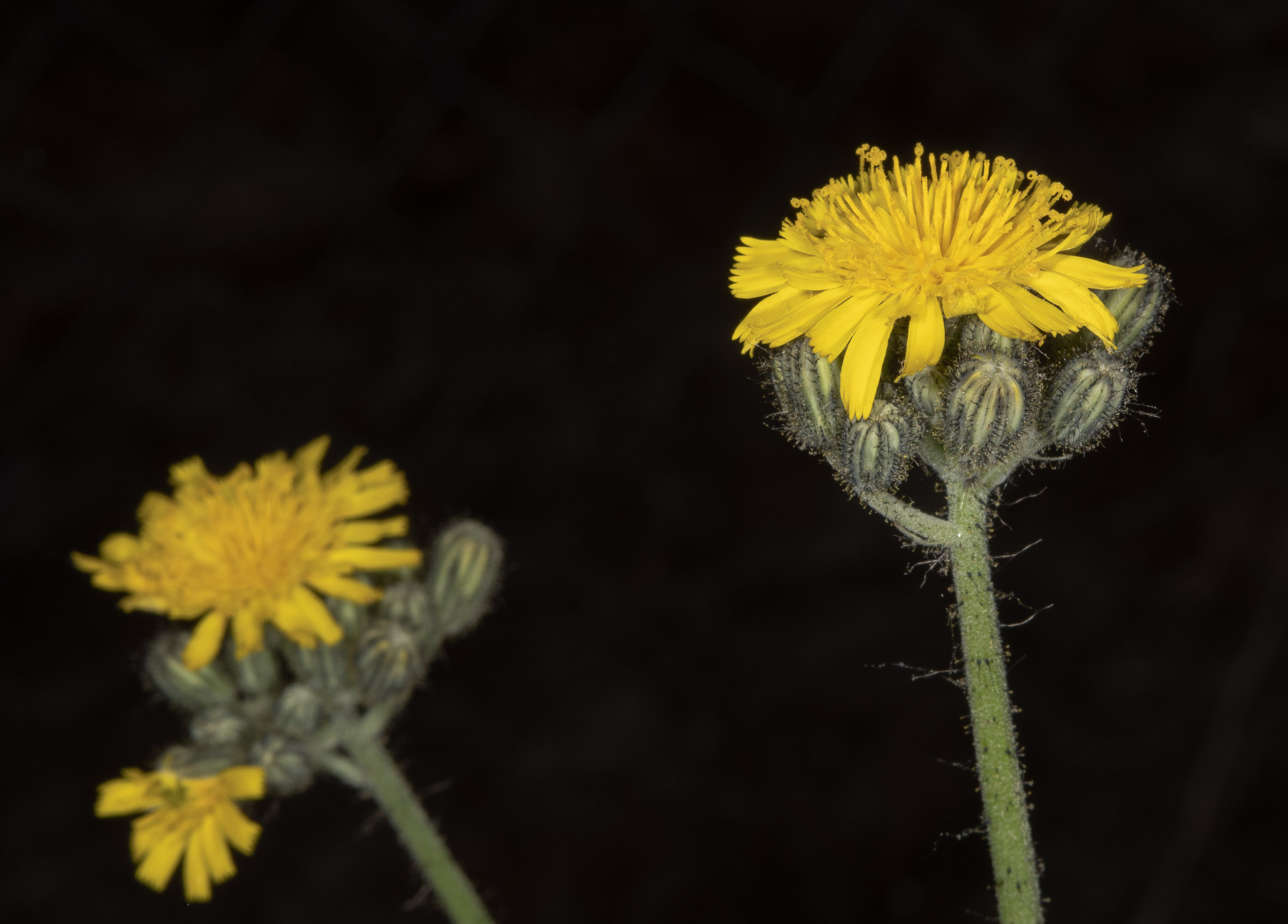
6/3/2018 · Mt. Watatic, Ashby, Massachusetts · ≈ 4 × 2½″ (10 × 7.2 cm) 

6/1/2010 · Nashua River Rail Trail, Groton Center, Groton, Massachusetts · ≈ 10 × 15″ (26 × 39 cm) ID is uncertain 
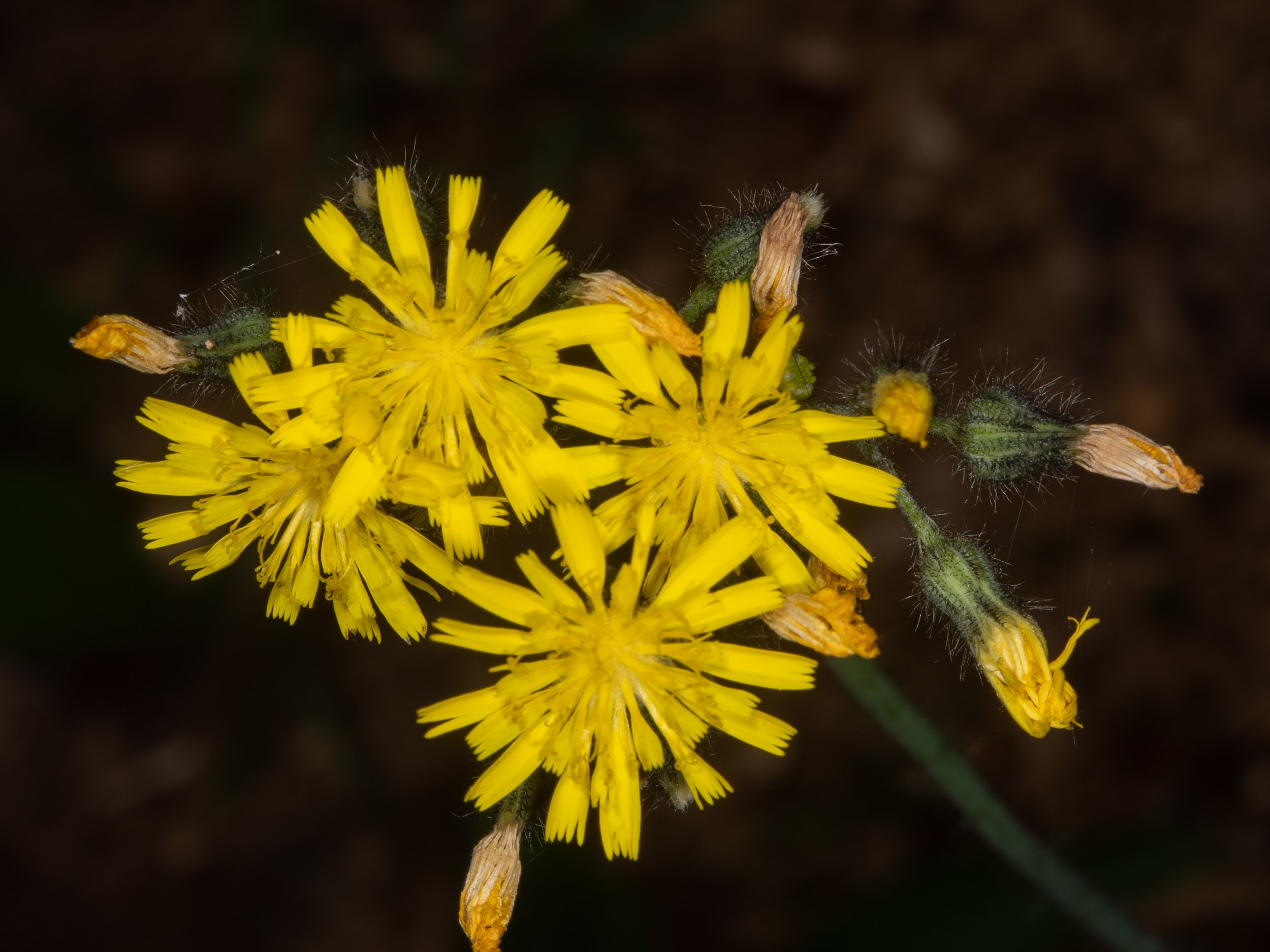
6/21/2017 · Pearl Hill State Park, Townsend, Massachusetts · ≈ 3½ × 2½″ (9.8 × 7.3 cm) 
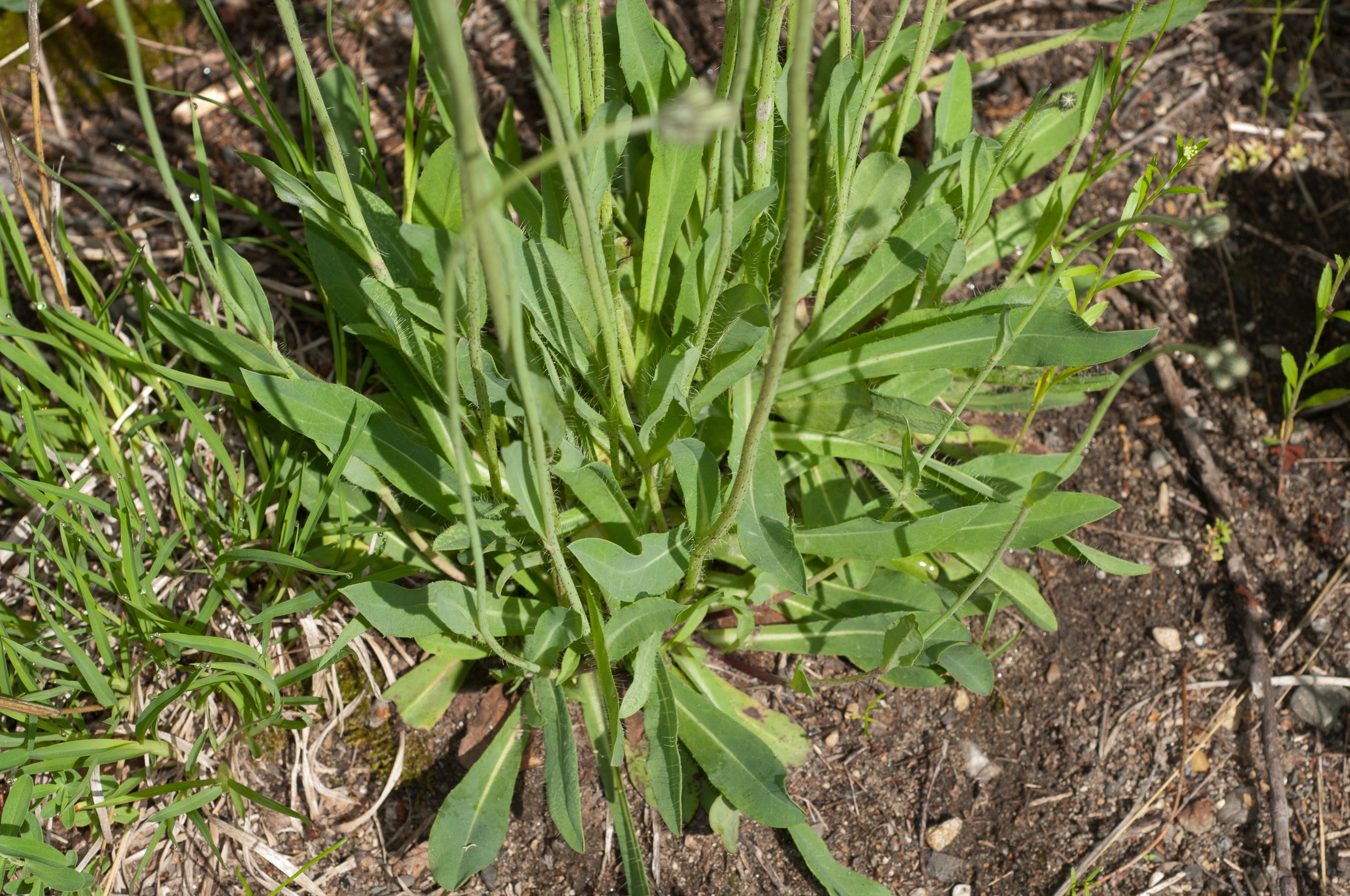
5/24/2012 · Nashua River Rail Trail, Groton Center, Groton, Massachusetts · ≈ 14 × 9″ (35 × 23 cm) ID is uncertain 

6/2/2010 · J. Harry Rich State Forest, Groton, Massachusetts · ≈ 6 × 6″ (14 × 14 cm) ID is uncertain 
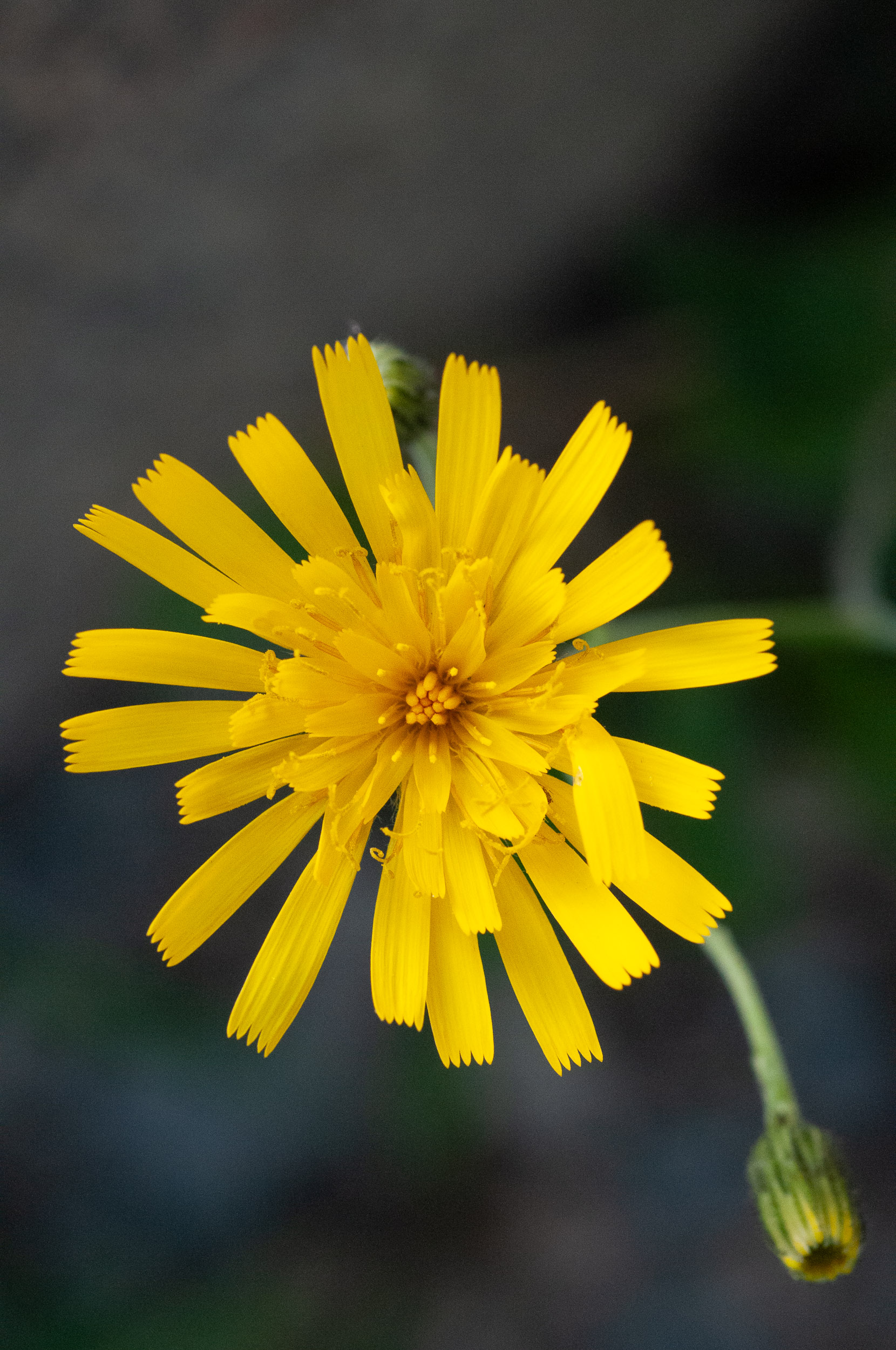
9/19/2009 · Acadia National Park, Bar Harbor, Maine · ≈ 3 × 4½″ (7.9 × 11 cm) ID is uncertain 
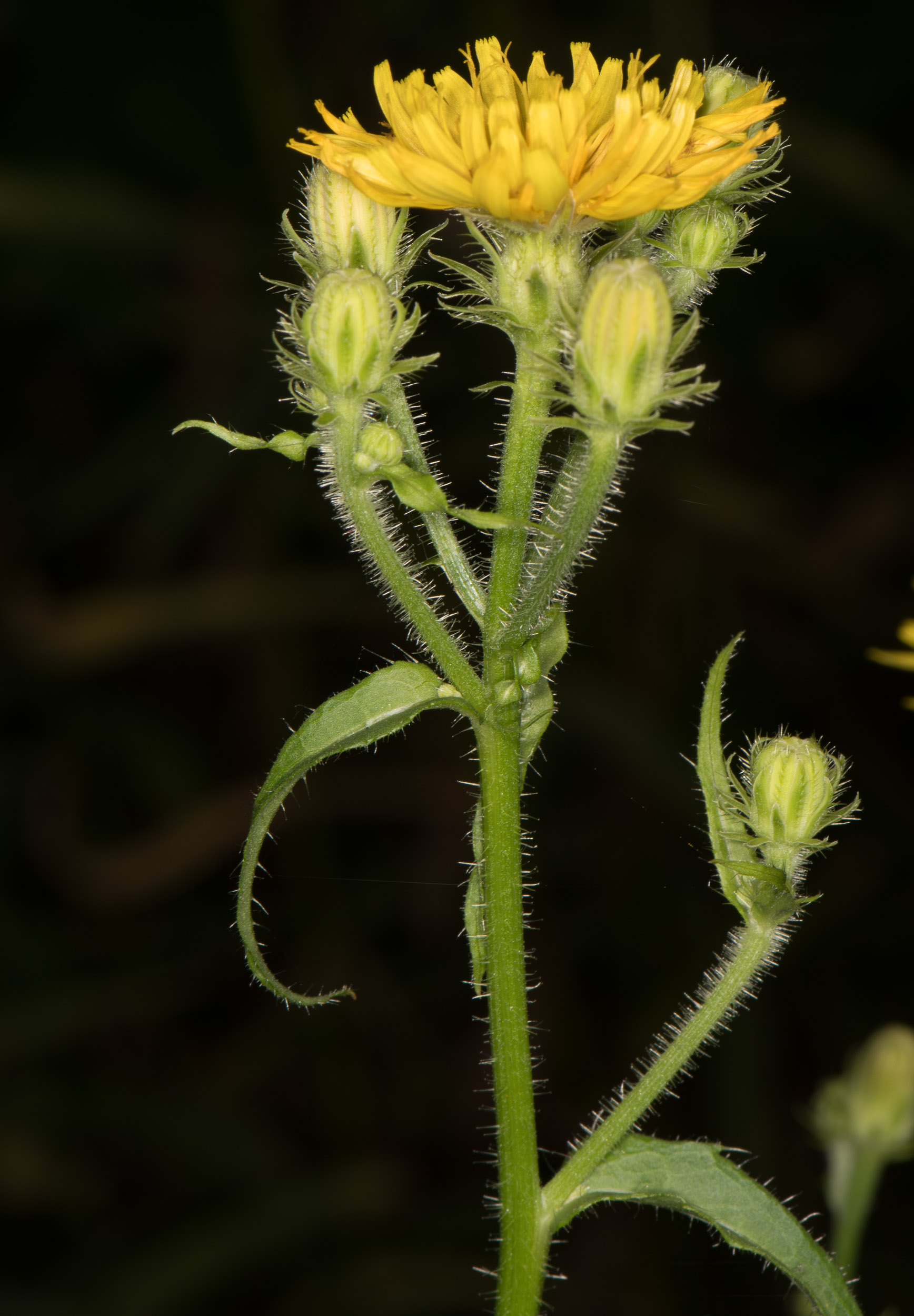
8/27/2021 · Hackett and Minot Trails, Harpswell, Maine · ≈ 3½ × 5″ (8.7 × 12 cm) 
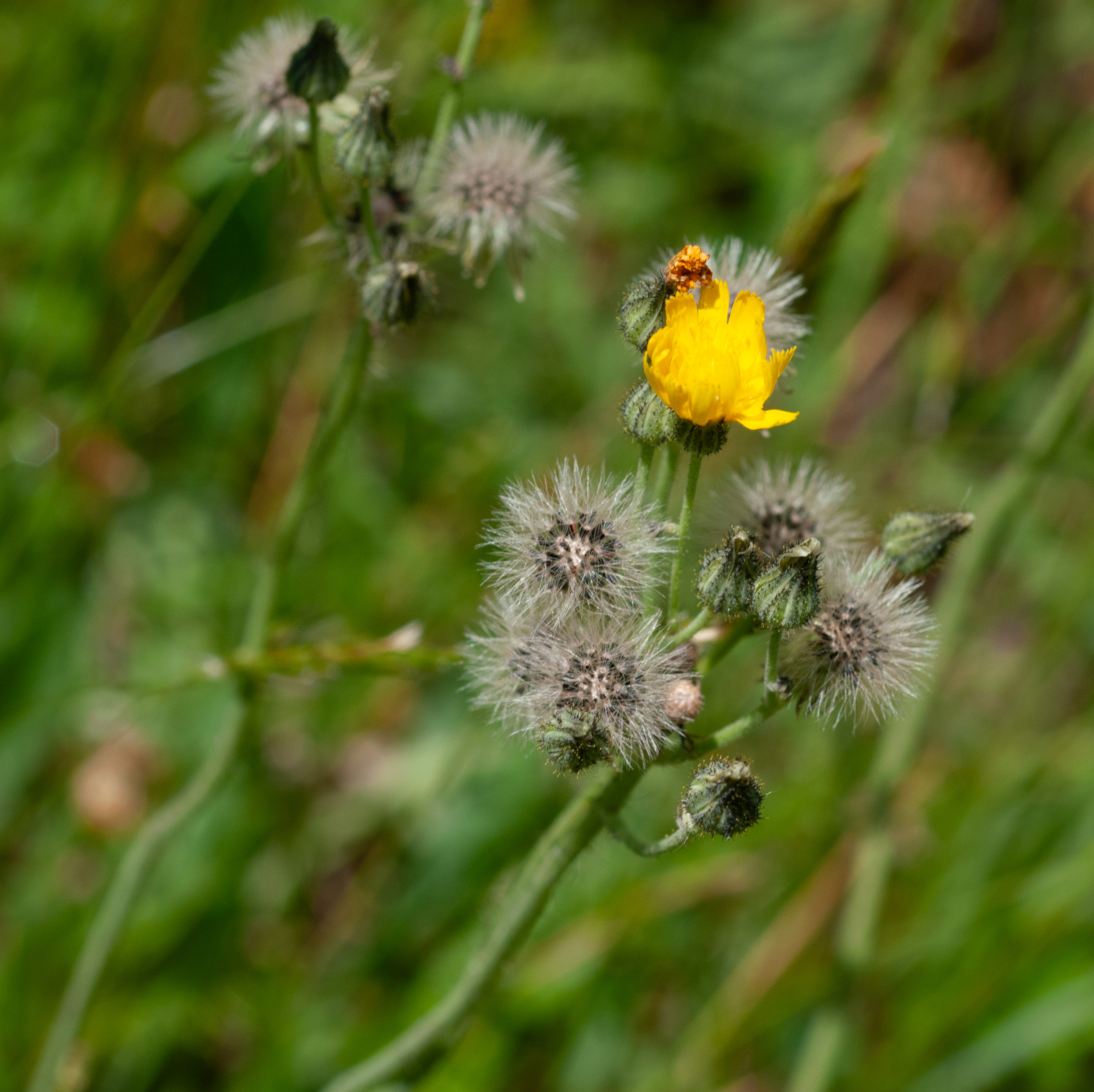
6/5/2010 · Nashua River Rail Trail, Groton Center, Groton, Massachusetts · ≈ 4 × 4″ (10 × 10 cm) ID is uncertain 
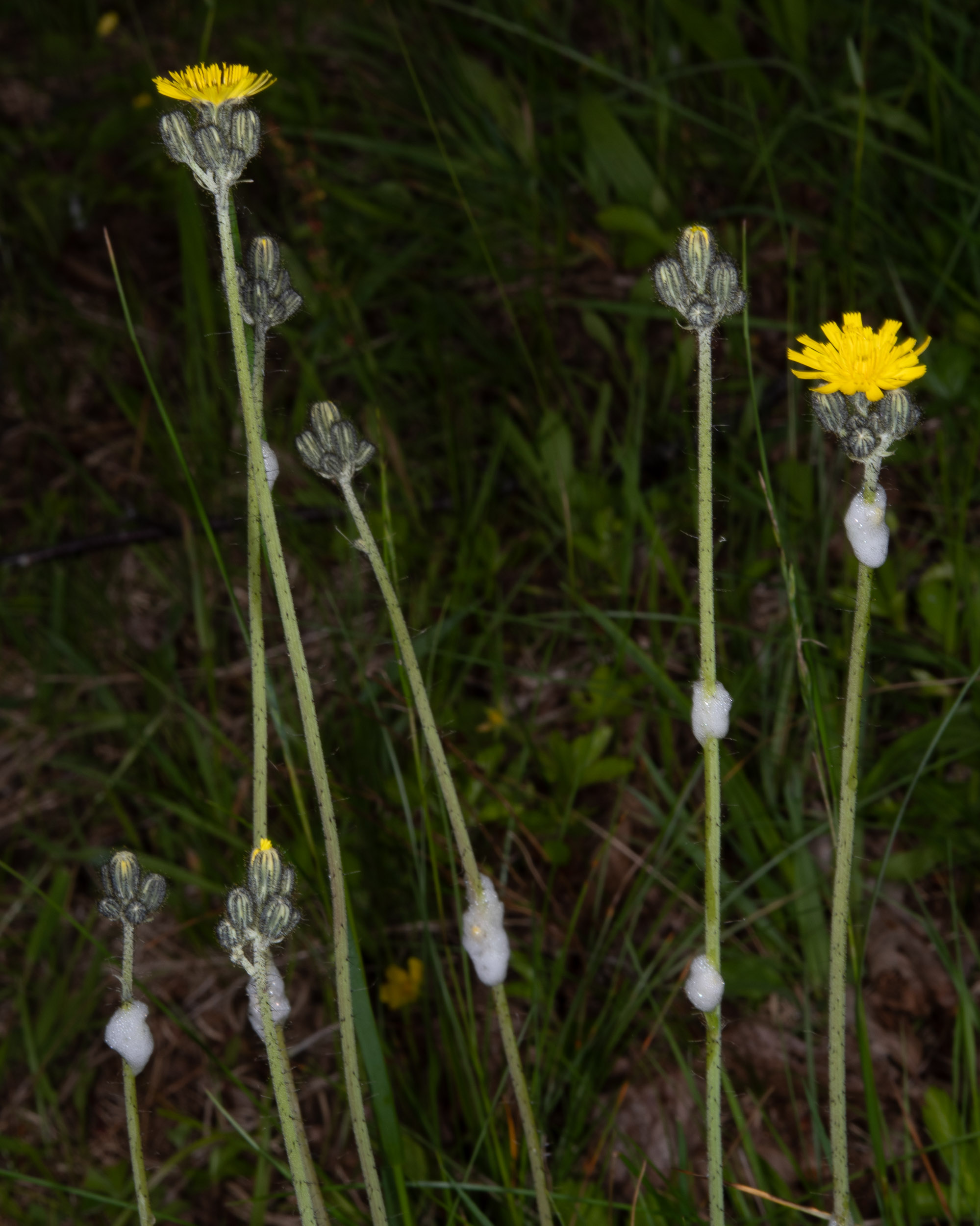
Spittlebug nymphs turn plant sap into foamy shelters · 6/9/2025 · Curtis Farm Preserve, Harpswell, Maine · ≈ 6 × 8″ (16 × 20 cm) 
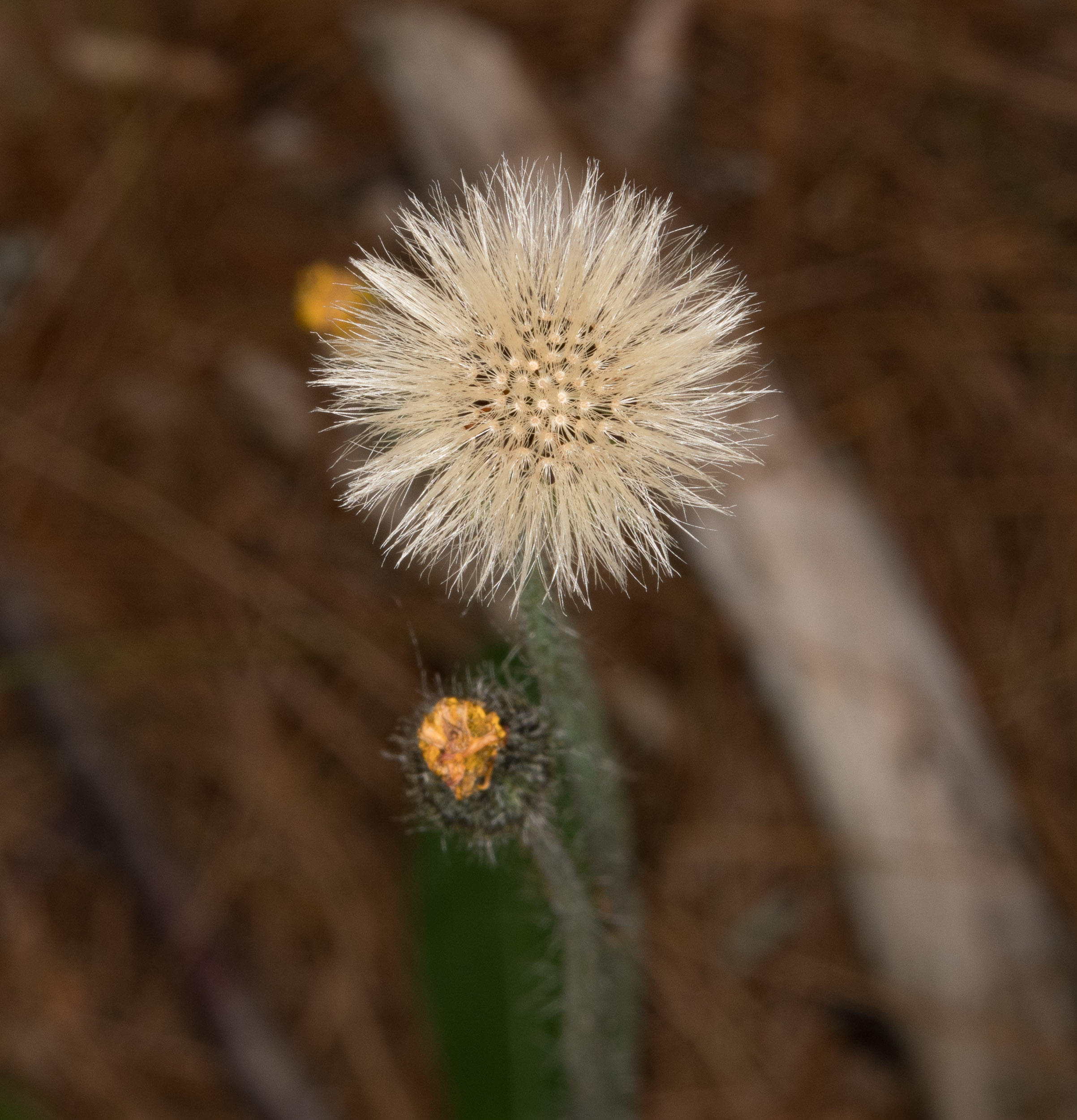
6/21/2017 · Pearl Hill State Park, Townsend, Massachusetts · ≈ 2½ × 2½″ (6.6 × 6.8 cm) 
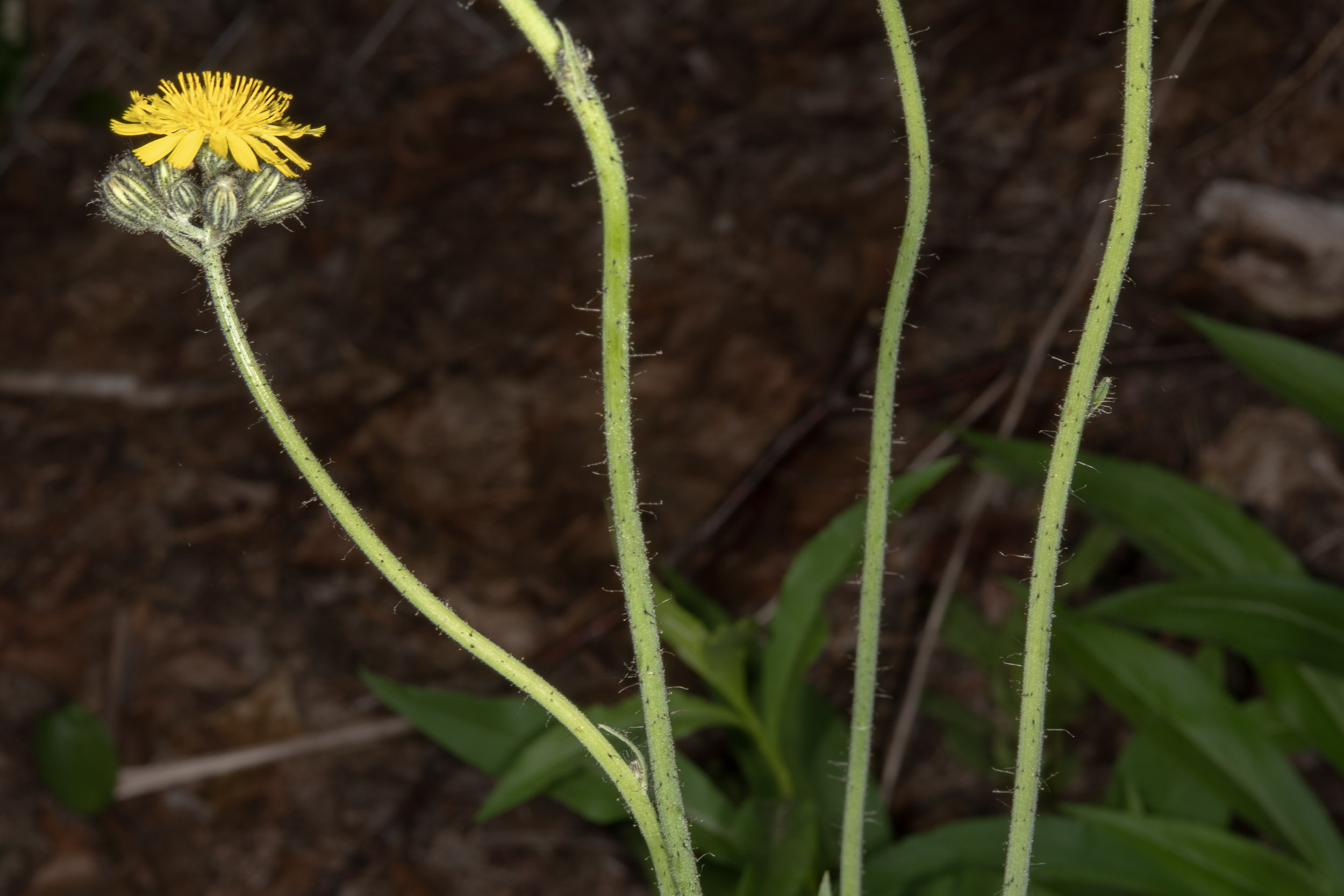
6/3/2018 · Mt. Watatic, Ashby · ≈ 7 × 4½″ (18 × 12 cm) 
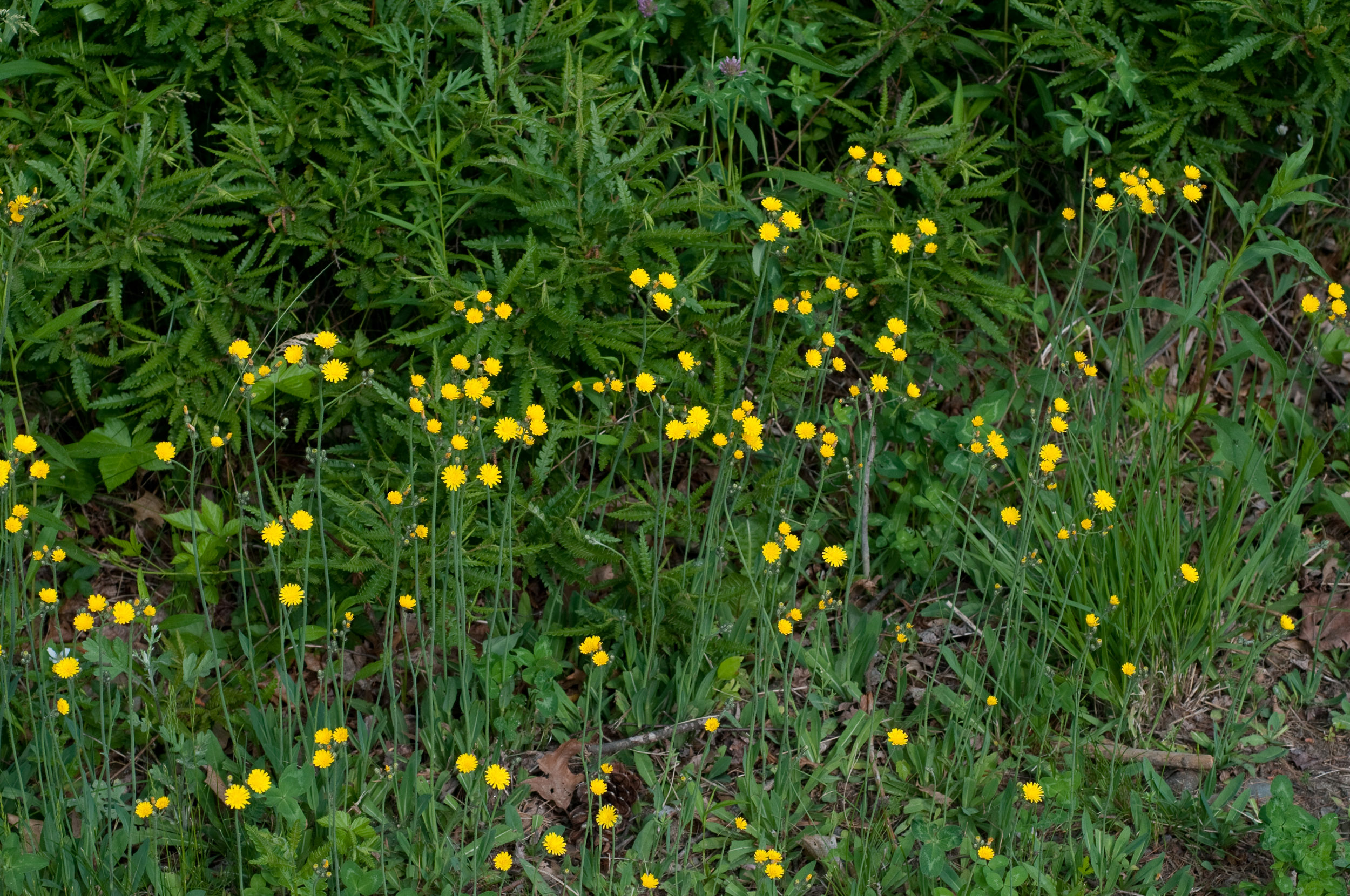
6/1/2010 · Nashua River Rail Trail, Groton Center, Groton, Massachusetts ID is uncertain 
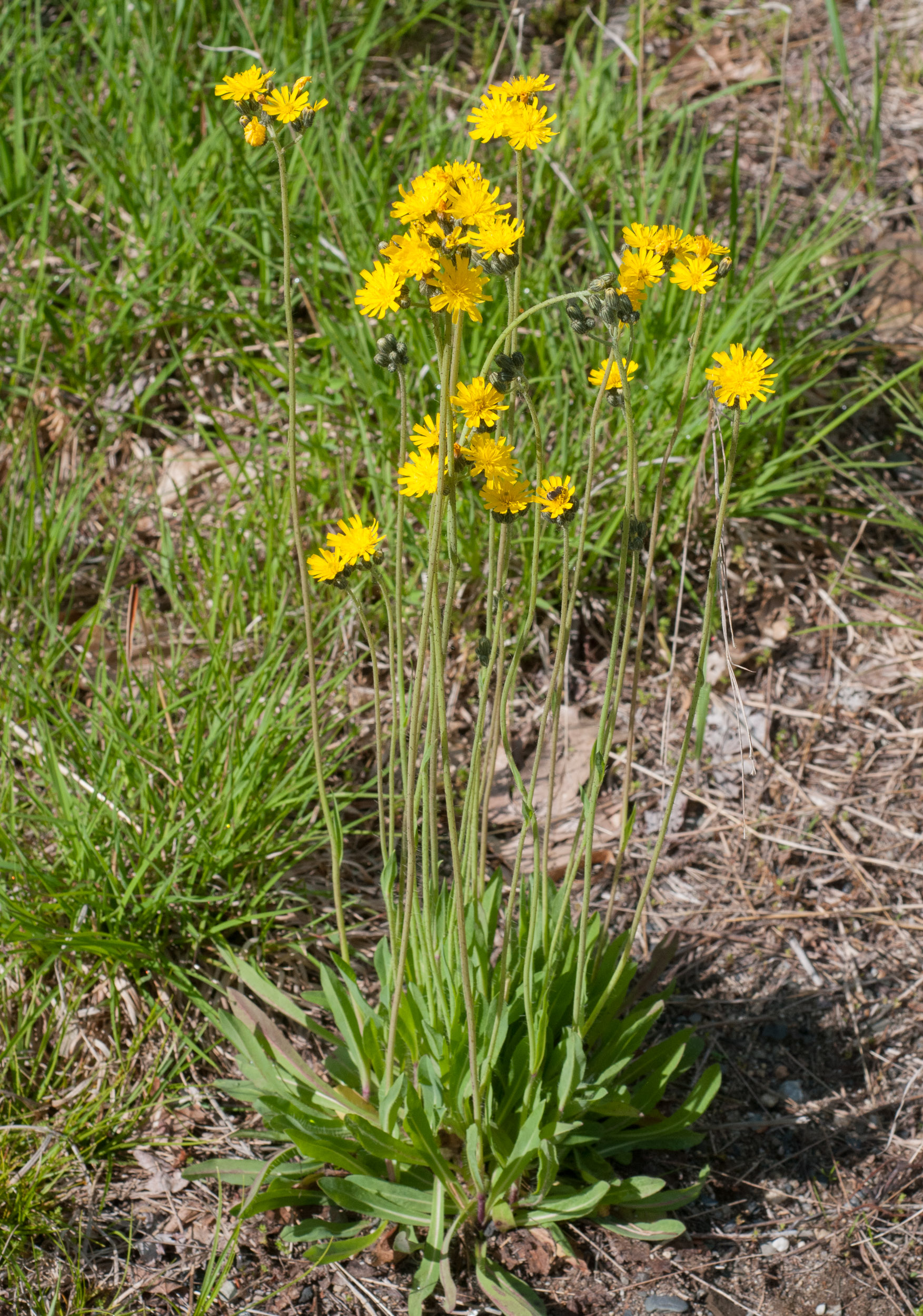
5/24/2012 · Nashua River Rail Trail, Groton Center, Groton, Massachusetts · ≈ 1 × 1½′ (33 × 46 cm) ID is uncertain 

8/20/2010 · Nashua River Rail Trail, Ayer, Massachusetts · ≈ 8 × 9″ (20 × 23 cm) ID is uncertain 
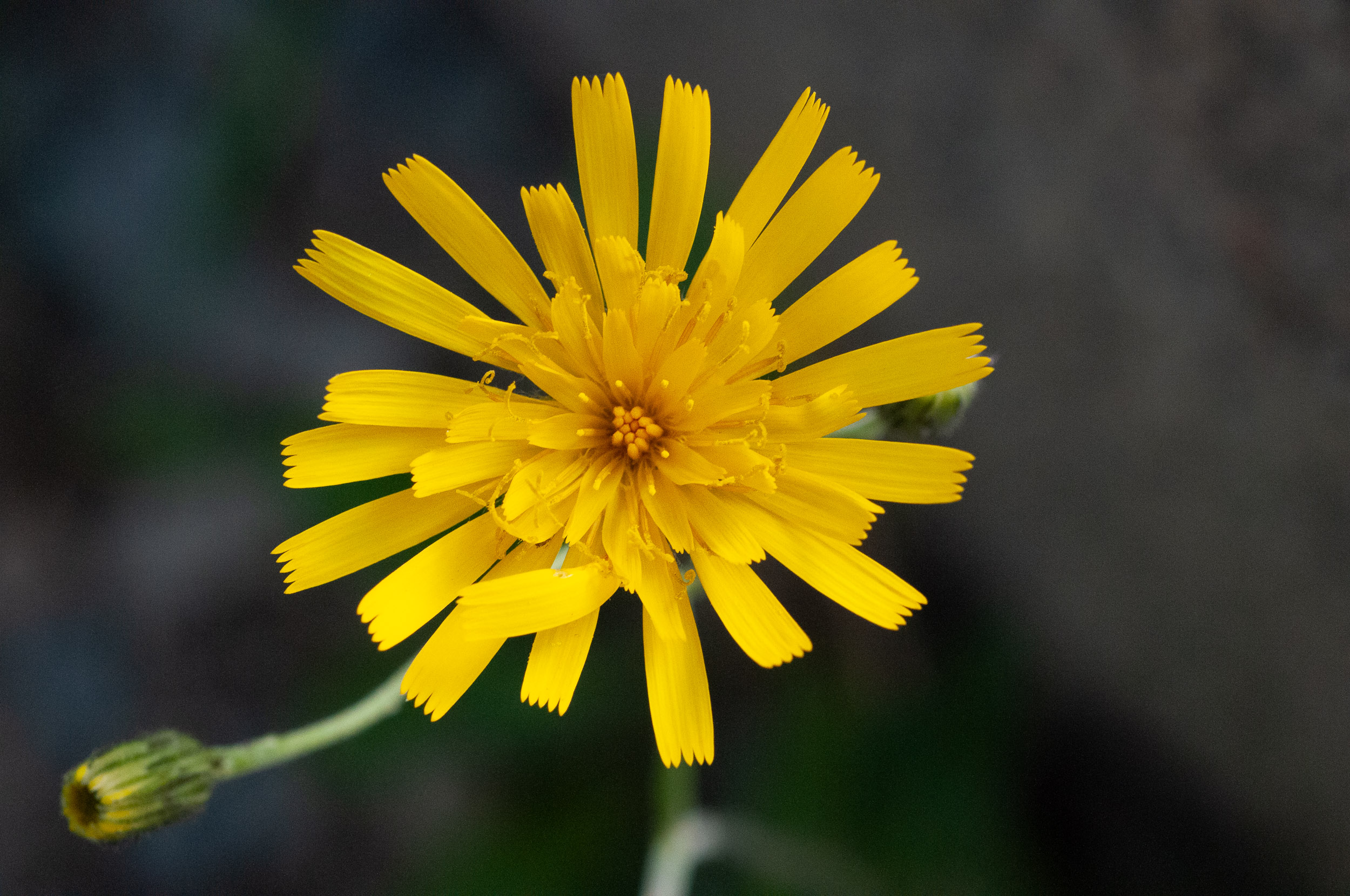
9/19/2009 · Acadia National Park, Bar Harbor, Maine · ≈ 4½ × 3″ (11 × 7.9 cm) ID is uncertain 

The insect is Agapostemon virescens, or bicolored striped sweat bee · 6/19/2024 · Red Rose Preserve, Bowdoinham, Maine · ≈ 3½ × 3″ (9.8 × 8.5 cm) 
| Kingdom | Plantae | Plants, but not fungi, lichens, or algae (from Stearn's Botanical Latin) |
| Subkingdom | Tracheobionta | Vascular plants—plants with a “circulatory system” for delivering water and nutrients |
| Division | Magnoliophyta | Flowering plants, also known as angiosperms |
| Class | Magnoliopsida | Dicotyledons—plants with two initial seed leaves |
| Subclass | Asteridae | A large class that encompasses asters |
| Order | Asterales | Flowering plants with a central disk flower and surrounding petals, like daisies |
| Family | Asteraceae | The aster family, which also includes daisies and sunflowers; from the Greek ἀστήρ, “star,” for the star-shaped flowers |
| Genus | Hieracium | From Greek hierakion, “a hawk,” from Pliny’s belief that hawks strengthened their eyesight by eating these plants |
| Species | caespitosum | From caespes, “a turf, sod, or field” |
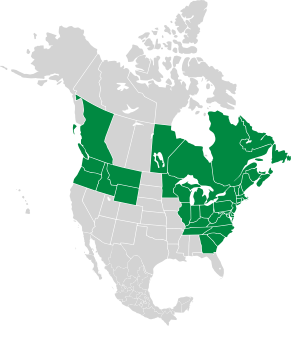
Hieracium caespitosum description by Thomas H. Kent, not updated.

© FloraFinder.org. All rights reserved.