Hydrocotyle sibthorpioides Lam.
Lawn marsh pennywort
Lawn marshpennywort is native to tropical and subtropical southeastern Asia, though it is gradually naturalizing in North America.
Plants: These low-growing plants are less than 4″ (10 cm) high, creeping to form mats up to 12″ (30 cm) around.
Leaves: Alternate, from ⅛–¾″ (5–20 mm) in size. They are peltate—the stem connects to the bottom of the leaf, not one end, as is usual. Leaves are rounded or kidney-shaped, with crenate (scalloped) edges.
Flowers: Roundish umbels have 3-10 star-shaped flowers with greenish-white petals. Each flower is about ⅛″ (5 mm) in size.
Fruits: Flat, elliptical to round fruits about 1/32″ (1 mm) in size break open into halves, each with one seed.
Habitats: Shady places in lowlands, and stream banks or forests in wet grassy places; at elevations of 1312–9843′ (400–3000 m)
Edibility: Edible raw or cooked.
Online References:
Hydrocotyle rotundifolia Lam.

9/20/2013 · Mt. Watatic, Ashby, Massachusetts · ≈ 9 × 6″ (22 × 15 cm) 
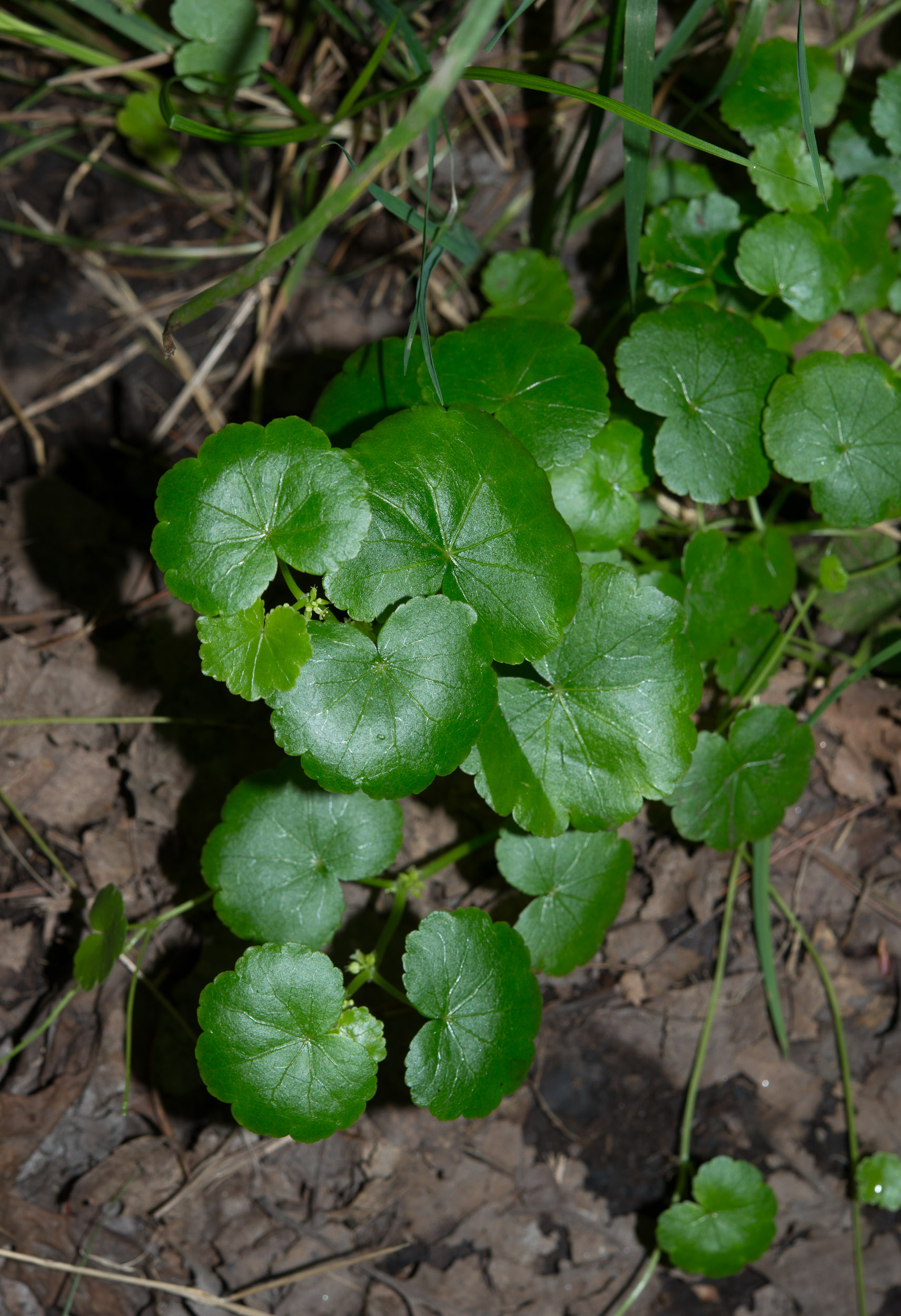
7/14/2013 · Ball Hill Trail, Leominster State Forest, Leominster, Massachusetts · ≈ 6 × 9″ (16 × 23 cm) 
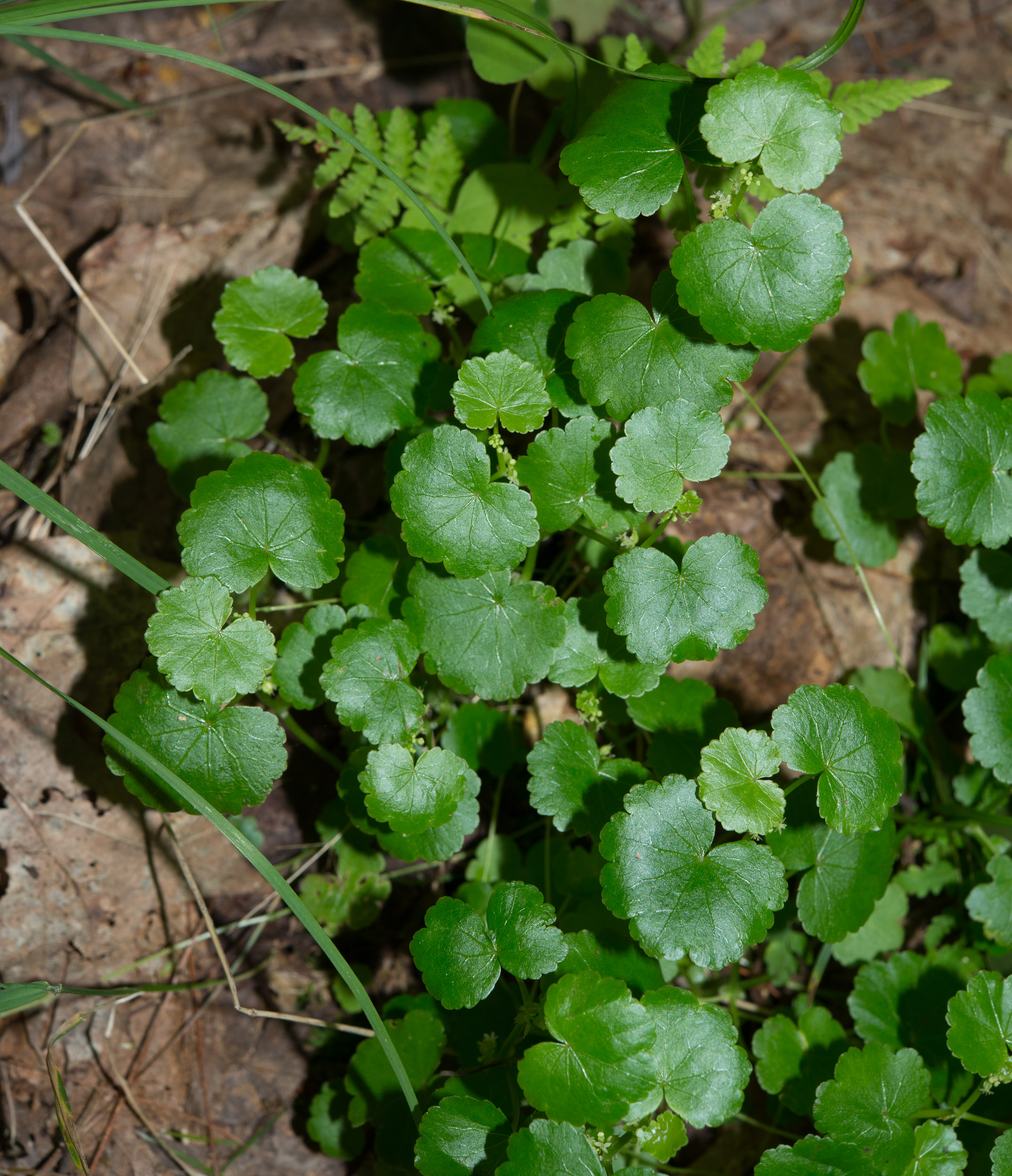
7/14/2013 · Ball Hill Trail, Leominster State Forest, Leominster, Massachusetts · ≈ 7 × 9″ (18 × 21 cm) 
| Kingdom | Plantae | Plants, but not fungi, lichens, or algae (from Stearn's Botanical Latin) |
| Subkingdom | Tracheobionta | Vascular plants—plants with a “circulatory system” for delivering water and nutrients |
| Division | Magnoliophyta | Flowering plants, also known as angiosperms |
| Class | Magnoliopsida | Dicotyledons—plants with two initial seed leaves |
| Subclass | Asteridae | A large class that encompasses asters |
| Order | Apiales | Includes carrots, celery, parsley, and ivy |
| Family | Araliaceae | Ivy family |
| Genus | Hydrocotyle | From the Greek hydor, “water,” and kotyle, “a small cup” |
| Species | sibthorpioides | Resembling the genus Sibthorpia, which was named for Humphrey Sibthorp (1713-1797), a professor of botany at Oxford University where he only gave one lecture in thirty-seven years |

Hydrocotyle sibthorpioides description by Thomas H. Kent, not updated.

© FloraFinder.org. All rights reserved.