Jasminum polyanthum Franch.
Pink jasmine, white jasmine
Native to southeastern China, pink jasmine has become naturalized in Australia and New Zealand, where in some areas it is considered an invasive species. It is not found in the wild in North America, though it is popular with gardeners.
Plants: Twining vines can reach 20′ (6.1 m) in length.
Leaves: Groups of 5-7, each 2–4″ long ⨉ ½–1″ wide (5–10 ⨉ 1.3–2.5 cm). They are dark green on top, lighter on the bottom, narrow and somewhat wavy, with smooth edges
Flowers: Vines form profuse pink buds that open into five-petaled white flowers with a wonderful scent. Flowers are about ¾″ (2 cm) in diameter.
Fruits: Berries are black, ⅛–⅜″ (6–11 mm) around.
Habitats: In native Asian habitats, it is found in valleys and forests at elevations of 4593–9843′ (1.4–3 km).
 |
Some jasmines. |
Online References:

2/24/2010 · Bob & Celeste’s, Carlsbad, California · ≈ 10 × 15″ (25 × 38 cm)  ID is uncertain


2/28/2010 · Bob and Celete’s, Carlsbad, California · ≈ 7 × 11″ (18 × 27 cm) ID is uncertain 
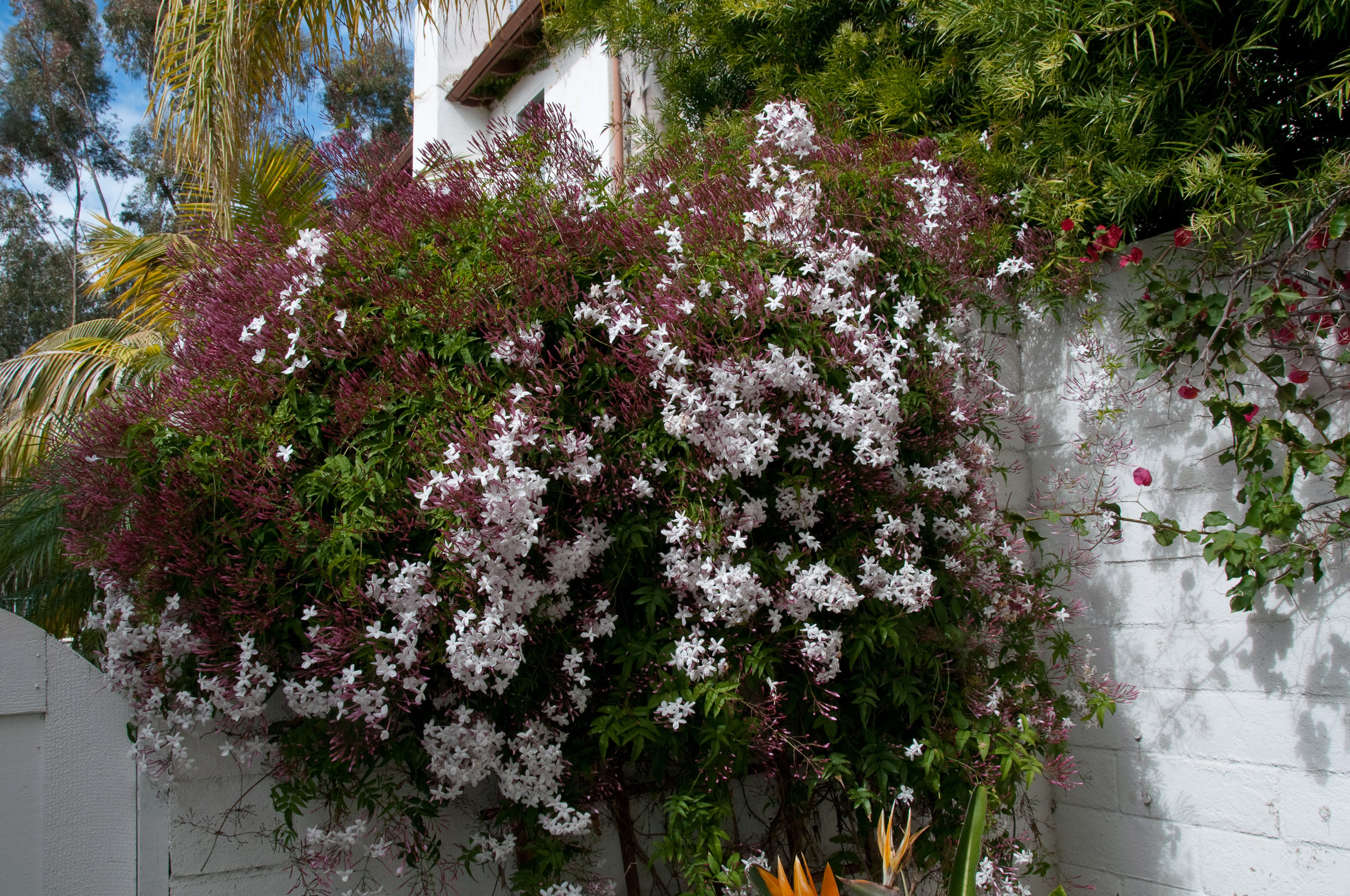
2/24/2010 · Bob & Celeste’s, Carlsbad, California · ≈ 4 × 2½′ (131 × 87 cm) ID is uncertain 
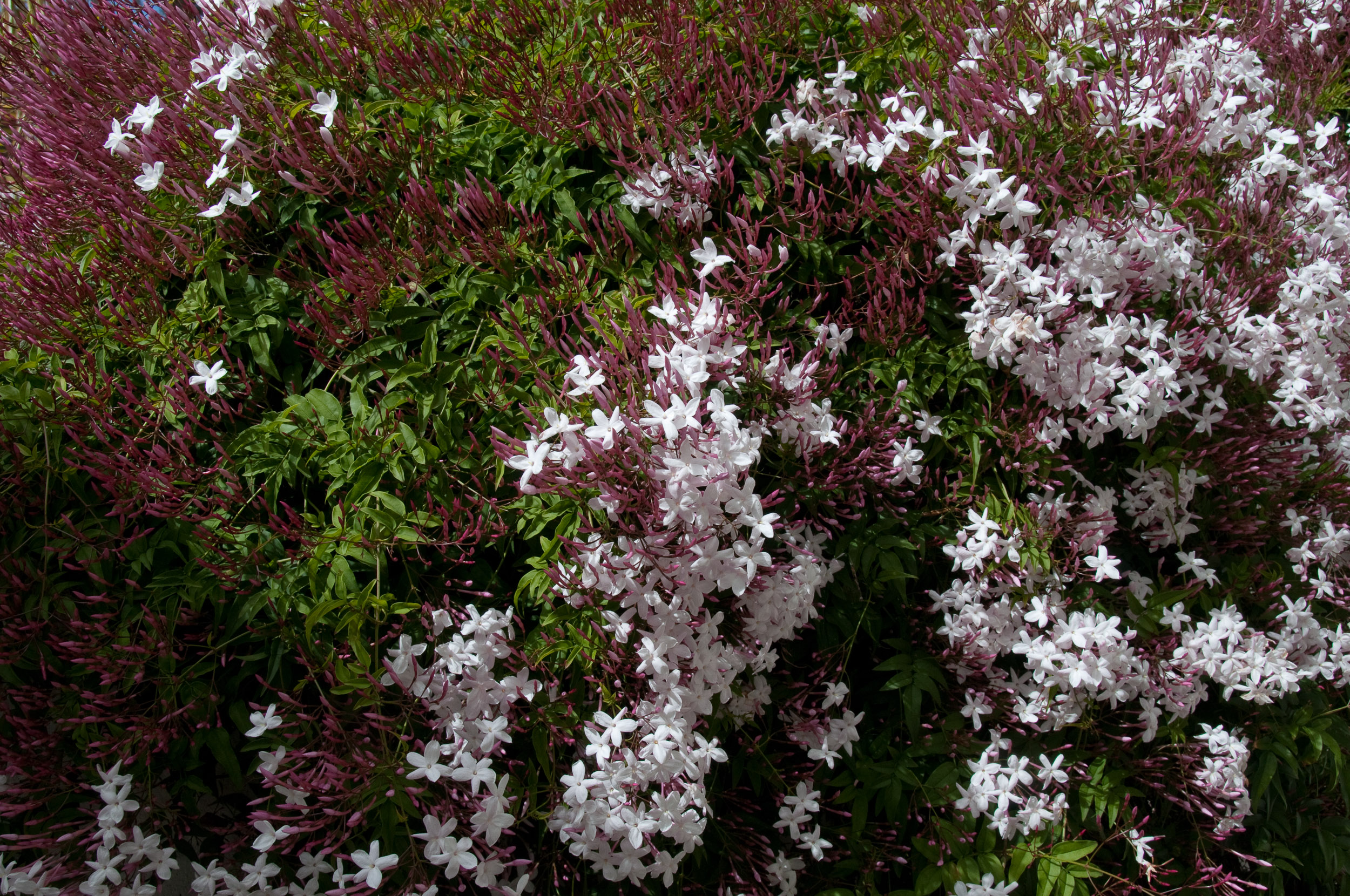
2/24/2010 · Bob & Celeste’s, Carlsbad, California · ≈ 2 × 1½′ (69 × 46 cm) ID is uncertain 

2/26/2010 · Bob & Celeste’s, Carlsbad, California · ≈ 8 × 5″ (19 × 13 cm) ID is uncertain 
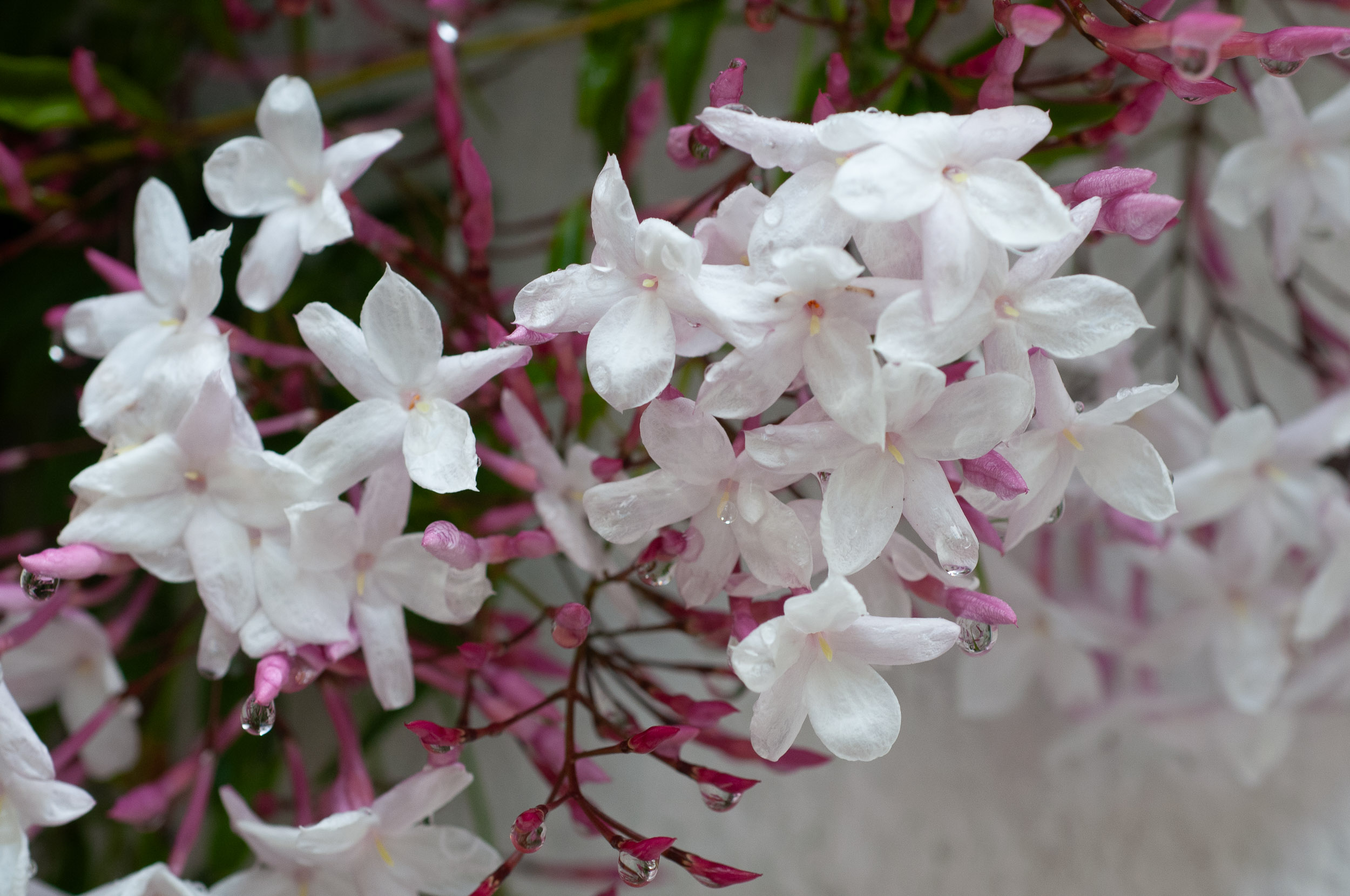
2/28/2010 · Bob and Celete’s, Carlsbad, California · ≈ 8 × 5″ (19 × 13 cm) ID is uncertain 
| Kingdom | Plantae | Plants, but not fungi, lichens, or algae (from Stearn's Botanical Latin) |
| Subkingdom | Tracheobionta | Vascular plants—plants with a “circulatory system” for delivering water and nutrients |
| Division | Magnoliophyta | Flowering plants, also known as angiosperms |
| Class | Magnoliopsida | Dicotyledons—plants with two initial seed leaves |
| Subclass | Asteridae | A large class that encompasses asters |
| Order | Lamiales | Aromatic herbs and shrubs, including lavender, lilac, olive, jasmine, ash, teak, snapdragon, sesame, psyllium, garden sage, mint, basil, and rosemary |
| Family | Oleaceae | Temperate climate shrubs, trees and a few vines, include forsythia, ash, jasmine, privet, olive, lilac, and many others |
| Genus | Jasminum | Originally from the Persian Yasameen,”gift from God” |
| Species | polyanthum | Many-flowered |

Jasminum polyanthum description by Thomas H. Kent, not updated.

© FloraFinder.org. All rights reserved.