Lactuca serriola L.
Prickly lettuce
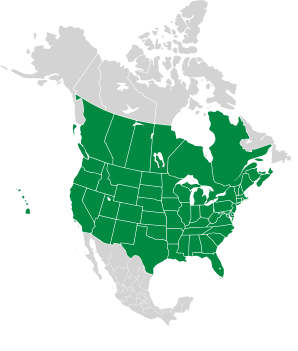
Prickly lettuce originated in the Mediterranean uplands in Europe. It is now widely distributed in parts of Europe, Asia, Africa, and North America.
Plants: Erect, 12–79″ (30–200 cm) tall. Stems sometimes have stiff hairs near the bottom; stems and leaves have a milky sap when cut.
Leaves: Alternate, 1¾–12″ (5–30 cm) long and ⅜–4″ (1–10 cm) wide. The mid-ribs of leaves have prickers along the bottom. Typically leaves are deeply lobed.
Flowers: Panicles form open, roughly conical clusters of flowers. Flowers are ⅜–½″ (1–1.5 cm) in diameter, and have 13-27 florets each. Flowers appear from July to September.
Fruits: ⅛″ (3 mm) long, single-seeded, lance-shaped, attached to a “parachute” like dandelions.
Habitats: Grasslands, seasonal wetlands, orchards, vineyards, urban places, roadsides, disturbed habitats.
Edibility/medicinal: Prickly lettuce is a wild progenitor of the common lettuce varieties that we eat (Lactuca sativa), but it contains compounds that make it taste bitter. It also contains a compound that is a mild soporific; in the past, “Syrup of Lactucarium” was a commercial product sold to help with bronchitis, the flu, colds, coughs, asthma, etc. Its effects have been compared to those of opium, though much milder, hence the term “lettuce opium.” Whether these effects even exist is debatable—in 1893, it was described as a “feeble narcotic.”
 |
Some wild lettuce species. |
Online References:
Lactuca scariola L.

9/25/2009 · Nashua River Rail Trail, near Hospital, Ayer, Massachusetts  ID is uncertain
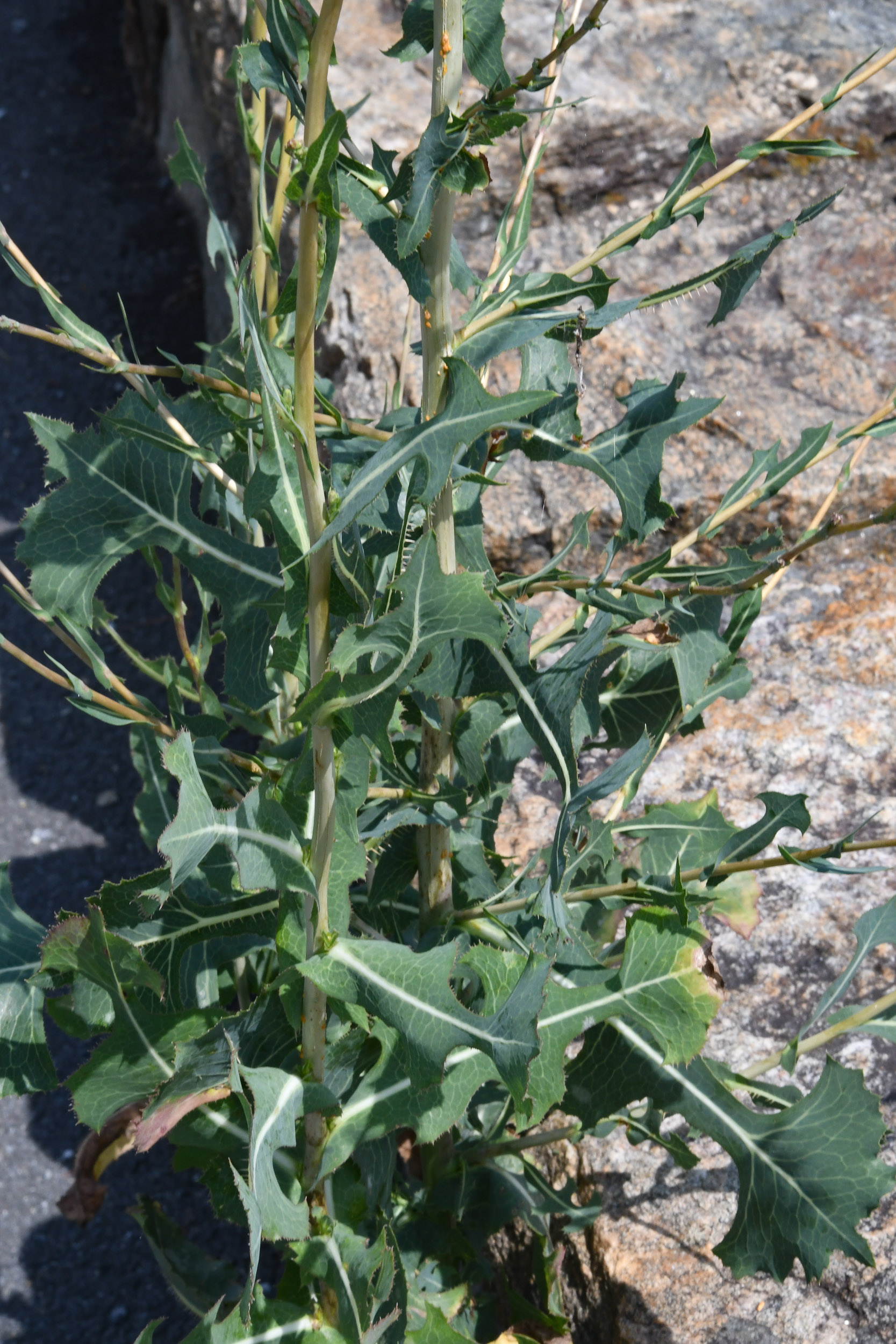
7/31/2016 · Skyline Drive, Shenandoah National Park, Virginia 
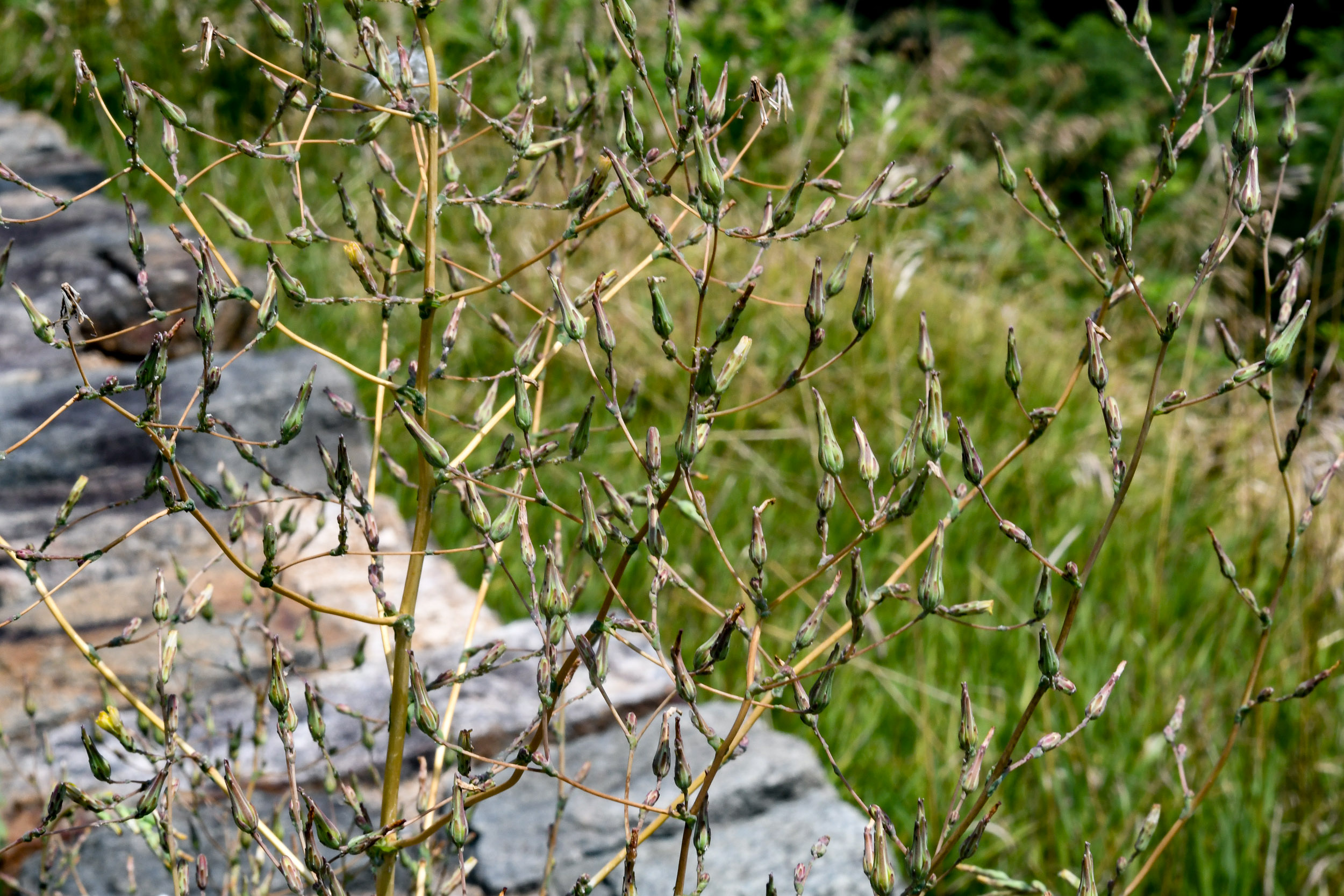
7/31/2016 · Skyline Drive, Shenandoah National Park, Virginia 
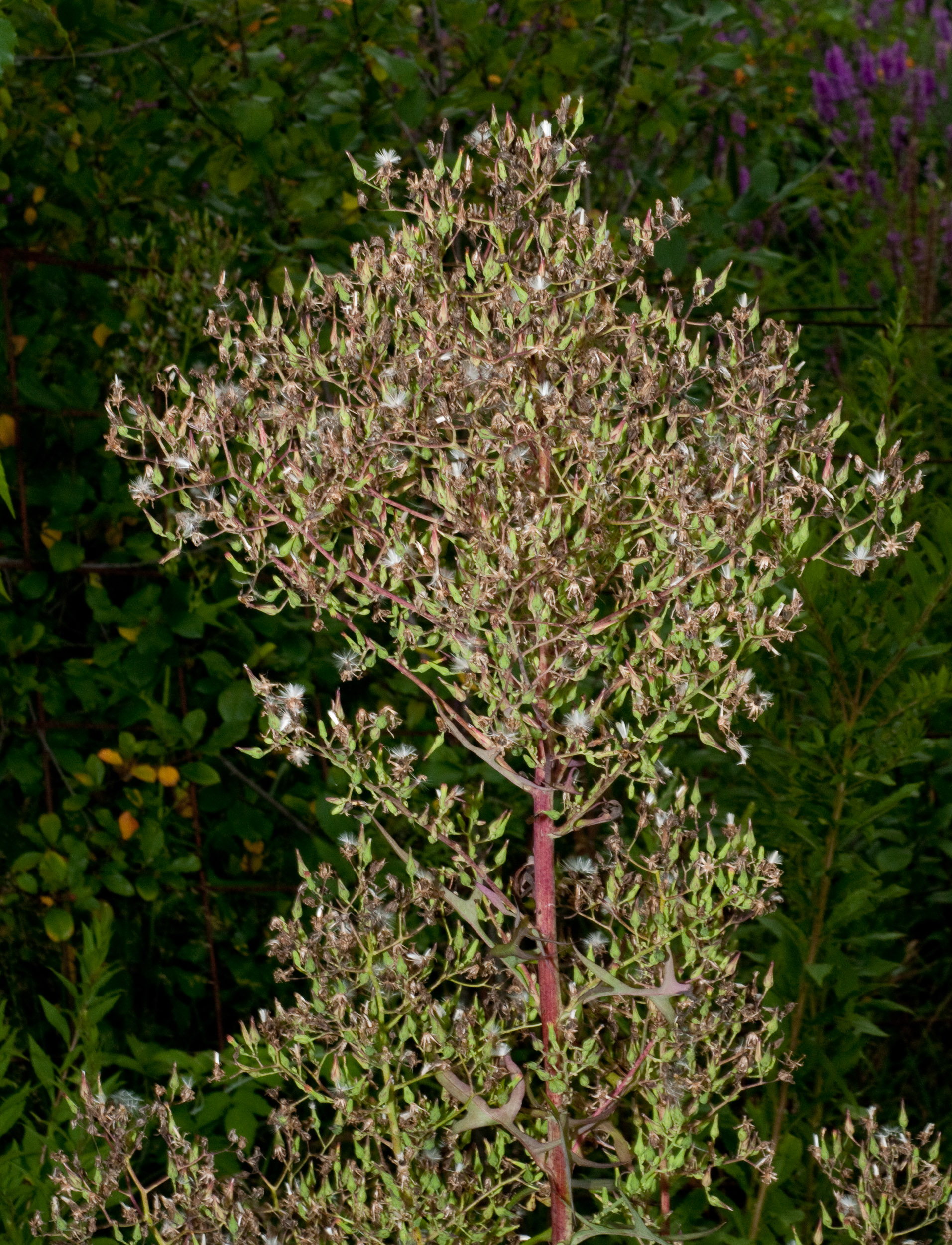
8/4/2010 · Nashua River Rail Trail, Groton Center, Groton, Massachusetts · ≈ 1 × 1½′ (34 × 45 cm) ID is uncertain 
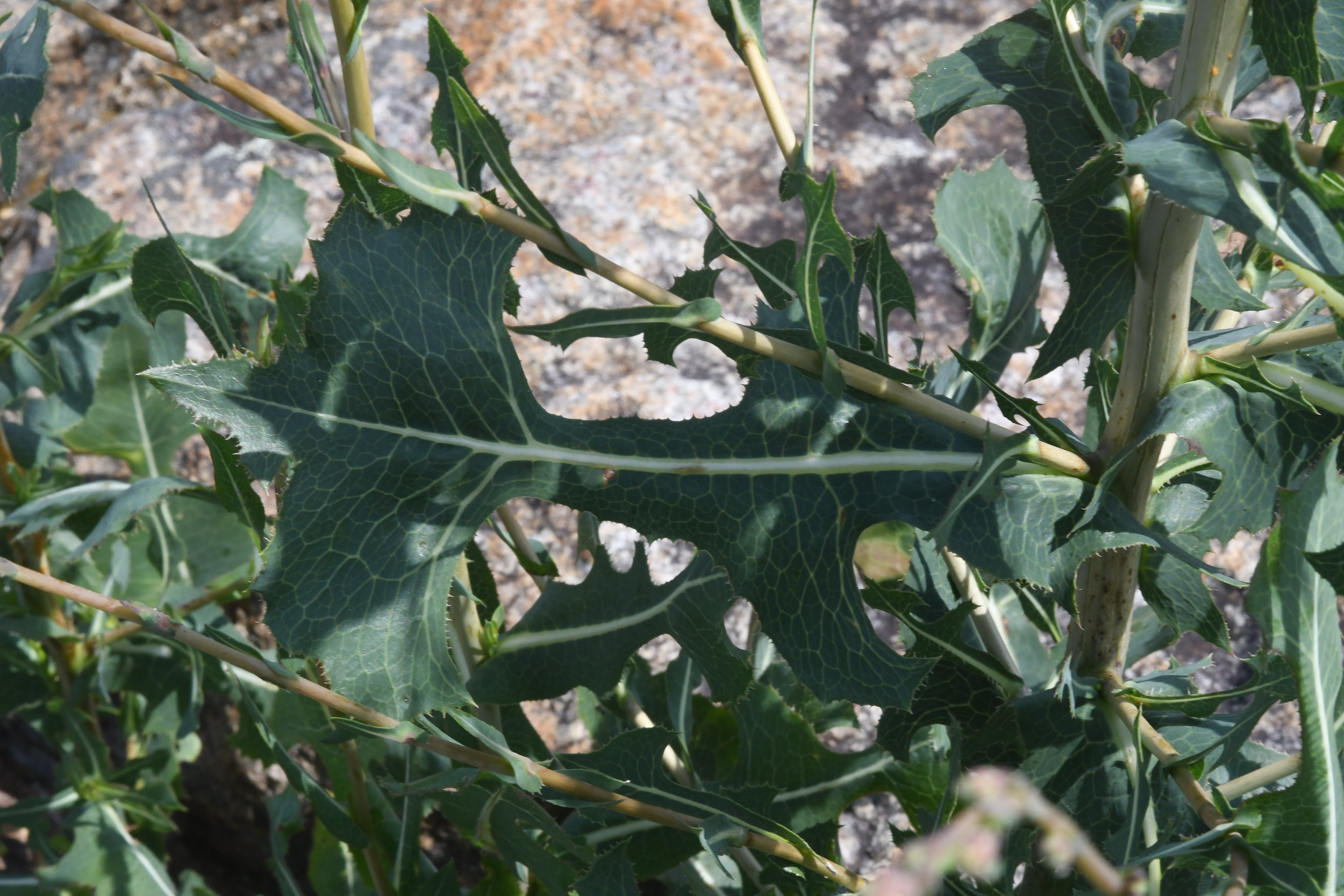
7/31/2016 · Skyline Drive, Shenandoah National Park, Virginia 
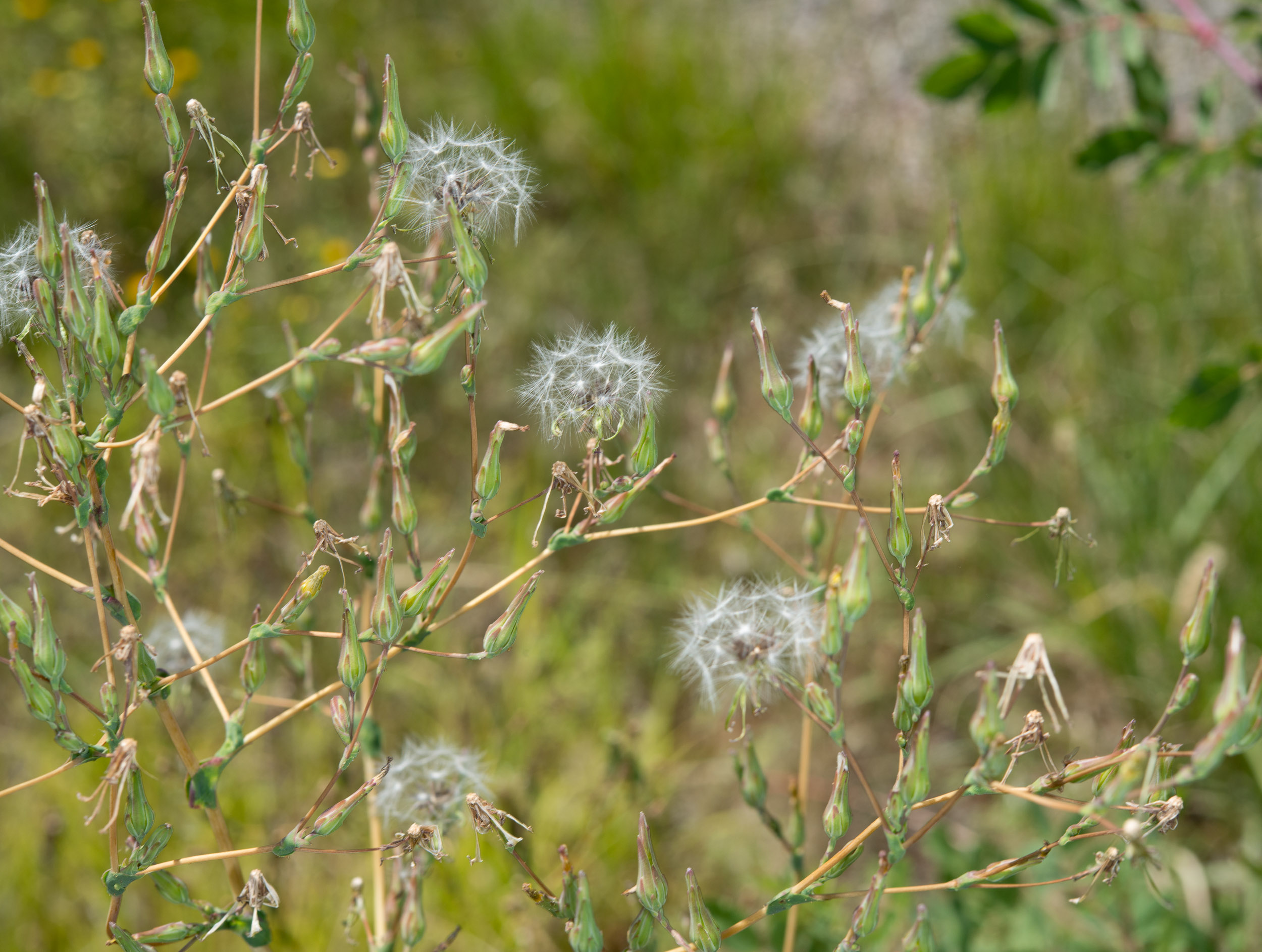
8/29/2014 · Along Rio Grande gorge, New Mexico · ≈ 9 × 7″ (22 × 16 cm) 
| Kingdom | Plantae | Plants, but not fungi, lichens, or algae (from Stearn's Botanical Latin) |
| Subkingdom | Tracheobionta | Vascular plants—plants with a “circulatory system” for delivering water and nutrients |
| Division | Magnoliophyta | Flowering plants, also known as angiosperms |
| Class | Magnoliopsida | Dicotyledons—plants with two initial seed leaves |
| Subclass | Asteridae | A large class that encompasses asters |
| Order | Asterales | Flowering plants with a central disk flower and surrounding petals, like daisies |
| Family | Asteraceae | The aster family, which also includes daisies and sunflowers; from the Greek ἀστήρ, “star,” for the star-shaped flowers |
| Genus | Lactuca | From lacta, Latin for “milk,” referring to the milky sap in stem, and a root word for lactic acid |
| Species | serriola | Either in ranks, or pertaining to salad, being one form of an old name for chicory |
Lactuca serriola description by Thomas H. Kent, not updated.

© FloraFinder.org. All rights reserved.