Urticastrum divaricatum (L.) Kuntze
Laportea canadensis (L.) Weddell
Wood nettle, Canadian woodnettle
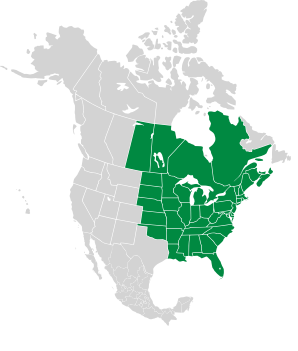
Wood nettle is native to North America.
Plants: 2–4′ (60–121 cm) high, found in moist woods. Their stems have stiff white hairs that sting if you rub against them, producing a rash and a strong burning sensation that usually lasts about an hour.
Leaves: Alternate, up to 4 ⨉ 6″ (10 ⨉ 15 cm), egg-shaped, with coarse serrations.
Flowers: Male flower clusters are white or greenish white, in loose branching clusters. Each flower is less than ⅛″ (3.2 mm) across, with 5 petals. They appear from July to September.
Fruits: Oblique dry seeds.
Habitats: Moist woods, streambanks, in rich soils.
Edibility: Plants require careful handlings, but the young leaves are edible, nutritious, and delicious, like spinach. Cooking destroys the small stinging barbs on the leaves, but use gloves when harvesting the plants. Boiling doesn’t work well, but steaming produces good results.
 |
Similar species. |
Online References:
References:

7/18/2017 · Tobyhanna State Park, Pennsylvania · ≈ 7 × 4½″ (18 × 12 cm) 
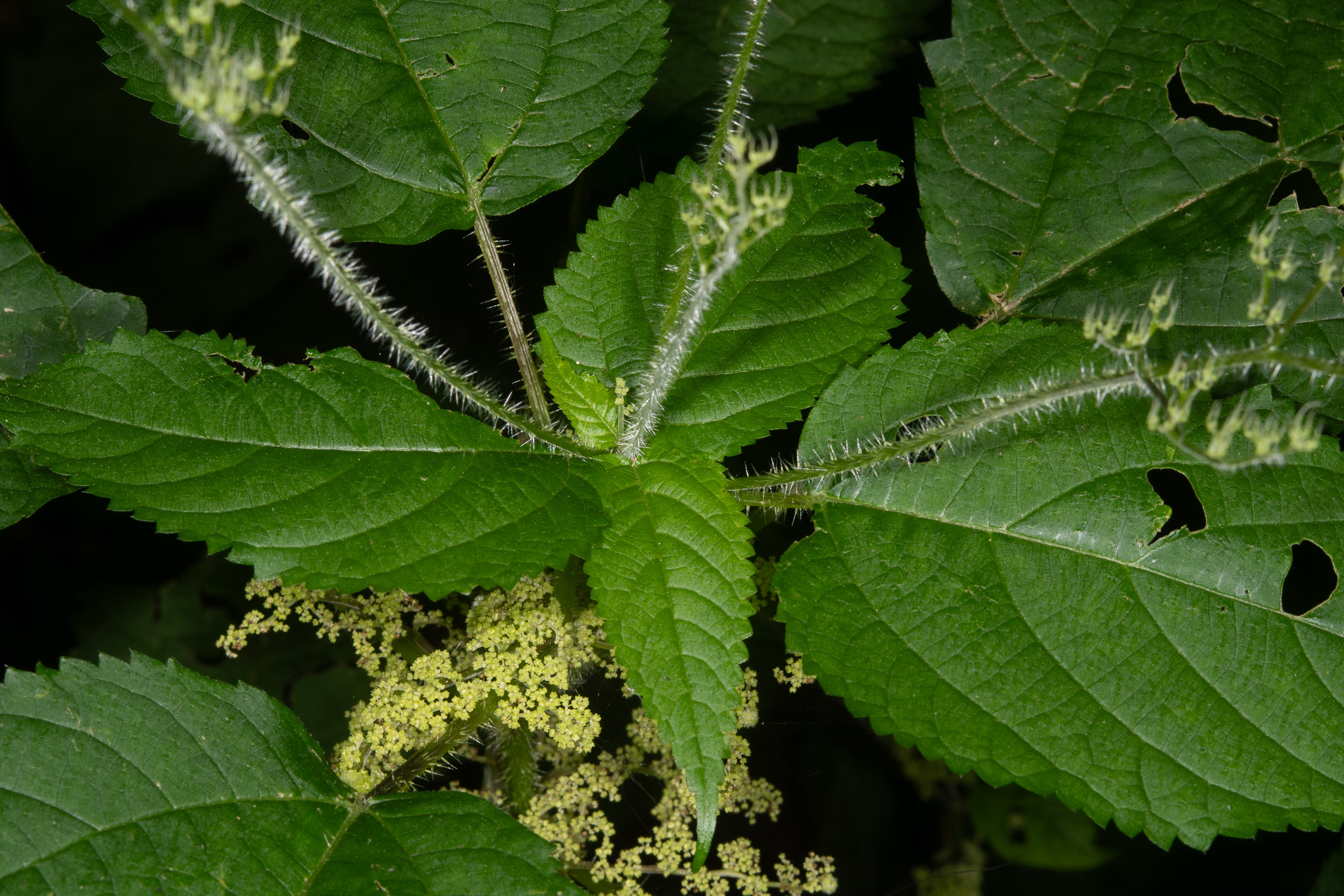
7/18/2017 · Tobyhanna State Park, Pennsylvania · ≈ 8 × 5″ (20 × 13 cm) 
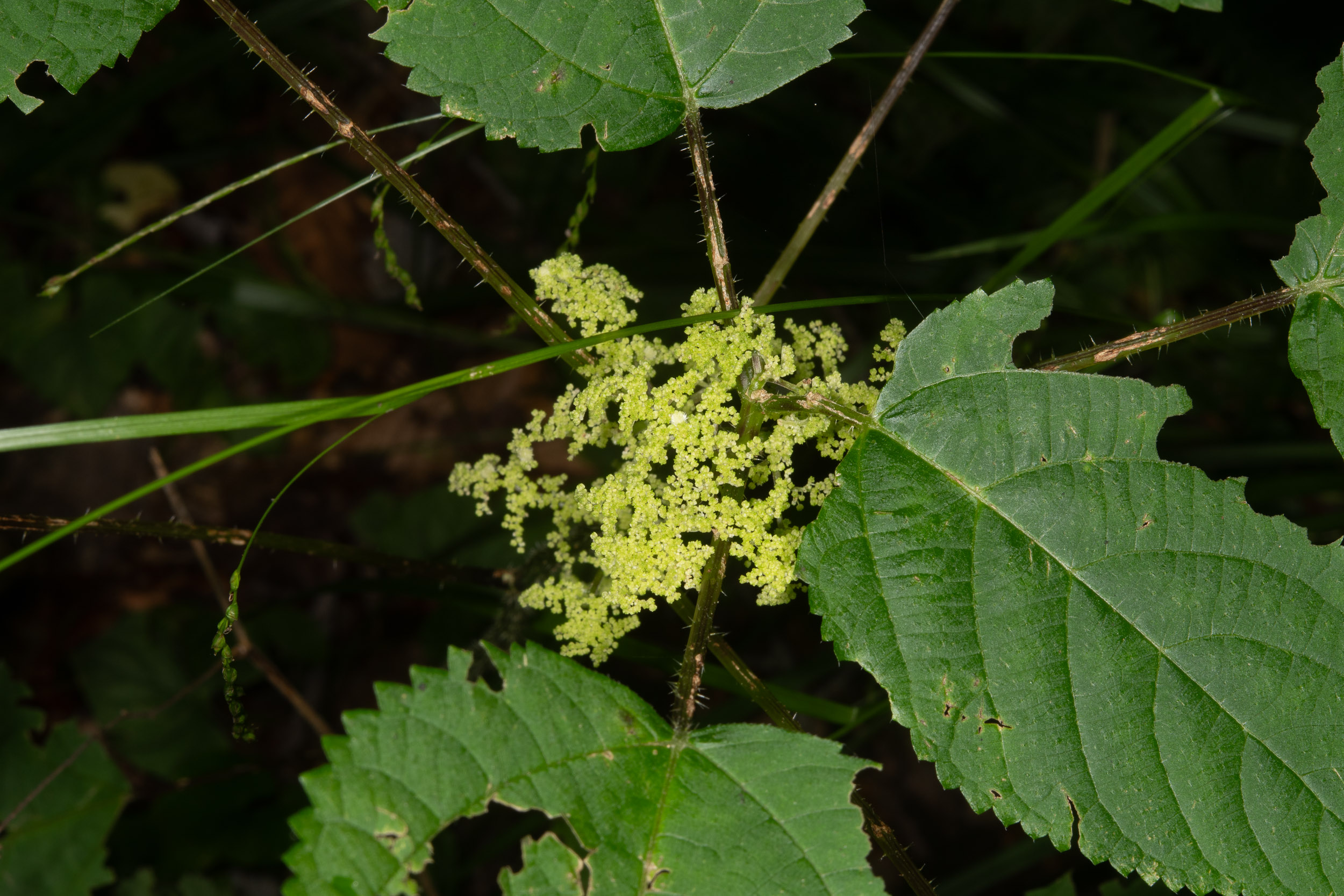
7/18/2017 · Tobyhanna State Park, Pennsylvania · ≈ 7 × 4½″ (18 × 12 cm) 

7/18/2017 · Tobyhanna State Park, Pennsylvania · ≈ 10 × 6″ (24 × 16 cm) 
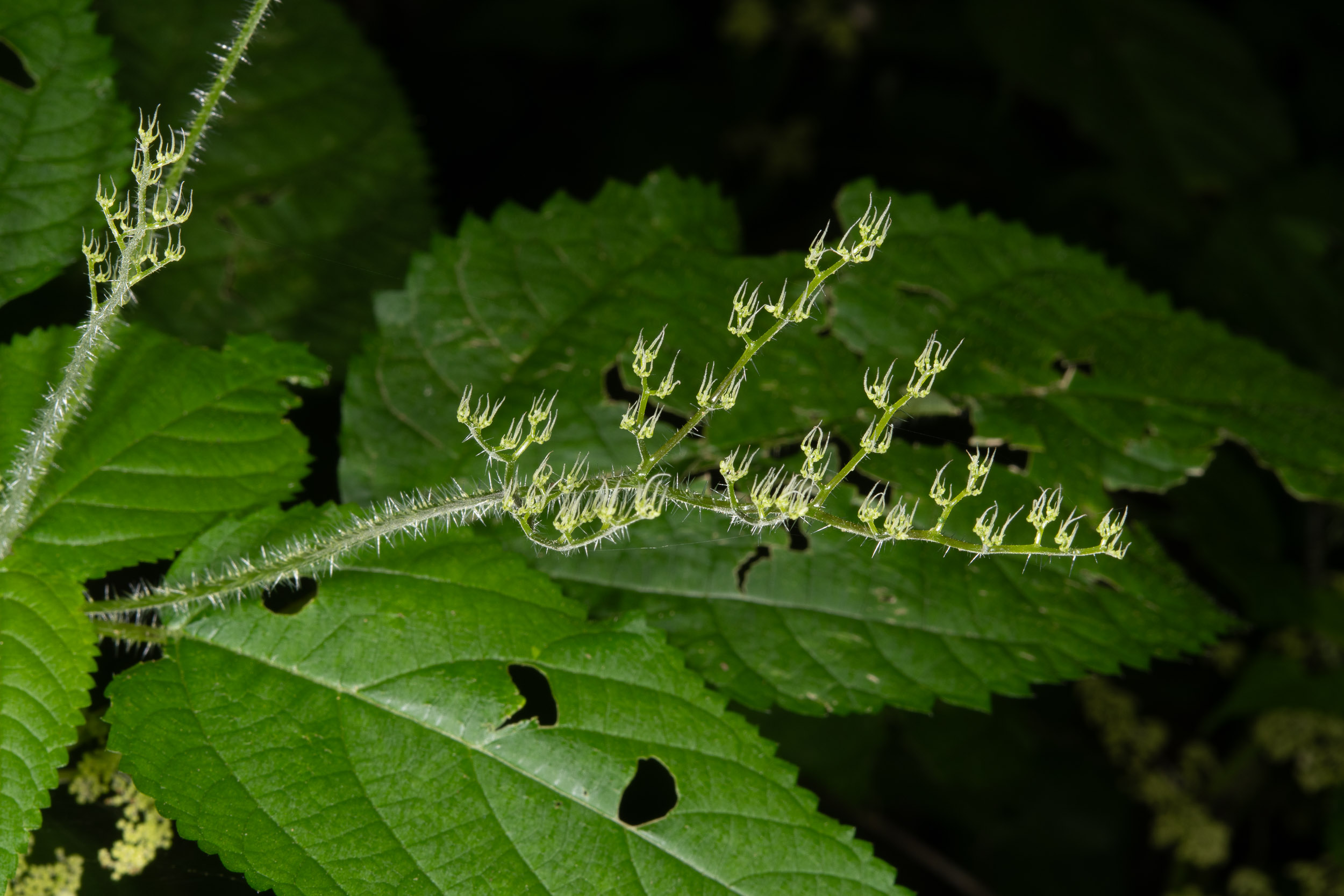
7/18/2017 · Tobyhanna State Park, Pennsylvania · ≈ 6 × 4″ (16 × 11 cm) 
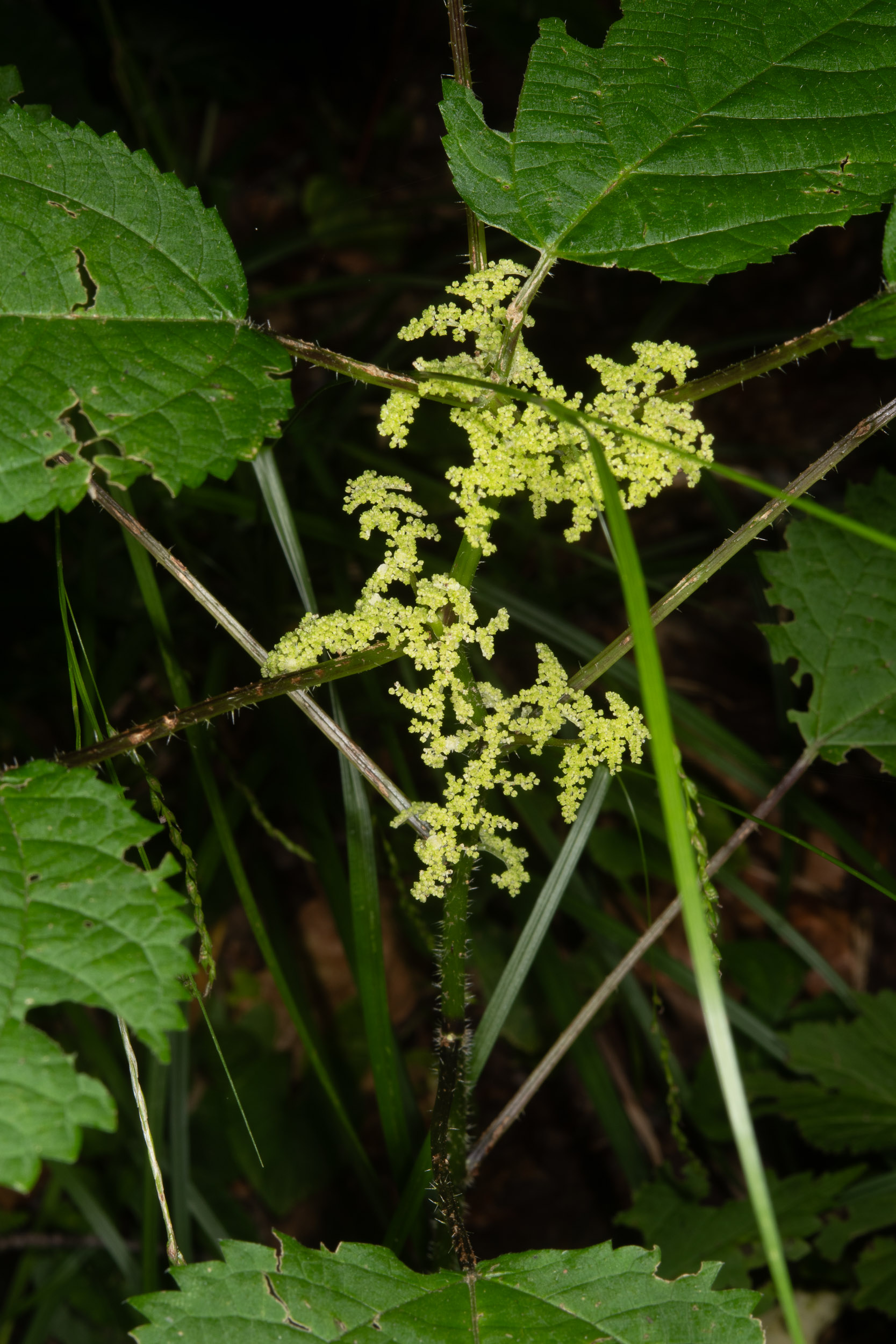
7/18/2017 · Tobyhanna State Park, Pennsylvania · ≈ 5 × 8″ (13 × 20 cm) 

7/18/2017 · Tobyhanna State Park, Pennsylvania · ≈ 5 × 3½″ (12 × 9.1 cm) 
| Kingdom | Plantae | Plants, but not fungi, lichens, or algae (from Stearn's Botanical Latin) |
| Subkingdom | Tracheobionta | Vascular plants—plants with a “circulatory system” for delivering water and nutrients |
| Division | Magnoliophyta | Flowering plants, also known as angiosperms |
| Class | Magnoliopsida | Dicotyledons—plants with two initial seed leaves |
| Subclass | Rosidae | Roses, legumes, proteas, dogwoods, hydrangeas, mistletoes, euphorbias, grapes, many more |
| Order | Urticales | Includes cannabis, nettles, mulberries, elms, others |
| Family | Urticaceae | Nettle family |
| Genus | Laportea | For Francois L. de Laporte, Count of Castelnau, Entomologist of the 19th century |
| Species | canadensis | “Of or referring to Canada” |
Laportea canadensis description by Thomas H. Kent, not updated.

© FloraFinder.org. All rights reserved.