Lepidospartum latisquamum S. Watson
Broomsage, Nevada broomsage
[An article has not been written yet.]
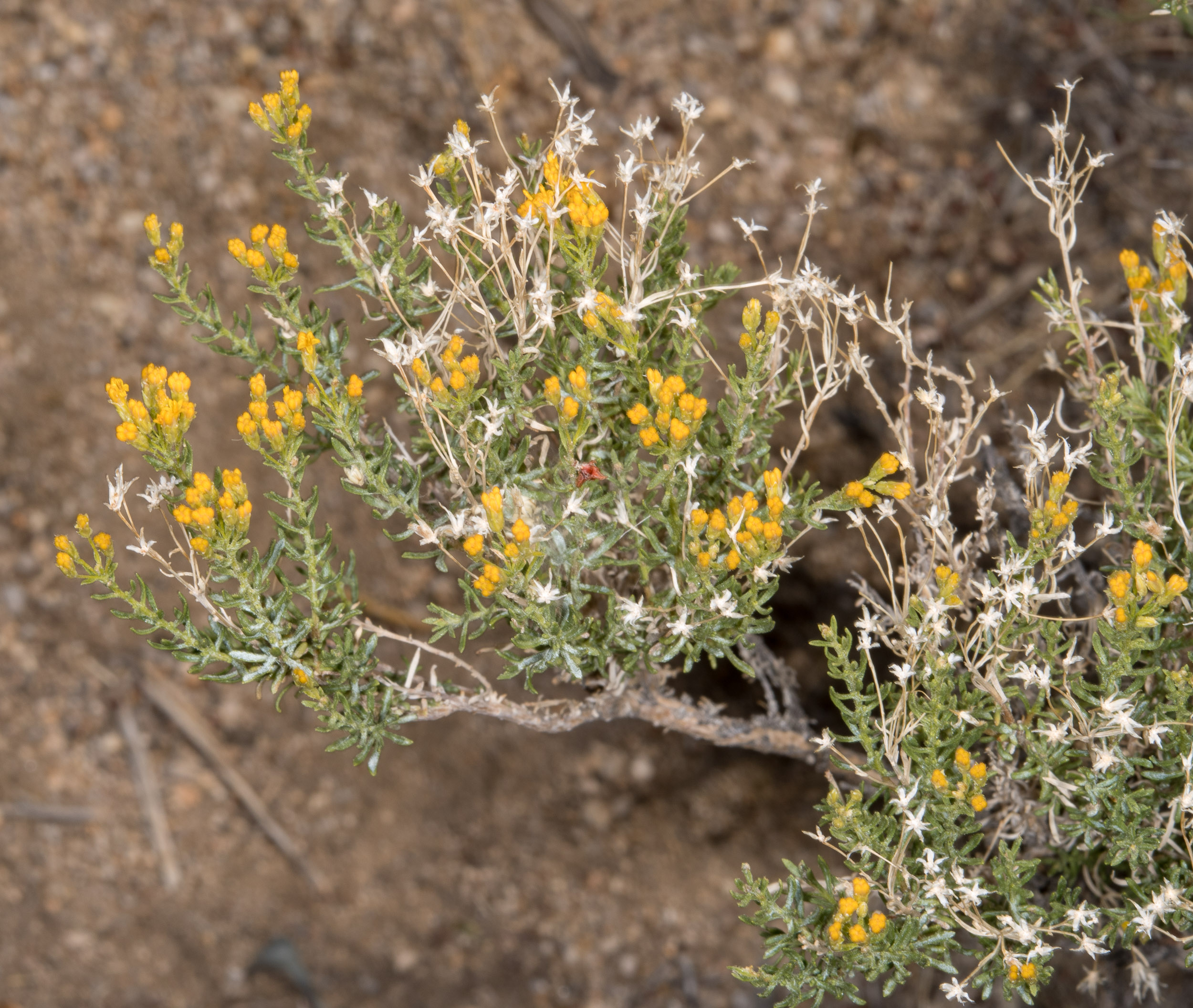
5/3/2018 · Park Blvd., Joshua Tree National Park · ≈ 6 × 4½″ (14 × 12 cm) 
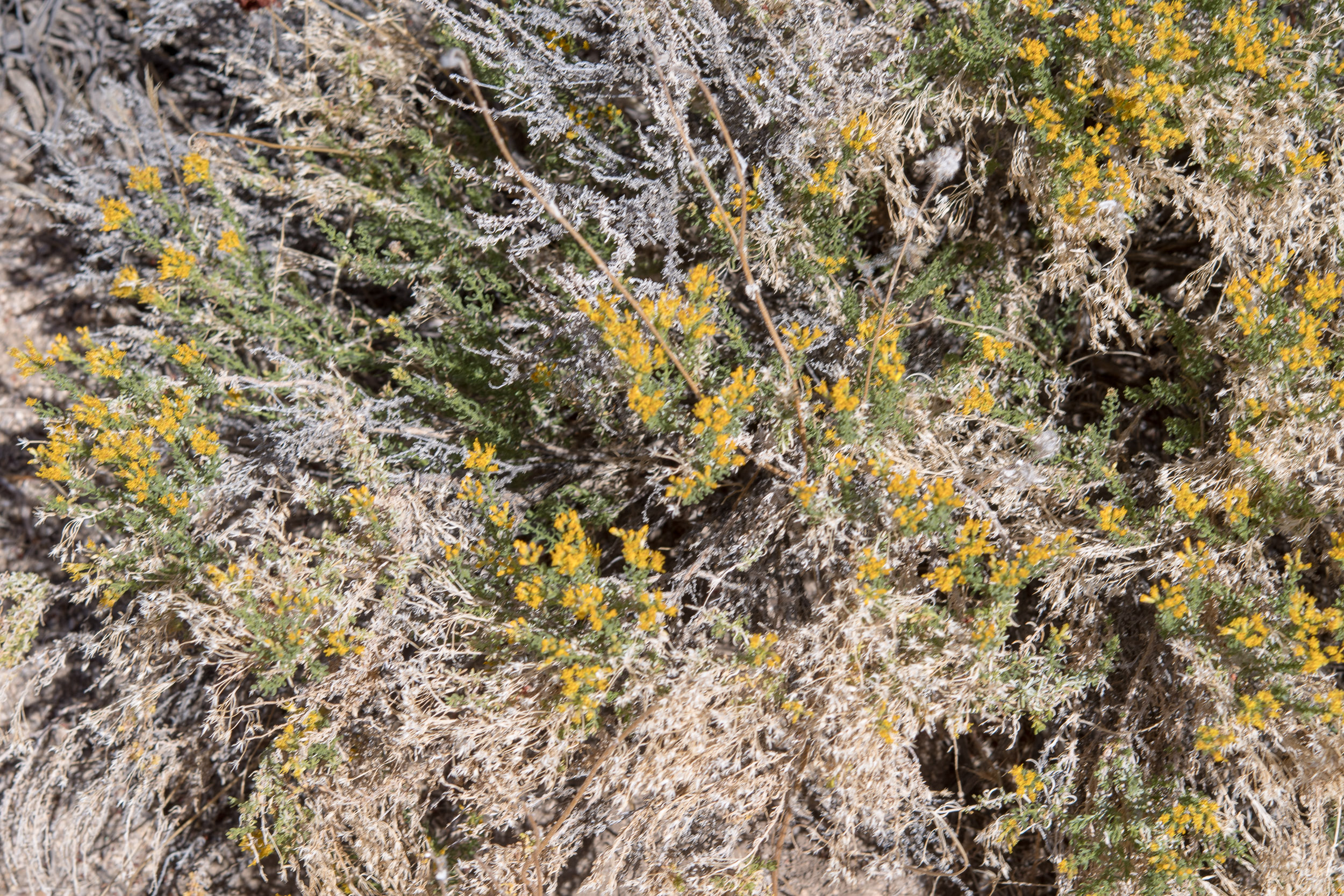
5/3/2018 · Park Blvd., Joshua Tree National Park · ≈ 1½ × 1′ (52 × 34 cm) 
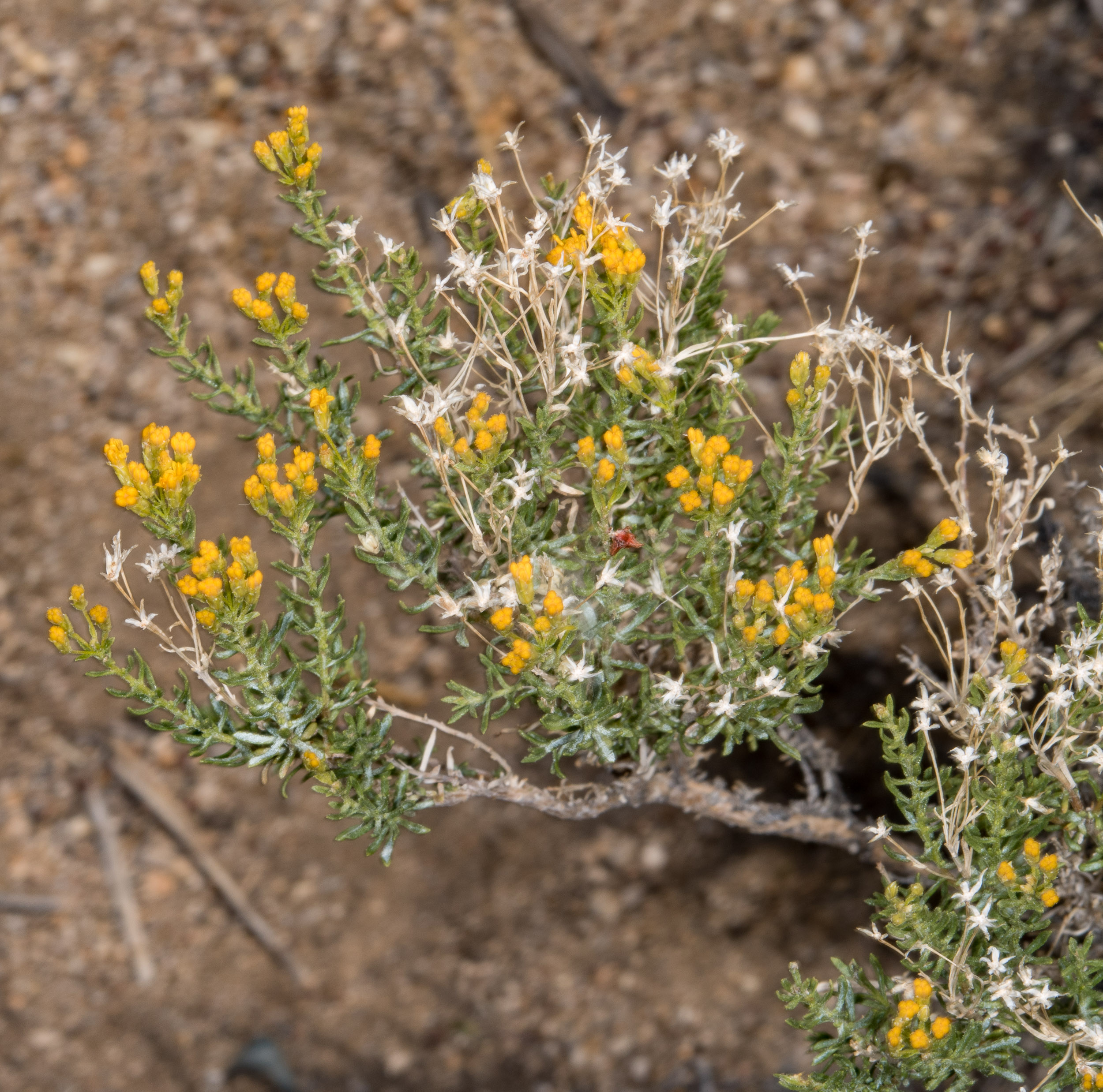
5/3/2018 · Park Blvd., Joshua Tree National Park · ≈ 5 × 4½″ (12 × 12 cm) 
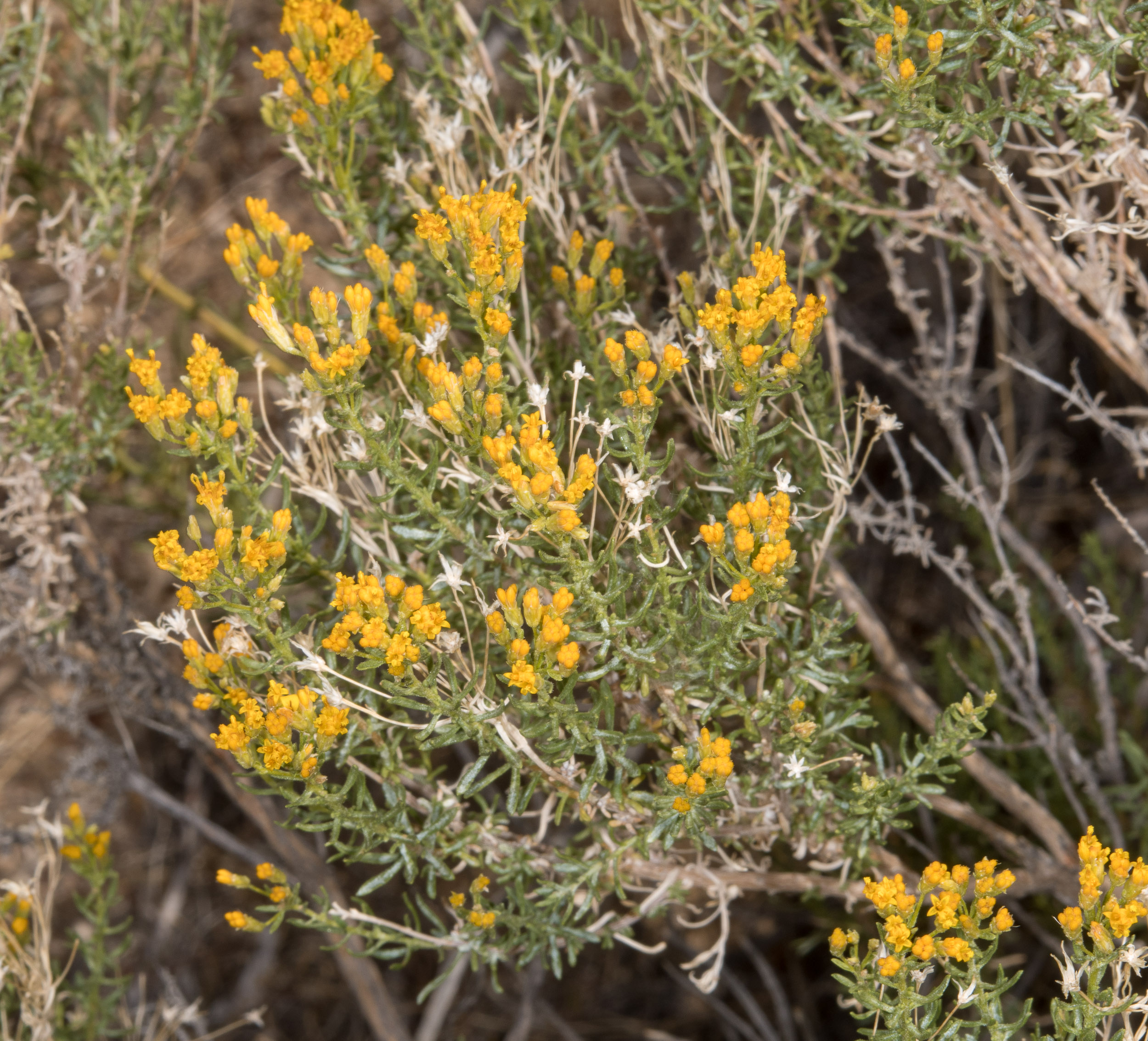
5/3/2018 · Park Blvd., Joshua Tree National Park · ≈ 5 × 4½″ (13 × 12 cm) 
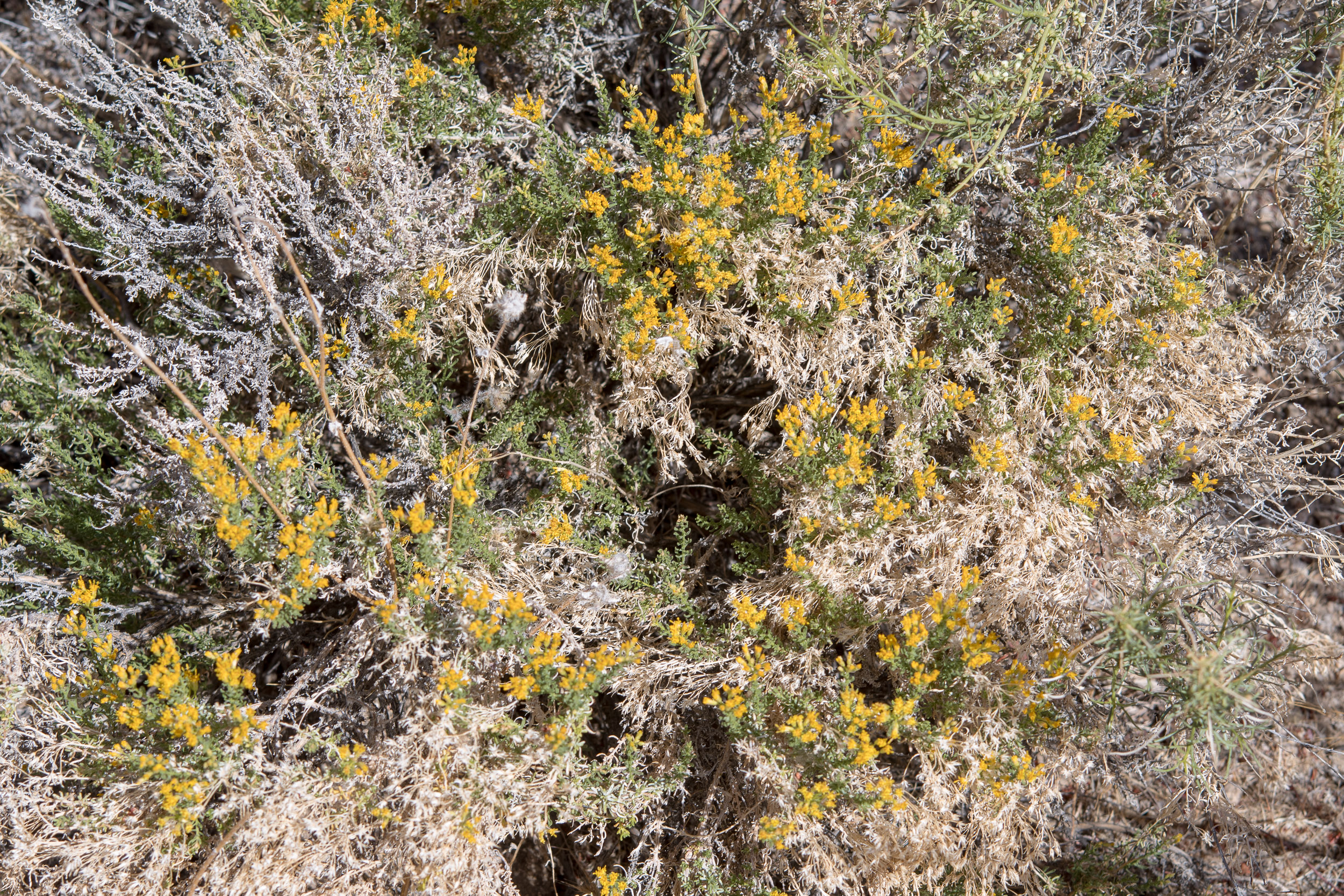
5/3/2018 · Park Blvd., Joshua Tree National Park · ≈ 1½ × 1′ (52 × 34 cm) 
| Kingdom | Plantae | Plants, but not fungi, lichens, or algae (from Stearn's Botanical Latin) |
| Subkingdom | Tracheobionta | Vascular plants—plants with a “circulatory system” for delivering water and nutrients |
| Division | Magnoliophyta | Flowering plants, also known as angiosperms |
| Class | Magnoliopsida | Dicotyledons—plants with two initial seed leaves |
| Subclass | Asteridae | A large class that encompasses asters |
| Order | Asterales | Flowering plants with a central disk flower and surrounding petals, like daisies |
| Family | Asteraceae | The aster family, which also includes daisies and sunflowers; from the Greek ἀστήρ, “star,” for the star-shaped flowers |
| Genus | Lepidospartum | From two Greek words lepis, meaning “scale,” and sparton, the broom shrub, hence meaning “broom-scale” or “scalebroom” |
| Species | latisquamum | Broad-scaled, referring to the phyllaries |
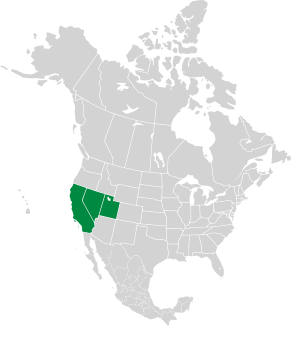
Lepidospartum latisquamum description by Thomas H. Kent, not updated.

© FloraFinder.org. All rights reserved.