Lilium canadense L.
Canada lily, meadow lily
Canada lilies are North American natives.
Plants: These lilies can reach 5′ (1.5 m) in height.
Leaves: In whorls of 3-8, surrounding the stem, sometimes with smaller individual leaves higher on the stem. The leaves have parallel veins, and are 1–5″ (2.5–12 cm) long and ½–1″ (1.3–2.5 cm) wide.
Flowers: Nodding (downward-facing), 2–5″ (5–12 cm) across, with six spotted petals, and may be yellow, orange, or red. The petals curl backward toward the base of the flower. Flowers appear in June.
Fruits: A capsule that splits when dry to release two or more seeds.
Habitats: Disturbed soils, river or stream floodplains, forests, meadows and fields, and wetland margins.
Edibility: Buds and roots are edible.
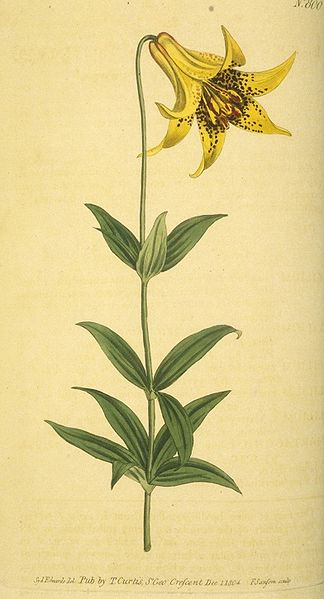
From Curtis Botanical Magazine, by the US Department of Agriculture. 
Online References:
References:
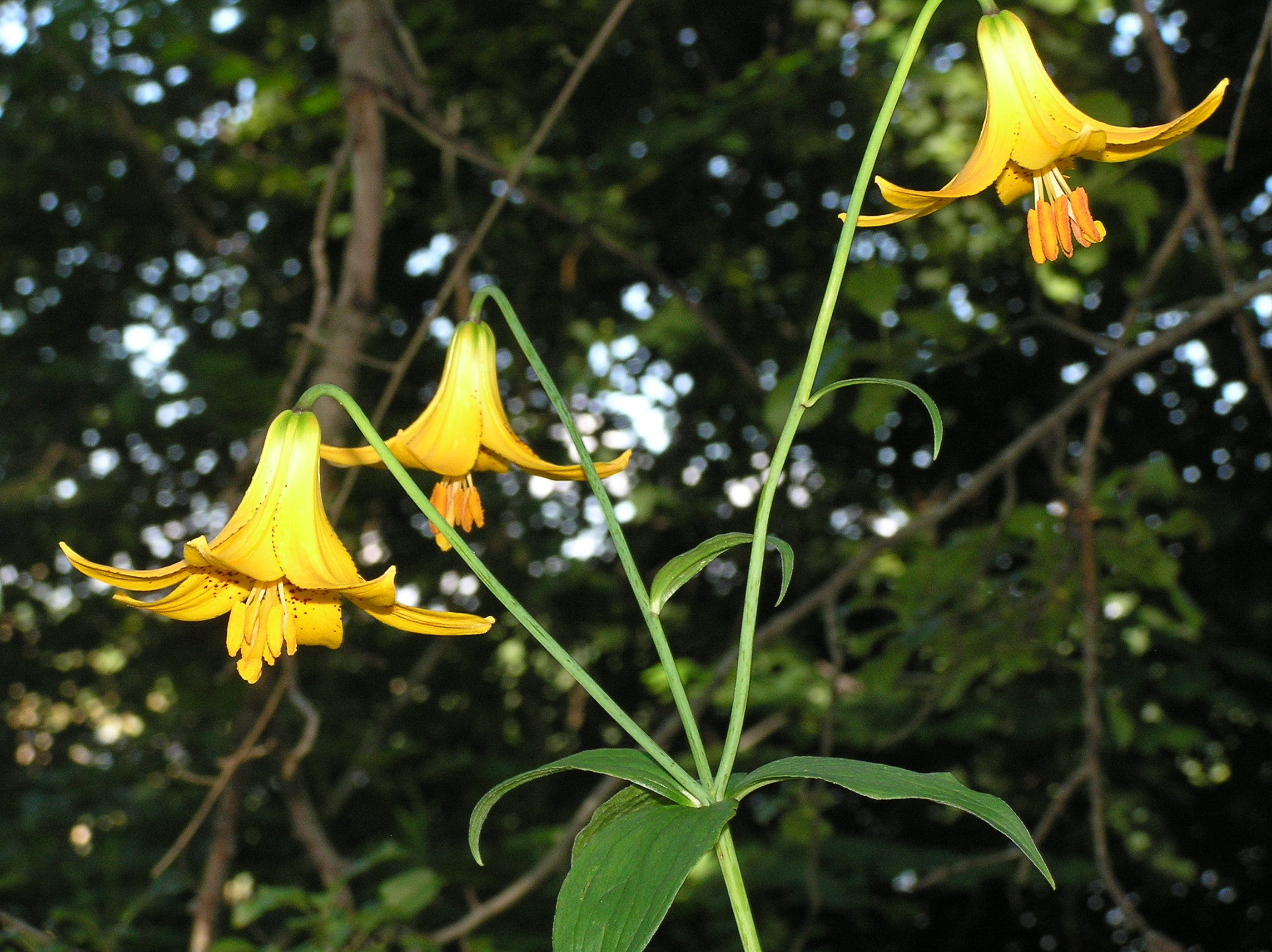
1/5/2026 · Maine Audubon Gilsland Farm Audubon Center, Falmouth, Maine · By Constance B. Kent 

9/20/2009 · Wild Gardens of Acadia, Acadia National Park, Bar Harbor, Maine · ≈ 12 × 17″ (29 × 44 cm) 
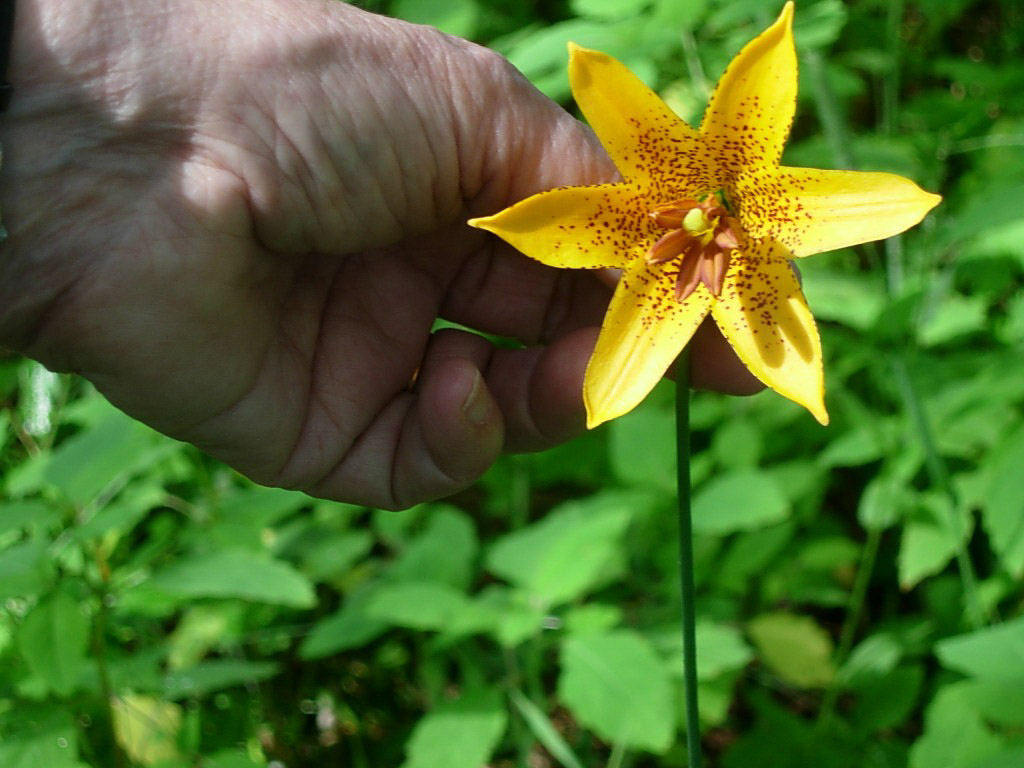
1/5/2026 · Maine Audubon Gilsland Farm Audubon Center, Falmouth, Maine · By Constance B. Kent 
| Kingdom | Plantae | Plants, but not fungi, lichens, or algae (from Stearn's Botanical Latin) |
| Subkingdom | Tracheobionta | Vascular plants—plants with a “circulatory system” for delivering water and nutrients |
| Division | Magnoliophyta | Flowering plants, also known as angiosperms |
| Class | Liliopsida | Monocots (plants with a single seed leaf); includes the lily family |
| Subclass | Liliidae | Includes lilies, orchids, and many others |
| Order | Liliales | Includes lilies, tulips, trilliums, greenbriars, and others |
| Family | Liliaceae | Lilly family |
| Genus | Lilium | From Greek lirion, “lily,” |
| Species | canadense | “From Canada” |
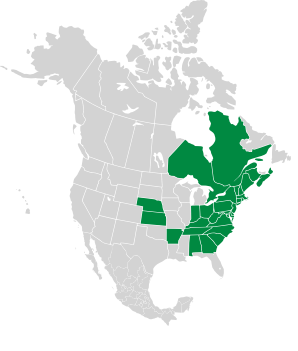
Lilium canadense description by Thomas H. Kent, not updated.

© FloraFinder.org. All rights reserved.