Lonicera fragrantissima Lindl. & Paxton
Winter honeysuckle, sweet breath of spring, january jasmine, fragrant honeysuckle
Winter honeysuckle is native to China, but it has escaped from landscaping in North America, becoming established (sometimes very invasive) in the eastern United States.
Plants: Shrubs are 3–9½′ (1–3 m) around.
Leaves: Opposite, elliptic to broad-ovate, with smooth edges. They are ⅞–3″ (2.5–7.5 cm) long, and dull blue-green to dark green.
Flowers: Blooms are a creamy white color, in pairs, appearing in March-April, and very fragrant, with a lemony smell. Each flower is ⅜″ (1 cm) in size.
Fruits: Orange to red berries ⅛–¼″ (6–8 mm) around.
Habitats: Woodlands, fields, and most disturbed sites.
 |
Honeysuckle comparisons. |
Online References:
Xylosteon fragrantissimum (Lindl. & Paxton) Small

9/7/2010 · New England Botanic Garden at Tower Hill, Boylston, Massachusetts 
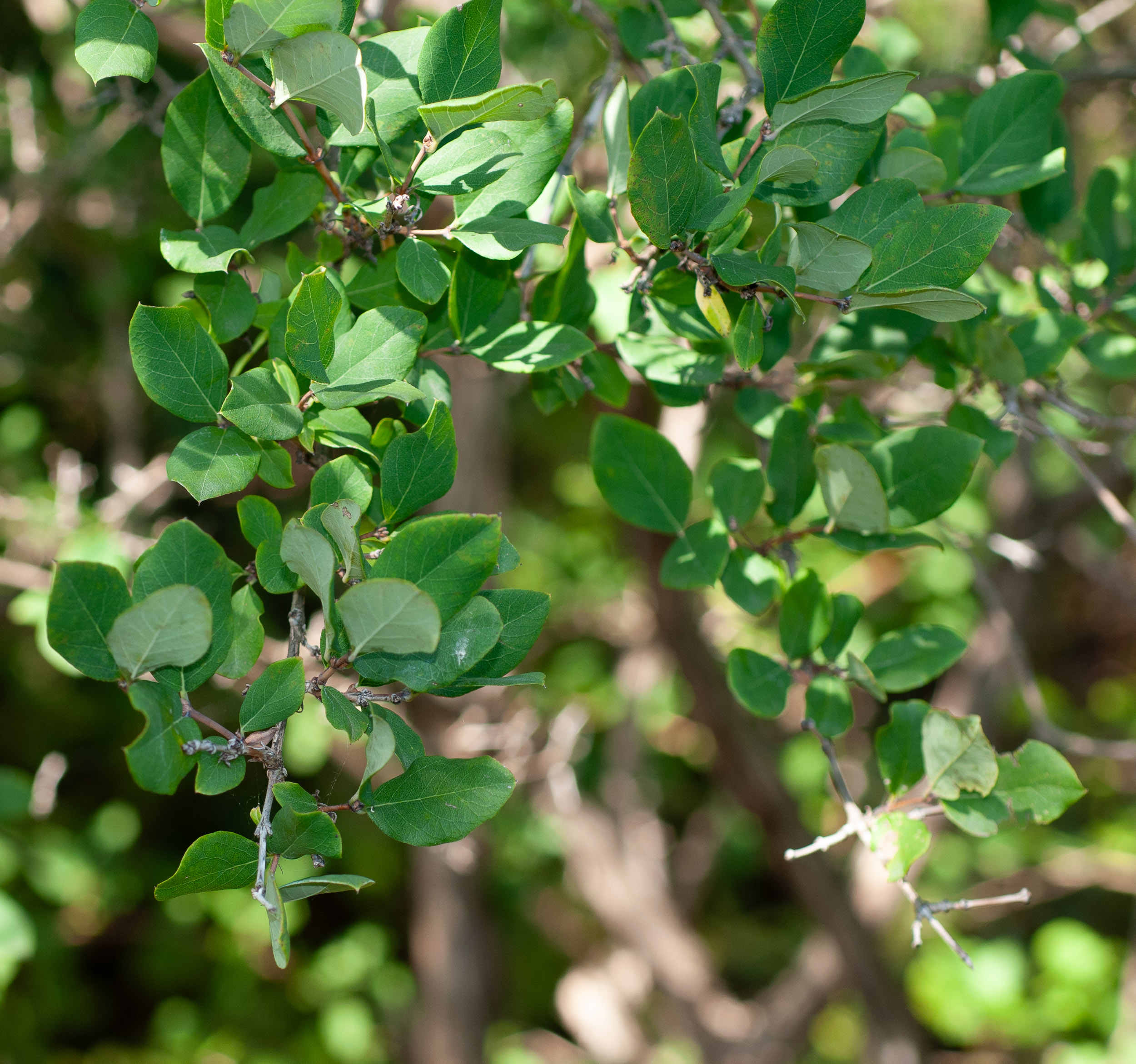
9/7/2010 · New England Botanic Garden at Tower Hill, Boylston, Massachusetts · ≈ 11 × 10″ (27 × 26 cm) 
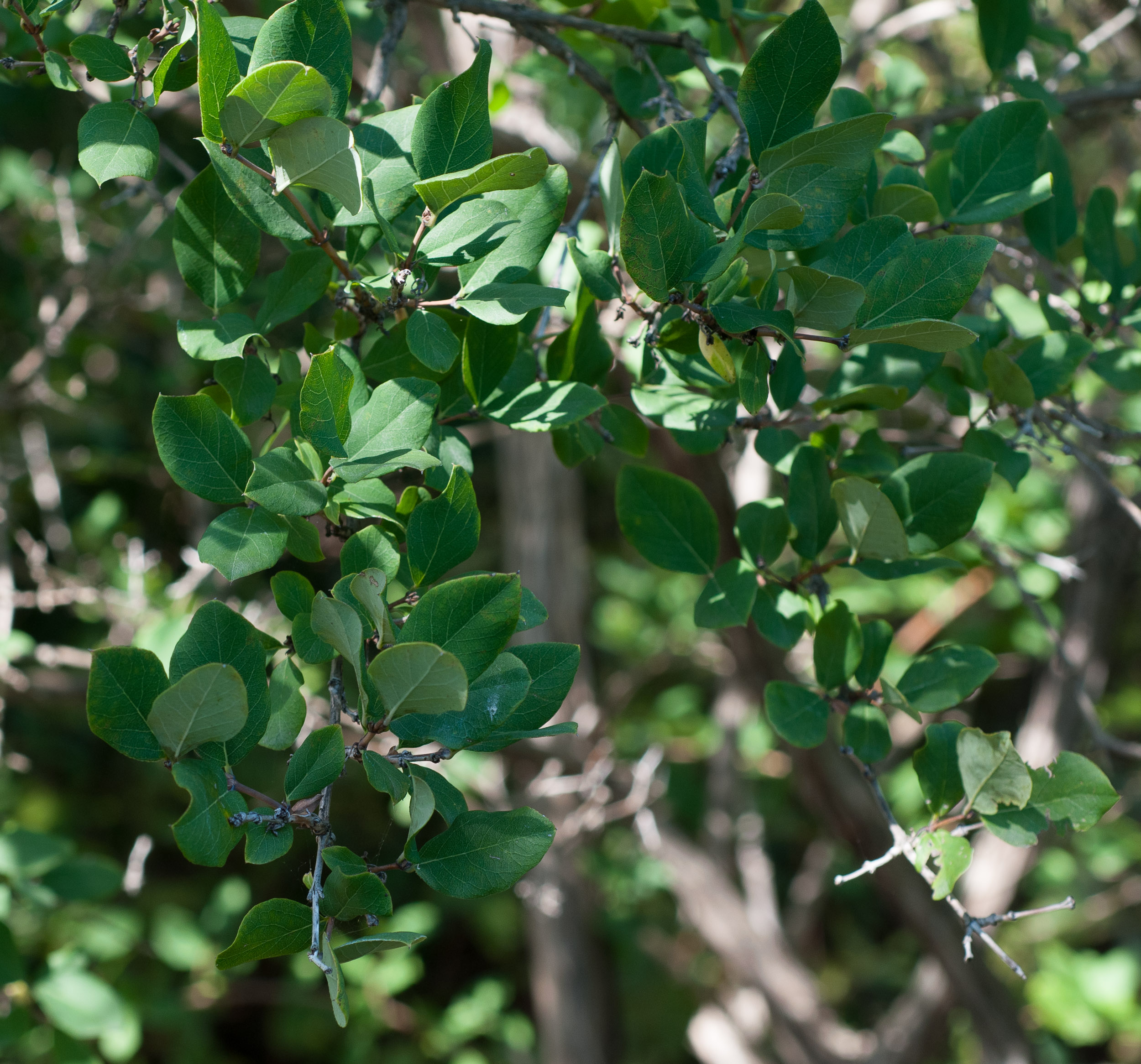
9/7/2010 · New England Botanic Garden at Tower Hill, Boylston, Massachusetts · ≈ 11 × 10″ (28 × 26 cm) 
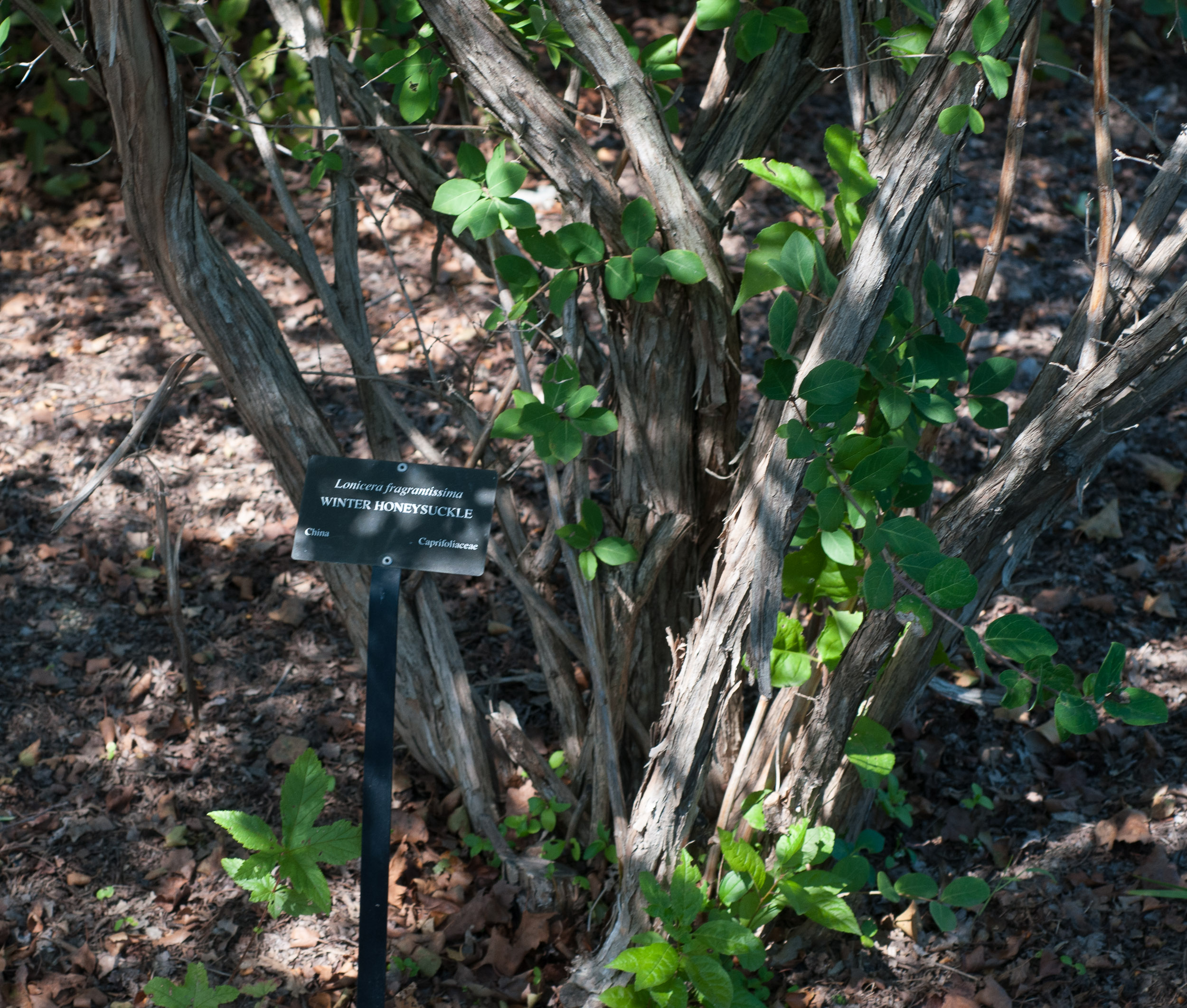
9/7/2010 · New England Botanic Garden at Tower Hill, Boylston, Massachusetts 
| Kingdom | Plantae | Plants, but not fungi, lichens, or algae (from Stearn's Botanical Latin) |
| Subkingdom | Tracheobionta | Vascular plants—plants with a “circulatory system” for delivering water and nutrients |
| Division | Magnoliophyta | Flowering plants, also known as angiosperms |
| Class | Magnoliopsida | Dicotyledons—plants with two initial seed leaves |
| Subclass | Asteridae | A large class that encompasses asters |
| Order | Dipsacales | Includes viburnum, honeysuckle, snowberry, beautybush, twinflower, many others |
| Family | Caprifoliaceae | Honeysuckle family |
| Genus | Lonicera | Either Latin for honeysuckle, though this is not a “true” honeysuckle; or named for Adam Lonitzer (1528-1586), a German herbalist, physician and botanist who wrote a standard herbal text that was reprinted many times between 1557 and 1783 |
| Species | fragrantissima | Means “smells good” |
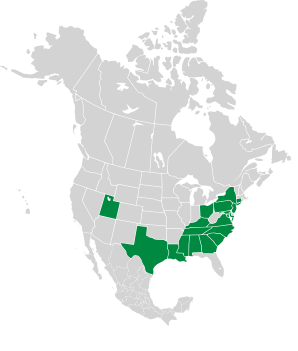
Lonicera fragrantissima description by Thomas H. Kent, not updated.

© FloraFinder.org. All rights reserved.