Medicago sativa L.
Alfalfa, lucerne
Alfalfa (or lucerne outside of the US) probably first appeared in south-central Asia, but nobody is certain because its cultivation goes back at least 500 years BCE. It provides excellent pasturage for cattle, hogs, and sheep. Alfalfa has long since naturalized and spread through Europe, Australia, and North and South America. North America alone produces 41%—29 million acres—of cultivated alfalfa annually.
Plants: Low-lying, multiply branched, 12–35″ (30–90 cm).
Leaves: Leaflets resemble those of clover, alternate, occurring in triplets, narrowly oval or obovate, toothed at the ends. Each middle leaflet bends upward, and is up to 1″ (3 cm) long.
Flowers: Purple (sometimes yellow) flowers form rounded balls or cylinders up to 1½″ (4 cm) around. Individual flowers are ¼–½″ (6.3–12 mm) in size.
Fruits: Seed pods are curved to spiral, with 3-8 seeds per pod.
Habitats: Fields, roadsides, and other man-made or disturbed habitats.
Edibility: Alfalfa sprouts are popular because they are high in various nutrients, including calcium and vitamins A, C, E, and K4. They should be thoroughly rinsed to avoid salmonella and E. coli, and the FDA recommends that children and the elderly avoid eating them due to possible bacterial contamination. Like other foods high in vitamin K, alfalfa sprouts should not be consumed by people on warfarin, a blood thinner.
Medical: From WebMD: “Alfalfa is an herb. People use the leaves, sprouts, and seeds to make medicine. Alfalfa is used for kidney conditions, bladder and prostate conditions, and to increase urine flow. It is also used for high cholesterol, asthma, osteoarthritis, rheumatoid arthritis, diabetes, upset stomach, and a bleeding disorder called thrombocytopenic purpura. People also take alfalfa as a source of vitamins A, C, E, and K4; and minerals calcium, potassium, phosphorous, and iron.”
Online References:
Purdue University's Center for New Crops and Plants Products A very detailed article.
References:
Clemants, Steven; Gracie, Carol, Wildflowers in the Field and Forest, Oxford University Press, 2006, p. 36

6/22/2010 · Nashua River Rail Trail, Ayer, Massachusetts · ≈ 8 × 5″ (19 × 13 cm) 
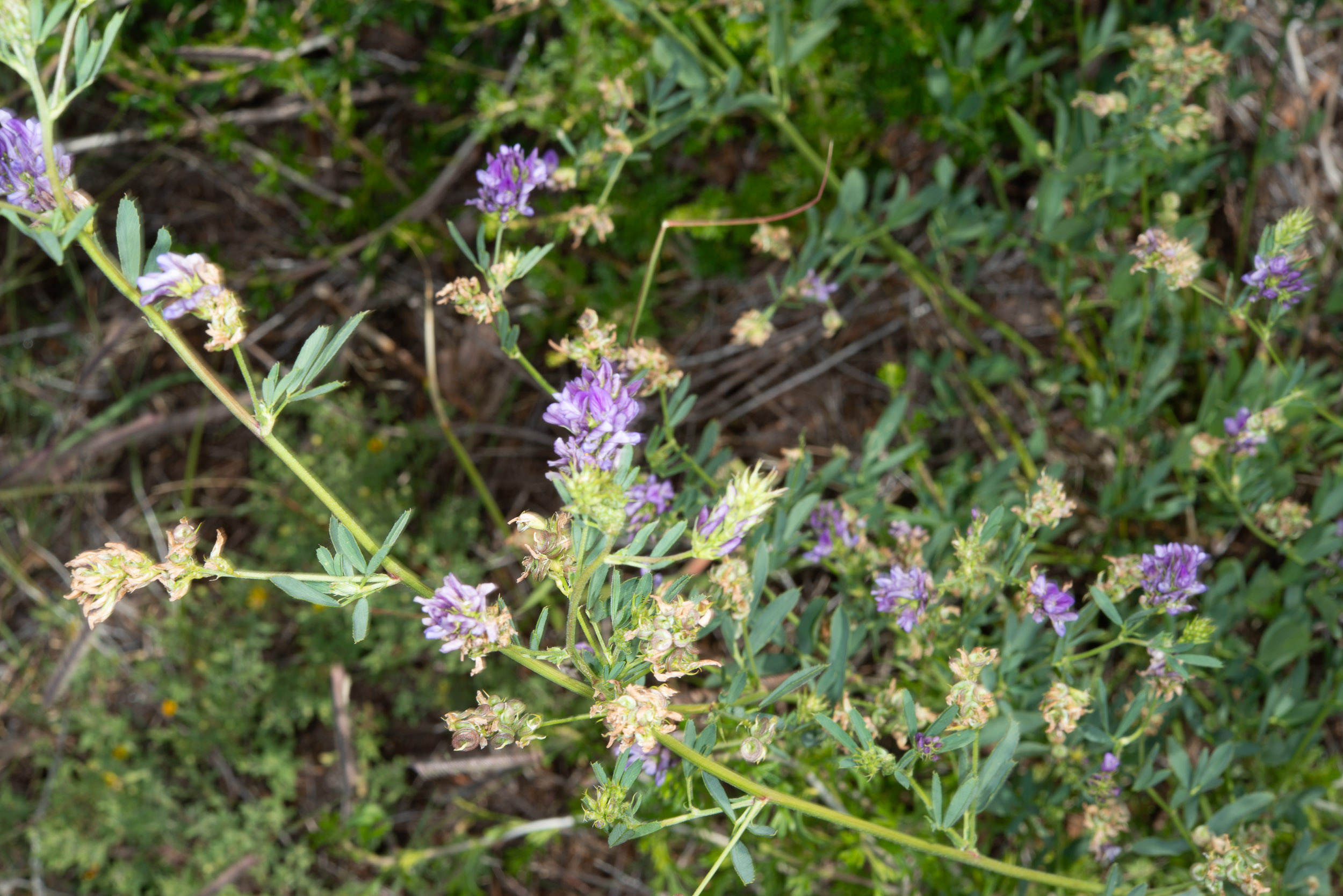
8/28/2014 · High Road to Taos, New Mexico · ≈ 11 × 7″ (28 × 18 cm) 
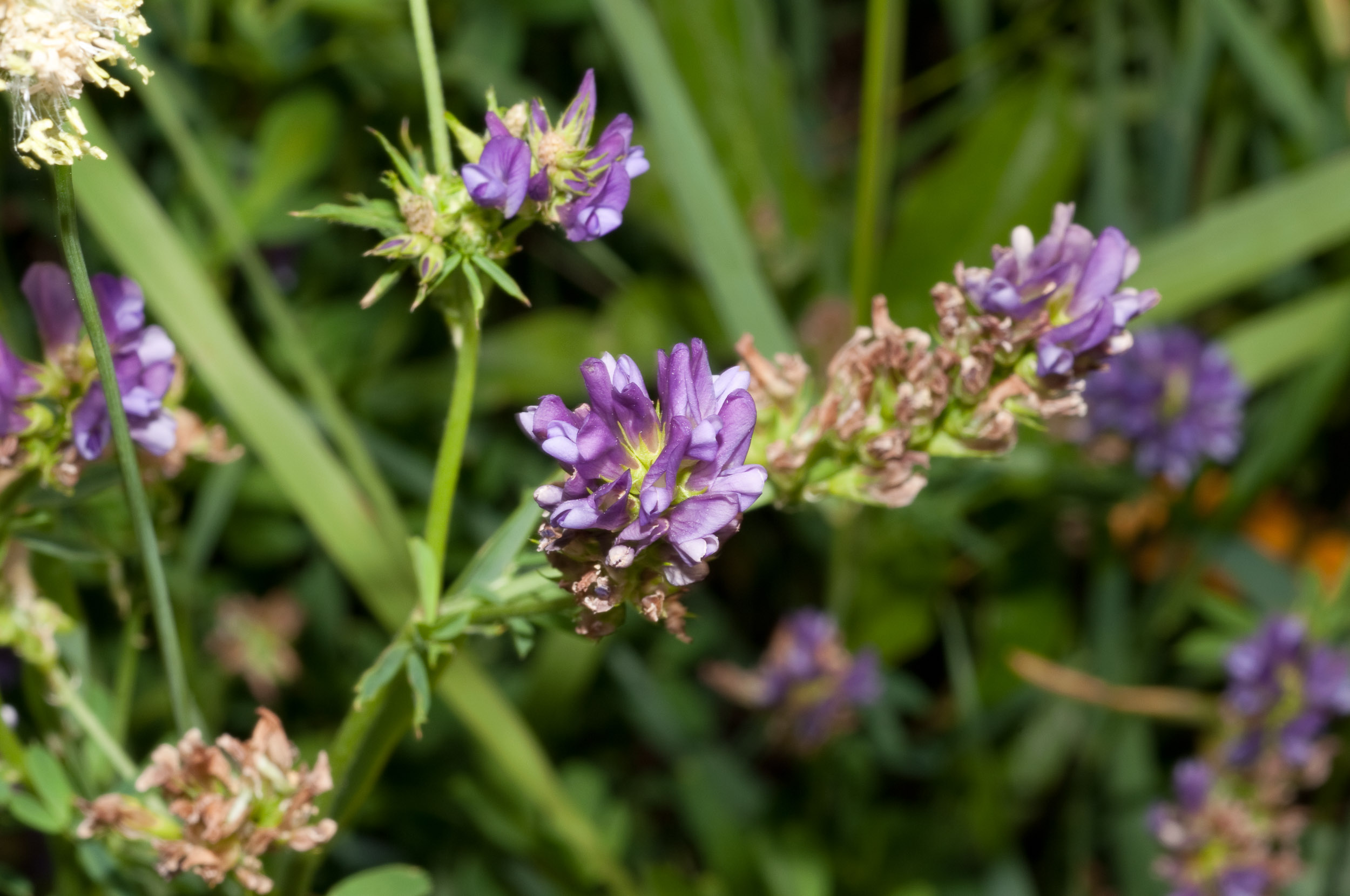
6/22/2010 · Nashua River Rail Trail, Ayer, Massachusetts · ≈ 5 × 3½″ (13 × 9.2 cm) 

8/29/2014 · Next to river boat ramp, New Mexico · ≈ 9 × 6″ (23 × 16 cm) 

8/28/2014 · High Road to Taos, New Mexico · ≈ 8 × 7″ (19 × 18 cm) 
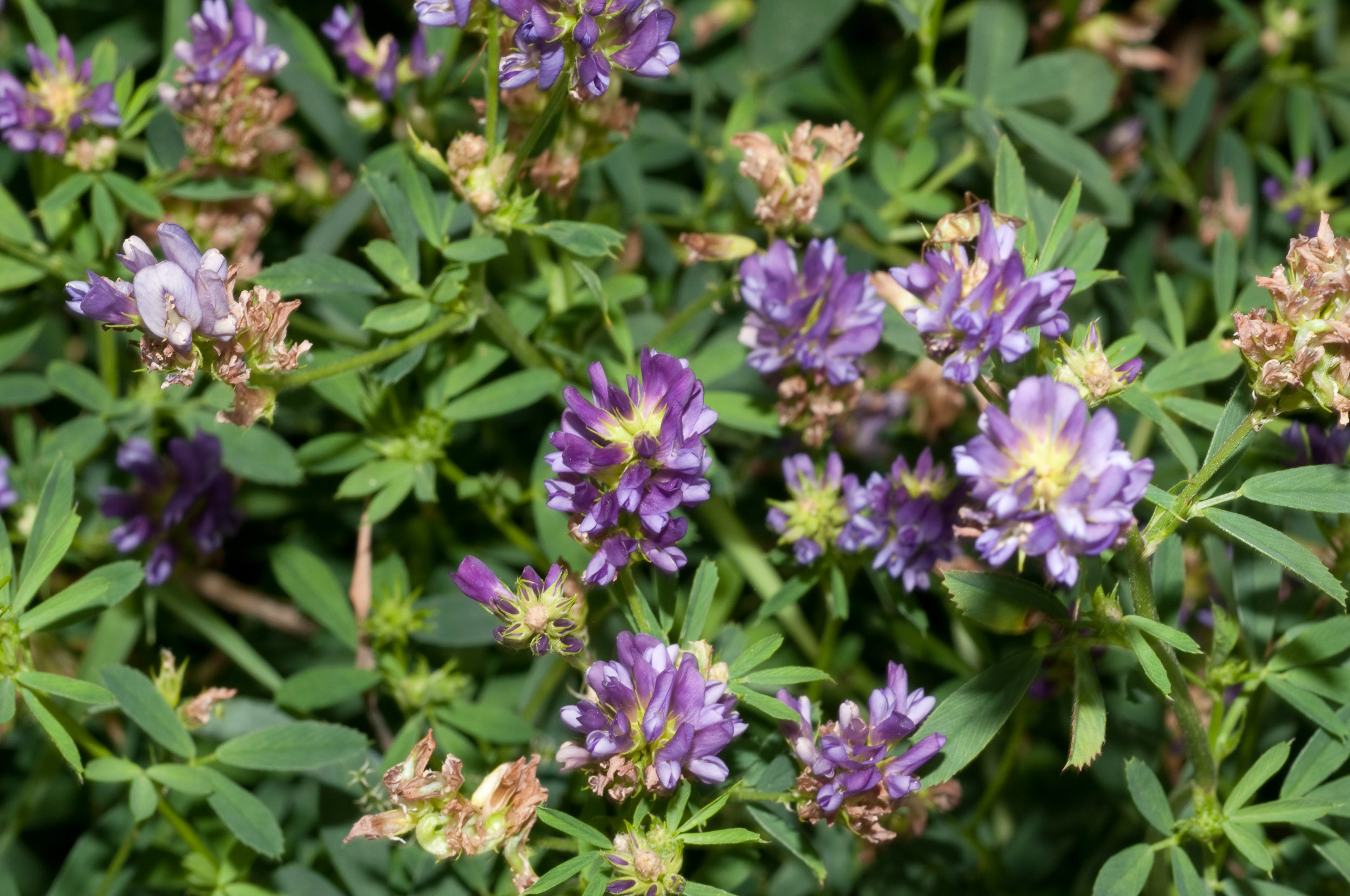
6/22/2010 · Nashua River Rail Trail, Ayer, Massachusetts · ≈ 7 × 4½″ (17 × 11 cm) 

8/29/2014 · Next to river boat ramp, New Mexico · ≈ 6 × 6″ (16 × 16 cm) 
| Kingdom | Plantae | Plants, but not fungi, lichens, or algae (from Stearn's Botanical Latin) |
| Subkingdom | Tracheobionta | Vascular plants—plants with a “circulatory system” for delivering water and nutrients |
| Division | Magnoliophyta | Flowering plants, also known as angiosperms |
| Class | Magnoliopsida | Dicotyledons—plants with two initial seed leaves |
| Subclass | Rosidae | Roses, legumes, proteas, dogwoods, hydrangeas, mistletoes, euphorbias, grapes, many more |
| Order | Fabales | Legumes (pea and bean families) |
| Family | Fabaceae | Legume family (peas and beans) |
| Genus | Medicago | From Latin medica, “alfalfa, lucerne,” in turn from Greek μηδική (πόα), “Median (grass).’Latin medica ‘alfalfa, lucerne,’ from Greek: median μηδική (πόα), “grass” |
| Species | sativa | Means “that which is sown,” indicating the plant is a cultivated one |
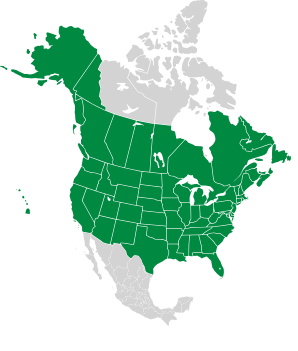
Medicago sativa description by Thomas H. Kent, not updated.

© FloraFinder.org. All rights reserved.