FloraFinder uses cookies only for correct operation. More info. Okay
Mentha arvensis L.
Field mint, wild mint, corn mint
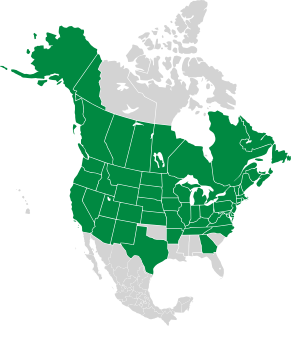
Field mint is a herbaceous perennial native to temperate parts of the northern hemisphere, including Europe and
North America.
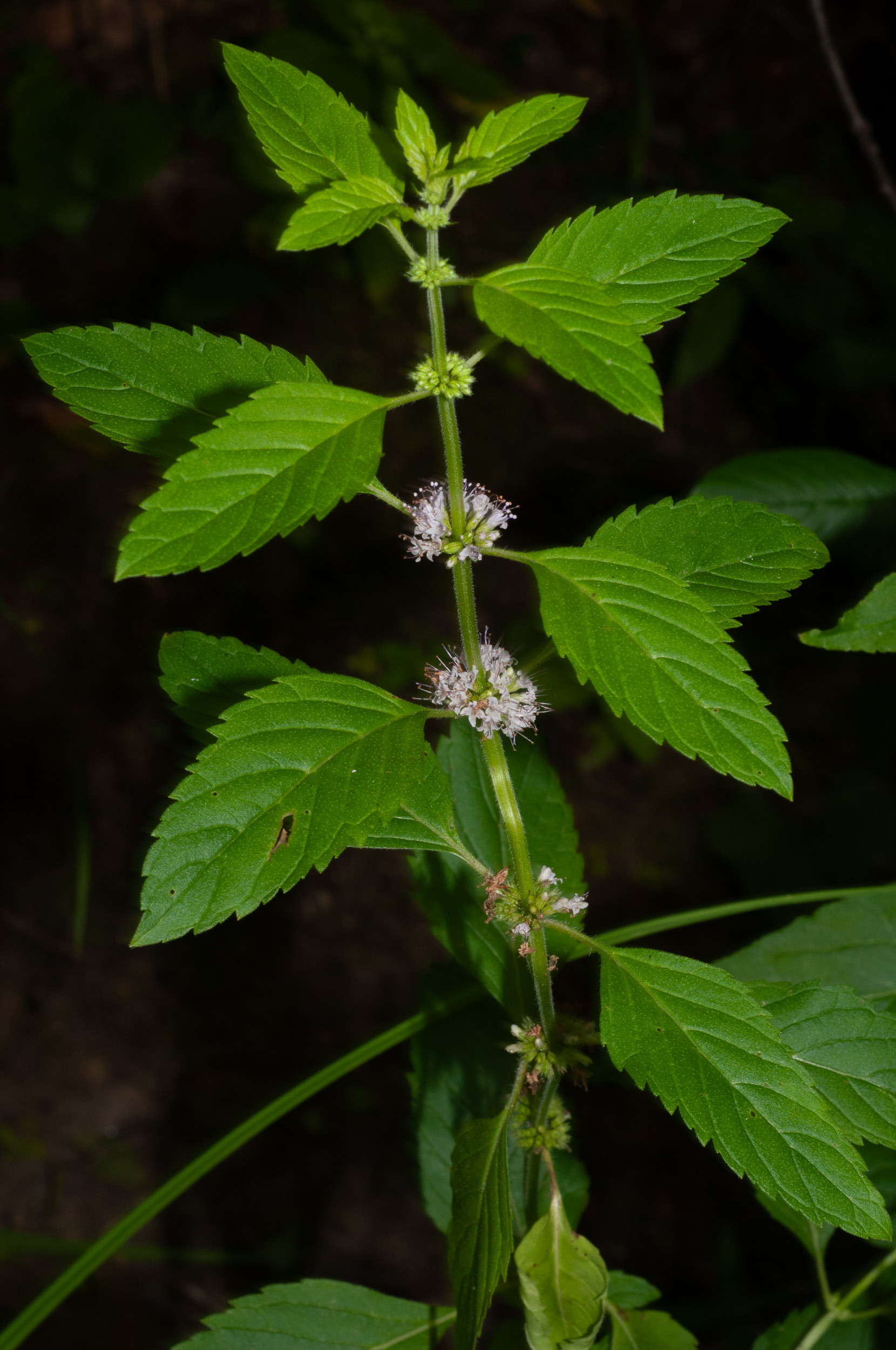
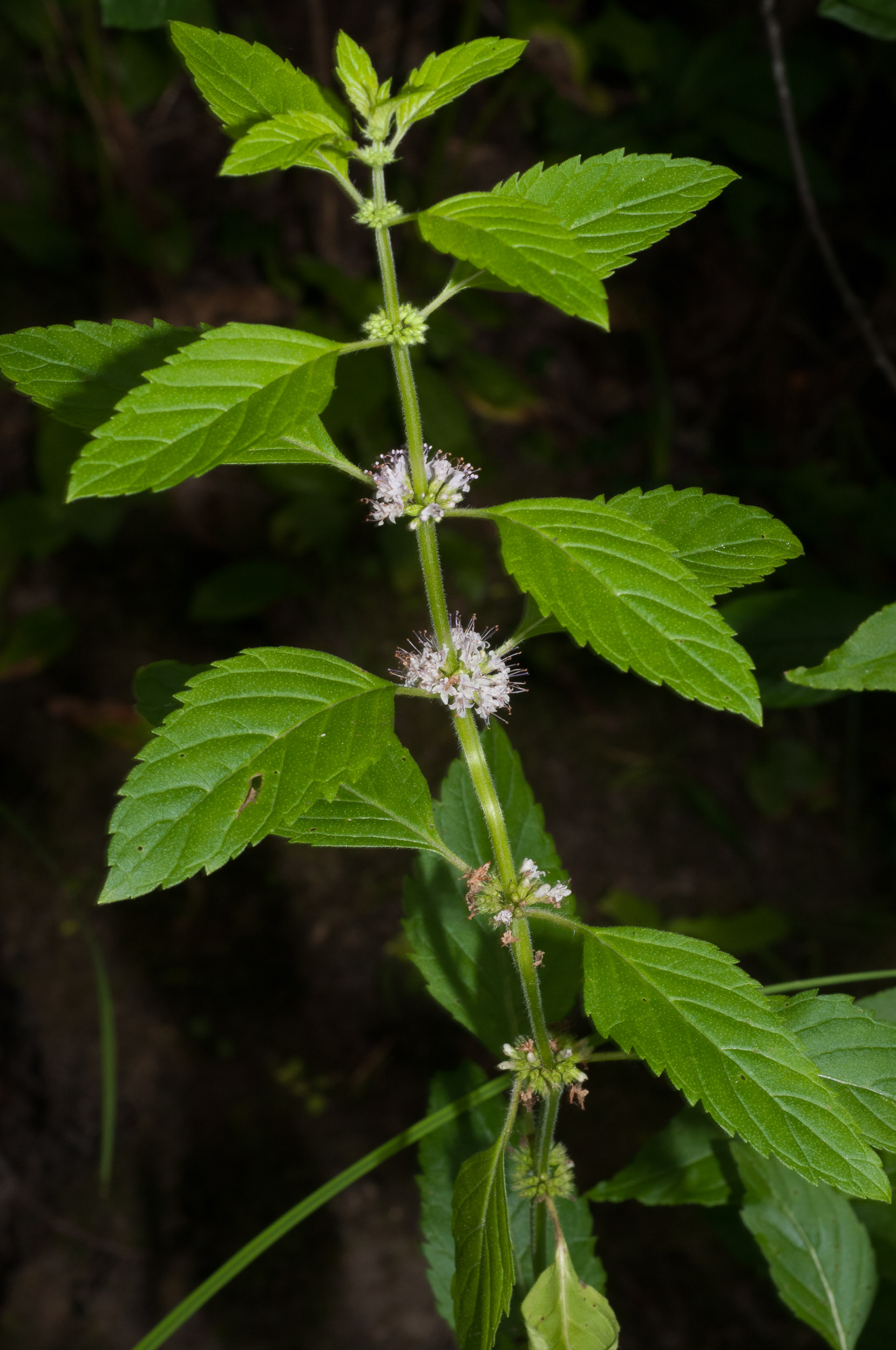
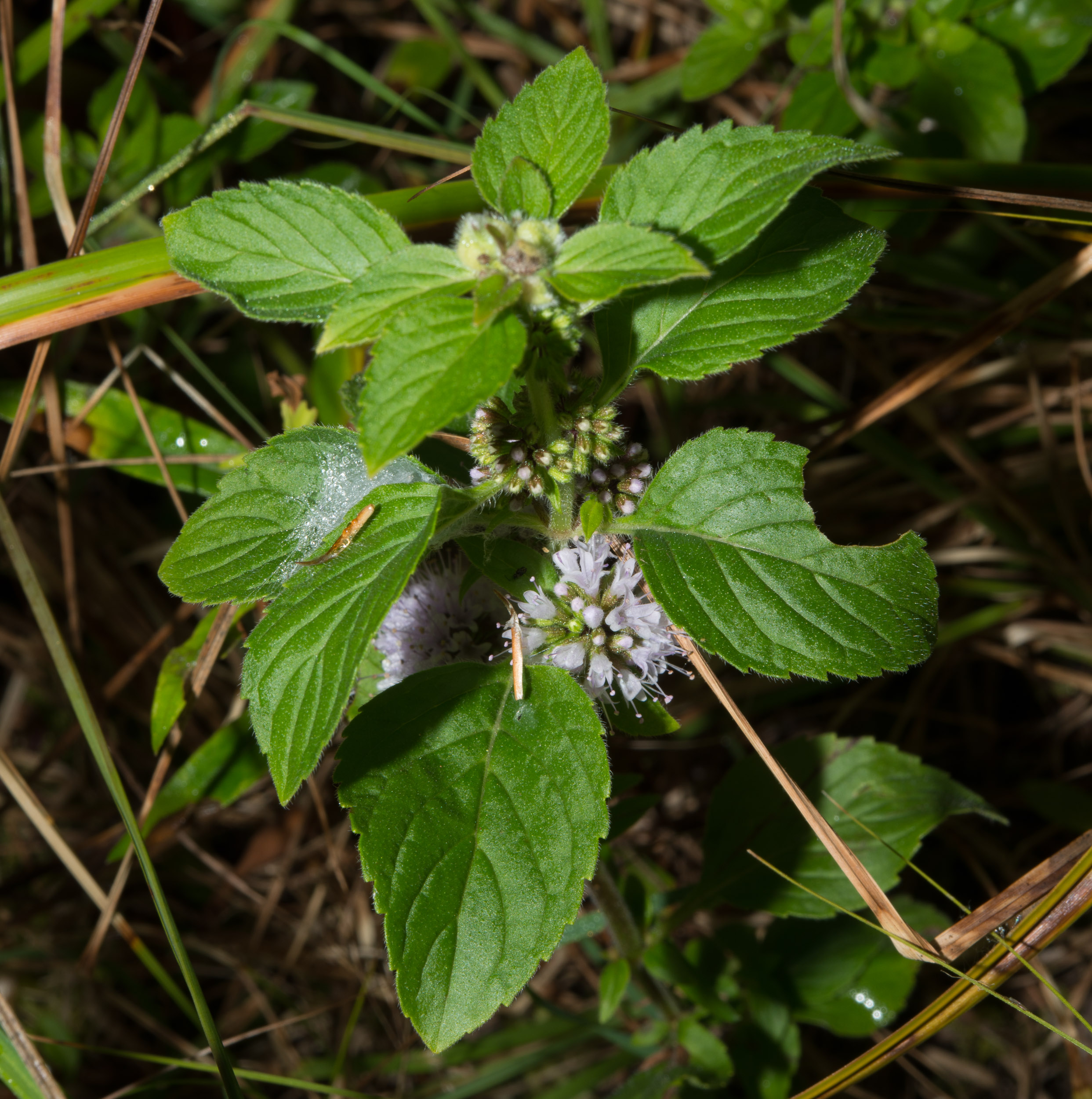
Plants: Typically 4–24″ (10–60 cm) high. As with
other mint family plants, stems are square in cross-section.
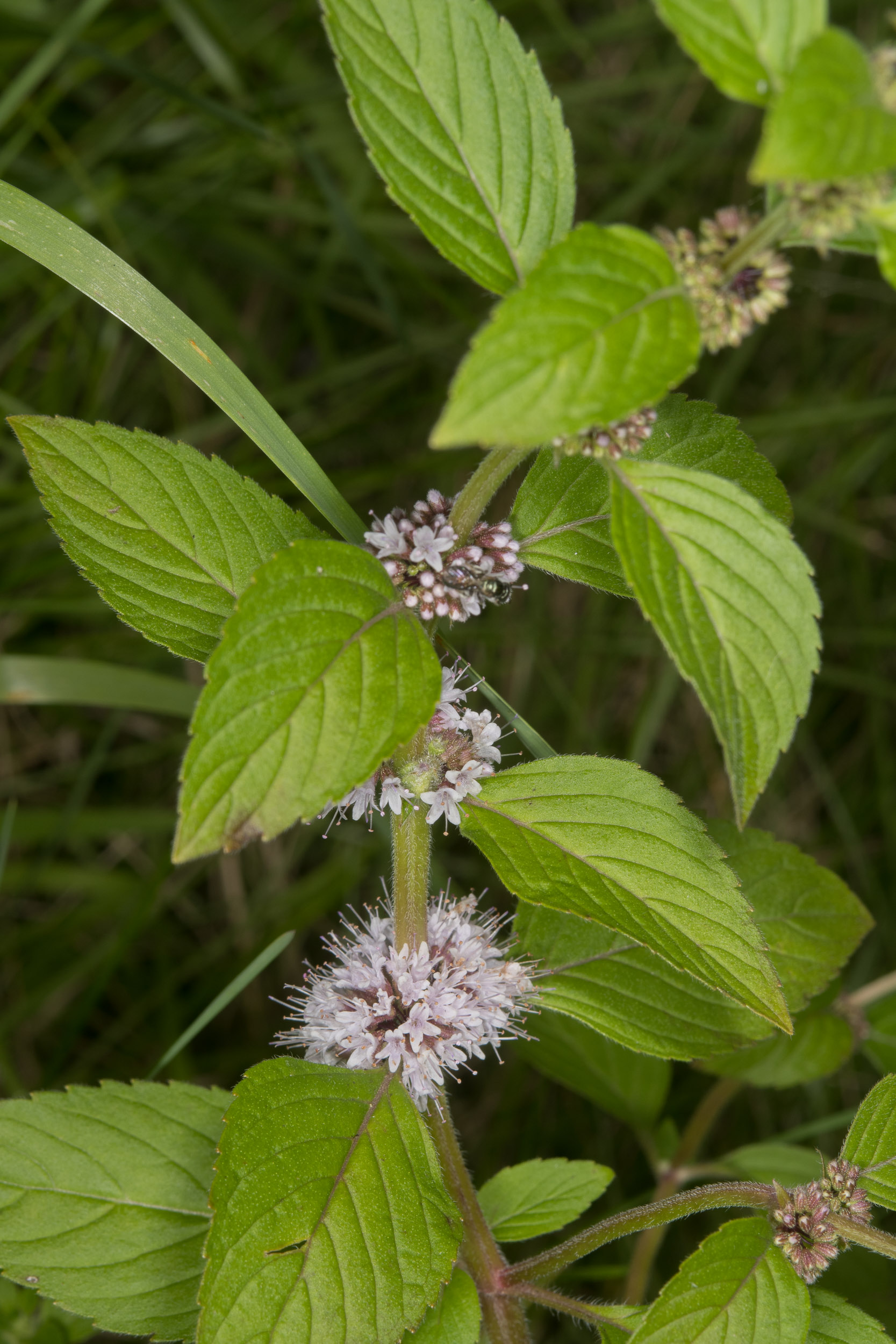
Leaves: Opposite, simple,
¾–2½ ⨉ ⅜–¾″ (2–6.5 ⨉ 1–2 cm), with pointed tips and finely hairy undersides.
Lower leaves are on short stalks, while upper leaves are sessile.
Leaves are hairy, egg-shaped or lanceolate,
and coarsely serrated. When fresh leaves are crushed,
they have the odor of peppermint or sweet fruit.
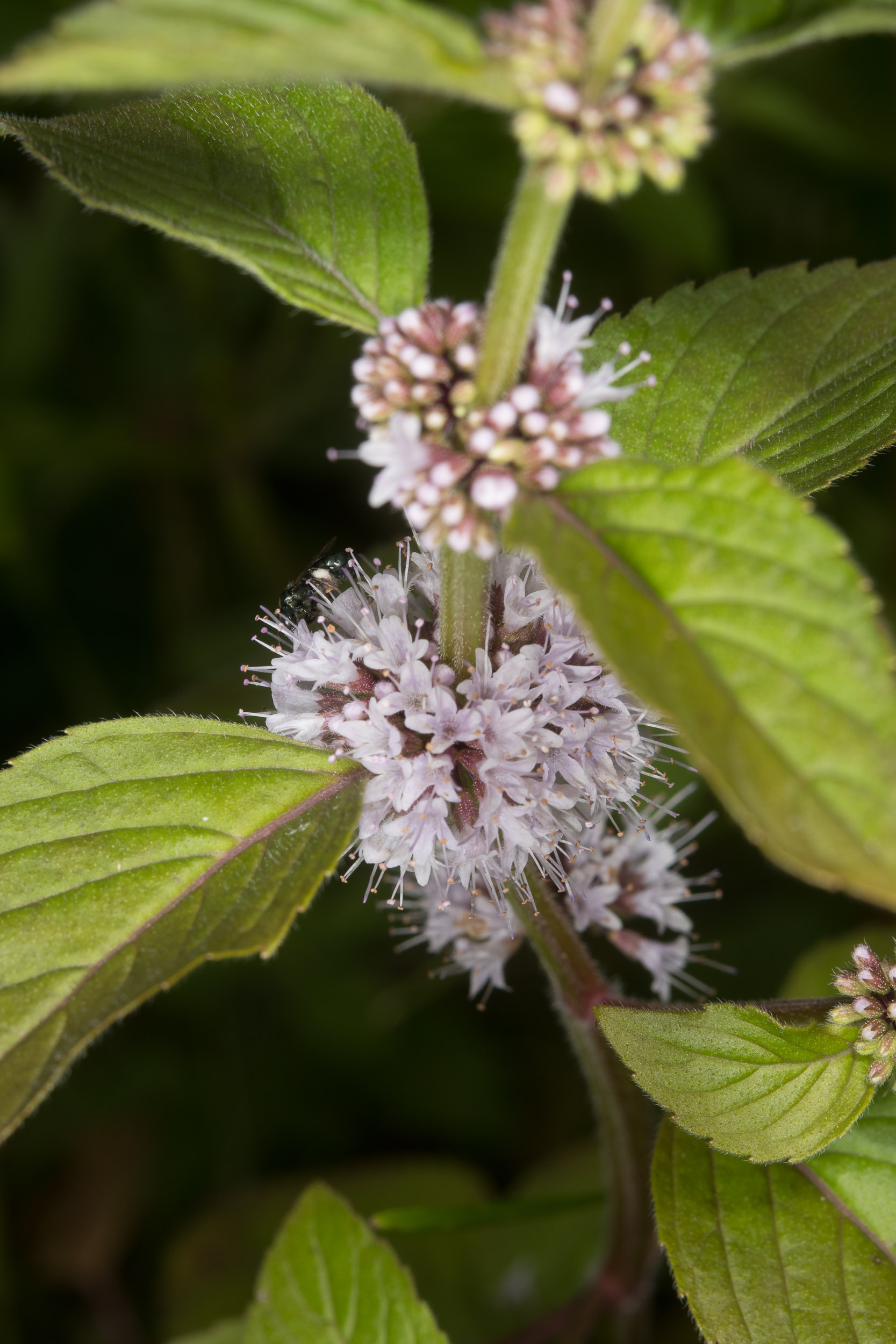
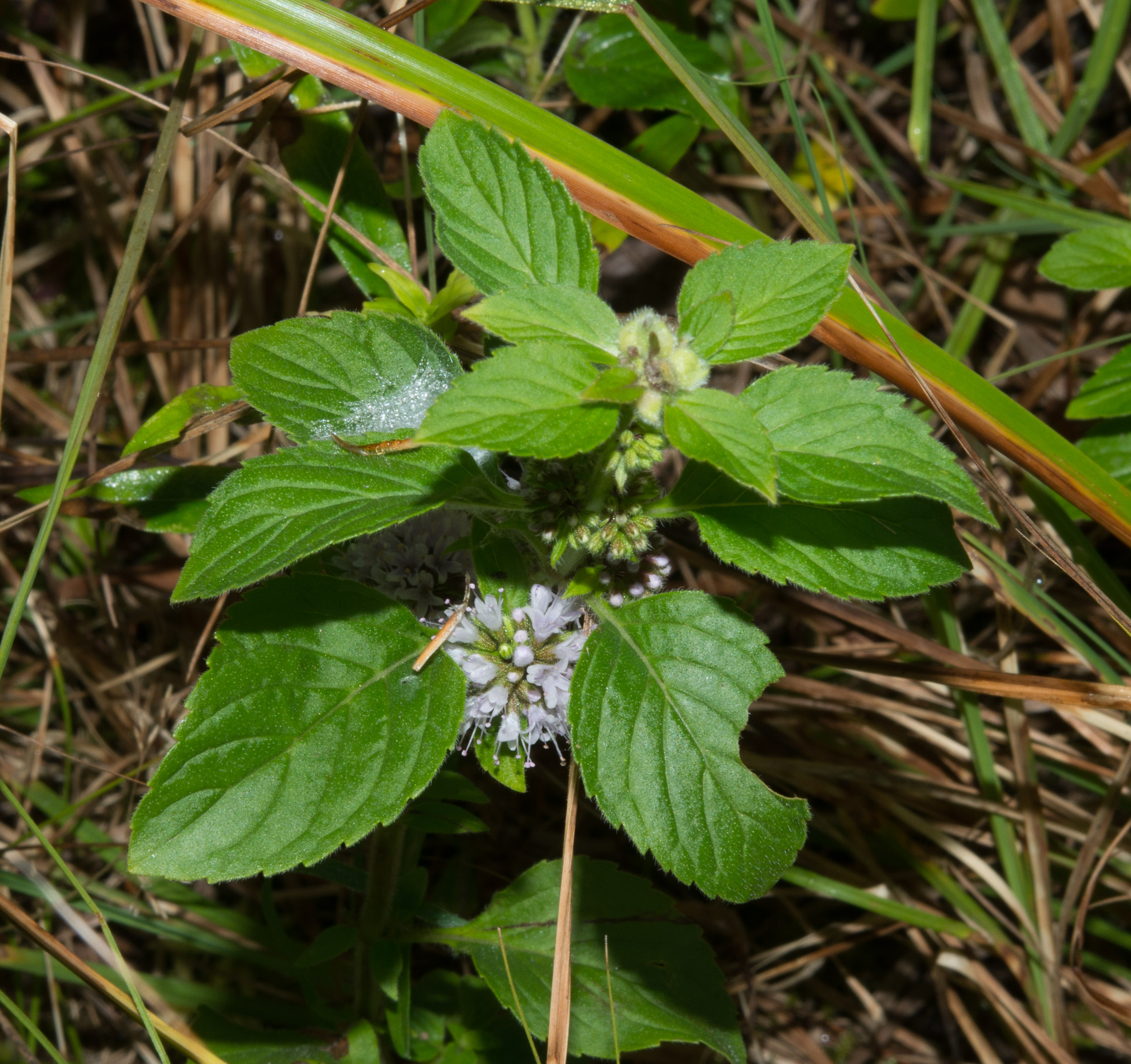
Flowers: Pale purple (sometimes white or pink). They
form whorls on the stem around leaf bases, looking a bit like lavendar pom poms. Each flower group
is about 1″ (2.5 cm) around, containing about 20 flowers. Individual flowers are 1/16–⅛″ (3–4 mm) long,
with a 5-lobed hairy calyx1/32–1/16″ (1.5–2.5 mm) long and comprised of small triangular lobes. They have a peppermint odor.
The corolla has four lobes, the uppermost of which is larger than the others.
There are 4 stamens. Flowers appear in mid to late summer.
Fruits: Four oval nutlets do not split open
when dried. Each contains a single seed.
Habitats: Moist habitats such as stream banks.
Edibility: Leaves are used to flavor tea or may be eaten
raw, but other mint varieties are generally preferred for this.
Mentha arvensis L. ssp. borealis (Michx.) Roy L. Taylor & MacBryde Mentha arvensis L. var. canadensis (L.) Kuntze Mentha arvensis L. var. glabrata (Benth.) Fernald Mentha arvensis L. ssp. haplocalyx Briq. Mentha arvensis L. var. lanata Piper Mentha arvensis L. ssp. parietariifolia (Becker) Briq. Mentha arvensis L. var. sativa auct. non Benth. Mentha arvensis L. var. villosa (Benth.) S.R. Stewart Mentha canadensis L. Mentha gentilis L. Mentha glabrior (Hook.) Rydb. Mentha penardii (Briq.) Rydb.
From Minthe or Menthe, a water nymph in Greek mythology, who was transformed by Persephone into a mint plant in revenge for Minthe’s ongoing affair with Hades (husband of Persephone).


 ID is uncertain