Oenothera deltoides Torr. & Frém.
Desert primrose, birdcage evening primrose, basket evening primrose, lion in a cage, devil’s lantern
Desert primrose is native to the southwestern United States, and northern Mexico.
Plants: Most of the colorful common names of this plant refer to odd shape it takes after it dies. The stems curl upward and form the “birdcage,” as shown below. Several leafy branches extend from the central stem, along the ground, from 4″ (10 cm) to 3′ (91 cm). It is these stems that dry and curl.
Leaves: Leaves are gray-green, forming a basal rosette. Leaves are deltoid, diamond-shaped, or oval, ¾–6″ (2–15 cm) long and up to ¾″ (1.9 cm), and often lobed, toothed, or grooved. (In several of the photos here, it is difficult to distinguish the leaves from those of surrounding plants.)
Flowers: Showy, fragrant white flowers that fade to pink as they age, ¾–1½″ (2–4 cm) wide. Each flower has a yellow throat, 4 petals, 8 stamens, and a stigma with four wavy hair-like branches. The flowers bloom at night.
Fruits: ¾–2″ (2–6 cm) round, usually curved pods, with seeds 1/32–1/16″ (1.5–2 mm) in size.
Habitats: Sandy soils such as deserts and beaches.

Branches surrounding the main stem lie on the ground, curling upward when the plant dies. Photo source unknown. 
 |
Similar species. |
Online References:
Wikimedia Commons (Photos)
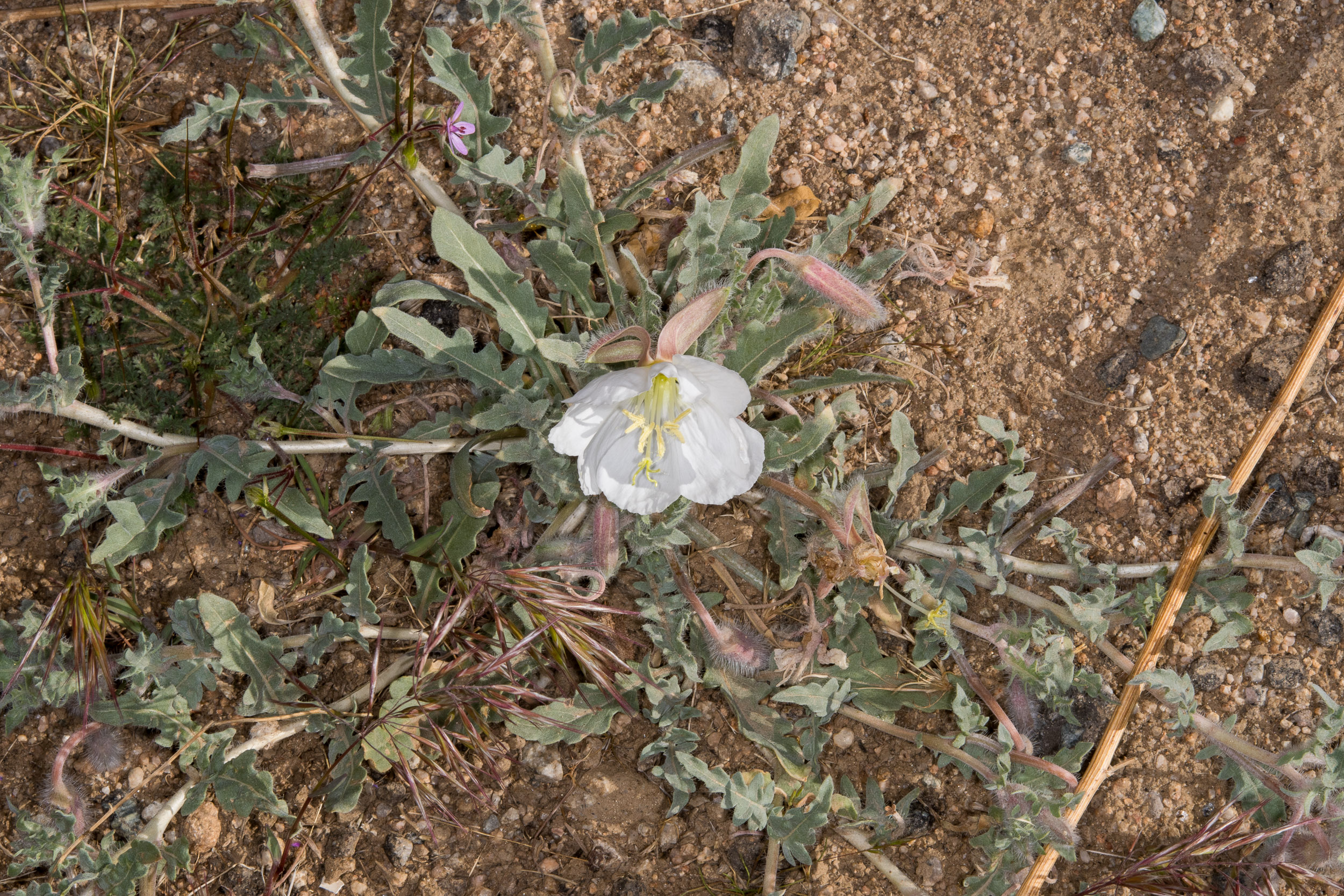
5/3/2018 · Park Blvd, Joshua Tree National Park, California · ≈ 12 × 8″ (31 × 20 cm) 

2/28/2010 · Anza-Borrego Desert State Park, California · ≈ 9 × 6″ (23 × 15 cm) 
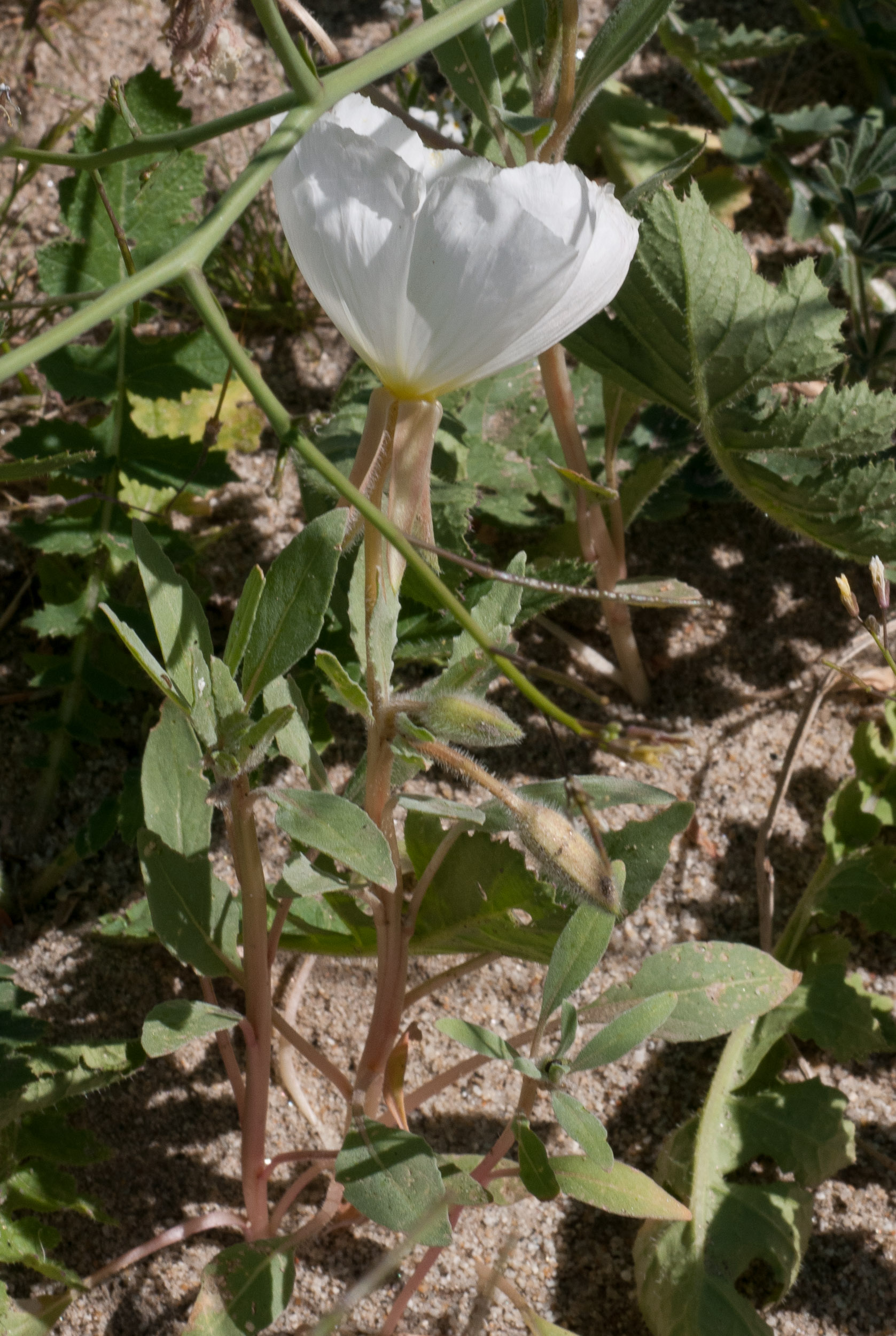
2/28/2010 · Anza-Borrego Desert State Park, California · ≈ 5 × 7″ (12 × 18 cm) 
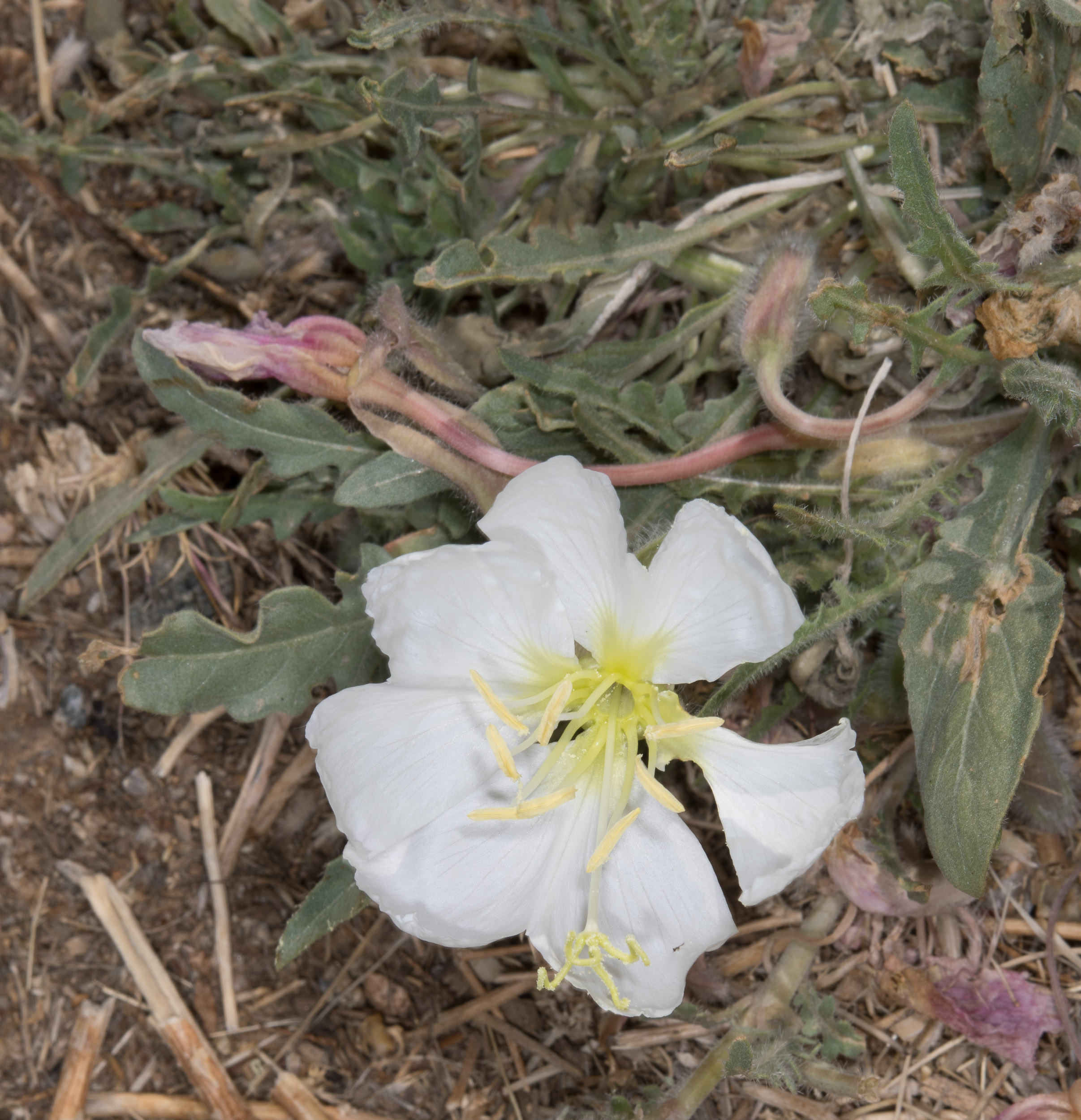
5/3/2018 · Park Blvd, Joshua Tree National Park, California · ≈ 4 × 4½″ (11 × 11 cm) 
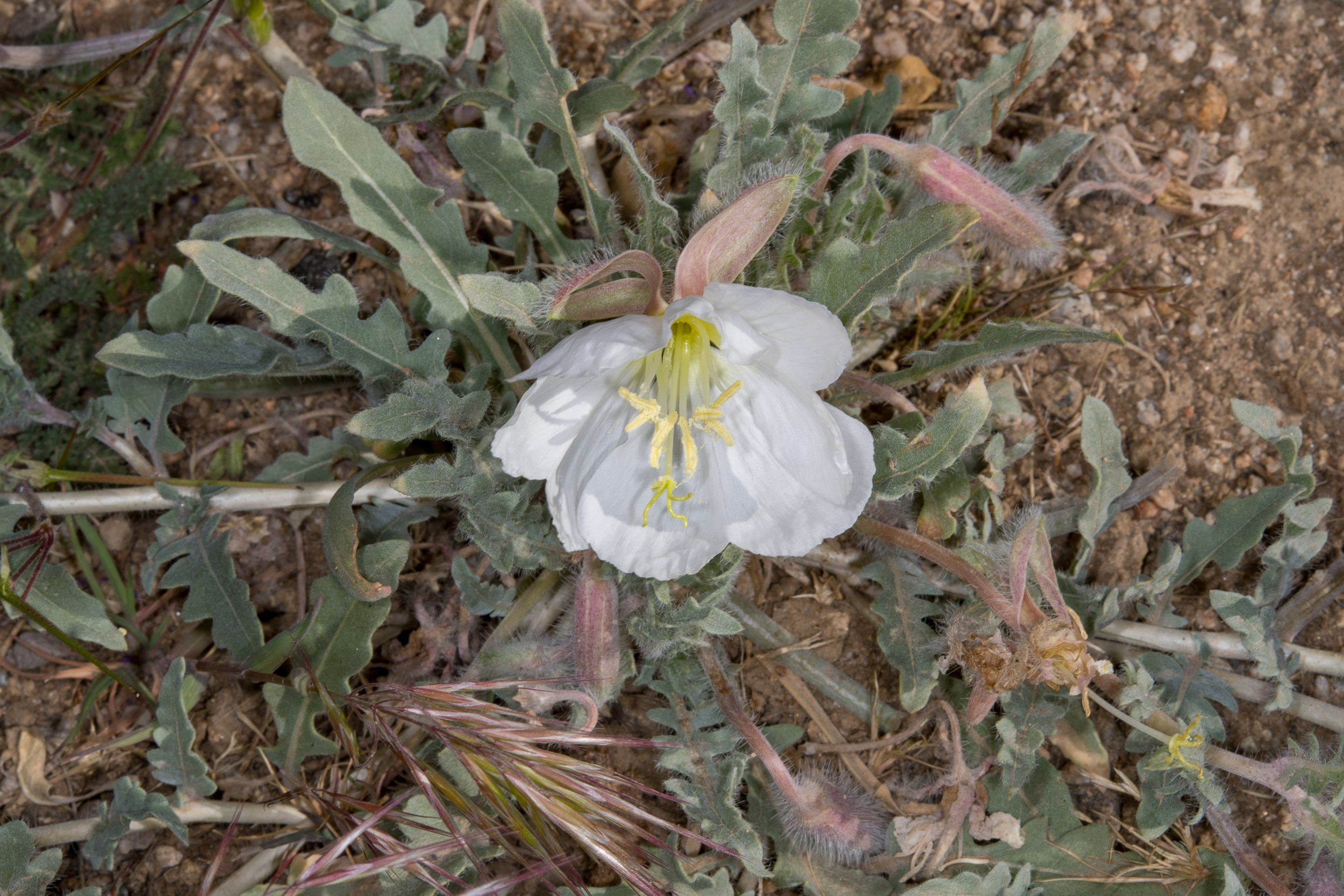
5/3/2018 · Park Blvd, Joshua Tree National Park, California · ≈ 7 × 4½″ (18 × 12 cm) 
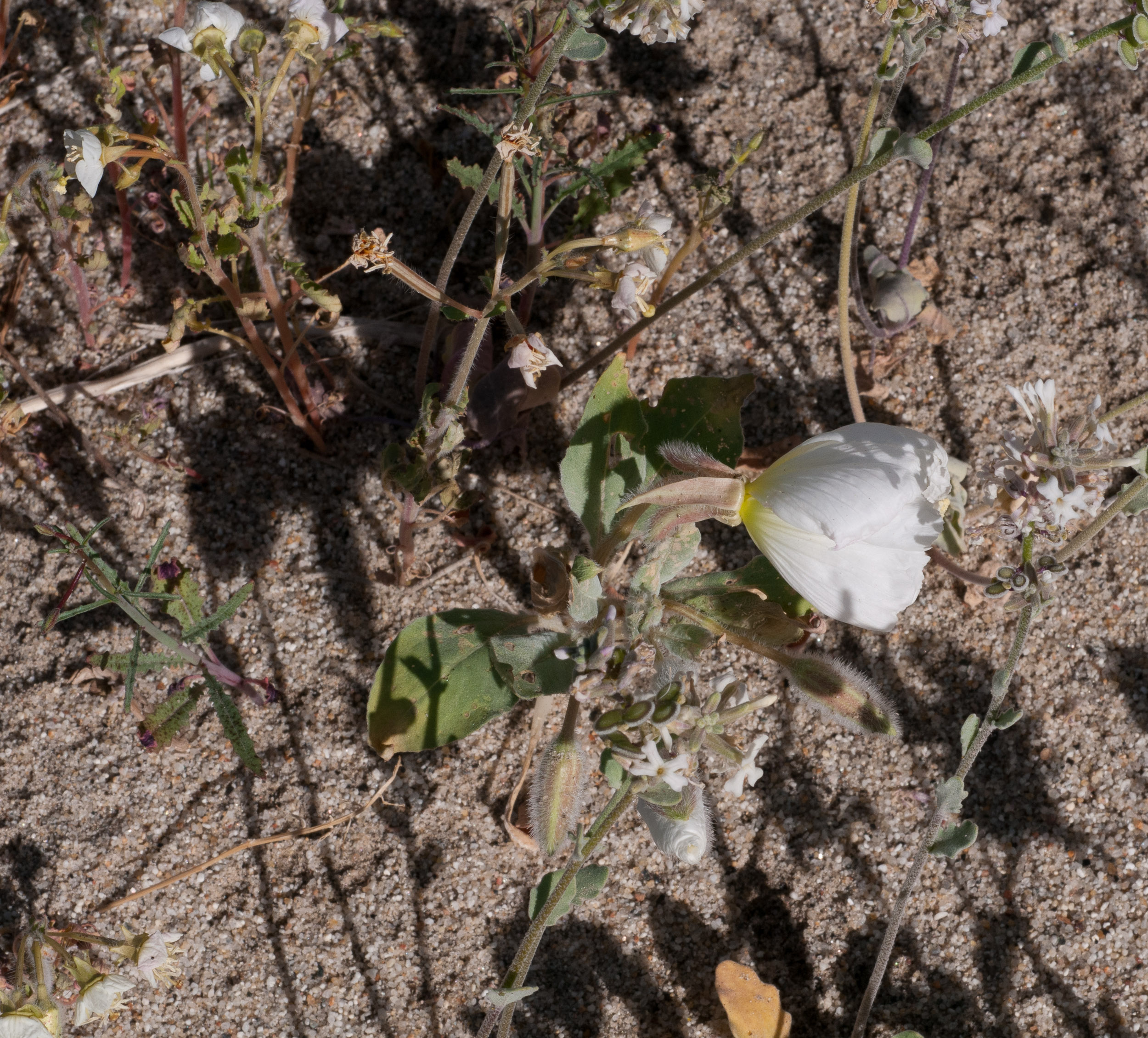
2/28/2010 · Anza-Borrego Desert State Park, California · ≈ 8 × 7″ (20 × 18 cm) 
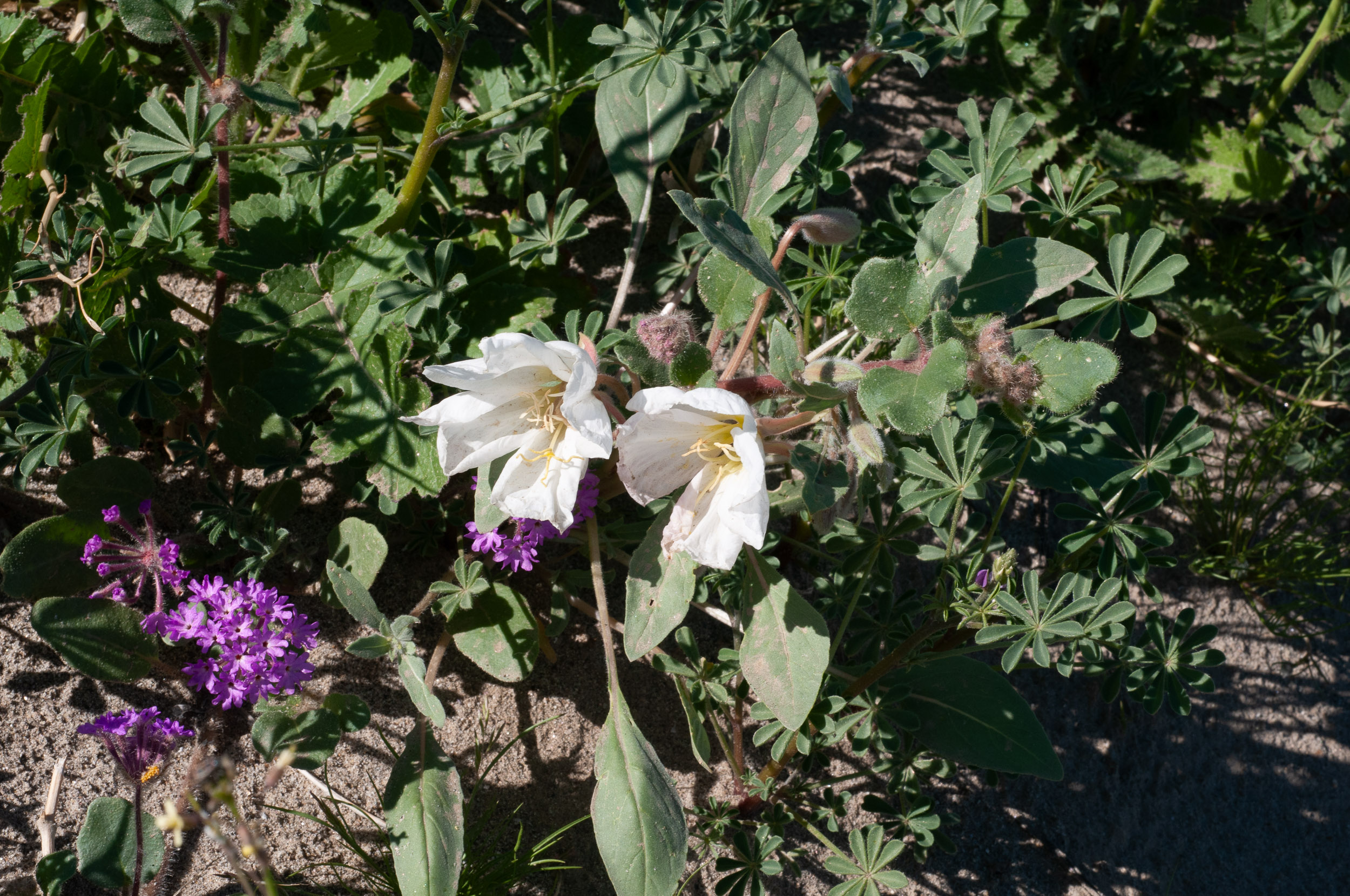
2/28/2010 · Anza-Borrego Desert State Park, California · ≈ 15 × 10″ (39 × 26 cm) 
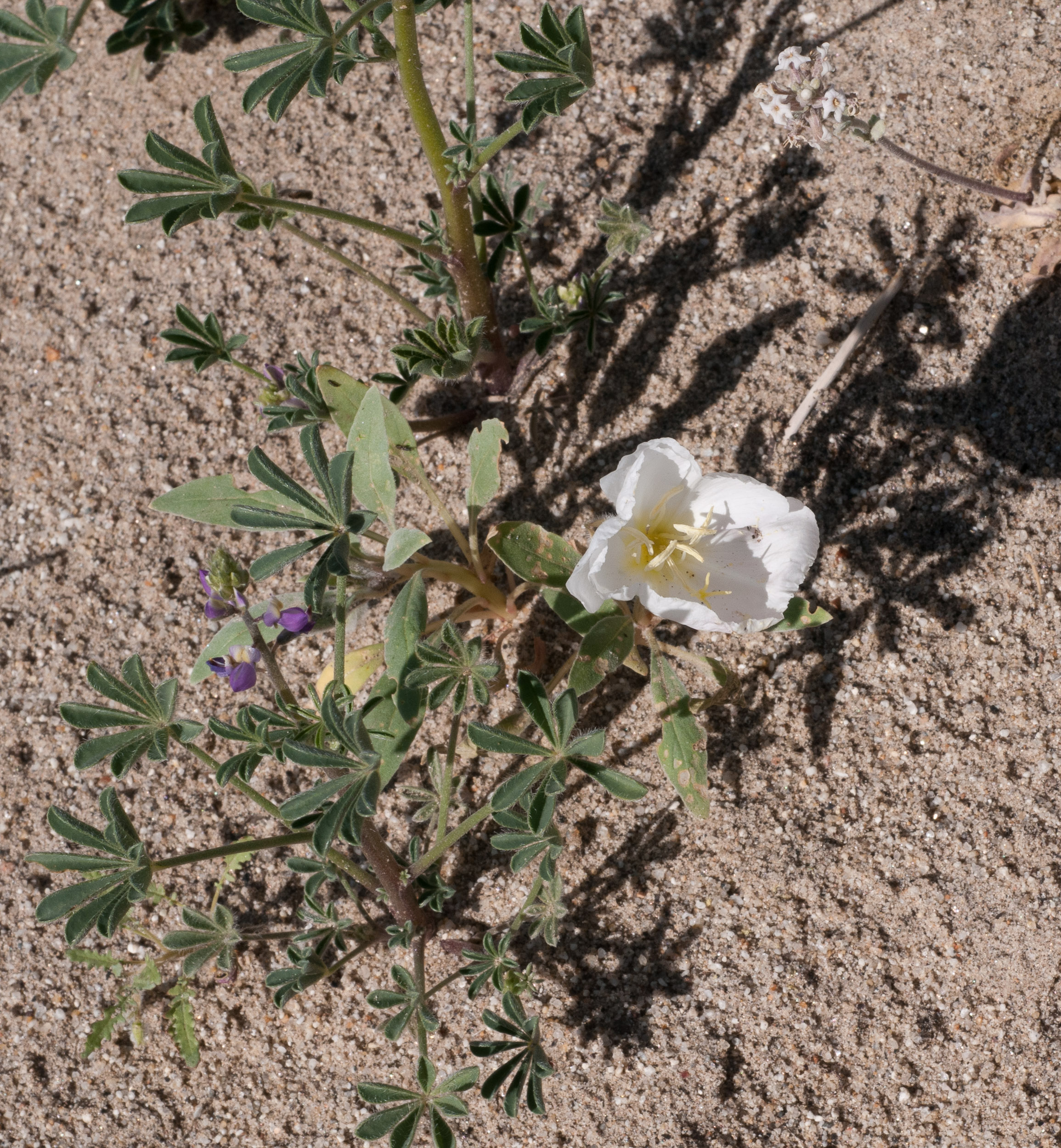
2/28/2010 · Anza-Borrego Desert State Park, California · ≈ 8 × 8″ (19 × 20 cm) 
| Kingdom | Plantae | Plants, but not fungi, lichens, or algae (from Stearn's Botanical Latin) |
| Subkingdom | Tracheobionta | Vascular plants—plants with a “circulatory system” for delivering water and nutrients |
| Division | Magnoliophyta | Flowering plants, also known as angiosperms |
| Class | Magnoliopsida | Dicotyledons—plants with two initial seed leaves |
| Subclass | Rosidae | Roses, legumes, proteas, dogwoods, hydrangeas, mistletoes, euphorbias, grapes, many more |
| Order | Myrtales | Includes myrtles, leadwoods, loosestrifes, pomegranates, evening primroses, many others |
| Family | Onagraceae | Willowherb/evening primrose family |
| Genus | Oenothera | Derivation uncertain: 1. Greek ονος θηρας (onos theras), or “donkey catcher.” 2. Or οινος θηρας (oinos theras), “wine seeker.” 3. Or Latin oenothera, “a plant whose juices may cause sleep” |
| Species | deltoides | Greek for “triangular” (Greek letter delta, Δ) (from Stearn’s Botanical Latin) |
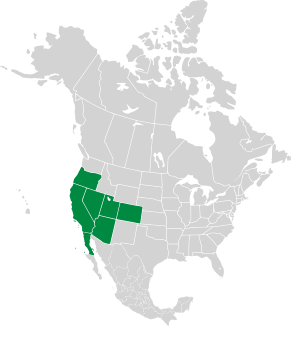
Oenothera deltoides description by Thomas H. Kent, not updated.

© FloraFinder.org. All rights reserved.