Phellinus igniarius (L.) Quél. (1886)
Horse hooves
Horse hooves are native to the northern half of North America.
Identification: These large shelf-like fungi lives on trunks of birch and aspen, as well as alder, madrone, manzanita, maple, and willow, often on living trees. It forms dark brown or black, woody, hoof-shaped fruits 1¾–8″ (5–20 cm) around and almost as thick. As it ages it becomes cracked or furrowed and darker in color. It generally has no stalk.
Edibility: Horse hooves are not edible, says David Arora, author of Mushrooms Demystified, “unless you are fond of wood.” Tom Volk’s Fungus of the Month site describes its possible use in conjunction with tobacco by native Americans; similar use is also attributed to some Inupiaq and Yup’ik Eskimos of Western Alaska in the past and even today. Ashes from the mushrooms are said to contribute “a powerful kick” when smoked with tobacco. Research indicates that this is a serious health risk.
Habitats: Prefers willows, but commonly found on birch and alder and other broad leafed trees.
Online References:
References:
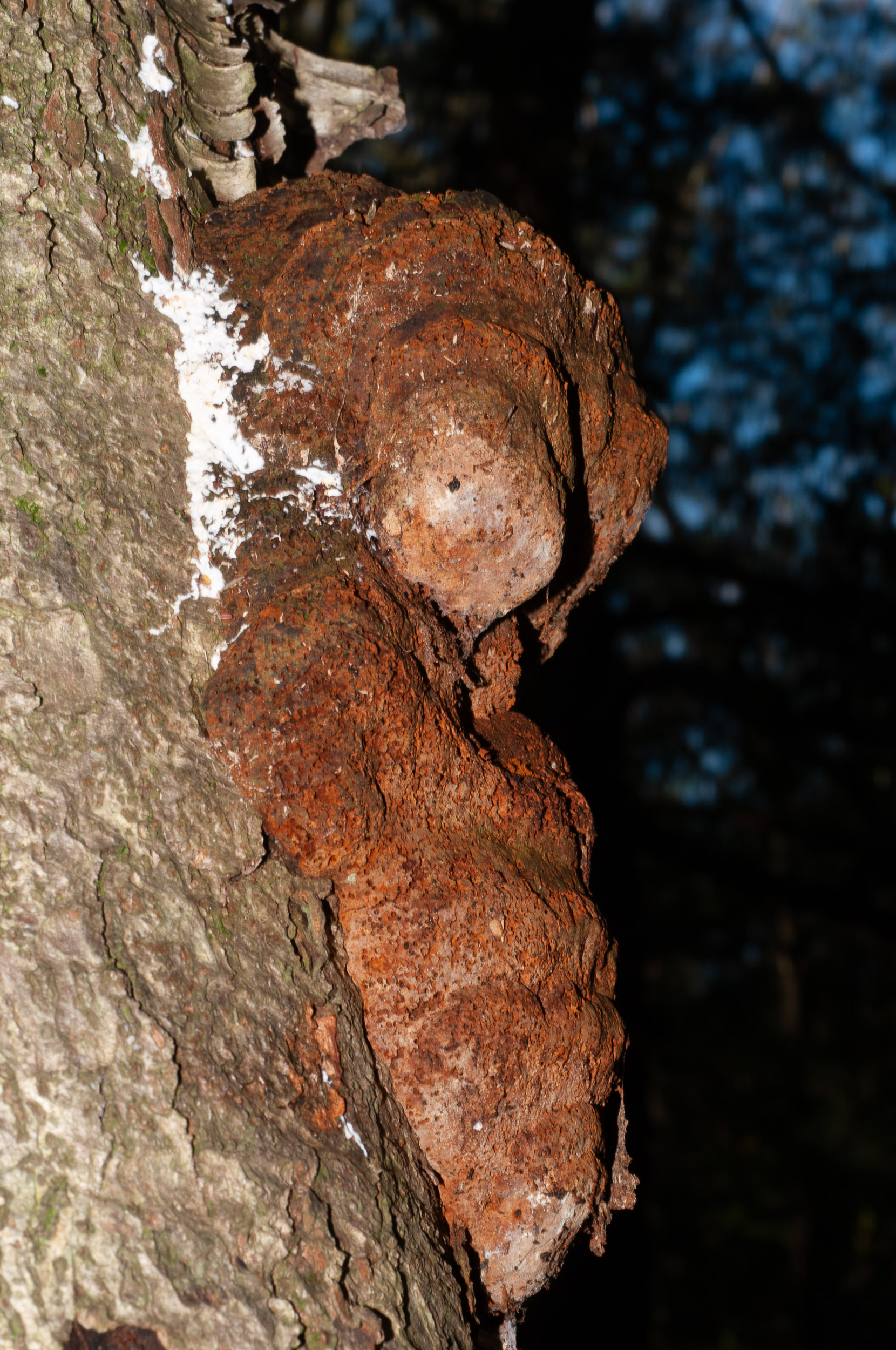
Growing on Birch. · 10/3/2010 · Tarkill Interpretive Trail, Rte 402, Poconos, Peck’s Pond, Pennsylvania · ≈ 8 × 12″ (20 × 31 cm)  ID is uncertain

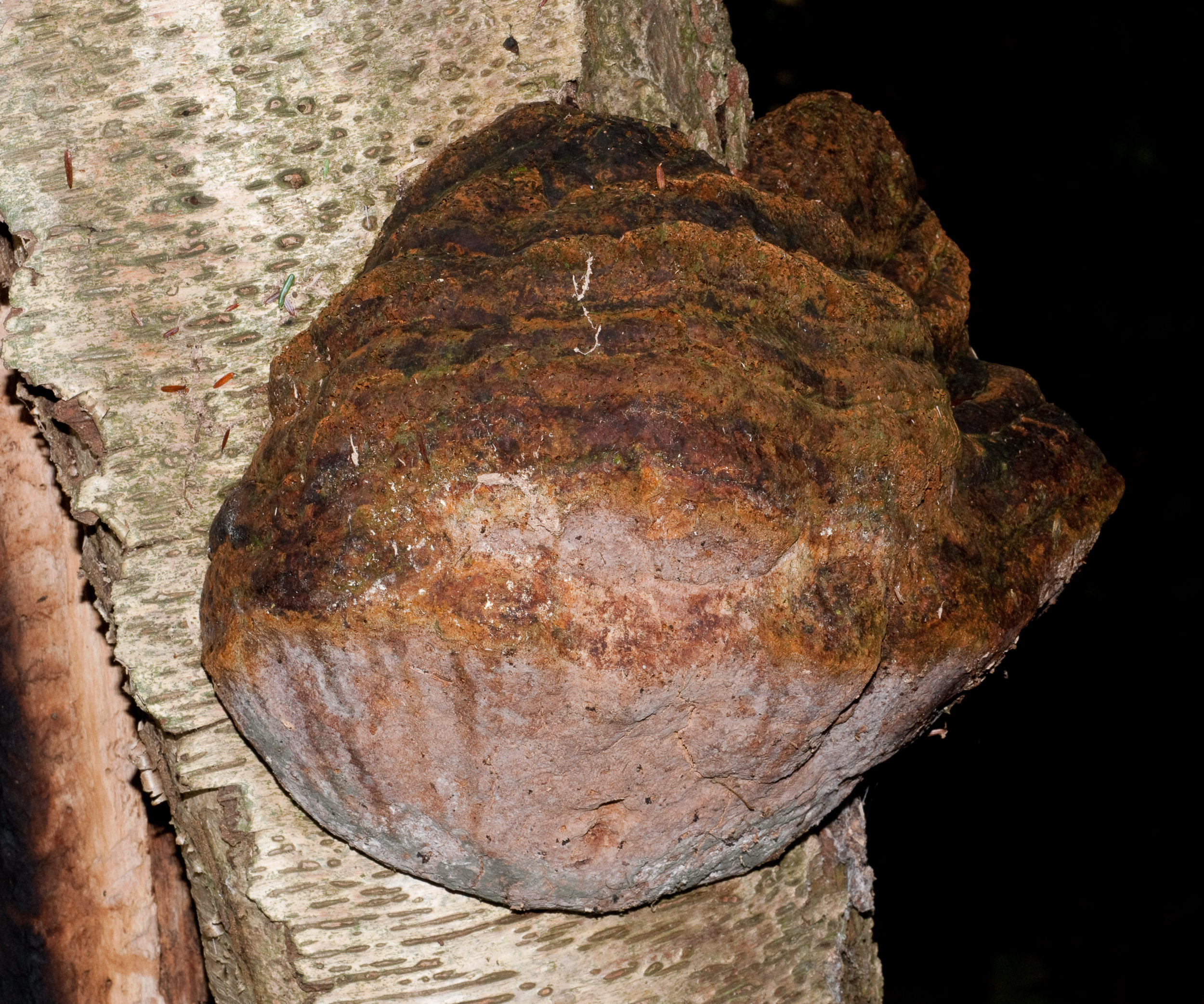
Growing on Birch. · 10/3/2010 · Tarkill Interpretive Trail, Rte 402, Poconos, Peck’s Pond, Pennsylvania · ≈ 12 × 10″ (31 × 26 cm) ID is uncertain 
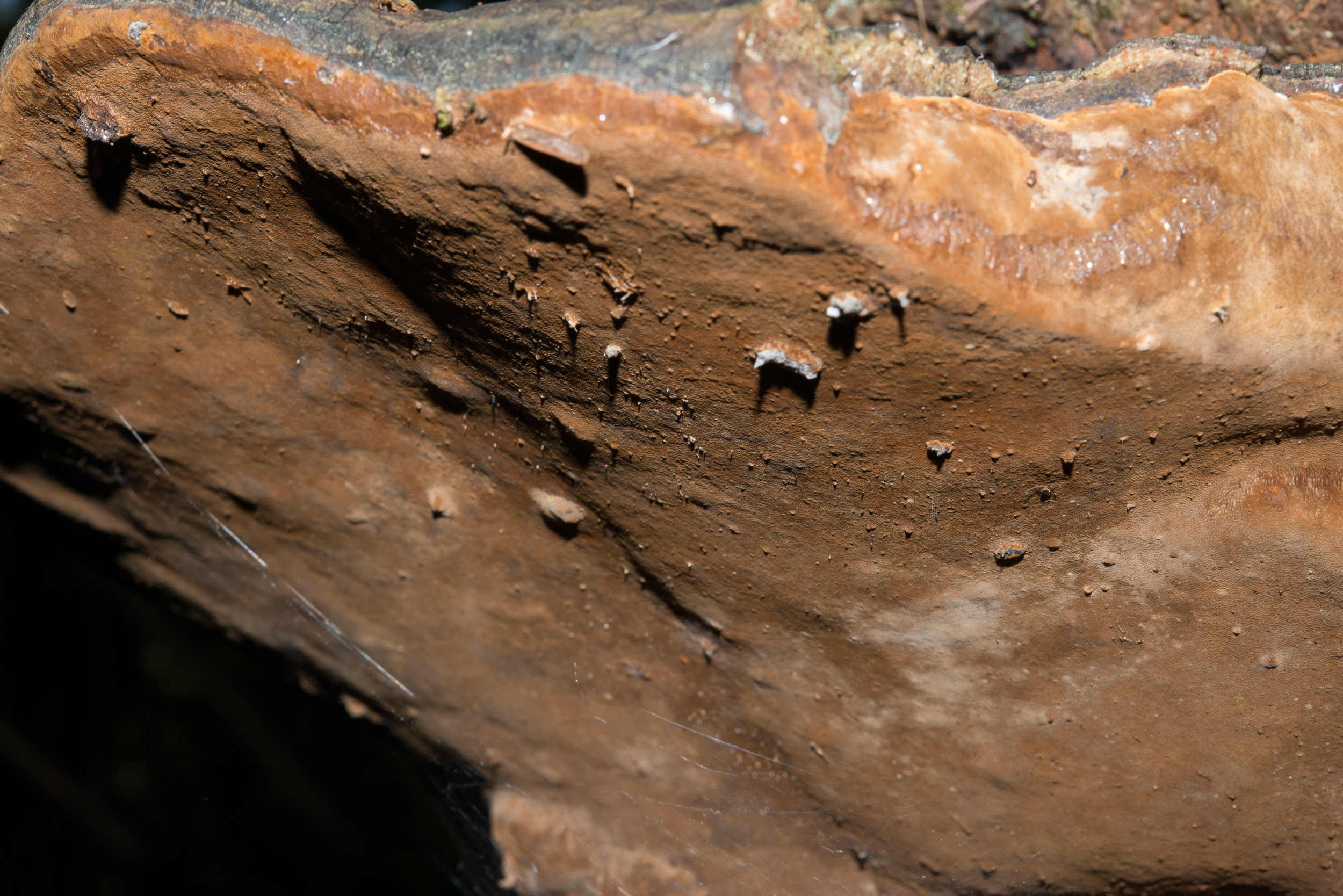
8/25/2013 · Cranberry Meadow Pond Trail, Monadnock Conservancy, Peterborough, New Hampshire · ≈ 8 × 5″ (19 × 12 cm) ID is uncertain 

8/25/2013 · Cranberry Meadow Pond Trail, Monadnock Conservancy, Peterborough, New Hampshire · ≈ 9 × 6″ (23 × 16 cm) ID is uncertain 
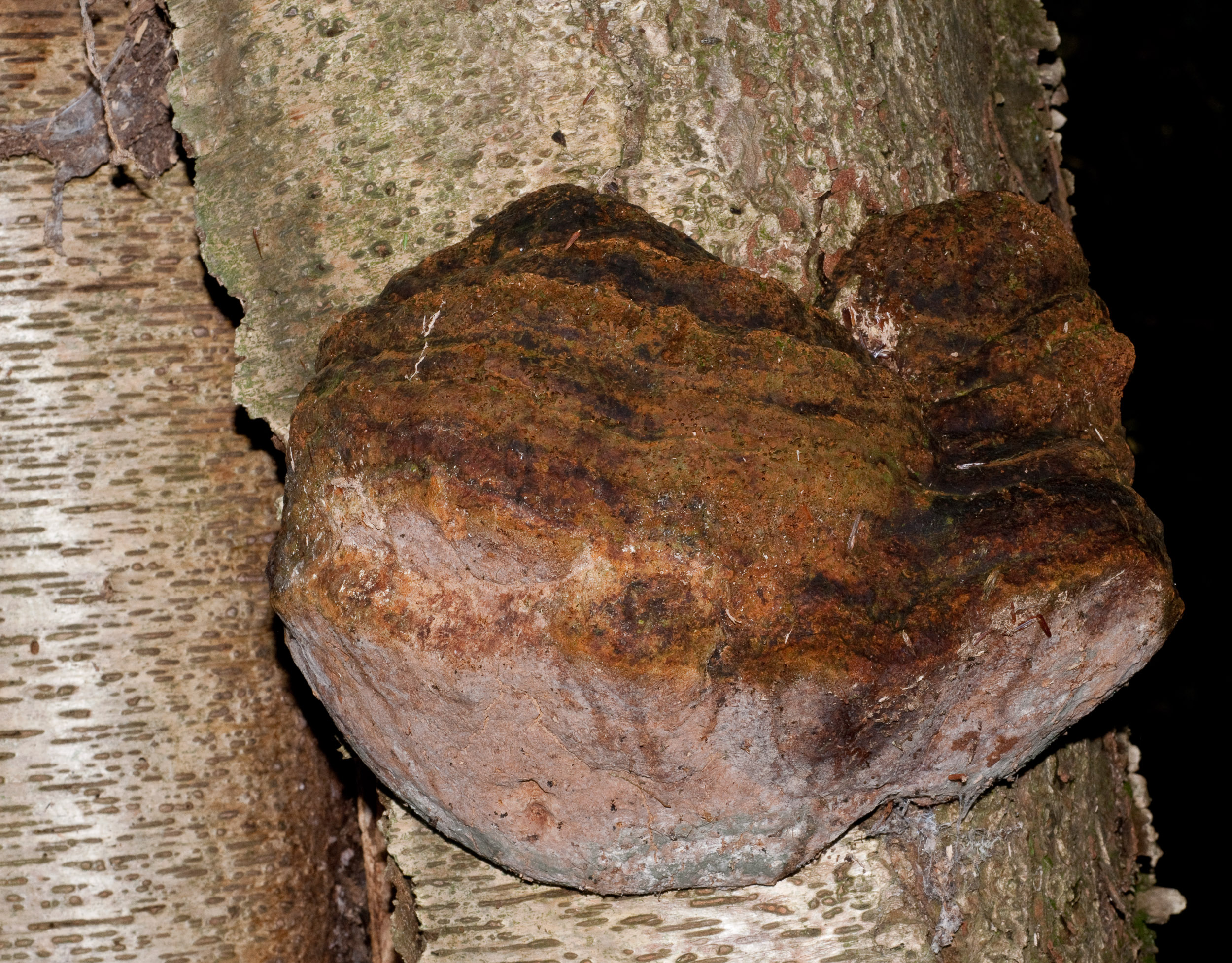
Growing on Birch. · 10/3/2010 · Tarkill Interpretive Trail, Rte 402, Poconos, Peck’s Pond, Pennsylvania · ≈ 15 × 12″ (37 × 29 cm) ID is uncertain 

The host tree is a yellow birch (Betula alleghaniensis). · 10/3/2010 · Tarkill Interpretive Trail, Rte 402, Poconos, Peck’s Pond, Pennsylvania · ≈ 10 × 15″ (26 × 39 cm) 
| Roughly 75 people in North America are poisoned each year by mushrooms, often from eating a poisonous species that resembles an edible species. Though deaths are rare, there is no cure short of a liver transplant for severe poisoning. Don’t eat any mushroom unless you are absolutely certain of its identity! Please don’t trust the identifications on this site. We aren’t mushroom experts and we haven’t focused on safely identifying edible species. |
Phellinus igniarius description by Thomas H. Kent, not updated.

© FloraFinder.org. All rights reserved.