Populus grandidentata Michx. var. meridionalis Tidestr.
Populus grandidentata Michx. var. subcordata Vict.
Populus grandidentata Michx.
Bigtooth aspen, large-tooth aspen, American aspen, white poplar, aspen
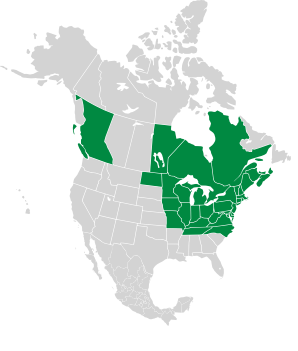
Bigtooth aspen is a native of eastern North America. This is a clonal species, forming small groves of genetically identical trees.
Plants: Deciduous tree, 59–115′ (18–35 m) tall, with a trunk 12–55″ (30–140 cm) in diameter. Younger trees have smooth olive green bark. With age, the bark becomes gray or gray-brown, thick, and roughly grooved, with diamond-shaped lenticels.
Leaves: Alternate, simple, ovate to nearly circular, 2½–4½ ⨉ 1¼–4″ (7–12 ⨉ 3.5–10 cm), with large blunt teeth. When leaves first open, they are covered by dense whitish hairs. Later leaves are dark bluish green on top, and pale green below. In the fall, they are golden yellow. The leaf stem (petiole) is flattened vertically.
Flowers: These trees are dioecious: male and female flowers occur on different trees. Both flowers are catkins, clusters of drooping narrow fuzzy flowerheads. Both catkins are about 1–3″ (3–8 cm) long. The male catkins have 6-13 red stamens, while the female catkins have red stigmas.
Fruits: Fruits are in similar catkins, ¼–½″ (8–15 mm) long. Each fruit is a thin cone with a rounded base and two valves, a little like a pear, up to ⅛″ (6 mm) long. They eventually open to reveal tiny brown tufted seeds.
Habitats: Sandy, loamy soils, including high, rocky sites.
Online References:
References:
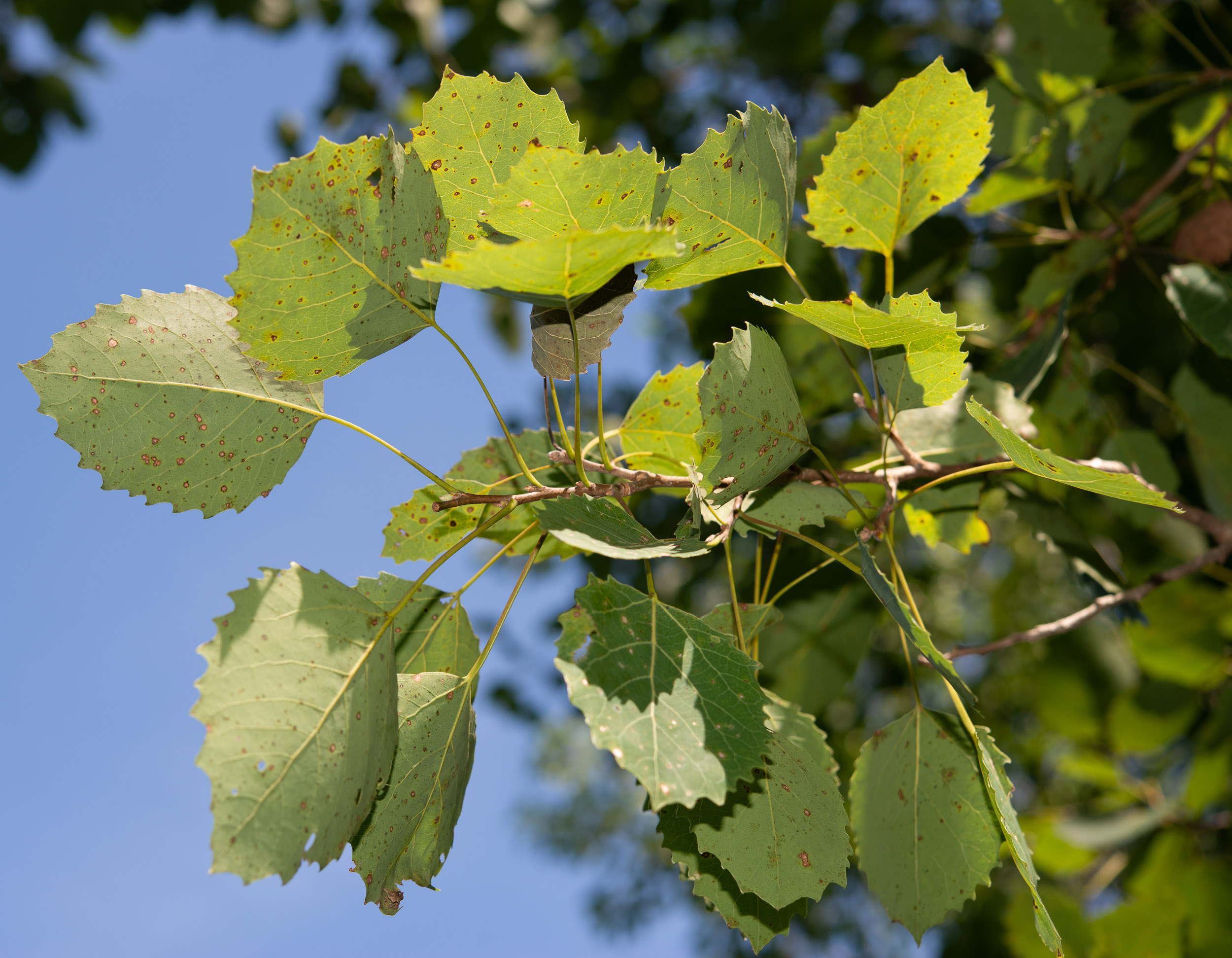
8/6/2013 · Dunstable Rural Land Trust, Dunstable, Massachusetts · ≈ 1 × 1′ (40 × 31 cm) 
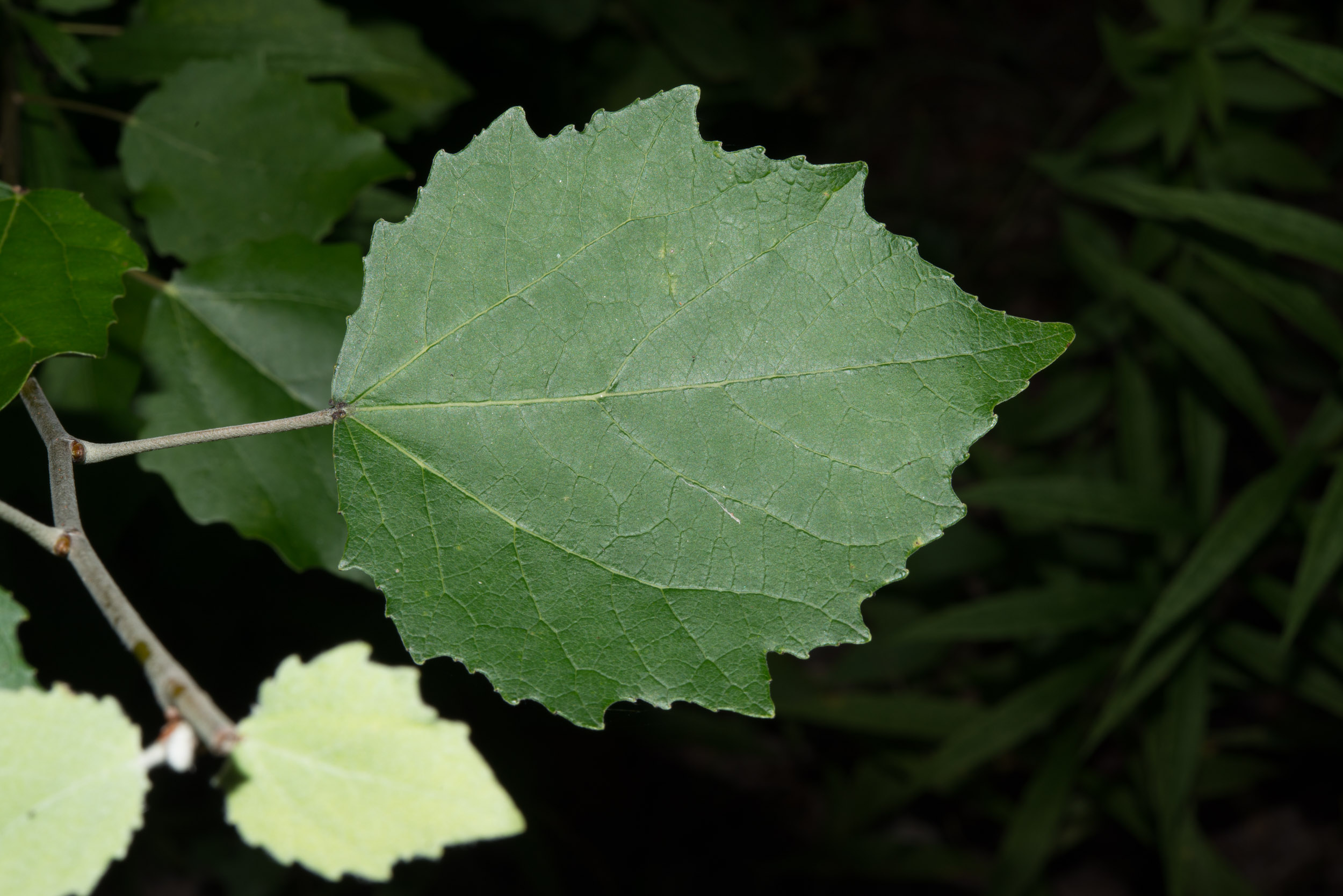
8/23/2013 · Andres Institute of Art, Big Bear Mountain, Brookline, New Hampshire · ≈ 8 × 6″ (20 × 14 cm) 
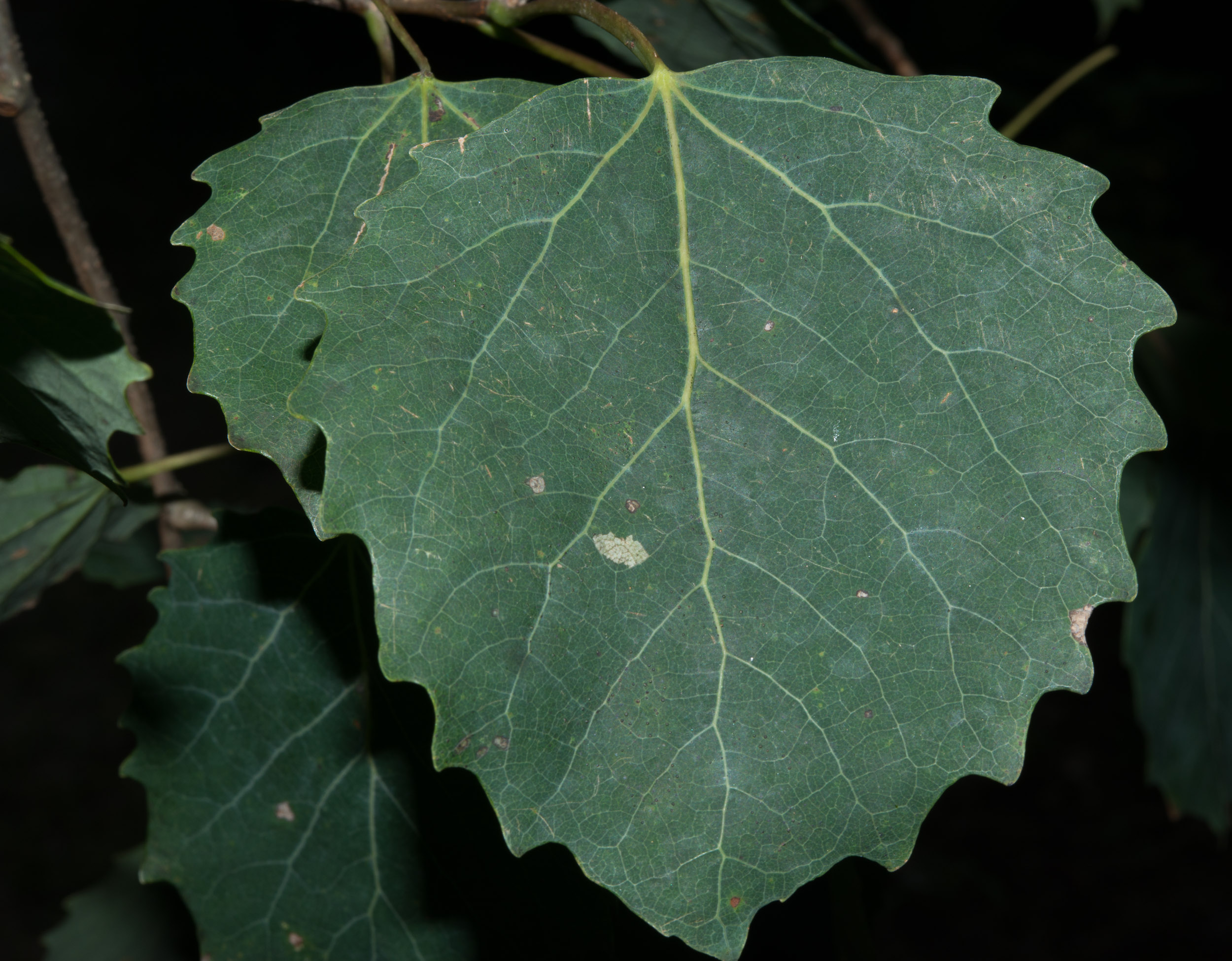
8/7/2013 · Amos Kendall Conservation Land, Dunstable, Massachusetts · ≈ 7 × 6″ (17 × 14 cm) 
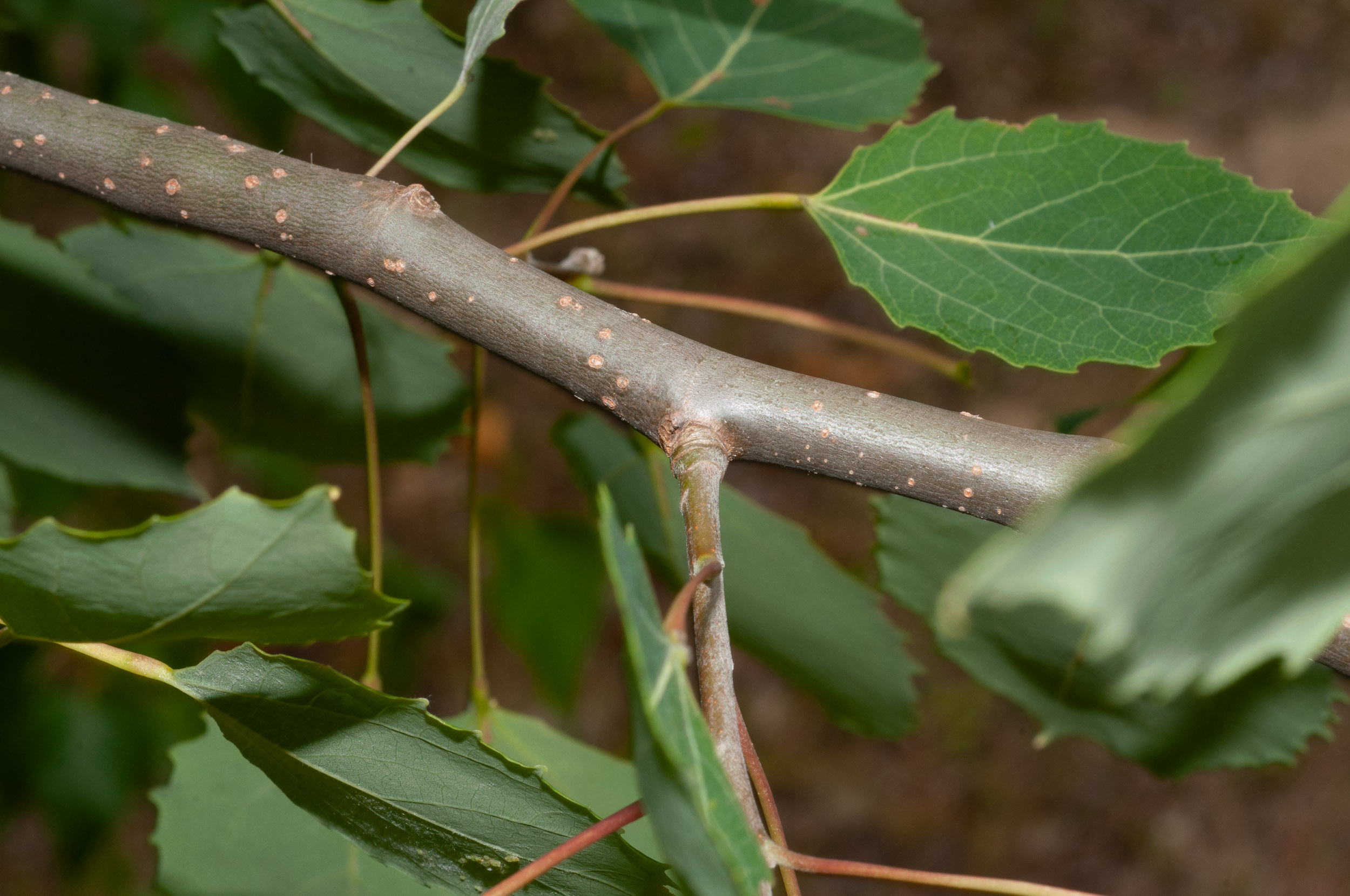
6/27/2012 · Townsend Wildlife Management Area, Townsend, Massachusetts · ≈ 6 × 4″ (15 × 10 cm) 
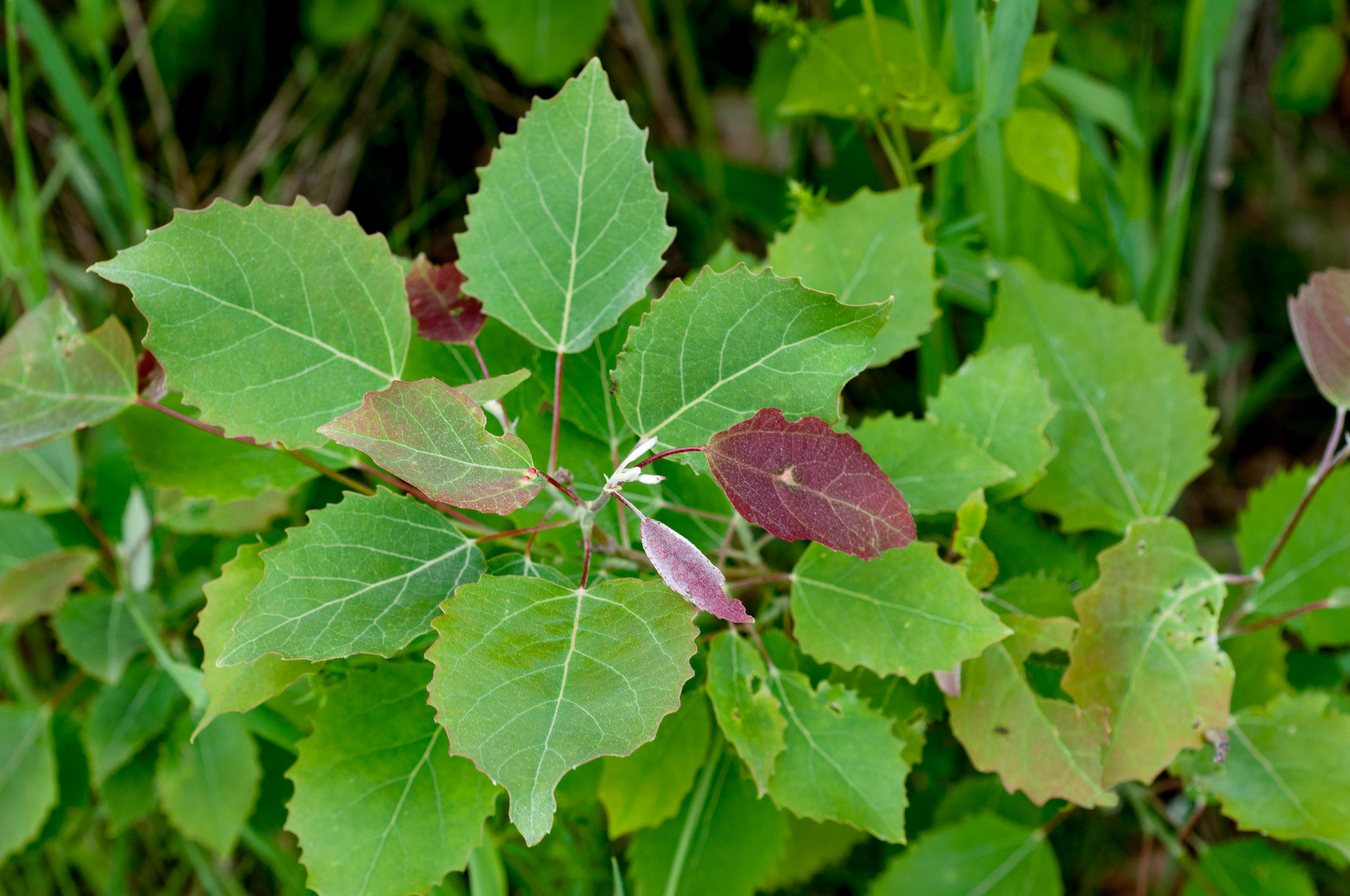
5/29/2010 · Maine Audubon Gilsland Farm Audubon Center, Falmouth, Maine · ≈ 12 × 8″ (31 × 20 cm) 
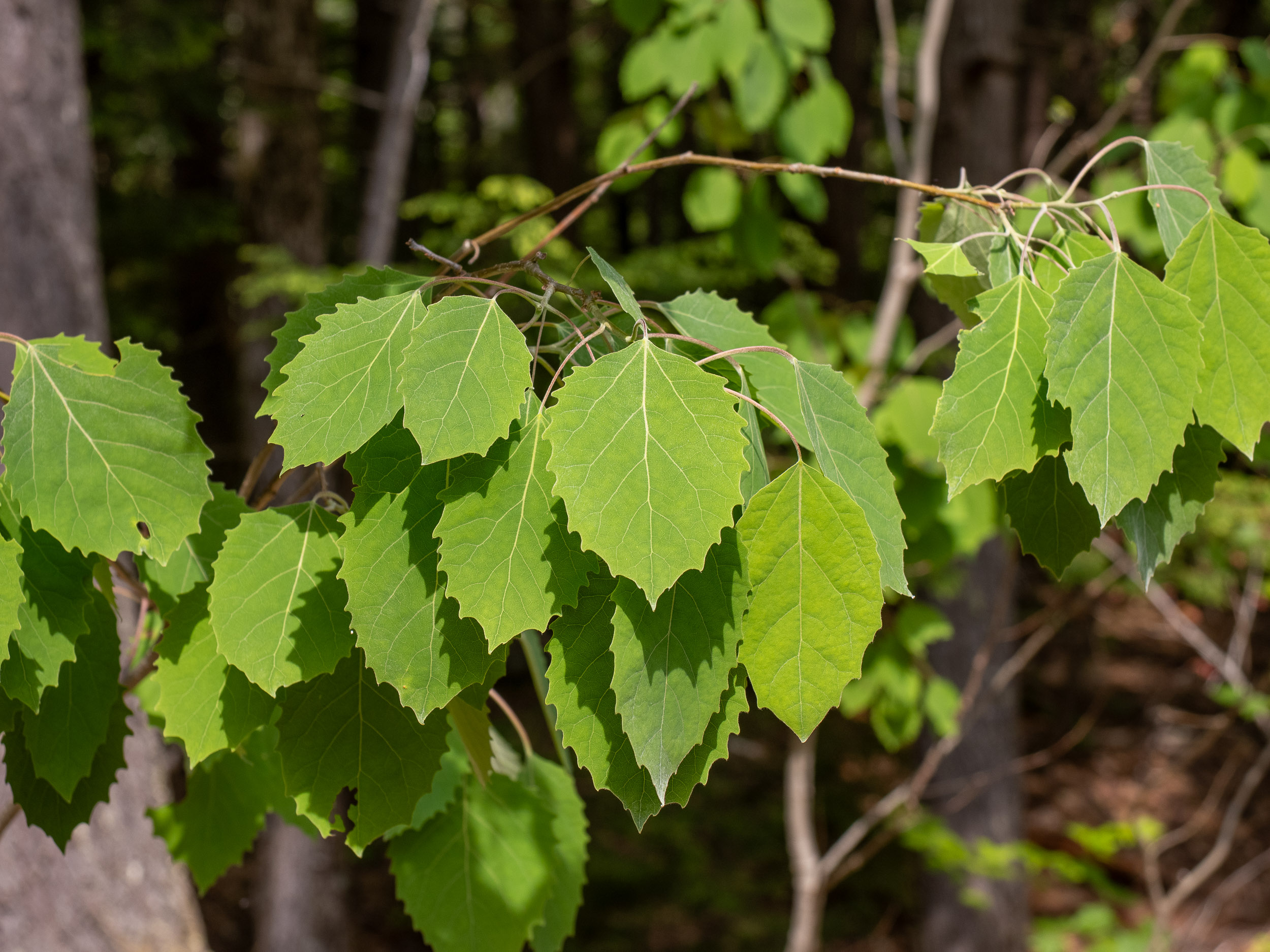
6/10/2026 · Albany Covered Bridge, Albany, New Hampshire 
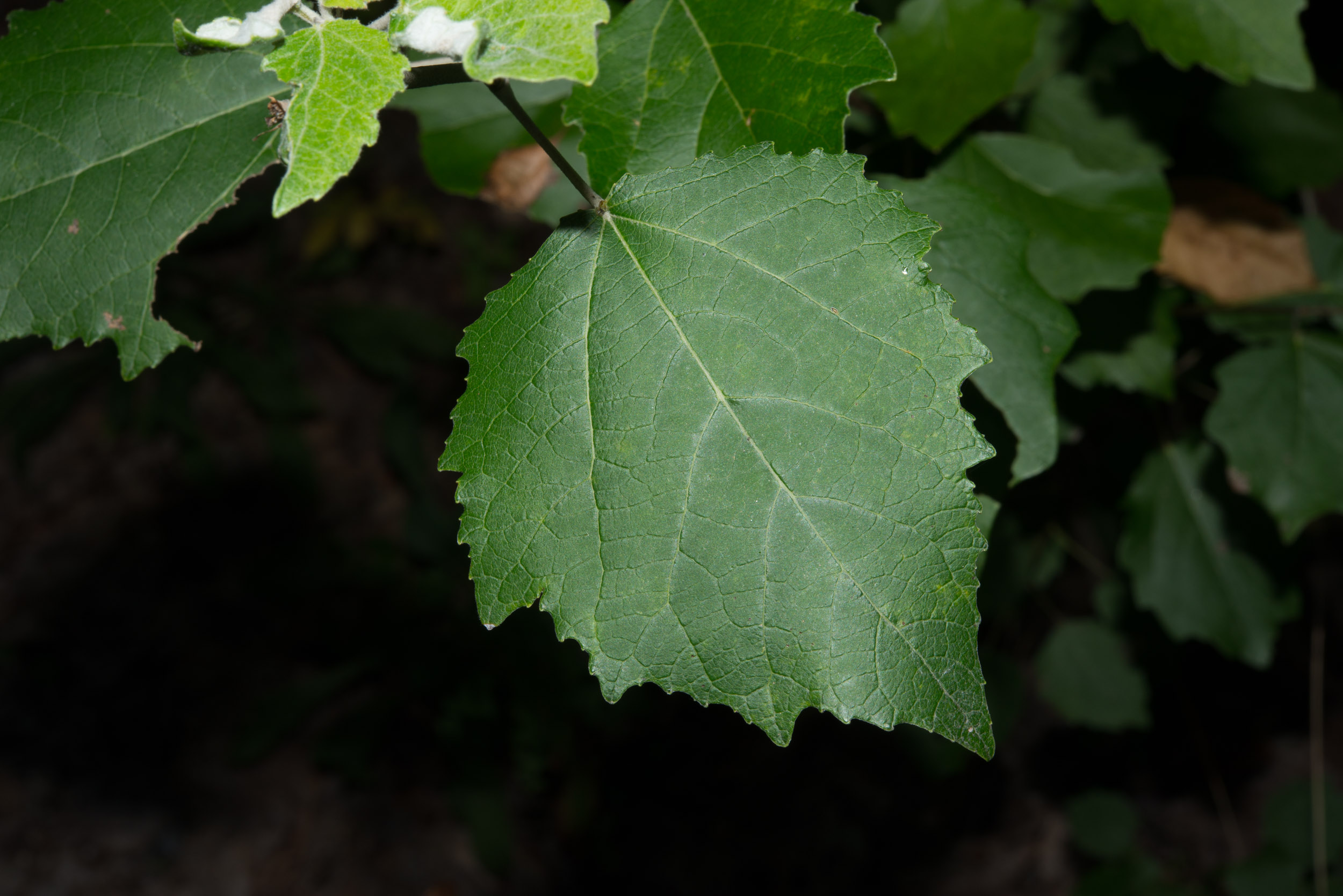
8/23/2013 · Andres Institute of Art, Big Bear Mountain, Brookline, New Hampshire · ≈ 8 × 6″ (20 × 14 cm) 
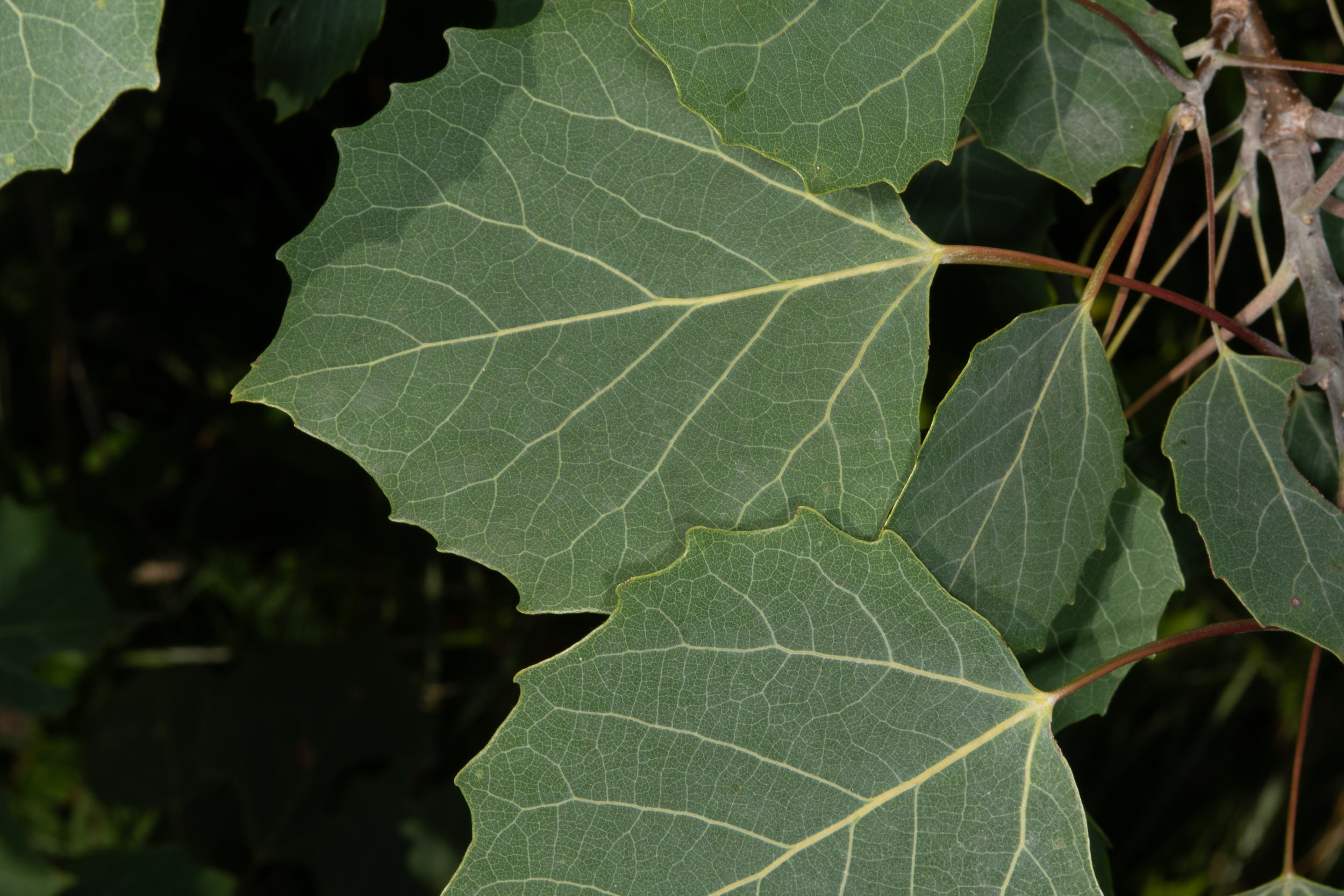
7/18/2020 · Woodward Point Preserve, Brunswick, Maine · ≈ 7 × 4½″ (18 × 12 cm) 
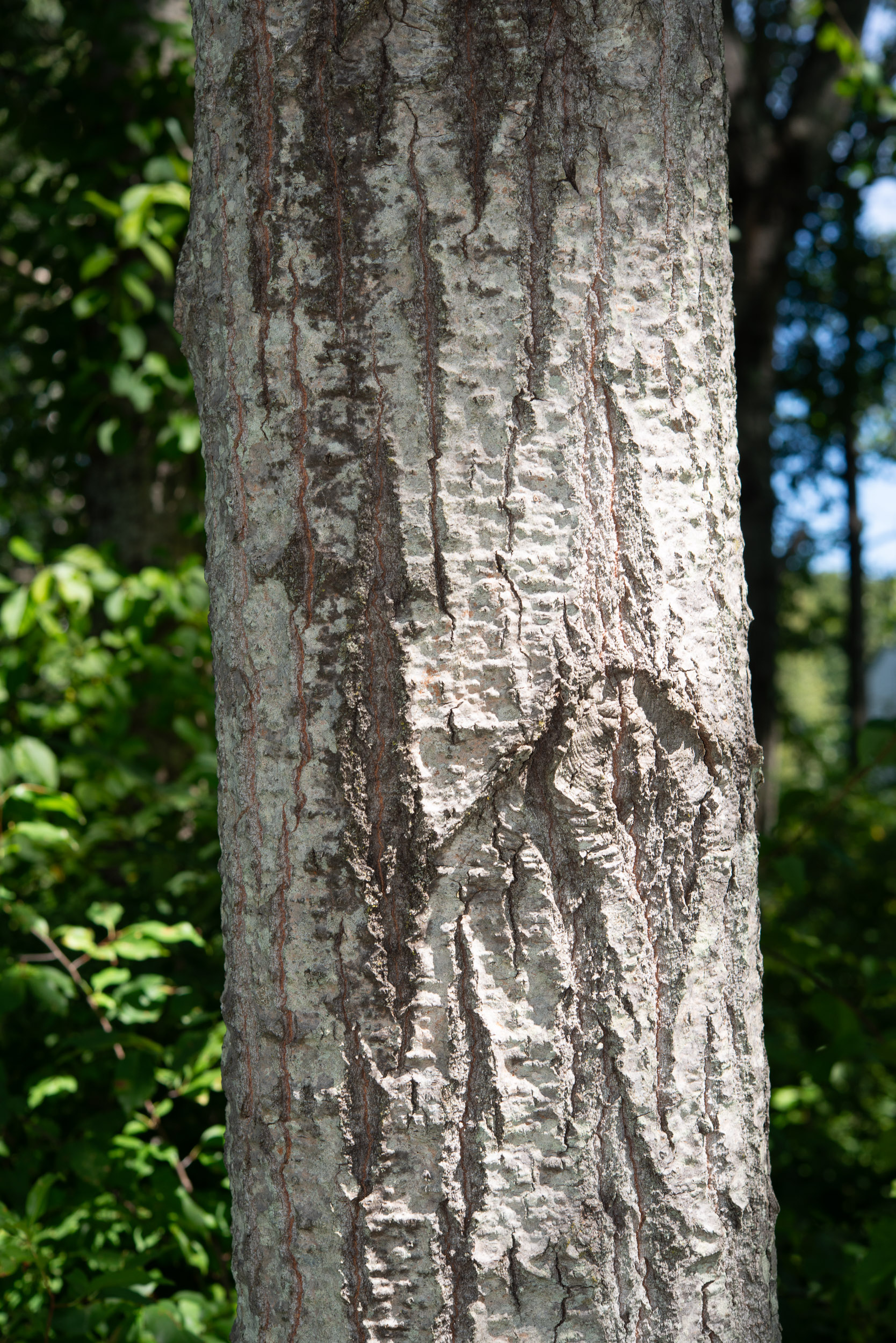
8/6/2013 · Dunstable Rural Land Trust, Dunstable, Massachusetts · ≈ 1½ × 2½′ (53 × 79 cm) 
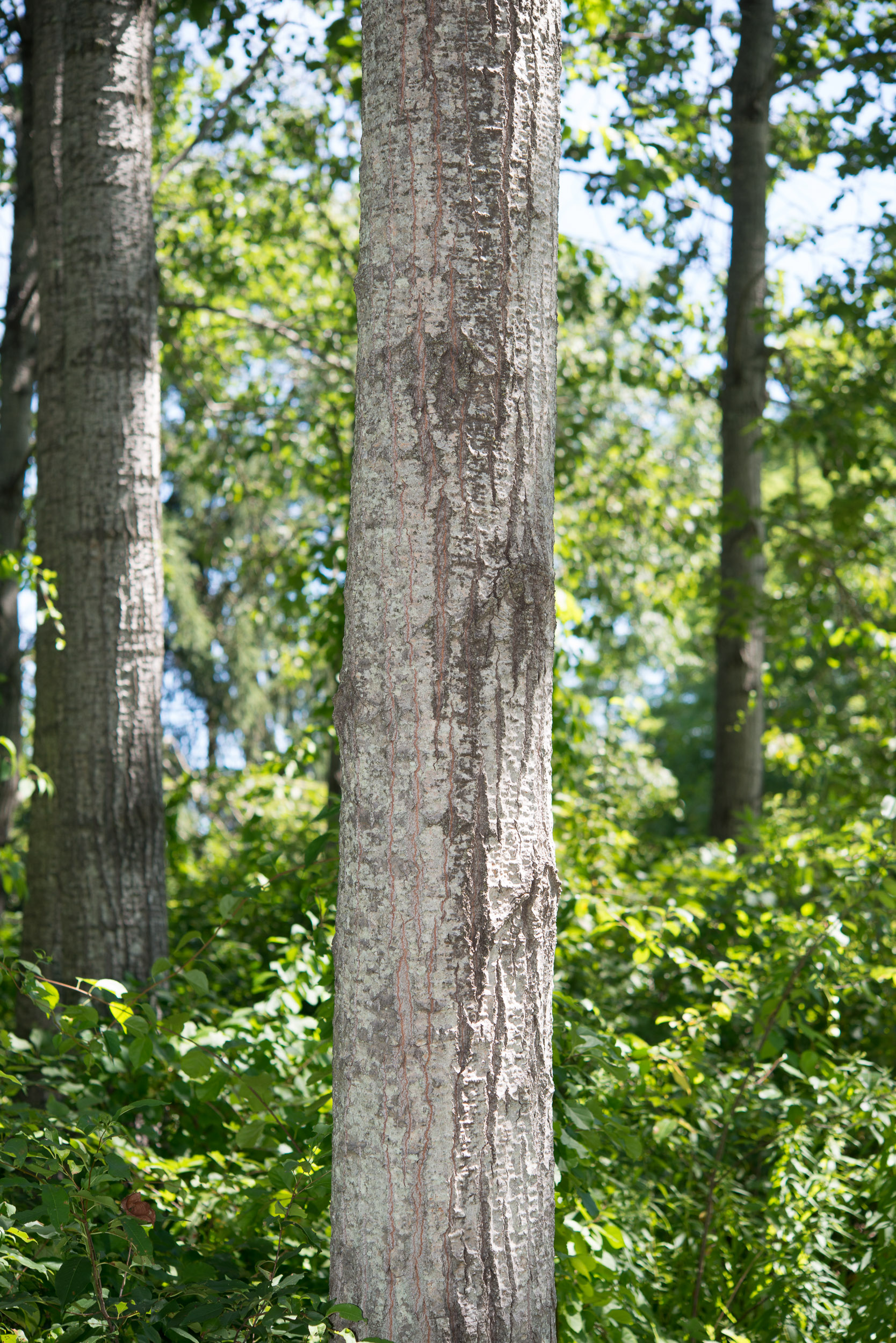
8/6/2013 · Dunstable Rural Land Trust, Dunstable, Massachusetts 
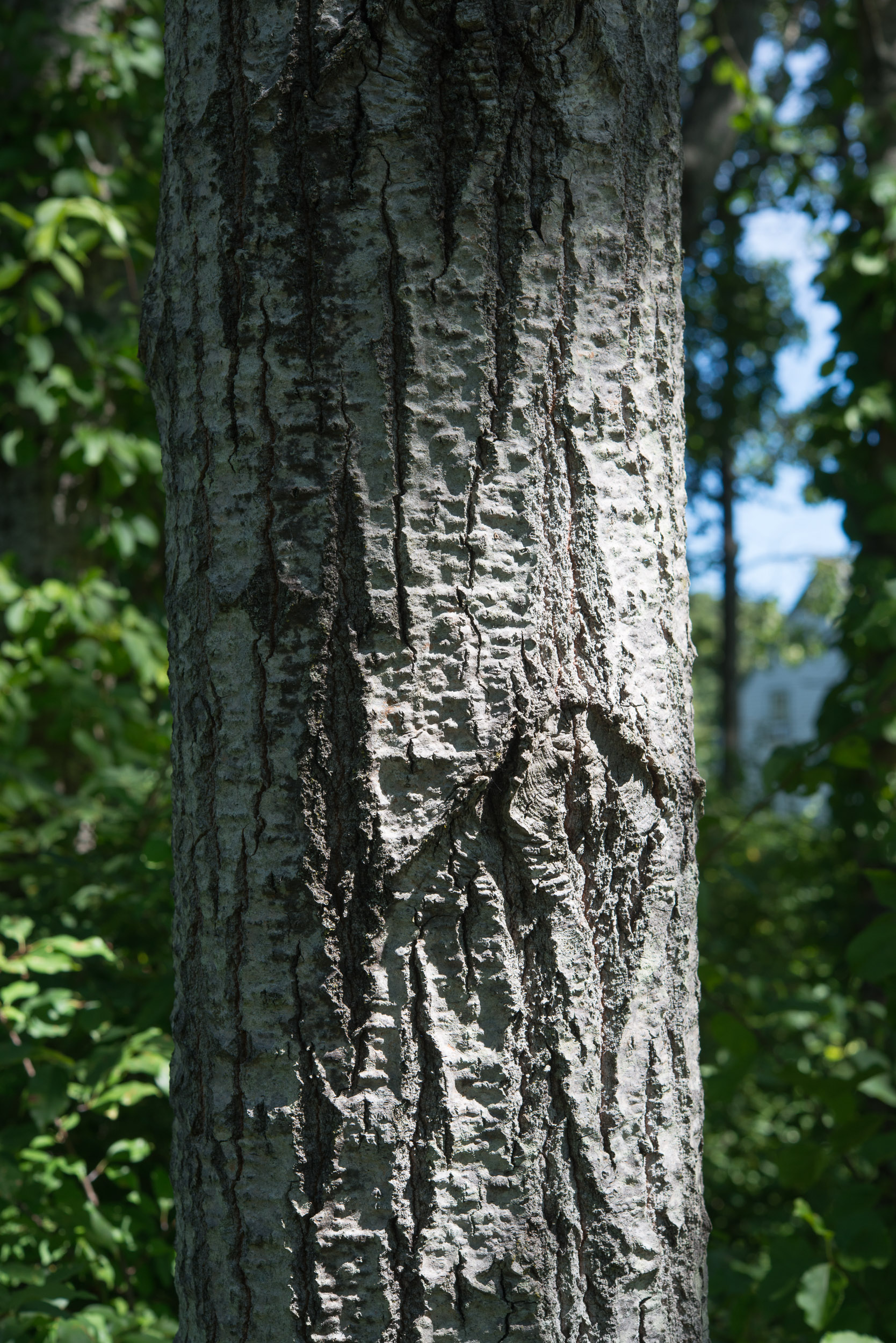
8/6/2013 · Dunstable Rural Land Trust, Dunstable, Massachusetts · ≈ 1½ × 2½′ (53 × 79 cm) 
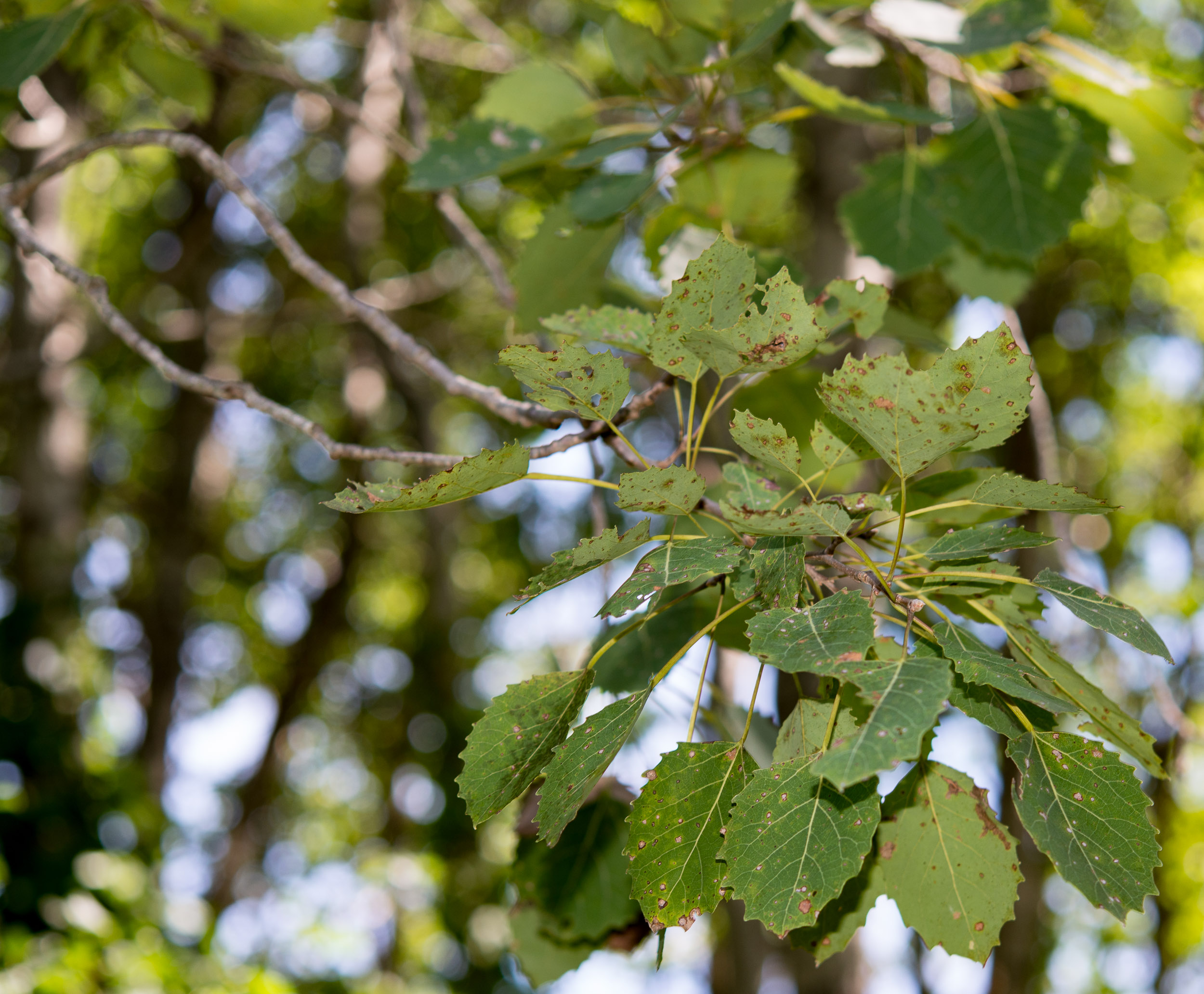
8/6/2013 · Dunstable Rural Land Trust, Dunstable, Massachusetts · ≈ 1½ × 1′ (50 × 41 cm) 
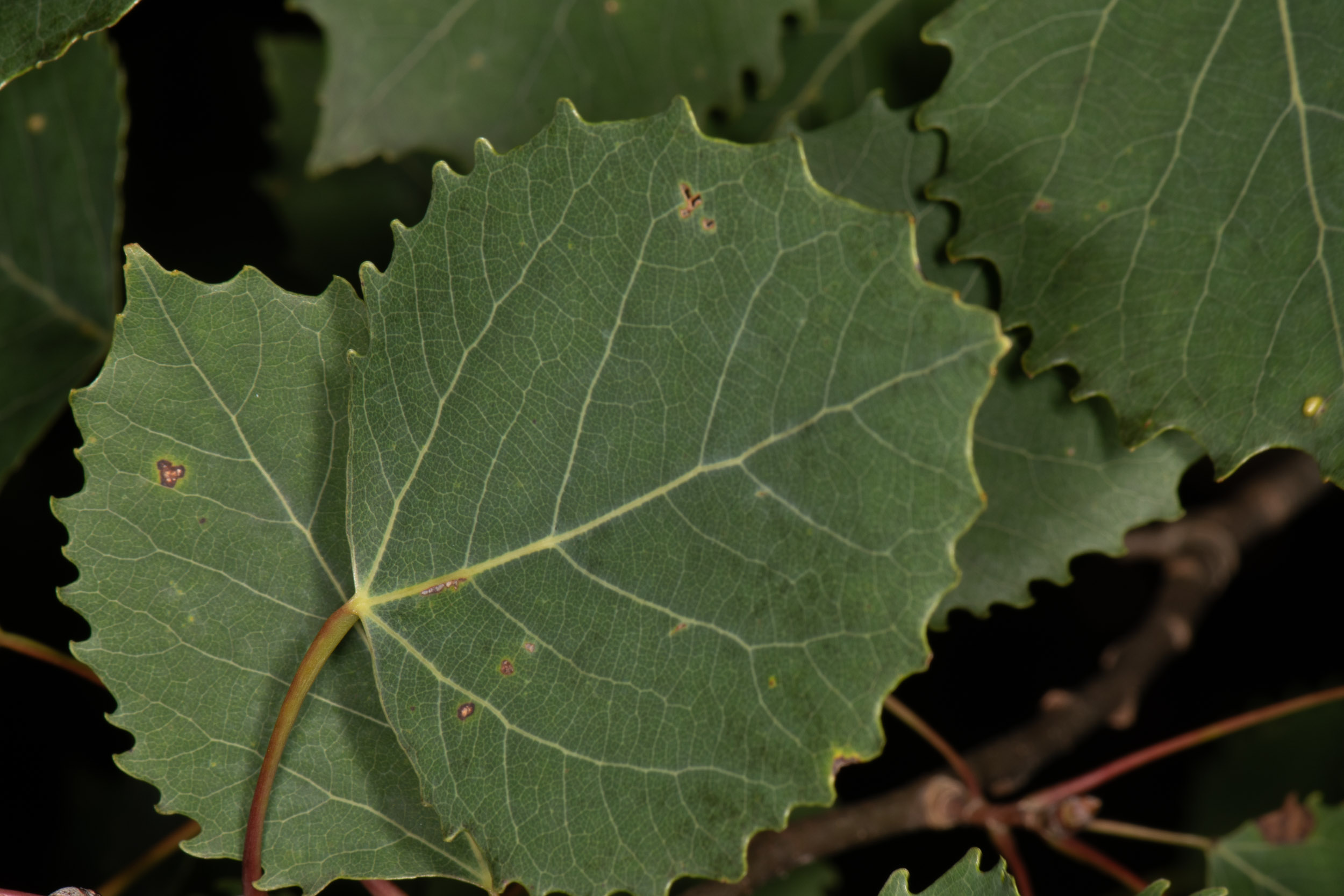
8/15/2021 · Bass Falls Preserve, Alna, Maine · ≈ 5 × 3½″ (13 × 9 cm) 
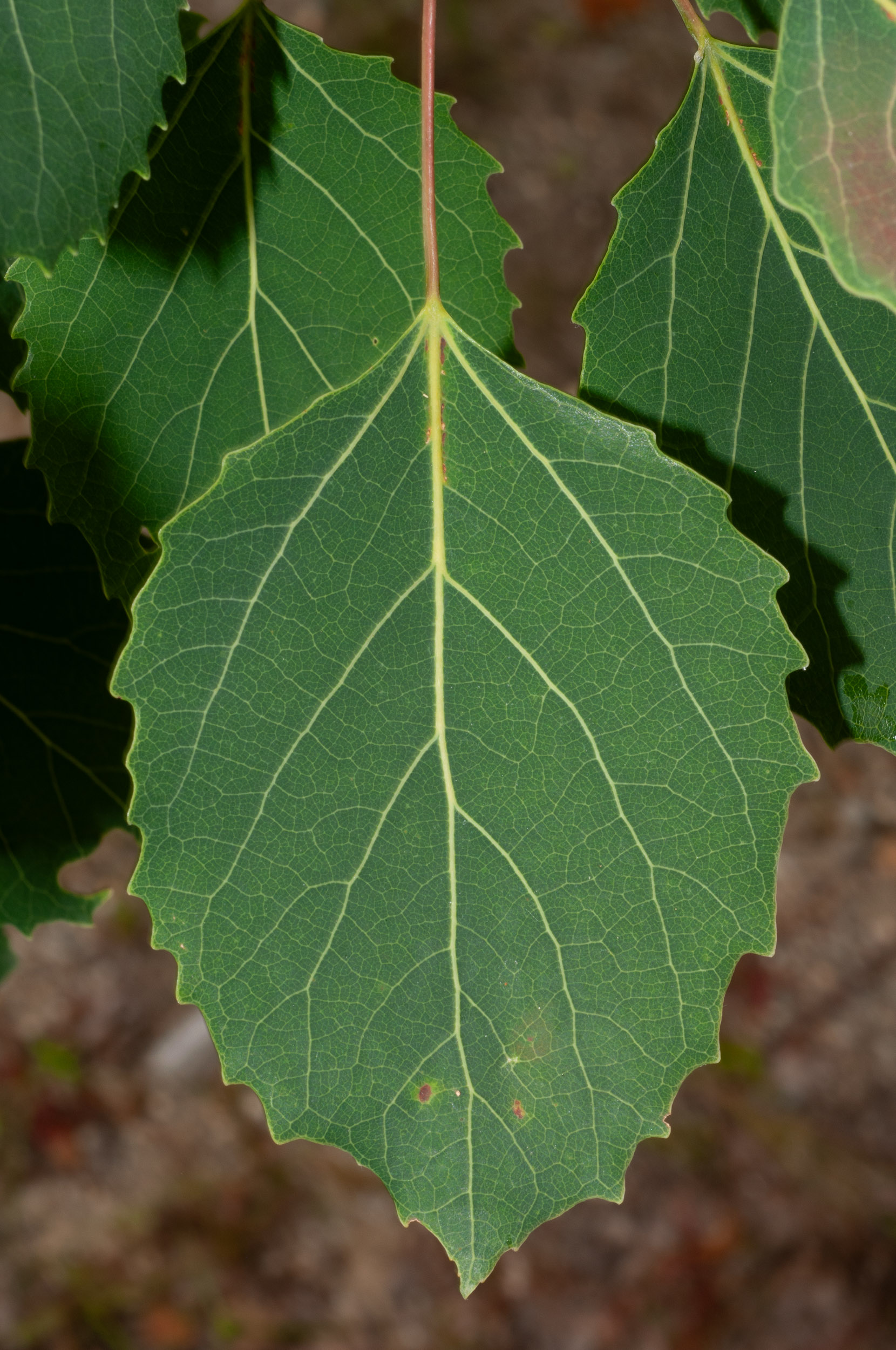
6/27/2012 · Townsend Wildlife Management Area, Townsend, Massachusetts · ≈ 4½ × 7″ (11 × 17 cm) 
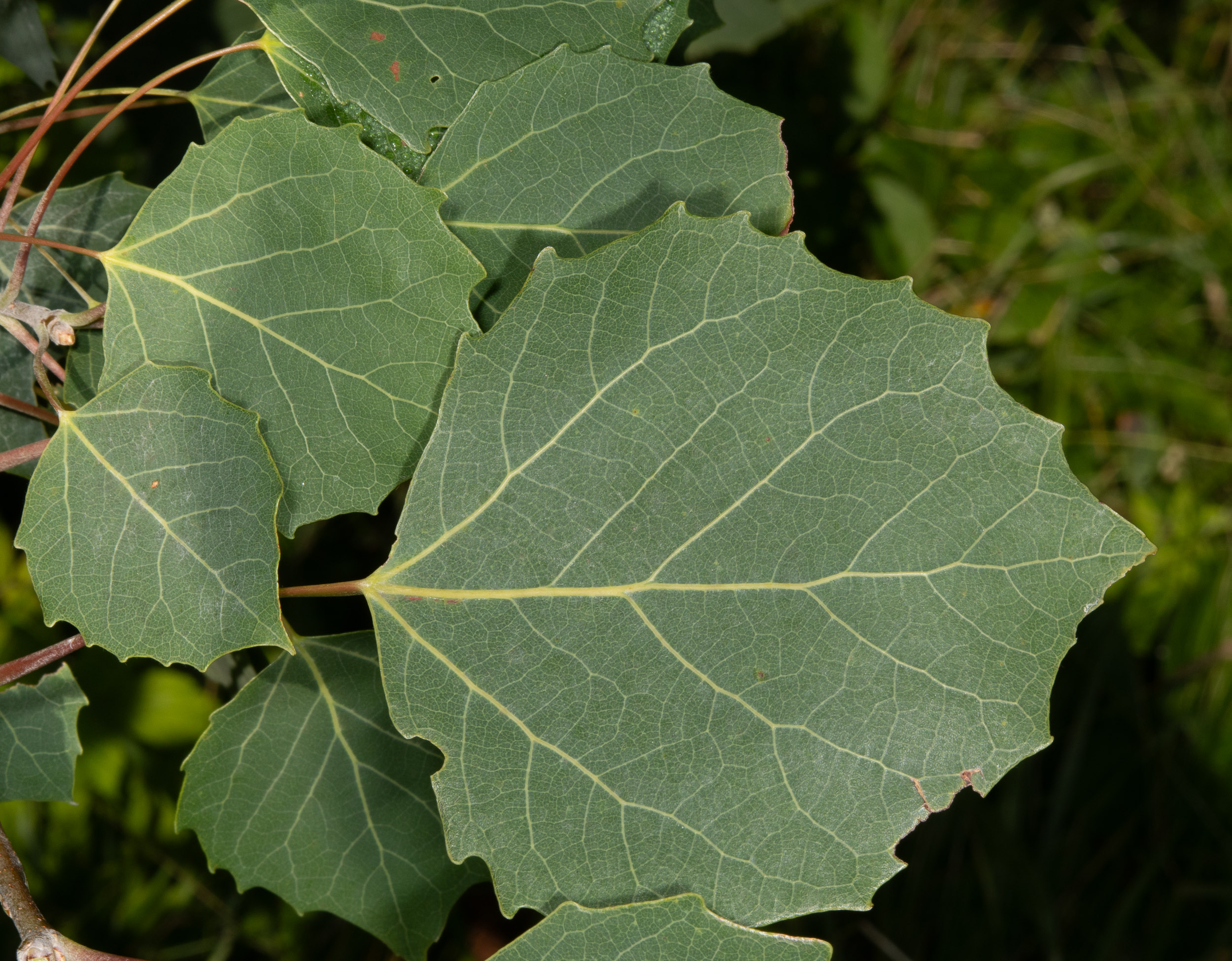
7/18/2020 · Woodward Point Preserve, Brunswick, Maine · ≈ 7 × 5″ (17 × 13 cm) 
| Kingdom | Plantae | Plants, but not fungi, lichens, or algae (from Stearn's Botanical Latin) |
| Subkingdom | Tracheobionta | Vascular plants—plants with a “circulatory system” for delivering water and nutrients |
| Division | Magnoliophyta | Flowering plants, also known as angiosperms |
| Class | Magnoliopsida | Dicotyledons—plants with two initial seed leaves |
| Subclass | Rosidae | Roses, legumes, proteas, dogwoods, hydrangeas, mistletoes, euphorbias, grapes, many more |
| Order | Malpighiales | A broad group encompassing 16,000 species |
| Family | Salicaceae | Willow family |
| Genus | Populus | Latin for “people” because the many moving leaves in a breeze resemble a moving populace |
| Species | grandidentata | From grandis, “large,” and dentata, “toothed.” |
Populus grandidentata description by Thomas H. Kent, not updated.

© FloraFinder.org. All rights reserved.