Prunus fasciculata (Torr.) A. Gray
Desert almond, wild almond, desert peach
Wild almond is native to arid regions of North America.
Plants: Deciduous perennial shrubs are up to 6½′ (2 m) high, with many straight branches resembling large thorns. The branches are gray and hairless, often with a few real thorns.
Leaves: Linear, but often wider toward the tips, (oblanceolate). Each leaf is ⅛–¾ ⨉ 1/32–1/16″ (5–20 ⨉ 1–2 mm) in size. Leaf groups of about six emerge almost directly the stems (“sessile.”)
Flowers: White, ⅛″ (3 mm), fragrant, single or paired. Male flowers have 10-15 stamens and one or more pistils. Flowers appear from February to May.
Fruits: Drupes, the wild almonds, are about ½ ⨉ ⅜″ (1.5 ⨉ 1.2 cm) in size, and ovoid. They are gray to red-brown and covered with a dense fine fuzz.
Habitats: Sandy or rocky soil on dry slopes and washes, at elevations up to 1.4 mi (2.2 km).
Edibility: Edible, but due to the presence of small amounts of cyanide, potentially dangerous. Bitter-tasting fruit should not be eaten.
Online References:
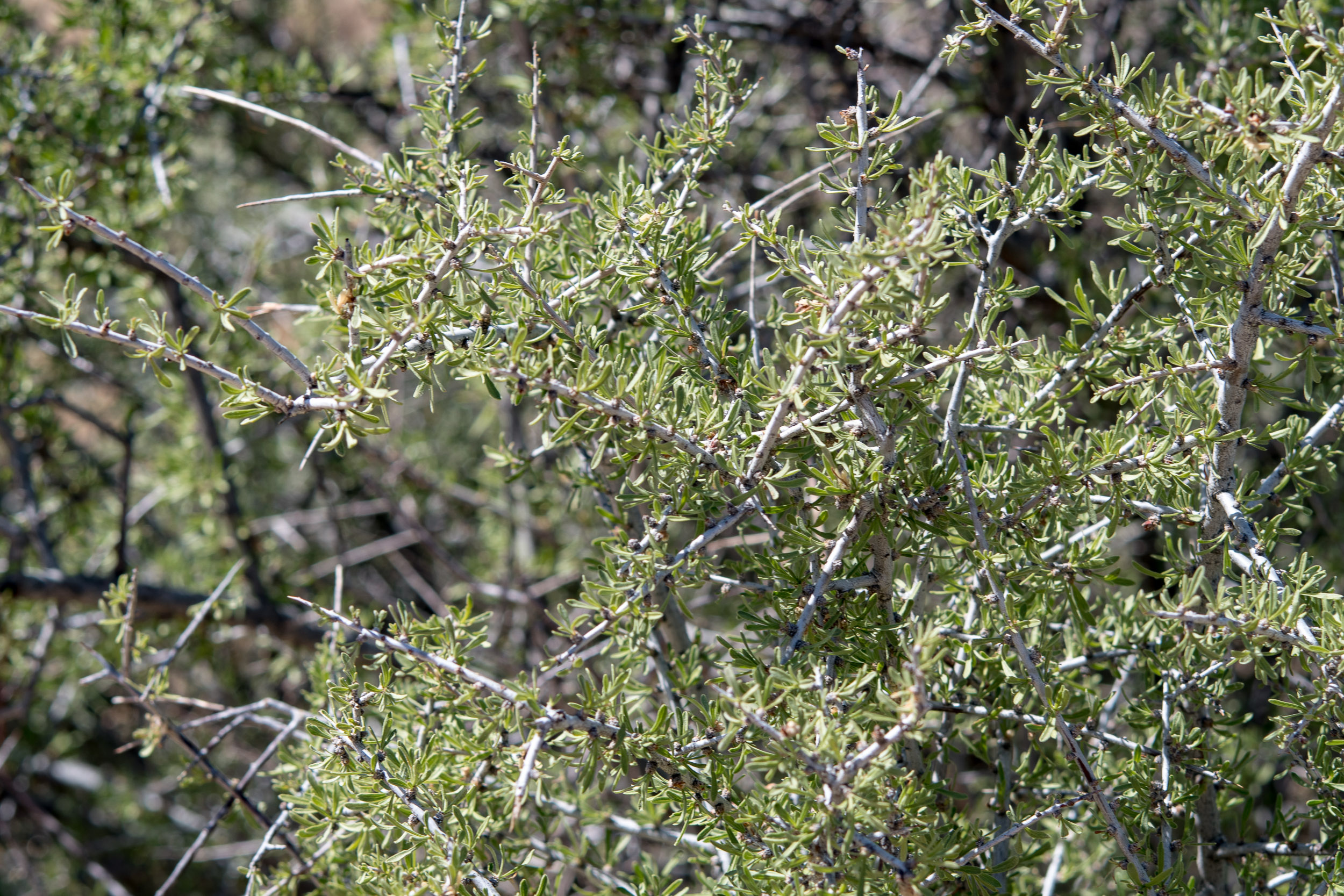
5/3/2018 · Park Blvd., Joshua Tree National Park · ≈ 15 × 10″ (39 × 26 cm) 
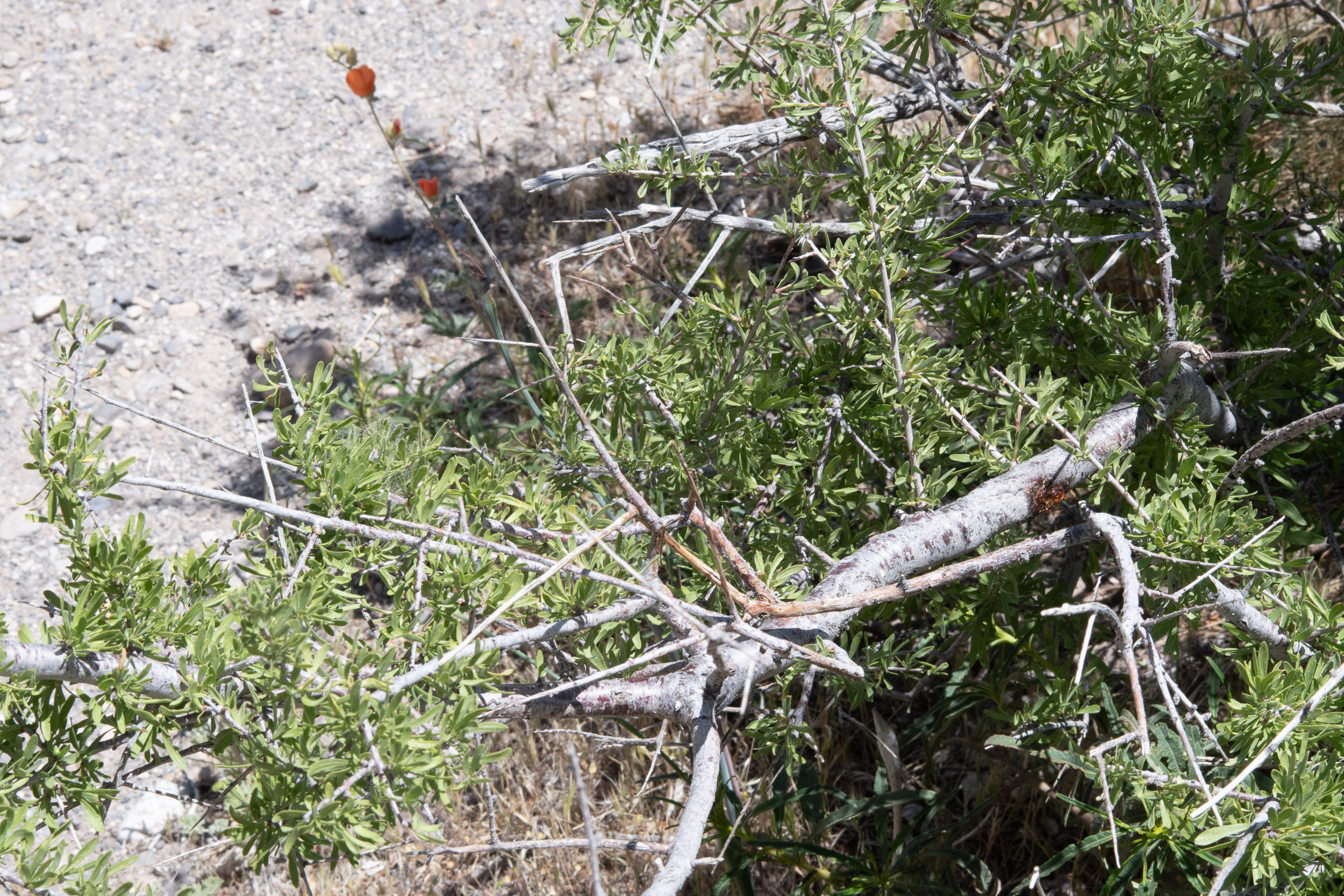
4/28/2018 · Red Rock Canyon, Nevada · ≈ 1½ × 1′ (52 × 34 cm) 
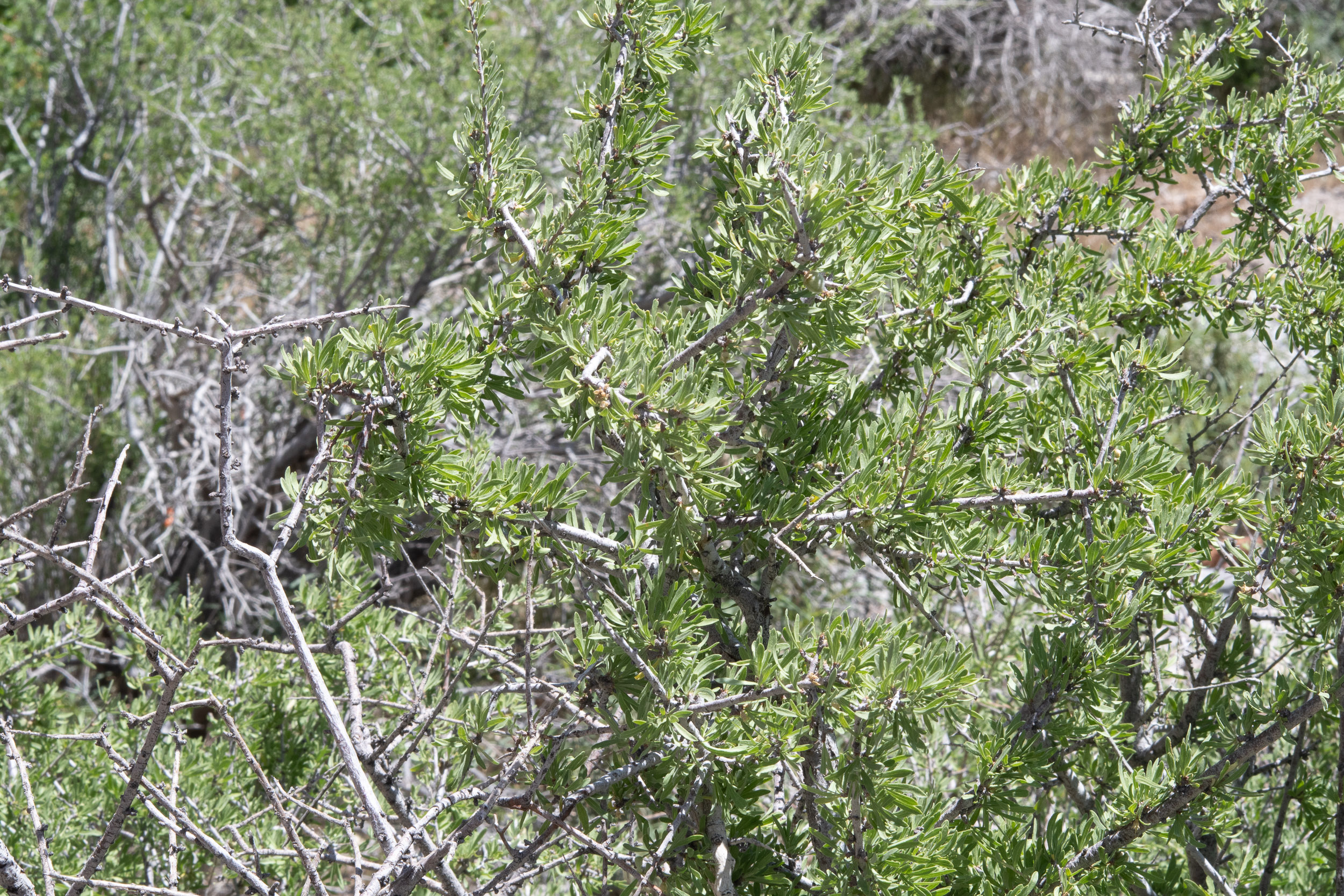
4/28/2018 · Red Rock Canyon, Nevada · ≈ 1½ × 1′ (52 × 34 cm) 
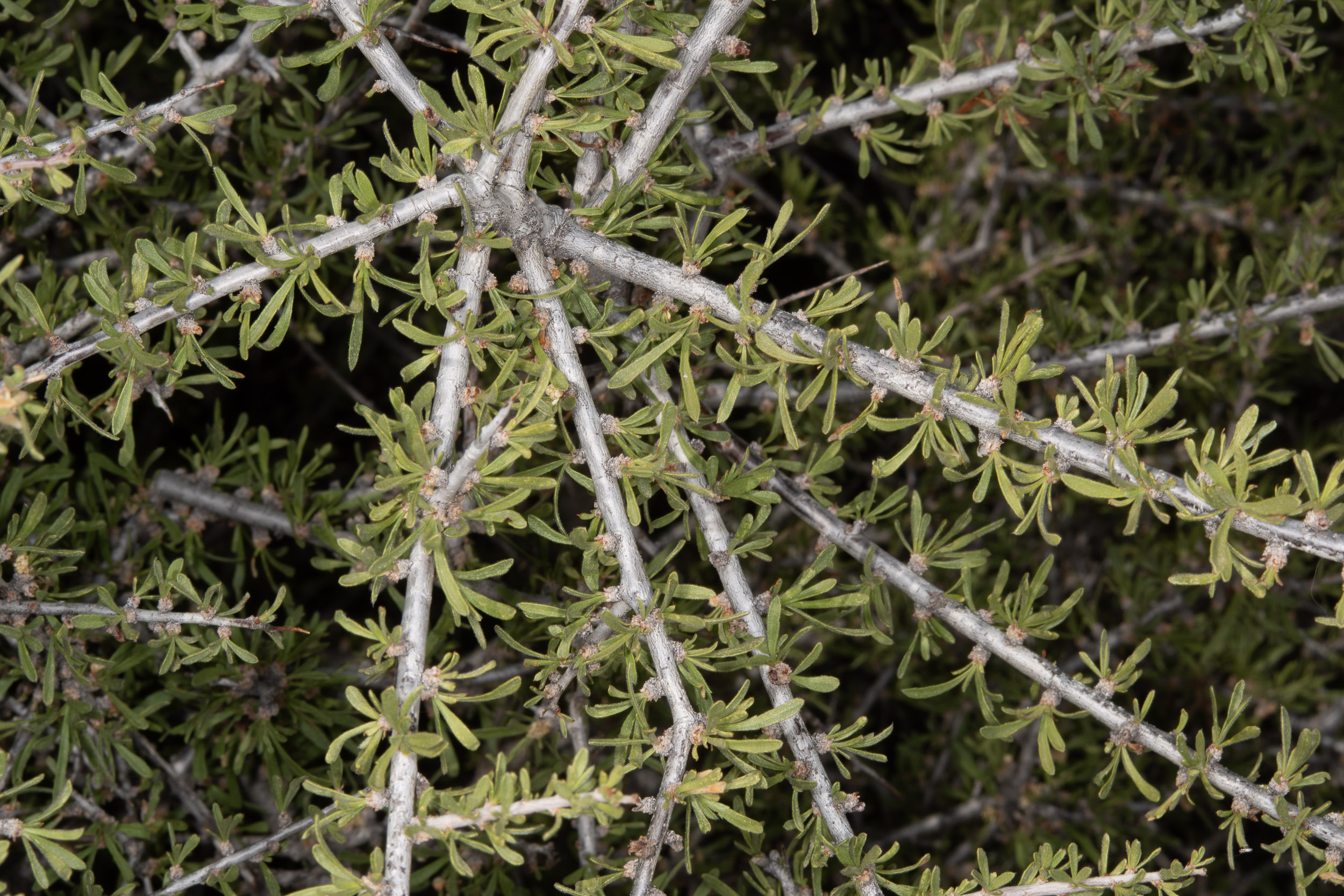
5/3/2018 · Park Blvd., Joshua Tree National Park · ≈ 10 × 6″ (24 × 16 cm) 
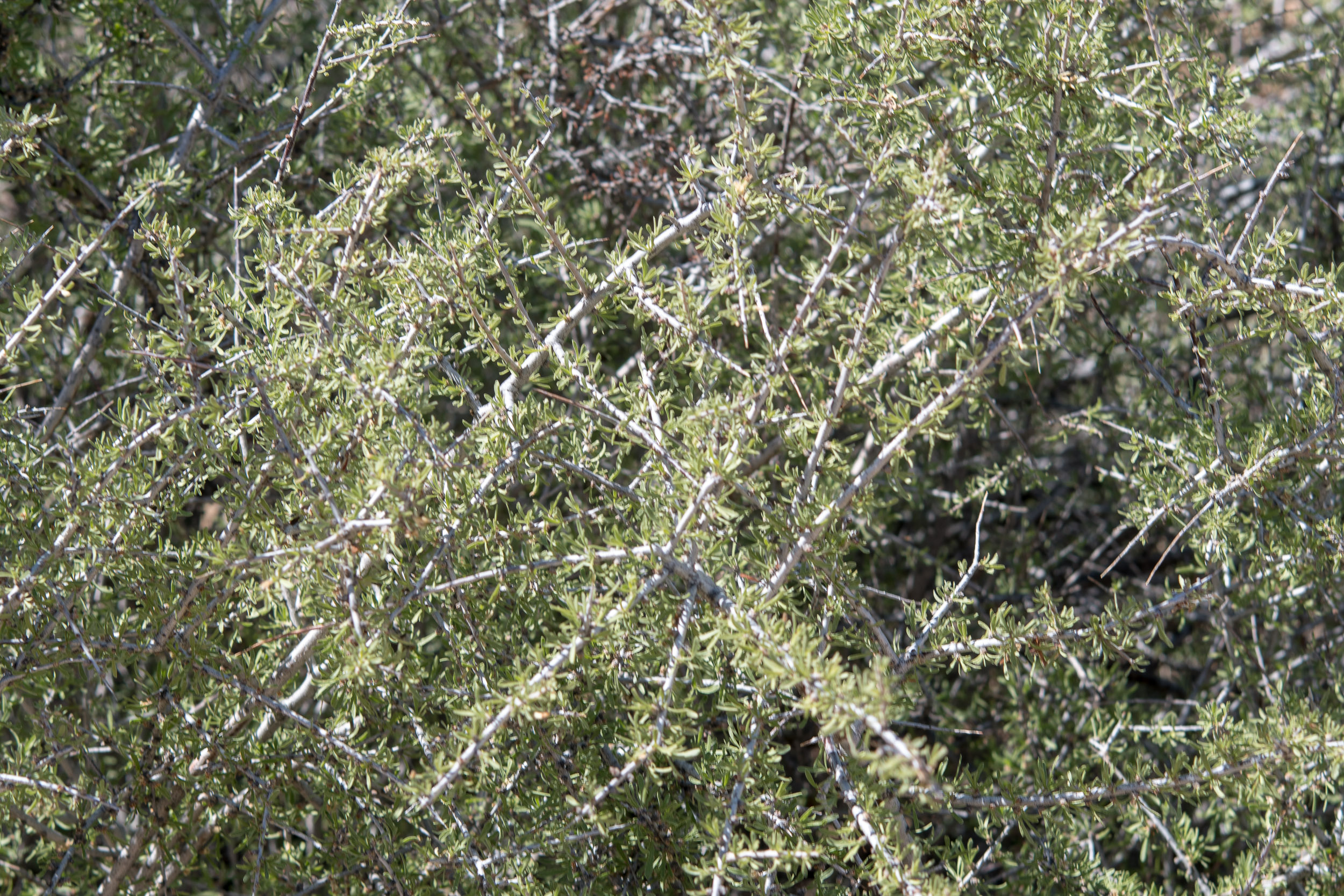
5/3/2018 · Park Blvd., Joshua Tree National Park · ≈ 1½ × 1′ (52 × 34 cm) 
| Kingdom | Plantae | Plants, but not fungi, lichens, or algae (from Stearn's Botanical Latin) |
| Subkingdom | Tracheobionta | Vascular plants—plants with a “circulatory system” for delivering water and nutrients |
| Division | Magnoliophyta | Flowering plants, also known as angiosperms |
| Class | Magnoliopsida | Dicotyledons—plants with two initial seed leaves |
| Subclass | Rosidae | Roses, legumes, proteas, dogwoods, hydrangeas, mistletoes, euphorbias, grapes, many more |
| Order | Rosales | Rose family and eight others |
| Family | Rosaceae | Includes apples, apricots, plums, cherries, peaches, pears, raspberries, strawberries, almonds, roses, meadowsweets, photinias, firethorns, rowans, and hawthorns; many others |
| Genus | Prunus | Includes plums, cherries, peaches, apricots, and almonds |
| Species | fasciculata | Derived from a Latin word meaning “bundles” and describing the way the leaves are attached to the leaf stem in little bunches or ‘fascicles’ |
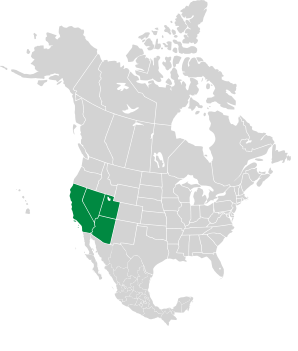
Prunus fasciculata description by Thomas H. Kent, not updated.

© FloraFinder.org. All rights reserved.