Ranunculus cymbalaria Pursh
Seaside crowfoot, alkali buttercup
[An article has not been written yet.]
Older scientific or horticultural names
Cyrtorhyncha cymbalaria (Pursh) Britton
Cyrtorhyncha cymbalaria (Pursh) Britton ssp. alpina (Hook.) Á. Löve & D. Löve
Halerpestes cymbalaria (Pursh) Greene
Halerpestes cymbalaria (Pursh) Greene ssp. saximontana (Fernald) Moldenke
Ranunculus cymbalaria Pursh var. alpinus Hook.
Ranunculus cymbalaria Pursh var. saximontanus Fernald
Ranunculus cymbalaria Pursh ssp. saximontanus (Fernald) Thorne
Ranunculus cymbalaria Pursh var. typicus L.D. Benson
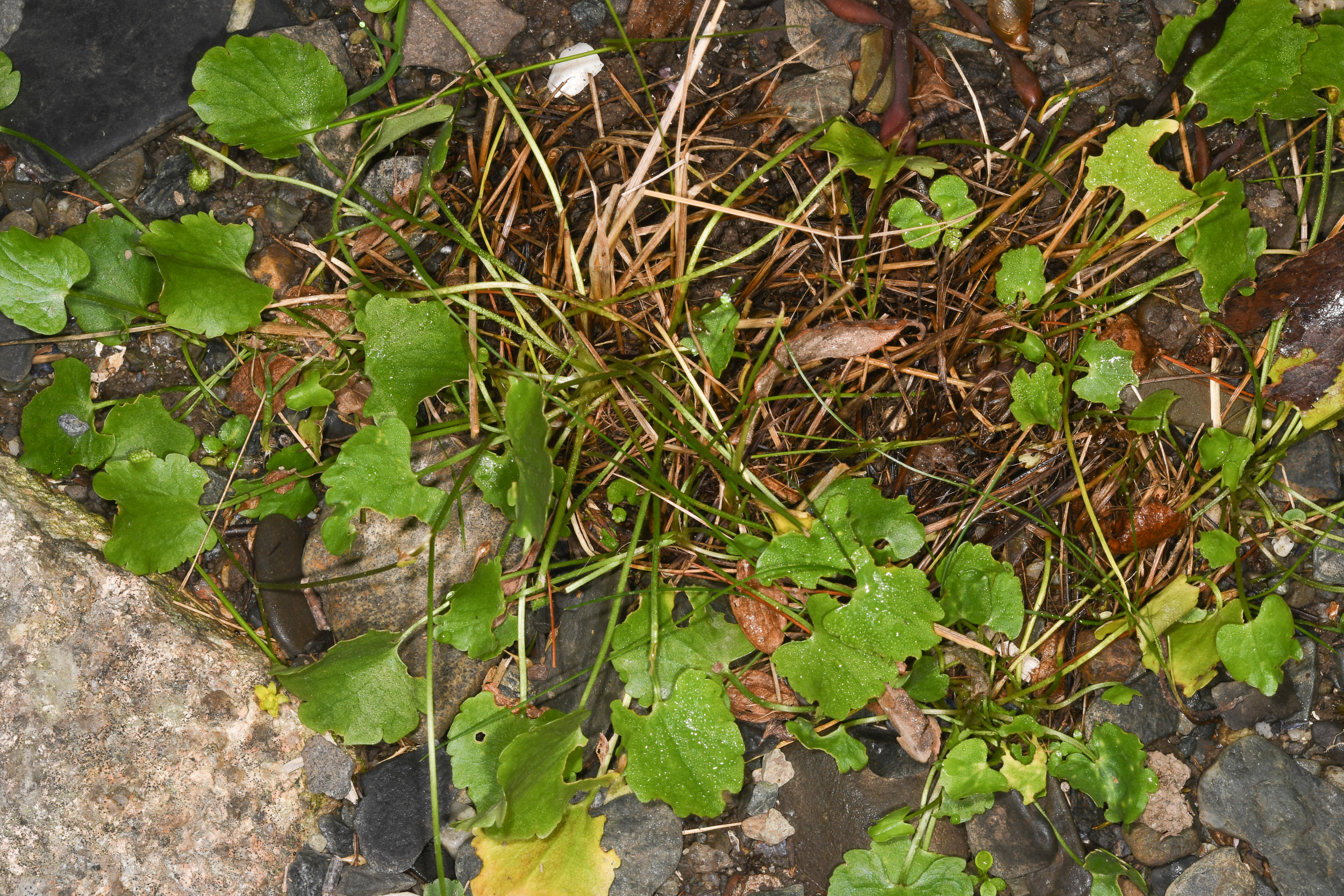
9/16/2016 · Sieur de Monts Botanical Gardens, Bar Harbor, Maine
Kingdom Plantae Plants, but not fungi, lichens, or algae (from Stearn's Botanical Latin )
Subkingdom Tracheobionta Vascular plants—plants with a “circulatory system” for delivering water and nutrients
Division Magnoliophyta Flowering plants, also known as angiosperms
Class Magnoliopsida Dicotyledons—plants with two initial seed leaves
Subclass Magnoliidae Includes magnolias, nutmeg, bay laurel, cinnamon, avocado, black pepper, and many others
Order Ranunculales Basal (evolved earlier) eudicots, also called “true dicots”
Family Ranunculaceae Buttercup family
Genus Ranunculus From Latin rana, “little frog,” because many species grow in moist places
Species cymbalaria A name for ivy-leaved toad flax, from the Greek kymbalon and/or the Latin cymbalum for “cymbal,” and referring to the rounded leaf shapes of some species
About plant names...
Ranunculus cymbalaria description by Thomas H. Kent, not updated.
© FloraFinder.org. All rights reserved.