Sequoia sempervirens (Lamb. ex D. Don) Endl.
Coast redwood, giant sequoia, giant redwood, California redwood, redwood
Some redwoods
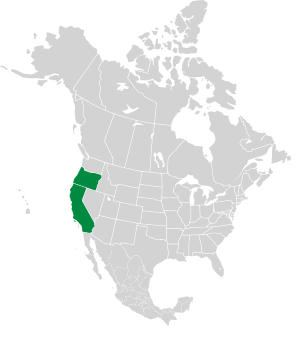
Sequoia sempervirens
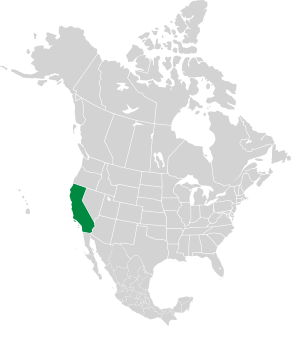
Sequoiadendron giganteum
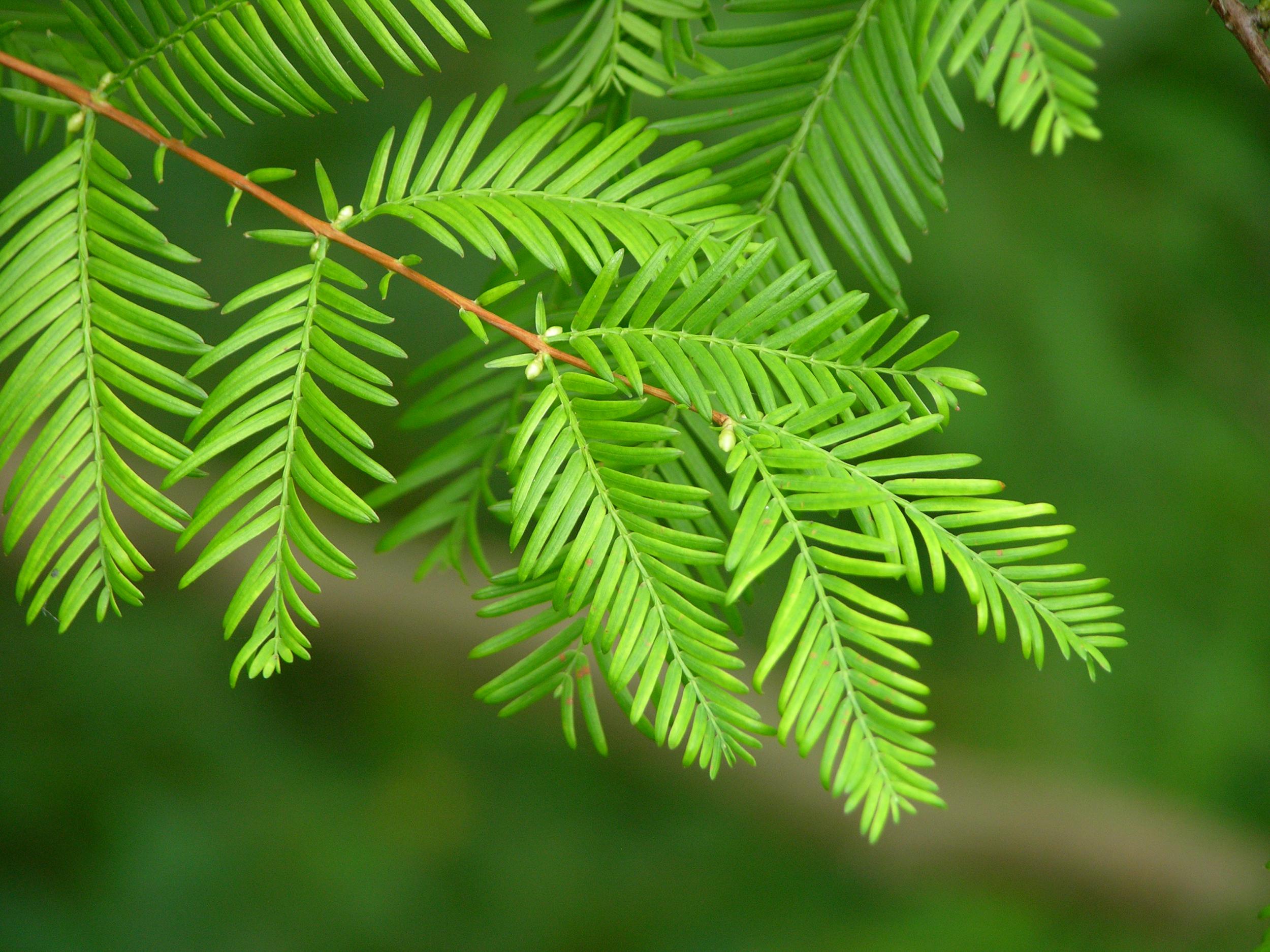
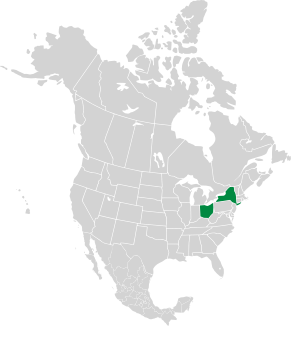
Metasequoia glyptostroboides



|
Sequoia sempervirens (Lamb. ex D. Don) Endl. Coast redwood, giant sequoia, giant redwood, California redwood, redwood Some redwoods | |||
| You are here Sequoia sempervirens |
Sequoiadendron giganteum |
Metasequoia glyptostroboides |
|
|---|---|---|---|
| Common Name | |
|
|
| Plant | Up to 377′ (115 m) tall, living up to 2,200 years. Bark is up to 1′ (30 cm) thick at base. | 164–279′ (50–85 m) tall. Bark, up to 3′ (91 cm) thick at the bottom of the tree, is fibrous and furrowed. | Up to 148′ (45 m) high, up to 6½′ (2 m) in diameter. Bark is reddish brown when young, becoming fissured an gray. |
| Leaves |
|
1/16–3/16″ (3–6 mm) long, arranged in spiral whorls. |
|
| Fruit | Oval, ½–1¼″ (1.5–3.2 cm), with 15-25 spirally arranged scales. | Cones are 1½–2½″ (4–7 cm) long. | Pollen cones are ovoid, 1/16–⅛ ⨉ 1/16–⅛″ (2.5–5.5 ⨉ 2–3.8 mm); with bracts that are triangular-ovate or obovate. Seed cones appear at the ends of leafy shoots ¾–1½″ (2–4 cm) long. They are purplish black when young, maturing to roughly spherical and ½–⅞ ⨉ ⅝–⅞″ (1.4–2.5 ⨉ 1.6–2.3 cm). |
| Range/ Zones |
|
|
|
| Habitats | California’s North Coast provides the only known suitable habitat. A combination of longitude, climate, and elevation limits the redwoods’ range to a few hundred coastal miles. The cool, moist air created by the Pacific Ocean keeps the trees continually damp, even during summer droughts. | On the western slopes of the Sierra Nevada mountains in California. | Moist valley floors, or in deep ravines and other areas with seepage and hence constant moisture, at elevations of 2461–4921′ (750–1500 m). |
Sequoia sempervirens description by Thomas H. Kent, not updated.
© FloraFinder.org. All rights reserved.