Sesuvium portulacastrum (L.) L.
Akulikuli, sea purslane, shoreline purslane, shoreline seapurslane
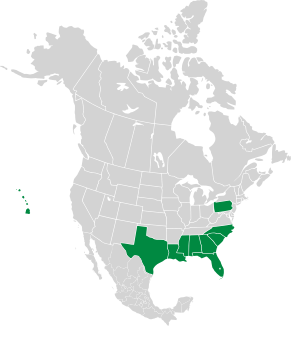
Shoreline purslane is a perennial herb native to Africa, Asia, Australia, Hawaii, North America, and South America. It is now found in tropical and subtropical seacoasts and mangrove flats worldwide.
Plants: A mat-forming vine up to 3″ (7.6 cm) high, sprawling along the ground, with succulent, reddish-green stems. They grow on the ocean side of dunes, down to the high tide line.
Leaves: Thick and fleshy, opposite, linear, with smooth edges. They are ½–1¾ ⨉ 1/16–⅜″ (1.5–5 cm ⨉ 2–10 mm), on very short stalks.
Flowers: Pink, star-shaped, ⅛–⅜″ (3–10 mm) around, with five sepals and 15-20 pink stamens. A single flower appears at the end of a leaf axil.
Fruits: Roughly conical capsules about ⅜″ (1 cm) in size contain small shiny black seeds.
Edibility: Leaves are edible after repeated boiling to remove excess salt.
Habitats: Tropical and subtropical seacoasts and mangrove flats.
Online References:
References:
McMullen, Conley K., Flowering Plants of the Galápagos, Comstock Publishing Associates, 1999, p. 269
Portulaca portulacastrum L.

4/13/2015 · Flamingo Campground, Everglades National Park, Florida · ≈ 2½ × 1½′ (79 × 53 cm) 
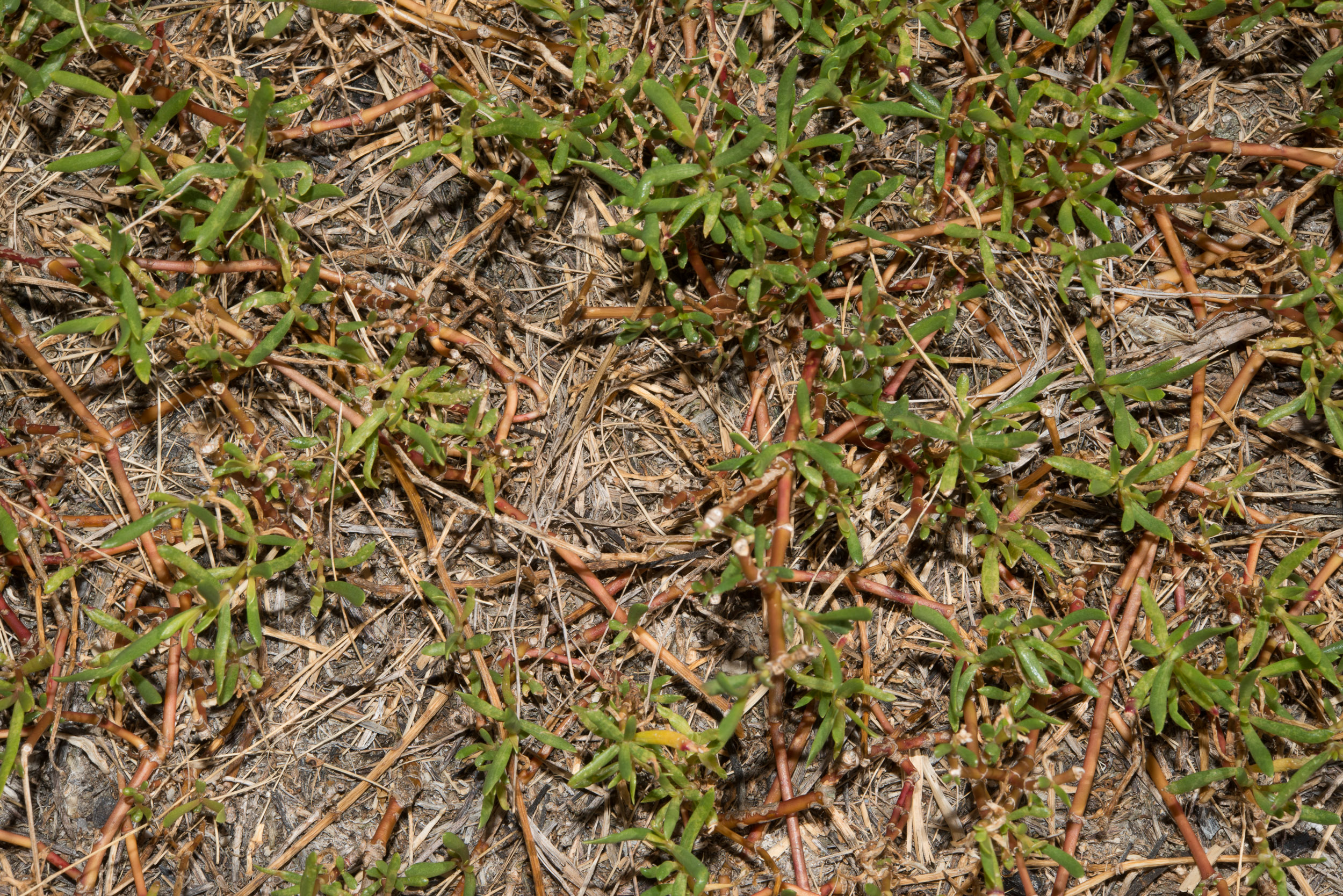
4/13/2015 · Flamingo Campground, Everglades National Park, Florida · ≈ 12 × 8″ (31 × 21 cm) 

4/4/2025 · Punta Pitt, San Cristóbal, Galápagos Islands, Ecuador · By Heather Kent 
| Kingdom | Plantae | Plants, but not fungi, lichens, or algae (from Stearn's Botanical Latin) |
| Subkingdom | Tracheobionta | Vascular plants—plants with a “circulatory system” for delivering water and nutrients |
| Division | Magnoliophyta | Flowering plants, also known as angiosperms |
| Class | Magnoliopsida | Dicotyledons—plants with two initial seed leaves |
| Subclass | Caryophyllidae | Cacti, many other succulents, carnivorous plants, and leadworts |
| Order | Caryophyllales | Includes cacti, carnations, amaranths, ice plants, and many carnivorous plants |
| Family | Aizoaceae | Fig-marigold or ice plant family (previously Mesembryanthemaceae) |
| Genus | Sesuvium | Neither Jepson or Munz offer a meaning for this name, but thanks to Umberto Quattrocchi and Jaeger’s Source-book of Biological Names and Terms, we have the following: Sesuvium, land of the Sesuvii, a Gallic tribe from west of the Seine. I have no idea how this name came to be applied to this genus however |
| Species | portulacastrum | Michael Charters infers that the meaning of this comes from the genus name Portulaca and the astrum, “star,” so would indicate a Portulaca-like plant that has star-shaped flowers |
Sesuvium portulacastrum description by Thomas H. Kent, not updated.

© FloraFinder.org. All rights reserved.