Symplocarpus foetidus (L.) Salisb. ex W.P.C. Barton
Eastern skunk cabbage, clumpfoot cabbage, foetid pothos, meadow cabbage, polecat weed, skunk cabbage, swamp cabbage
Skunk cabbage is native to eastern North America, northeastern Asia, eastern Siberia, northeastern China, Korea, and Japan. It is named for the disagreeable odor that results when the leaves are torn, an odor it uses to attract its pollinators. This species is loosely related to western skunk cabbage (Lysichiton americanus), found in the Pacific northwest.
Plants: Found in swamps and wetlands, skunk cabbage can reach 3′ (91 cm) high and 8′ (2.4 m) across at its peak. They develop unbelievably massive root systems.
Leaves: Early plants have hood-like leaves 4–6″ (10–15 cm) high; some leaves are maroon, sometimes mottled with yellow. This hood is a “spathe,” a modified leaf that protects the flowerhead. Later in the spring, large, oval leaves, up to 3–4′ (91–121 cm) long, grow up from a single point. The leaves of these plants don’t decay in the usual sense, they literally dissolve, disappearing by August.
Flowers: The flowers remain enclosed in the spathe, so you have to peek inside to see them.
Fruits: Hard, pea-sized seeds.
Habitats: Swamps, wetlands.
Edibility: Poisonous  You probably weren’t
seriously considering eating skunk cabbage, but if you were, don’t—it contains
calcium oxalate, which causes a strong
inflammatory reaction in people. Bears tolerate it, but they put up with bee stings too.
From Spring Wildflowers of the Northeast: A Natural History:
Medical:
In skunk cabbage [calcium oxalate crystals] take two forms: raphides, which occur in bundles of parallel, needlelike crystals, and druses, which are conglomerates of several crystals fused around a nucleus and shaped like an irregular, spiky ball. If skunk cabbage is eaten, the calcium oxalate causes a severe burning sensation in the mouth, throat, and esophagus and can result in an inability to speak or even in swelling of the throat.
Online References:
References:
Gracie, Carol, Spring Wildflowers of the Northeast: A Natural History, Princeton University Press, 2012, p. 152-161
Spathyema foetida (L.) Raf.

4/5/2015 · Tenant’s Harbor, Maine · ≈ 3 × 2½″ (7.7 × 7 cm) 

7/23/2017 · Pine Grove Furnace State Park, Pennsylvania · ≈ 8 × 10″ (20 × 24 cm) 
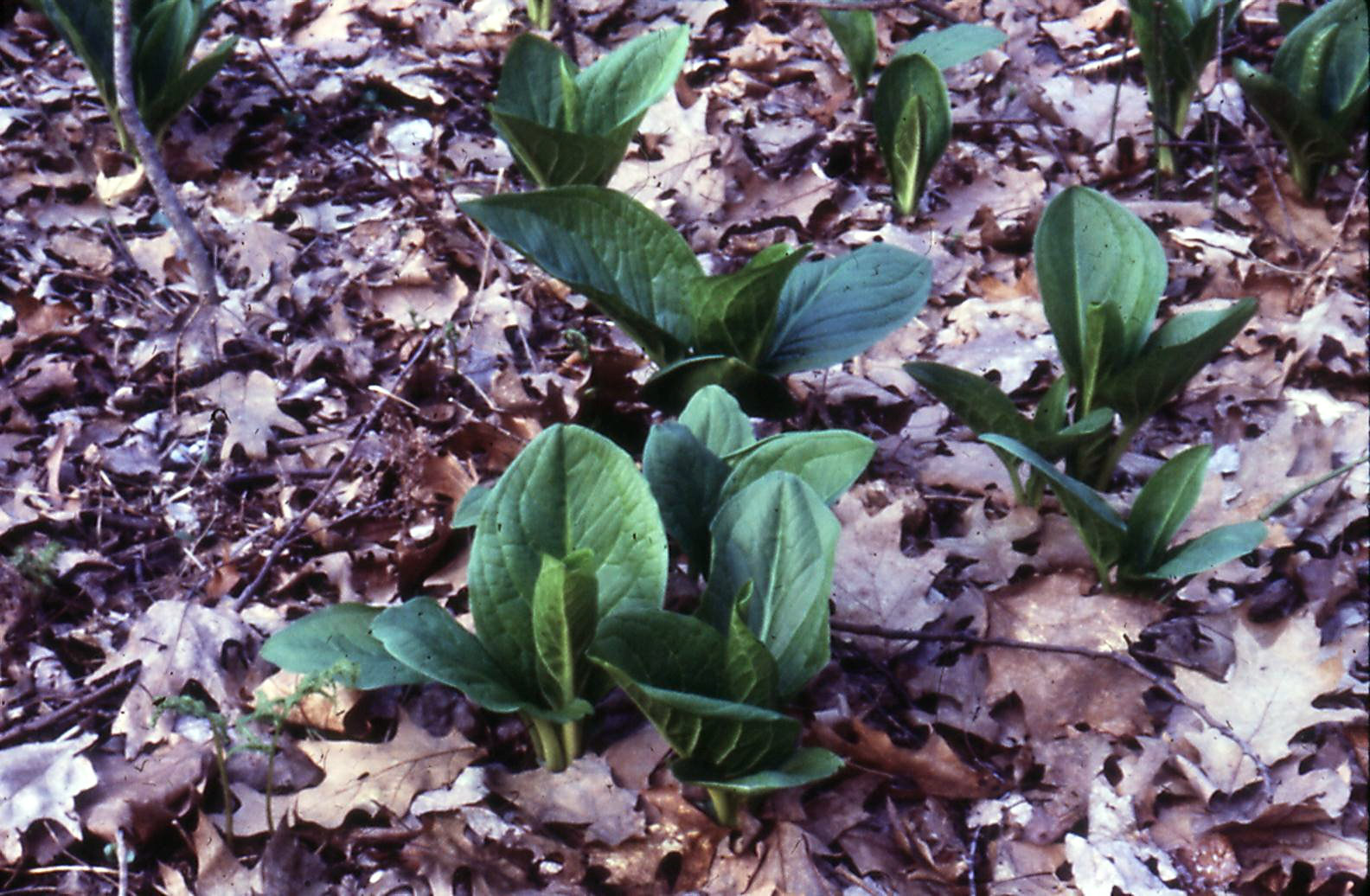
4/15/1979 · Memphis, Tennessee · By Tim Chandler 
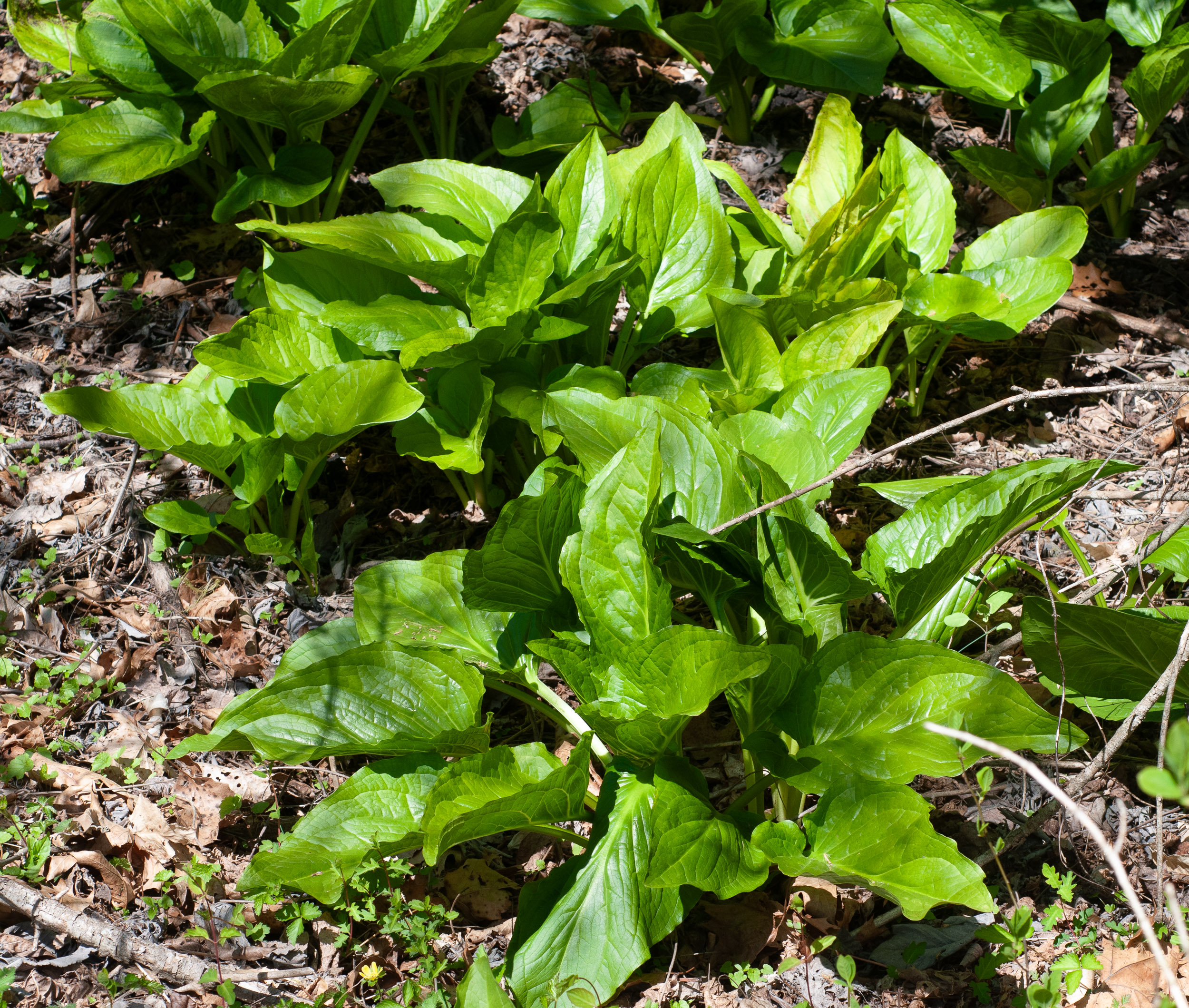
4/6/2012 · North Central Railroad Trail, Sparks, Maryland 

6/22/2023 · Florida Lake Park, Freeport, Maine 

4/27/2010 · Nashua River Rail Trail, Pepperell, Massachusetts 

4/30/2013 · Acton Arboretum, Acton, Massachusetts · ≈ 7 × 8″ (17 × 21 cm) 

4/5/2015 · Tenant’s Harbor, Maine 
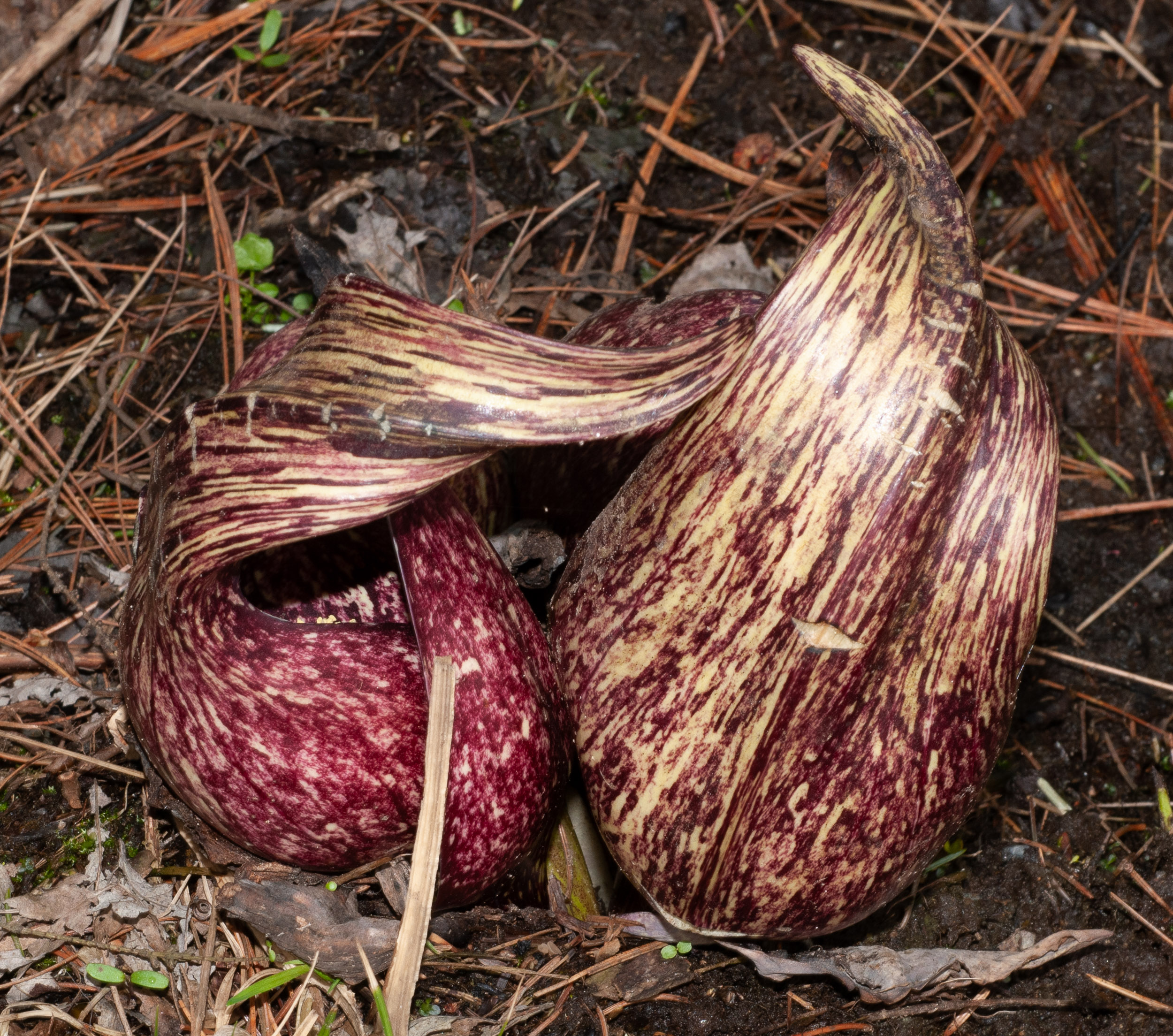
3/26/2012 · Groton Place and Sabine Woods, Groton, Massachusetts · ≈ 7 × 7″ (18 × 16 cm) 

4/30/2013 · Acton Arboretum, Acton, Massachusetts · ≈ 1½ × 1′ (42 × 38 cm) 

5/12/2021 · Weber-Kelly Preserve, Georgetown, Maine 

Melting its way through the early spring snow. · 4/5/2015 · Tenant’s Harbor, Maine 
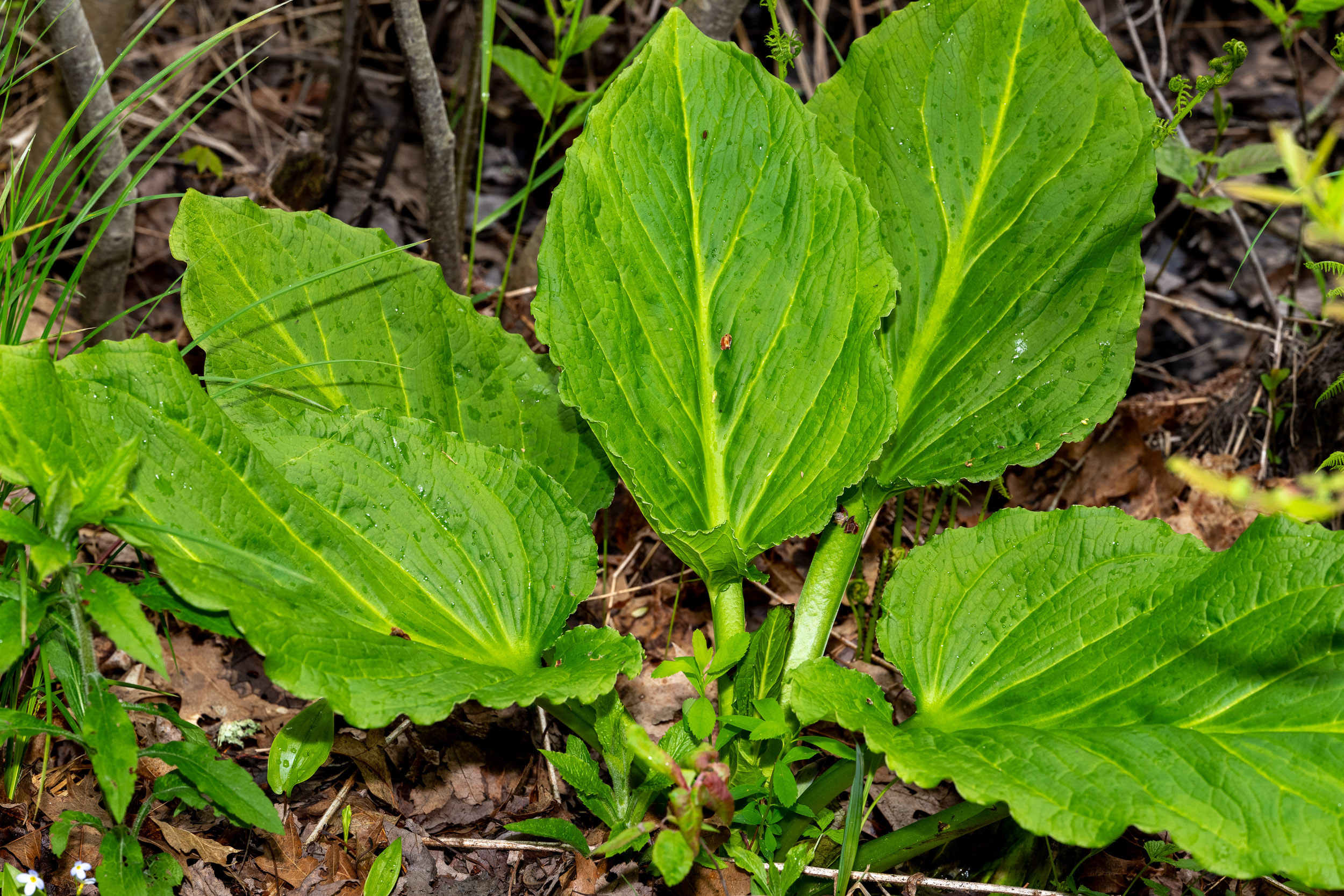
5/18/2025 · Center Point Preserve, Bowdoinham, Maine 

7/23/2017 · Pine Grove Furnace State Park, Pennsylvania · ≈ 10 × 6″ (24 × 16 cm) 

4/29/2010 · Bruce Freeman Rail Trail, Chelmsford, Massachusetts 
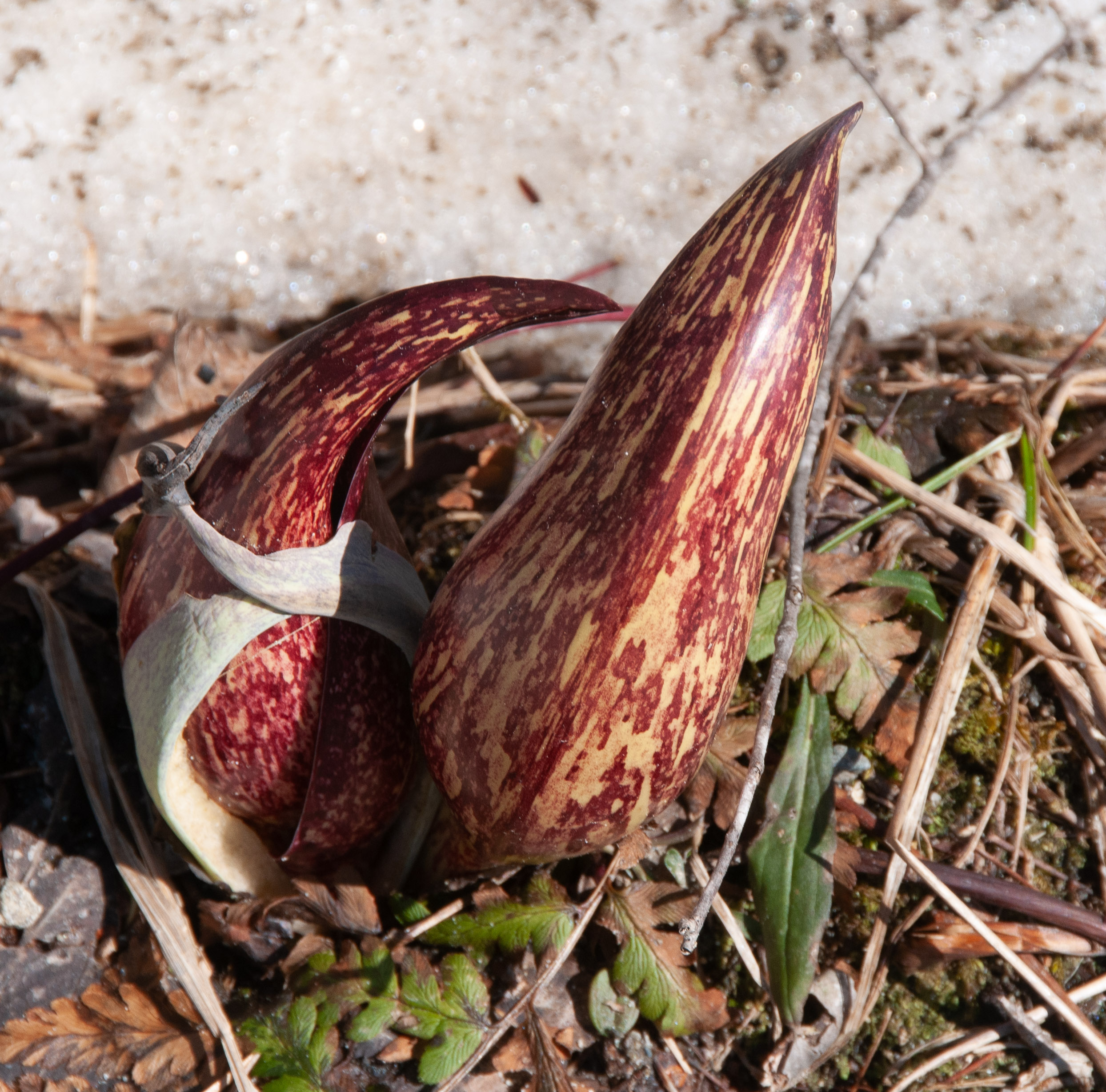
4/5/2015 · Tenant’s Harbor, Maine · ≈ 3½ × 3½″ (9.1 × 9 cm) 

I had to break off the top to see the interior. · 3/26/2012 · Groton Place and Sabine Woods, Groton, Massachusetts · ≈ 8 × 5″ (19 × 13 cm) 
| Kingdom | Plantae | Plants, but not fungi, lichens, or algae (from Stearn's Botanical Latin) |
| Subkingdom | Tracheobionta | Vascular plants—plants with a “circulatory system” for delivering water and nutrients |
| Division | Magnoliophyta | Flowering plants, also known as angiosperms |
| Class | Liliopsida | Monocots (plants with a single seed leaf); includes the lily family |
| Subclass | Alismatidae | Aquatic and marshy plants |
| Order | Alismatales | Herbaceous flowering plants found in marshy habitats |
| Family | Araceae | Arum family, with plants whose flower is enclosed in a spathe |
| Genus | Symplocarpus | From Greek symplokos, “connected,” and karpos, “fruit,” referring to the fruit cluster of the species |
| Species | foetidus | From Greek foetidus, “foul smelling” |

Symplocarpus foetidus description by Thomas H. Kent, not updated.

© FloraFinder.org. All rights reserved.