Tribulus terrestris L.
Puncture vine, goat’s-head, bindii, bullhead, burra gokharu, bhakhdi, caltrop, small caltrops, cat’s-head, devil’s eyelashes, devil’s-thorn, devil’s-weed, tackweed
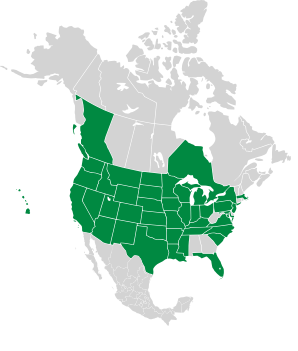
Puncturevine is an annoying weed whose sharply pointed burs poke holes in feet, impale thin shoe soles and bicycle tires, and injure grazing animals. Originating in Africa and Eurasia, and introduced accidentally to North America and Australia, it is an invasive species now found throughout much of the world temperate and tropical world.
Plants: Densely hairy stems extend from a central point, remaining mostly prostrate, into patches up to 3′ (1 m) in diameter.
Leaves: Opposite, bipinnate, and very hairy, leaflets are up to ⅛″ (3 mm) long.
Flowers: Yellow flowers are ⅛–⅜″ (4–10 mm) around. Each flower has five sepals and ten stamens.
Fruits: Fruits, the source of this plant’s bad reputation, quickly decompose into five burs. Each bur has 2-4 hard spines, each ⅜″ (1 cm) long.
Habitats: Temperate and tropical regions worldwide, especially in dry, loose, sandy soils.
Medical: Sometimes used in traditional medicine to aid in managing blood sugar levels, this benefit is not confirmed.
Online References:
References:
McMullen, Conley K., Flowering Plants of the Galápagos, Comstock Publishing Associates, 1999, p. 265

3/31/2025 · Puerto Egas, Santiago, Galápagos Islands, Ecuador · ≈ 10 × 9″ (26 × 22 cm) 
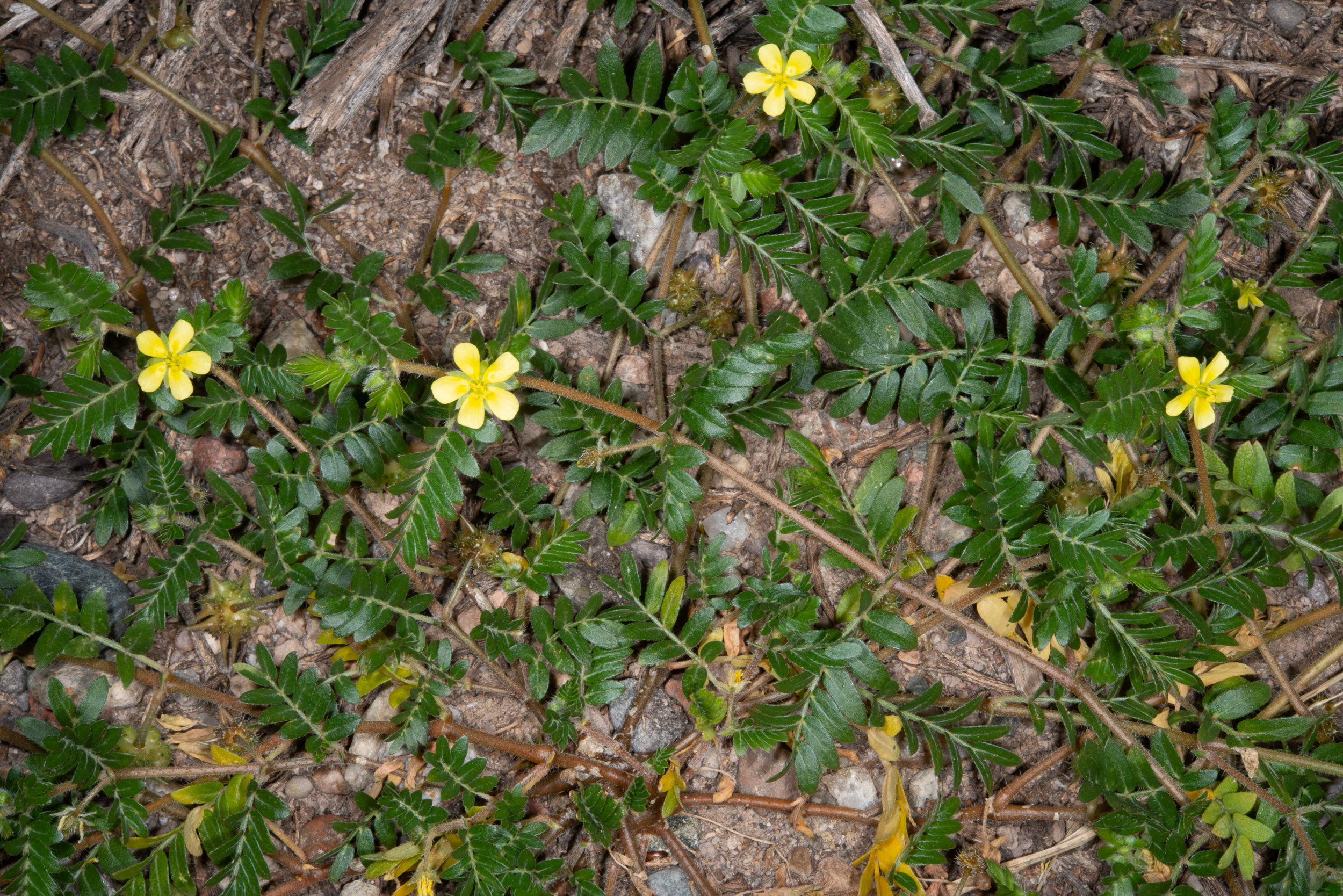
9/1/2014 · Bandelier National Monument, New Mexico · ≈ 11 × 7″ (28 × 18 cm) 

3/31/2025 · Puerto Egas, Santiago, Galápagos Islands, Ecuador · ≈ 16 × 11″ (40 × 27 cm) 

7/22/2026 

3/31/2025 · Rábida, Galápagos Islands, Ecuador · By Heather Kent 
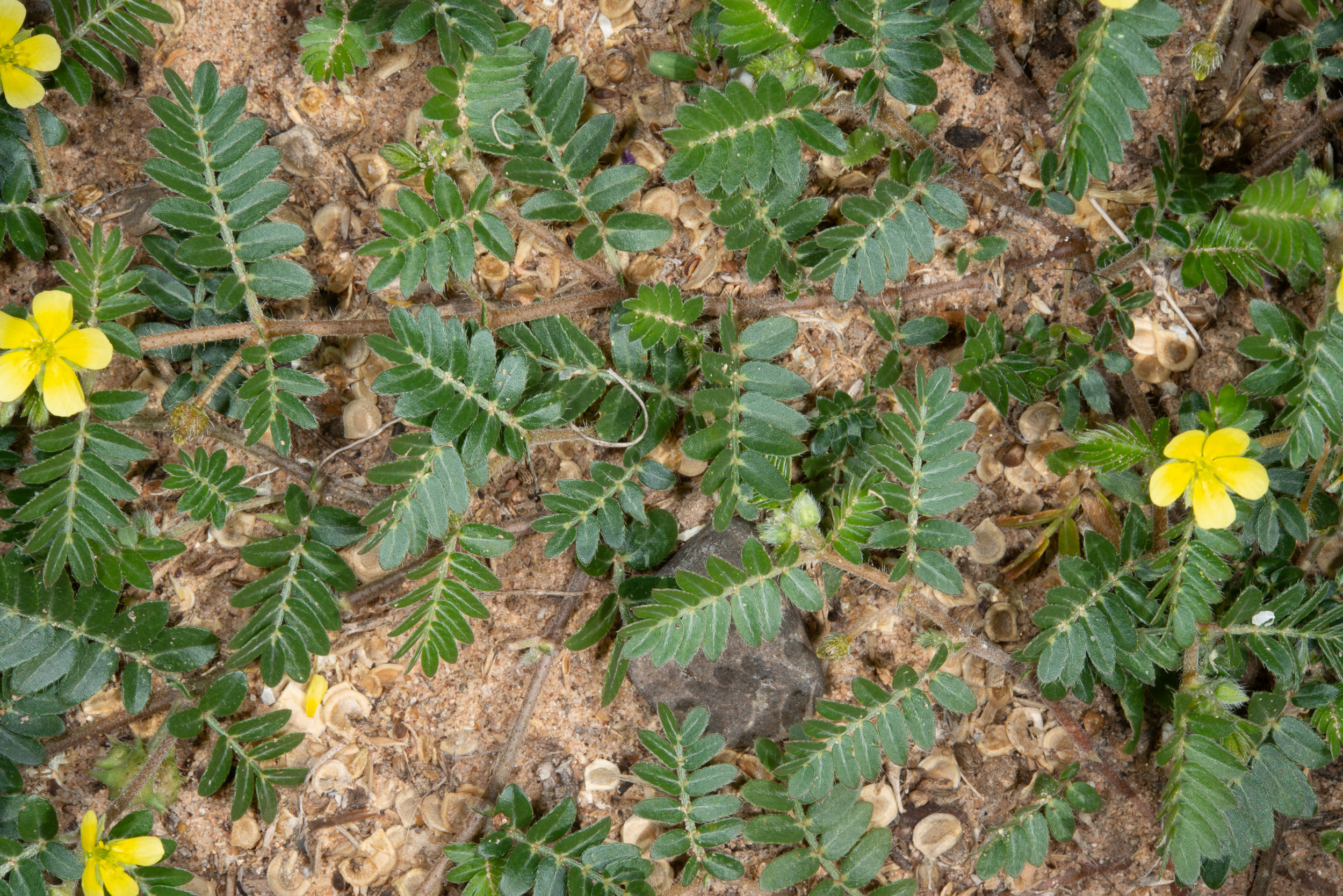
8/27/2014 · Sandy Walk, Petroglyph National Monument, New Mexico · ≈ 8 × 6″ (20 × 14 cm) 
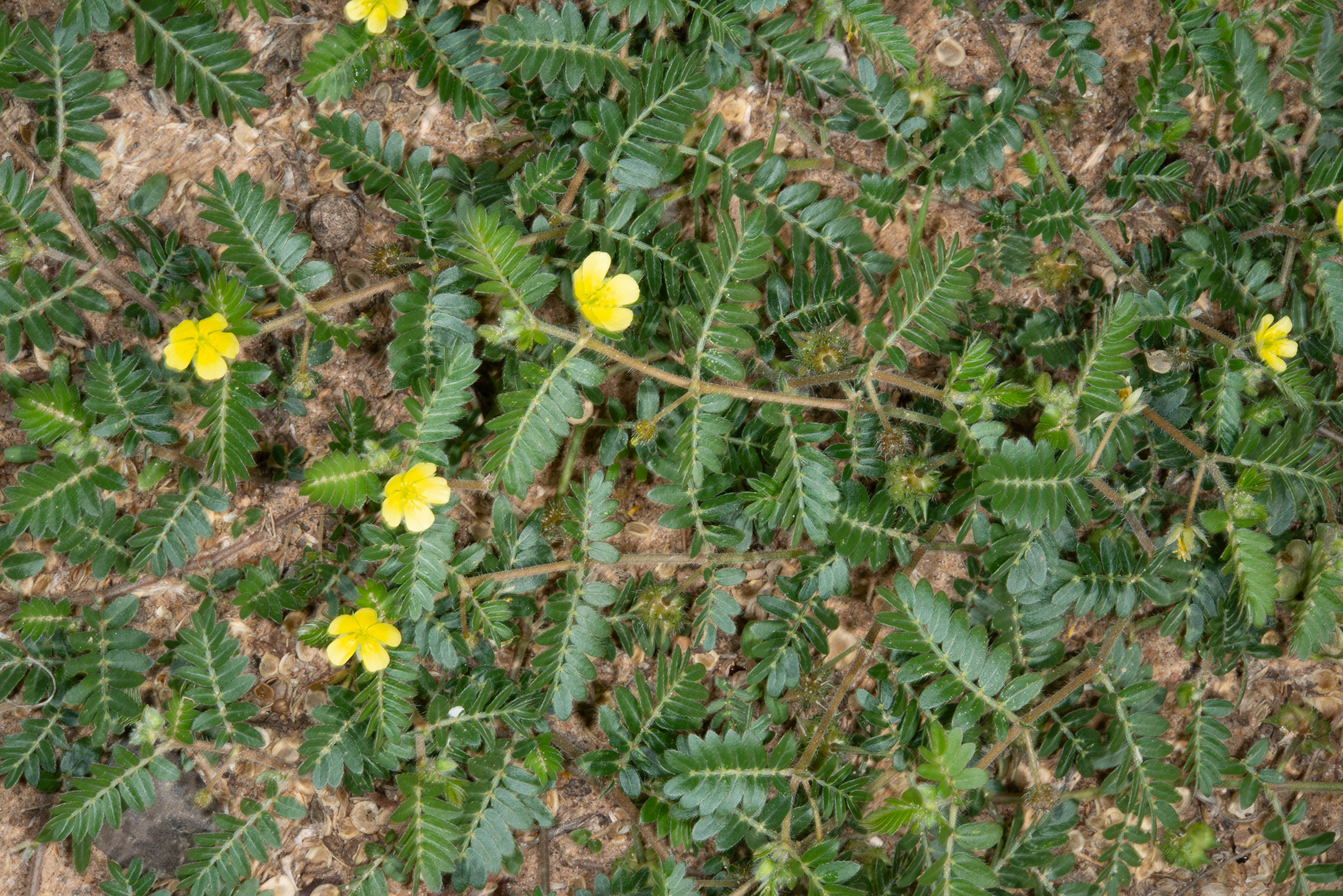
8/27/2014 · Sandy Walk, Petroglyph National Monument, New Mexico · ≈ 11 × 7″ (28 × 18 cm) 

3/31/2025 · Puerto Egas, Santiago, Galápagos Islands, Ecuador · ≈ 14 × 11″ (36 × 27 cm) 
| Kingdom | Plantae | Plants, but not fungi, lichens, or algae (from Stearn's Botanical Latin) |
| Subkingdom | Tracheobionta | Vascular plants—plants with a “circulatory system” for delivering water and nutrients |
| Division | Magnoliophyta | Flowering plants, also known as angiosperms |
| Class | Magnoliopsida | Dicotyledons—plants with two initial seed leaves |
| Subclass | Rosidae | Roses, legumes, proteas, dogwoods, hydrangeas, mistletoes, euphorbias, grapes, many more |
| Order | Sapindales | Includes citrus; maples, horse-chestnuts, lychees and rambutans; mangos and cashews; frankincense and myrrh; mahogany and neem |
| Family | Zygophyllaceae | The caltrop family, with about 250 species |
| Genus | Tribulus | From the Greek tribeles or tribolos and Latin tribulus for “three-pointed, a caltrop,” the shape of which is suggested by the three-pronged fruit, and referring to the caltrop, an ancient military weapon which consisted of an iron ball with projecting spikes that could be strewn on the battlefield to impede cavalry or foot soldiers. At least one spike projected upwards while others anchored the caltrop in the ground |
| Species | terrestris | Latin for “on land” |
Tribulus terrestris description by Thomas H. Kent, not updated.

© FloraFinder.org. All rights reserved.