Veratrum californicum Durand
Corn lily, California corn lily, California false hellebore
California corn lily is native to mountain meadows in southwestern North America and the Rocky Mountains.
Plants: This plant’s leaves resemble those of corn (or corn husks), leading to the unfortunate name “wild corn” as well as corn lily—unfortunate because this plant is poisonous to people and animals. Plants are up to 6′ (1.8 m) high.
Leaves: Up to 1′ (38 cm) long and 7″ (17 cm) wide, and strongly veined. The leaves wrap around the stem.
Flowers: Large panicles appear atop stems. Flowers are green, with six saucer-shaped white tepals and yellow stamens. Flowers appear from July to August.
Fruits: A three-chambered capsule that contains numerous brown, winged, flat seeds.
Habitats: Moist, open meadows and hillsides at elevations of 4921–13123′ (1.5–4 km).

Corn lily flowers. Photo by Russ Kleinman, Bill Norris, Kelly Kindscher & Danielle Walkup, in association with the Western New Mexico University Department of Natural Sciences and the Dale A. Zimmerman Herbarium. 
Edibility: Poisonous  All parts of the plant are poisonous,
and roots are 5-10 times worse than other parts. Highly toxic alkaloids effect the heart and nervous
system. Poisoning causes birth defects in sheep. Poisoning symptoms include excessive salivation or
frothing; irregular gait; vomiting; fast, irregular heartbeat; show, shallow breathing; coma; convulsions.
All parts of the plant are poisonous,
and roots are 5-10 times worse than other parts. Highly toxic alkaloids effect the heart and nervous
system. Poisoning causes birth defects in sheep. Poisoning symptoms include excessive salivation or
frothing; irregular gait; vomiting; fast, irregular heartbeat; show, shallow breathing; coma; convulsions.
Online References:
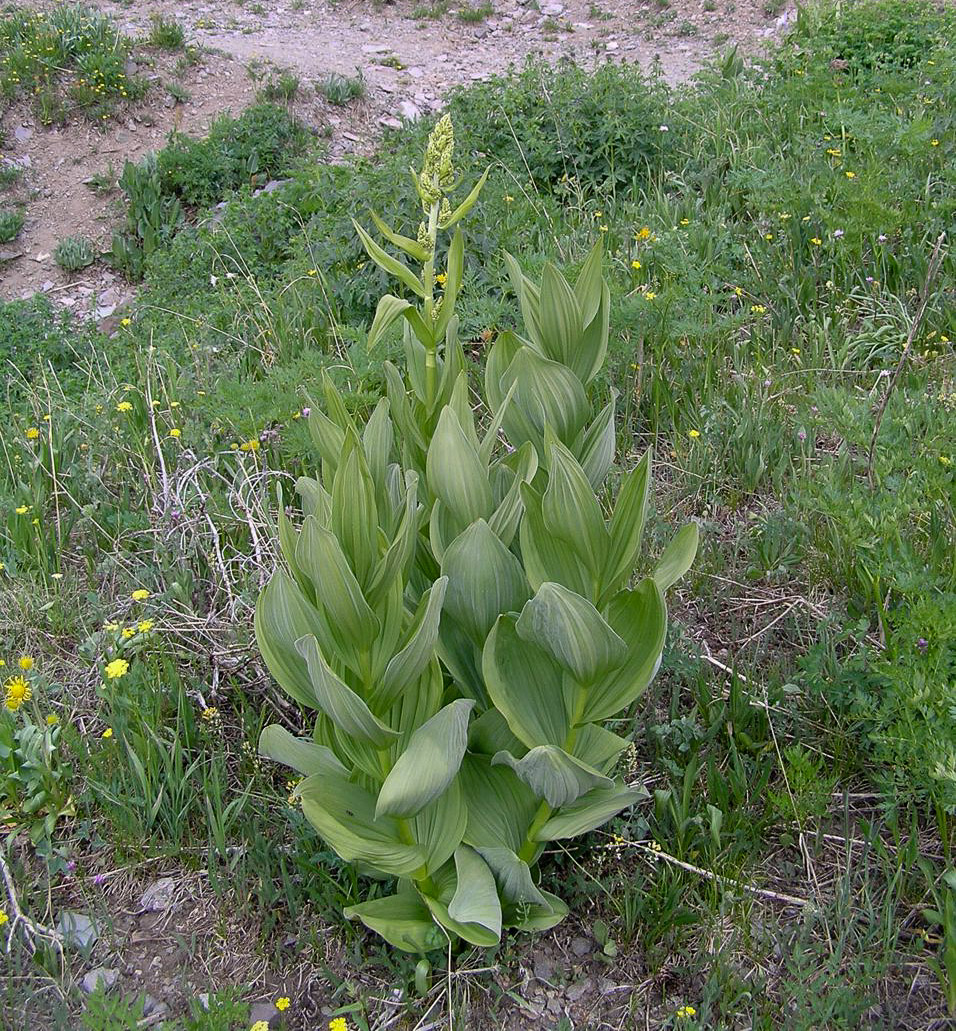
6/26/2006 · Near Ouray, Colorado · By Constance B. Kent 
| Kingdom | Plantae | Plants, but not fungi, lichens, or algae (from Stearn's Botanical Latin) |
| Subkingdom | Tracheobionta | Vascular plants—plants with a “circulatory system” for delivering water and nutrients |
| Division | Magnoliophyta | Flowering plants, also known as angiosperms |
| Class | Liliopsida | Monocots (plants with a single seed leaf); includes the lily family |
| Subclass | Liliidae | Includes lilies, orchids, and many others |
| Order | Liliales | Includes lilies, tulips, trilliums, greenbriars, and others |
| Family | Melanthiaceae | Trillium family |
| Genus | Veratrum | Latin for “dark roots”; also the ancient name of Hellebore |
| Species | californicum | Of or from California |
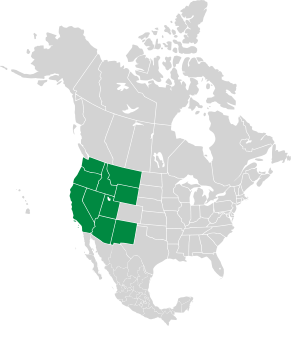
Veratrum californicum description by Thomas H. Kent, not updated.

© FloraFinder.org. All rights reserved.