Zenobia pulverulenta (W. Bartram ex Willd.) Pollard
Honeycup
Honeycup is native to the southeastern United States.
Plants: This is a shrub, 1½–6′ (50–180 cm) in height, with red-brown shredding bark.
Leaves: Arranged spirally around stems, ovate to ellliptic, bluish-silverish, glaucous, ¾–2½″ (2–7 cm) long. (Some varieties have green leaves.) The leaves have crenate margins, though you have to take a fairly close look to notice them. In the fall, the leaves become brilliant reddish-yellow, then purple.
Flowers: Large clusters of white, bell-shaped flowers. These are similar to those of many related species such as blueberries, but wider and flatter, often almost bowl-shaped, ⅜–7/16″ (1–1.2 cm) in size. The fragrant flowers emit a scent described by some as “citrus-like and fruity,” the source of the name “honeycup.”
Fruits: A dry five-valved capsule. When they first form, there is a little “antenna” poking from the top of each capsule (part of the flower). This often falls away, leaving a bumpy brown capsule.
Habitats: Moist soils in sandy or peaty pine savannahs, shrub bogs, pond/swamp margins and natural depression ponds in the southeastern United States.
Online References:
Zenobia cassinefolia (Vent.) Pollard
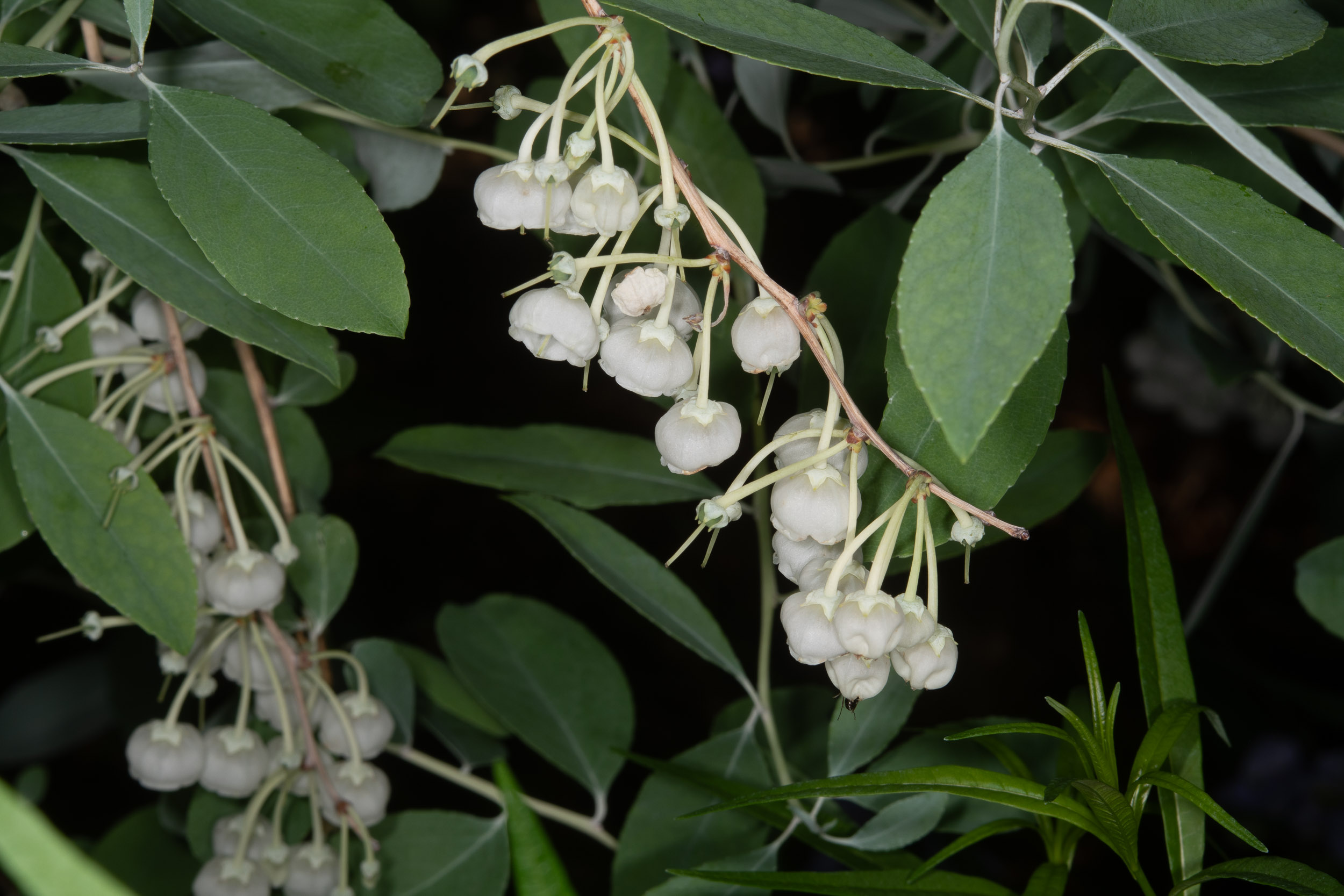
6/22/2017 · Garden in the Woods, Framingham, Massachusetts · ≈ 7 × 4½″ (18 × 12 cm) 
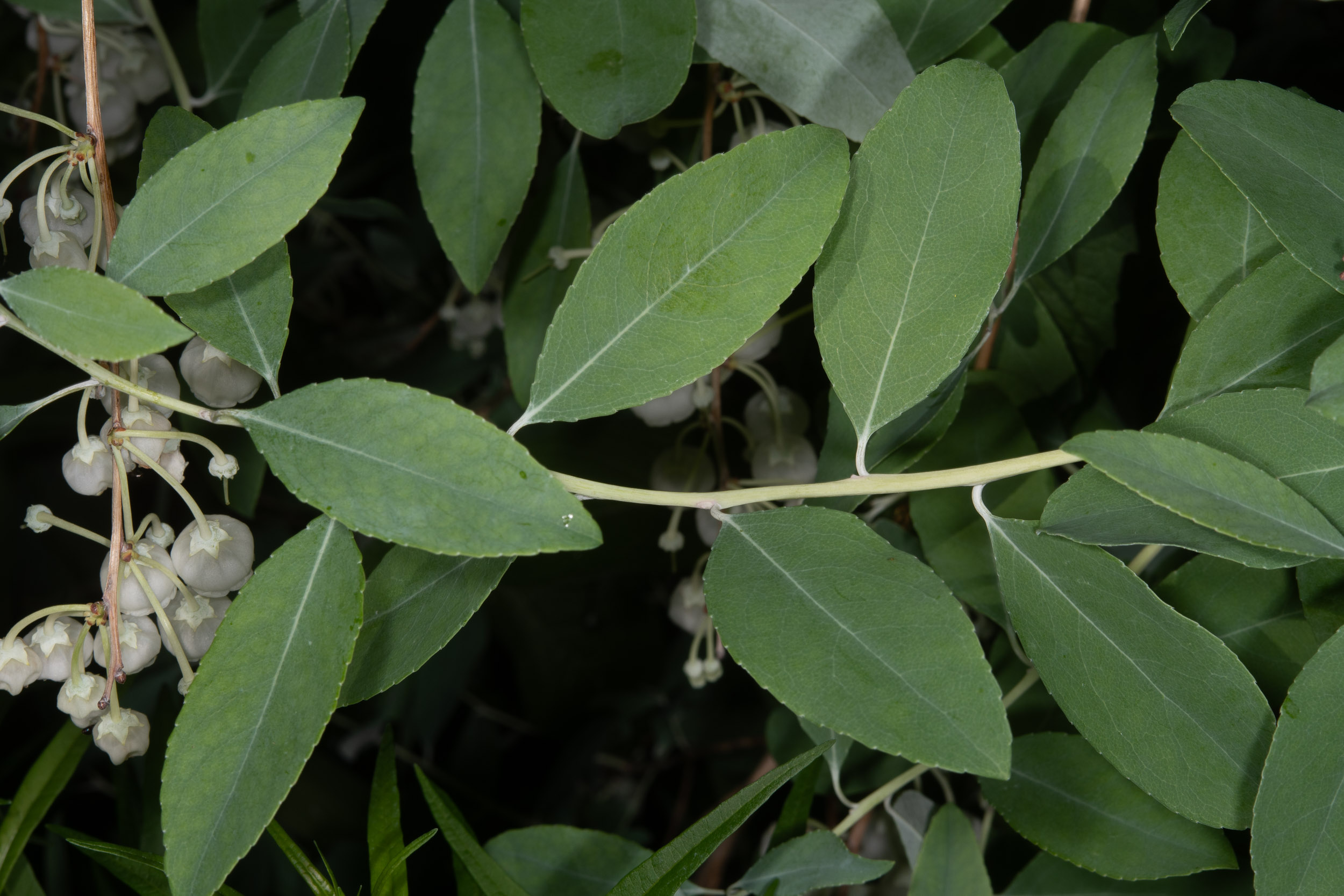
6/22/2017 · Garden in the Woods, Framingham, Massachusetts · ≈ 8 × 5″ (20 × 13 cm) 
| Kingdom | Plantae | Plants, but not fungi, lichens, or algae (from Stearn's Botanical Latin) |
| Subkingdom | Tracheobionta | Vascular plants—plants with a “circulatory system” for delivering water and nutrients |
| Division | Magnoliophyta | Flowering plants, also known as angiosperms |
| Class | Magnoliopsida | Dicotyledons—plants with two initial seed leaves |
| Subclass | Asteridae | A large class that encompasses asters |
| Order | Ericales | Tea, persimmon, blueberry, Brazil nut, azalea, many others |
| Family | Ericaceae | Heath or heather family |
| Genus | Zenobia | From Latin Zenobia, from Ancient Greek Ζηνοβία (Zēnobía), name of a third century Queen of Palmyra |
| Species | pulverulenta | Powdery, dust-covered |
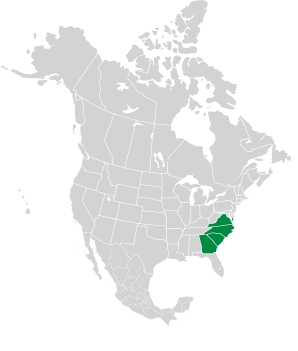
Zenobia pulverulenta description by Thomas H. Kent, not updated.

© FloraFinder.org. All rights reserved.