Hieracium L.
Hawkweed
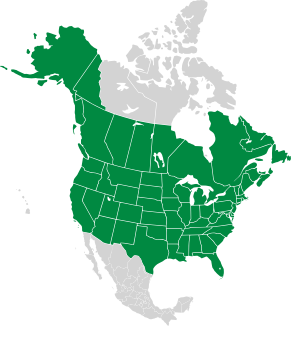
Some hawkweeds are European imports, originally intended for gardens, now escaped and widespread throughout North America. Others are natives. Especially in the Pacific northwest, some of the imports are considered invasives.
Pliny the Elder believed that hawks fed on hawkweeds to improve their otherwise dull eyesight. This results in both the common and genus names. Hieracium derives from Greek hierakion, or “hawk.” Hawks in fact have incredibly precise vision. There is no evidence that they pay any attention to these plants, nor, as far as I was able to find, is there anything in hawkweeds that might improve vision.
Hawkweeds are apomictic, reproducing asexually—new plants are near-perfect genetic clones of their parents. Most plants, by contrast, reproduce sexually, so that offspring reflect a mixture of traits from both parents. Since hawkweeds are asexual, they change more slowly than other species, but other agents of evolution, such as mutation, still result in changes. These more subtle changes produce microspecies, sometimes in numerous variations, bedevilling those of us with a penchant for classifying plants. Not to mention those of us struggling to invent the science of genetics:
| Gregor Mendel, a scientist and Augustinian monk born in Moravia in 1822, discovered the laws of genetics by experimenting with pea plants (Pisum sativum) in a garden plot at the monastery. His paper on the subject, Versuche über Pflanzenhybriden (Experiments on Plant Hybridization), was not widely read or embraced at the time. By some accounts, Charles Darwin received, but never opened, a copy. Karl von Nägeli, of the University of Munich, is the one scientist known to have responded to Mendel's paper. Nägeli suggested that Mendel experiment with hawkweeds to further his studies. Unfortunately for Mendel and for the history of genetics, hawkweeds are among the few plants that reproduce asexually: offspring are clones of the parent plant. Hence there was no genetic variation and Mendel questioned his own work, abandoning his studies 15 years before his death. (From John Eastman's The Book of Field and Roadside; strangescience.net; and Wikipedia.) |
Plants: Hawkweeds typically consist of a basal rosette of leaves, with long stems that are sometimes bare or sometimes contain alternate leaves. Hawkweeds form patches or colonies, spreading by stolons (above-ground roots) or by seed.
Leaves: Leaves vary a lot in shape. Stems and leaves are usually hairy, sometimes very hairy. When cut or broken, hawkweed stems, leaves, and stolons produce a bitter milky sap.
Flowers: Usually flowers occur in clusters and are composed of ray flowers that have squared-off tips and several serrations at the end of each ray. Most hawkweed flowers are yellow; one species is orange.
Fruits: Flowers are replaced by pappi, round balls containing seeds like those of dandelions; sometimes the pappi are shaped more like an old-style shaving brush. Each seed has its own parachute for wind dispersal.
 |
Some similar species. |
Online References:
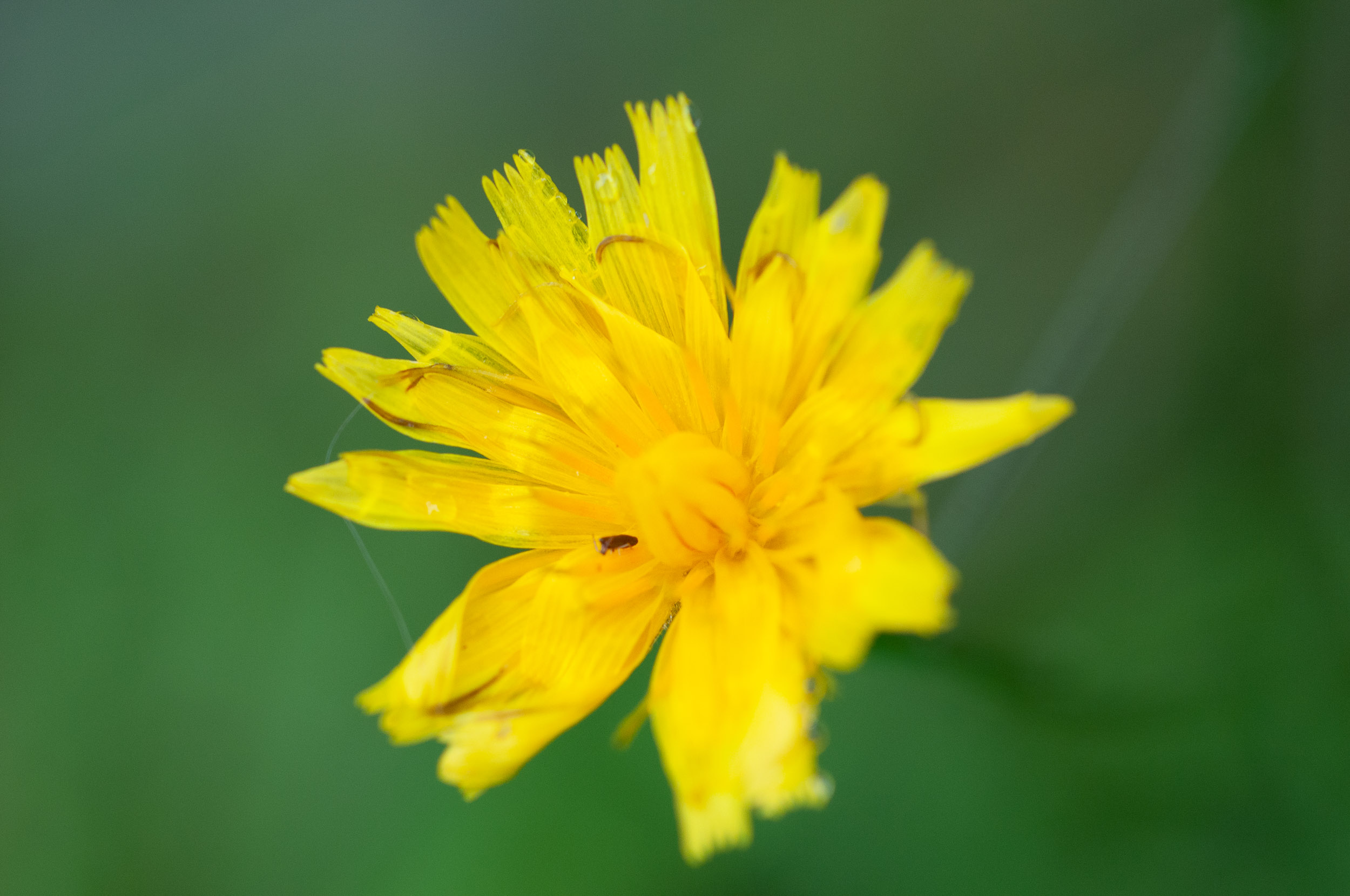
Yellow hawkweed (Hieracium) · 8/2/2008 · Bar Harbor, Maine · ≈ 3½ × 2½″ (9.8 × 6.6 cm)  Species not yet identified
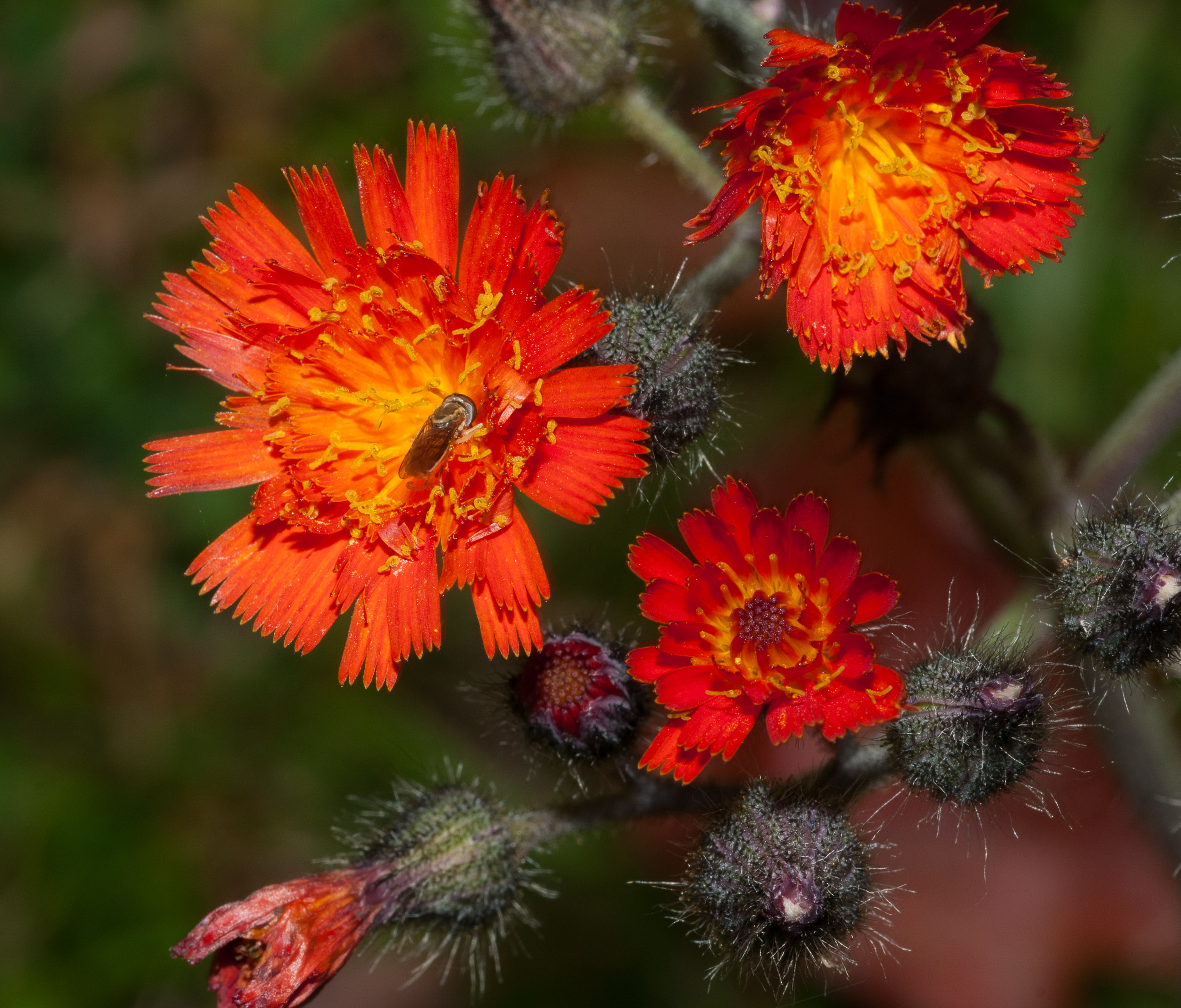
Orange hawkweed (Hieracium aurantiacum) · 9/29/2012 · Franconia Notch Area, New Hampshire · ≈ 3½ × 3″ (9.2 × 7.9 cm) 
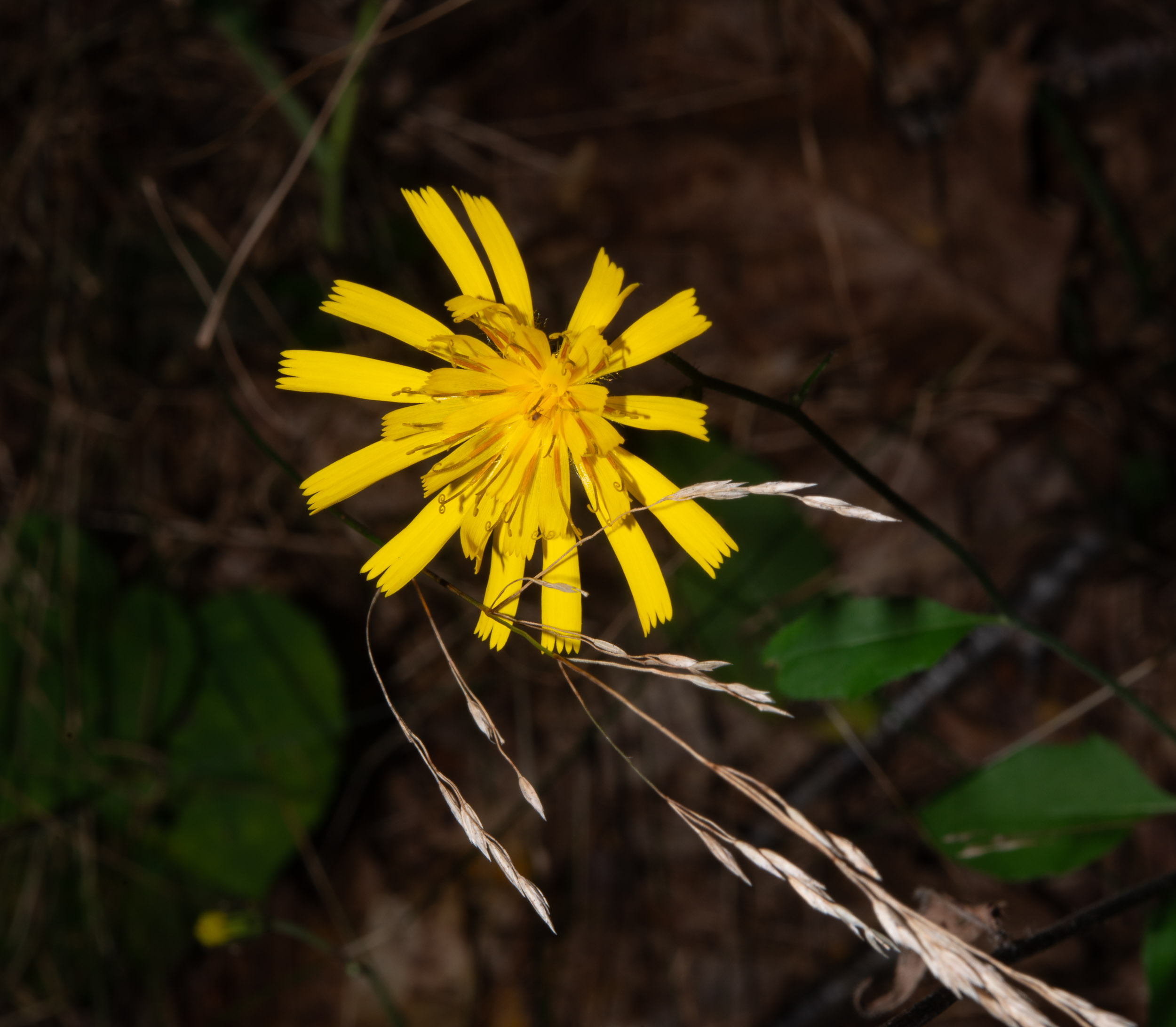
Canada hawkweed (Hieracium canadense) · 9/29/2013 · Compass Harbor, Acadia National Park, Bar Harbor, Maine · ≈ 4½ × 4″ (12 × 10 cm) 
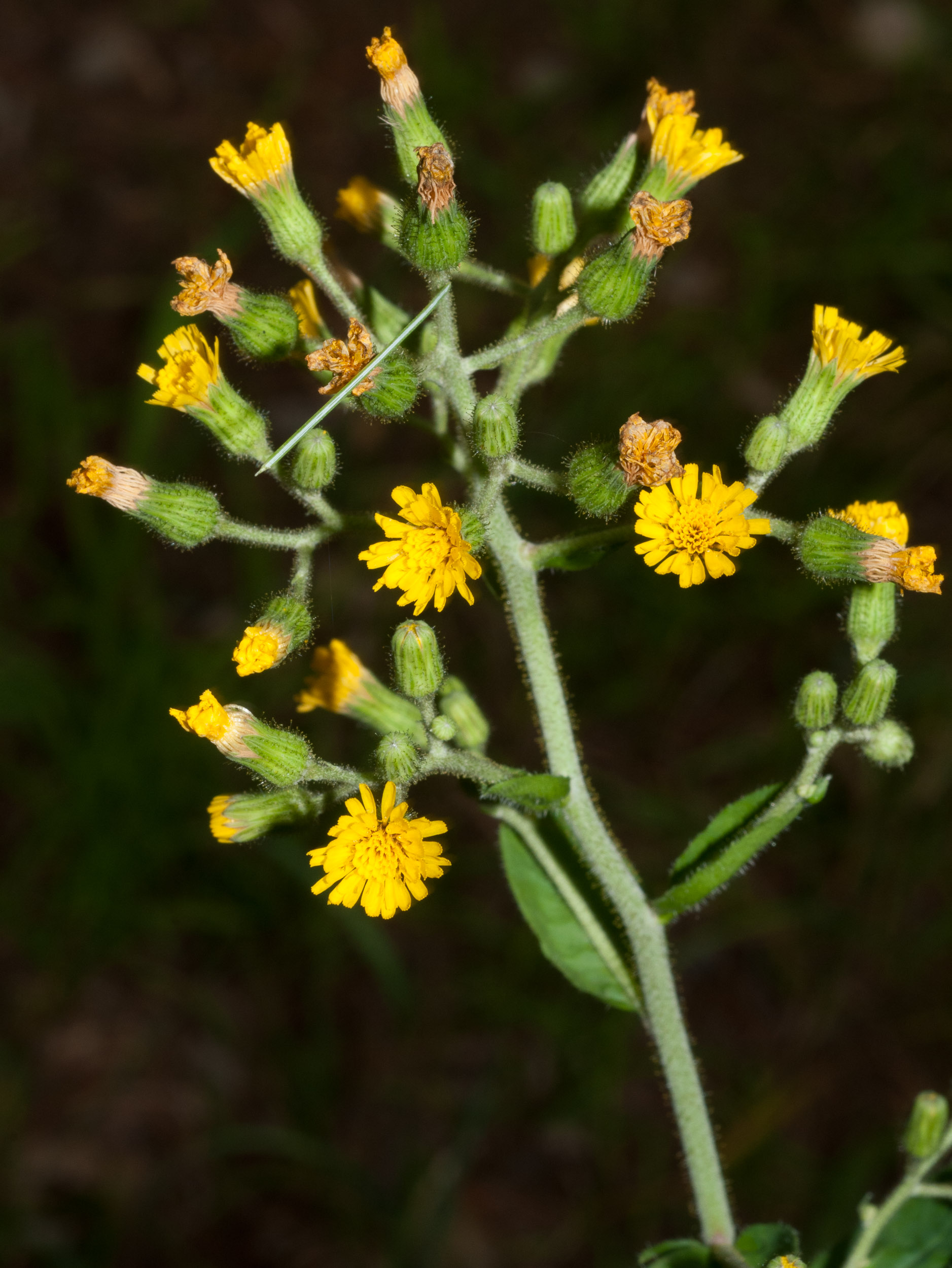
Gronovius’ hawkweed (Hieracium gronovii) · 7/31/2012 · Bemis Rd Conservation Area, Pepperell, Massachusetts · ≈ 5 × 4″ (13 × 10 cm) ID is uncertain 
| Kingdom | Plantae | Plants, but not fungi, lichens, or algae (from Stearn's Botanical Latin) |
| Subkingdom | Tracheobionta | Vascular plants—plants with a “circulatory system” for delivering water and nutrients |
| Division | Magnoliophyta | Flowering plants, also known as angiosperms |
| Class | Magnoliopsida | Dicotyledons—plants with two initial seed leaves |
| Subclass | Asteridae | A large class that encompasses asters |
| Order | Asterales | Flowering plants with a central disk flower and surrounding petals, like daisies |
| Family | Asteraceae | The aster family, which also includes daisies and sunflowers; from the Greek ἀστήρ, “star,” for the star-shaped flowers |
| Genus | Hieracium | From Greek hierakion, “a hawk,” from Pliny’s belief that hawks strengthened their eyesight by eating these plants |
Hieracium description by Thomas H. Kent, not updated.

© FloraFinder.org. All rights reserved.