Laportea canadensis (L.) Weddell
Wood nettle, Canadian woodnettle
Similar species
Laportea canadensis
Boehmeria cylindrica
Acalypha rhomboidea


|
Laportea canadensis (L.) Weddell Wood nettle, Canadian woodnettle Similar species | |||
| You are here Laportea canadensis |
Boehmeria cylindrica |
Acalypha rhomboidea |
|
|---|---|---|---|
| Common Name | |
|
|
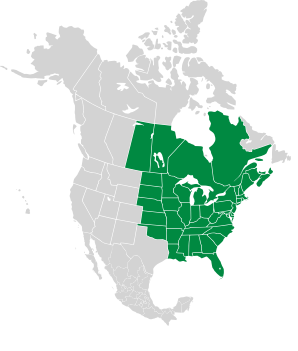
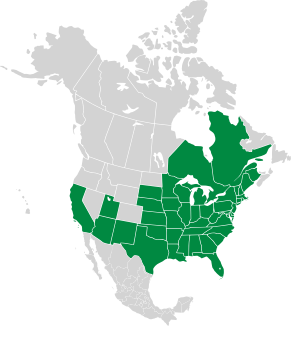
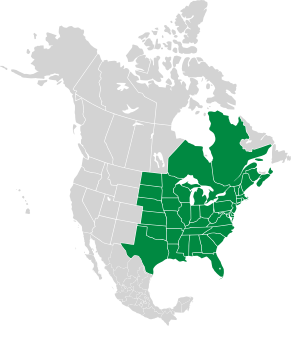
| Plant | 2–4′ (60–121 cm) high. Stems have stiff white hairs that sting if you rub against them. | 4–63″ (10–160 cm) high, and favor shady wooded areas. Stems are smooth, without the irritating hairs of stinging nettle. | 6–24″ (15–60 cm) tall, with a stem that is hairless or covered with fine white hairs. Bracts beneath flowers, stems, and leaf undersides turn copper-colored. |
| Leaves | Alternate, up to 4 ⨉ 6″ (10 ⨉ 15 cm), egg-shaped, with coarse serrations. | Usually opposite or nearly so. They are roughly egg-shaped, with sharp tips and teeth. (More precisely, they are elliptic, lanceolate to broadly ovate.) The leaves are 1¾–7 ⨉ ¾–4″ (5–18 ⨉ 2–10 cm). | Leaves are alternate, lance-like or oval with sharp tips, 3½″ (8.9 cm) × 1″ (2.5 cm), with blunt serrations. |
| Flowers | Male flower clusters are white or greenish white, in loose branching clusters. Each flower is less than ⅛″ (3.2 mm) across, with 5 petals. They appear from July to September. | Flowers occur on straight spikes that emerge from the stem, in clusters of small, inconspicuous green flowers. Each spike is often tipped by a couple of small leaves. Flowers appear from July to August. | Flowers are greenish-tan, and tiny—less than ⅛″ (3.2 mm) across. They flower from July to October. |
| Fruit | Oblique dry seeds. | Spiky little balls. | A 3-lobed roughly spherical fruit containing 3 seeds. |
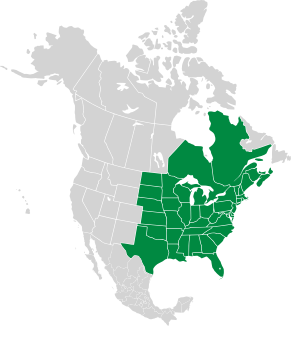
| Range/ Zones |
|
|
|
| Habitats | Moist woods, streambanks, in rich soils | Moist, deciduous woods; wet meadows; swamps, bogs, and mashes | Moist to mesic black soil prairie, openings in upland and floodplain forest, thickets, seeps, riverbanks and lake shores, limestone glades and bluffs, fields, fence rows, right-of-ways, vacant lots, and waste areas. |


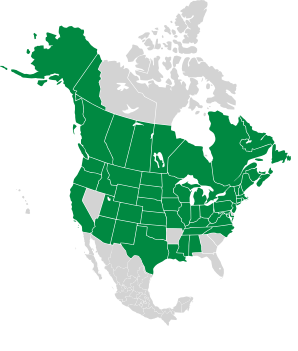
Laportea canadensis description by Thomas H. Kent, not updated.
© FloraFinder.org. All rights reserved.