Persicaria posumbu (Buch.-Ham. ex D. Don) H. Gross
Polygonum cespitosum Blume nom. inq.
Oriental lady’s thumb, bristly lady’s thumb
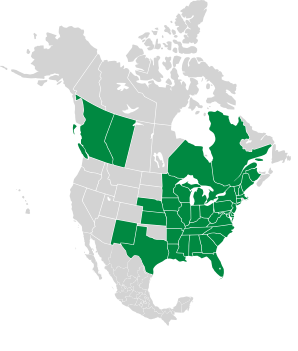
“Cespitose” lady’s thumb is an eastern Asian native, introduced to and now common in North America.
Plants: “Cespitose” lady’s thumb is so-called because it often sprawls, growing almost sideways. However, it can also be erect. It reaches up to 3′ (91 cm) in size.
Leaves: Alternate, elliptic to lanceolate, 1–3″ (2.5–7.6 cm) long, and pointed at the base and tip, and are not mottled. Petioles are 1/32–⅛″ (1–5 mm). Papery sheaths (ocrea) encompassing the joints are long-bristly, and ⅛–⅜″ (4–12 mm) long,, vs. less than ⅛″ (5 mm) for P. persicaria.
Flowers: Pink/white flower spikes are ¾–1½″ (1.9–3.8 cm) tall × 1/16–3/16″ (3–6 mm) thick, densely filled with individual flowers less than ¼″ (6.3 mm) in size. (By contrast, P. persicaria has flower stalks ⅛–⅜″ (6–12 mm) thick.) Flowers appear from June to October.
Fruits: A black achene with a triangular cross section.
Habitats: Common to invasive in disturbed habitats such as pastures, roadsides, and lawns. It is partial to wet areas.
 |
Similar smartweeds and knotweeds. |
Online References:
References:
Clemants, Steven; Gracie, Carol, Wildflowers in the Field and Forest, Oxford University Press, 2006, p. 76
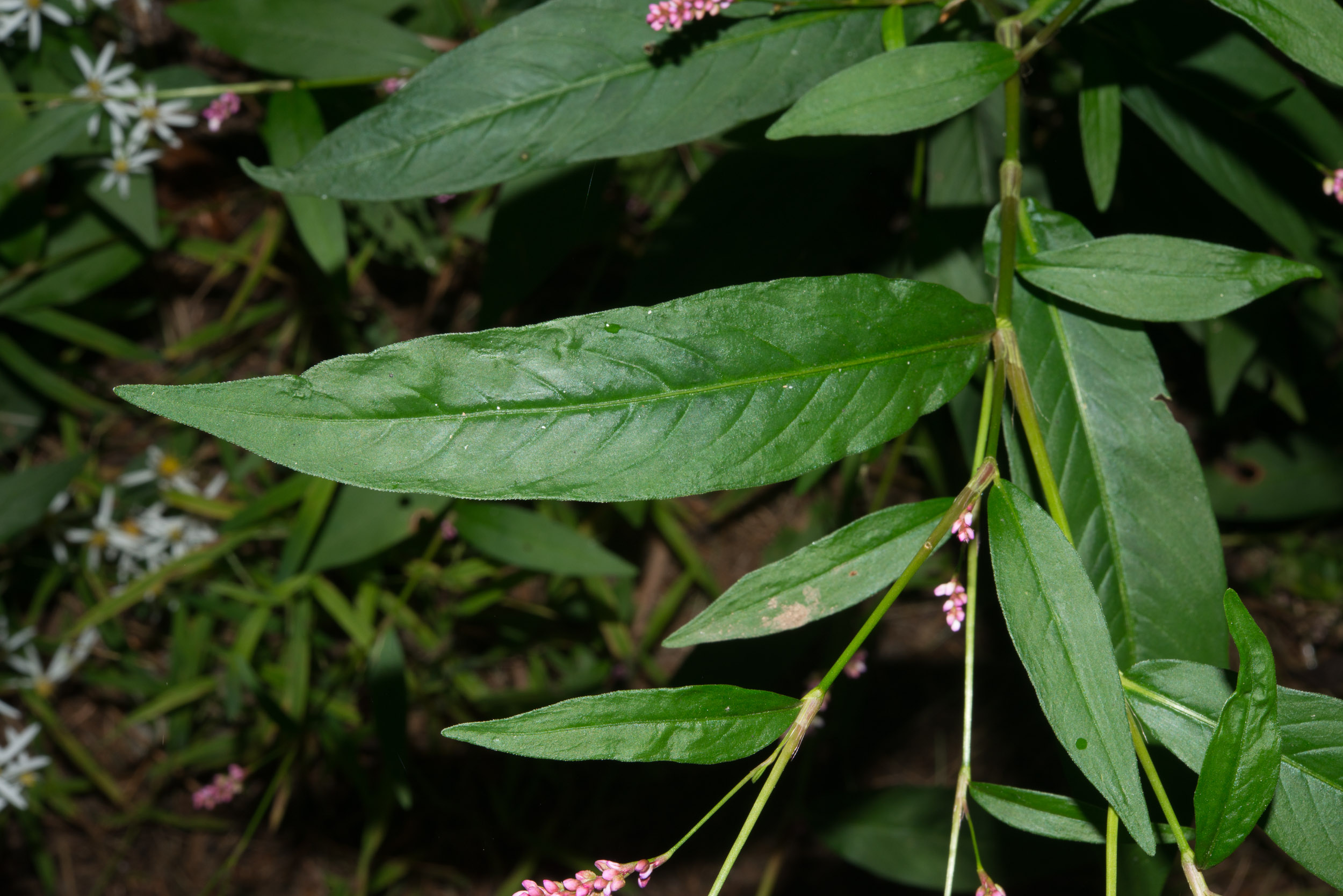
9/9/2013 · J. Harry Rich Forest, Groton, Massachusetts · ≈ 9 × 6″ (23 × 16 cm) 
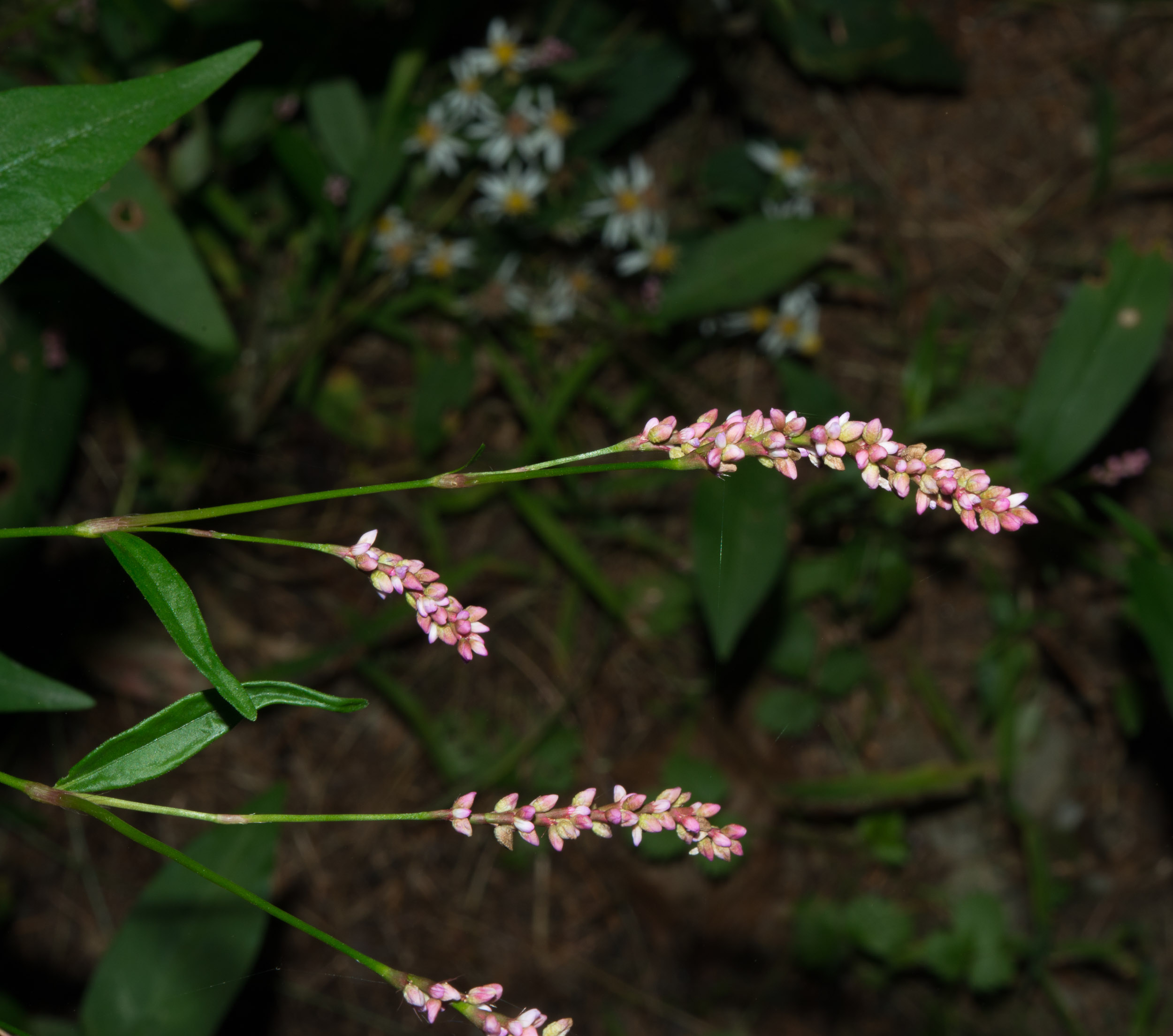
9/9/2013 · J. Harry Rich Forest, Groton, Massachusetts · ≈ 6 × 6″ (16 × 14 cm) 
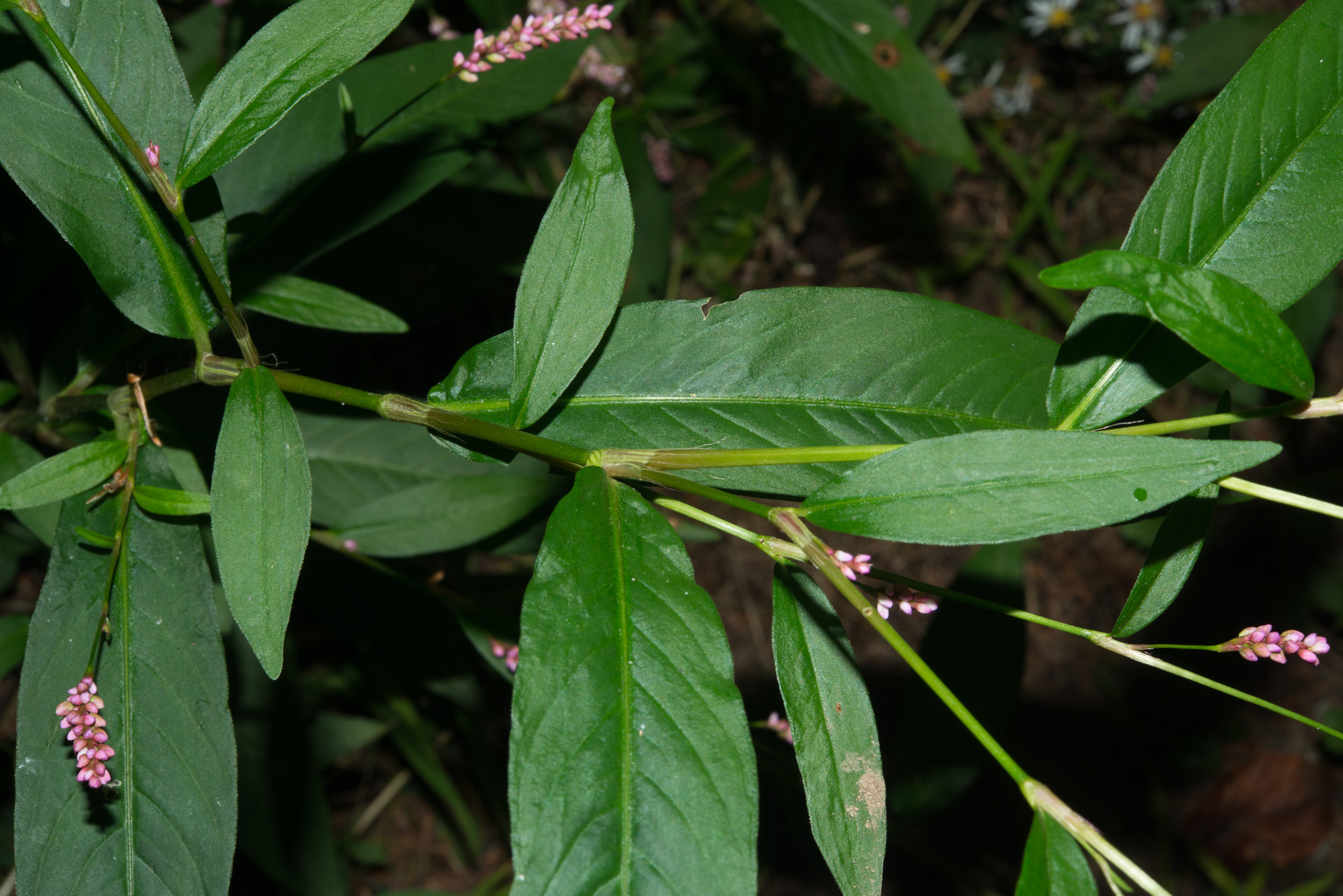
9/9/2013 · J. Harry Rich Forest, Groton, Massachusetts · ≈ 9 × 6″ (23 × 16 cm) 
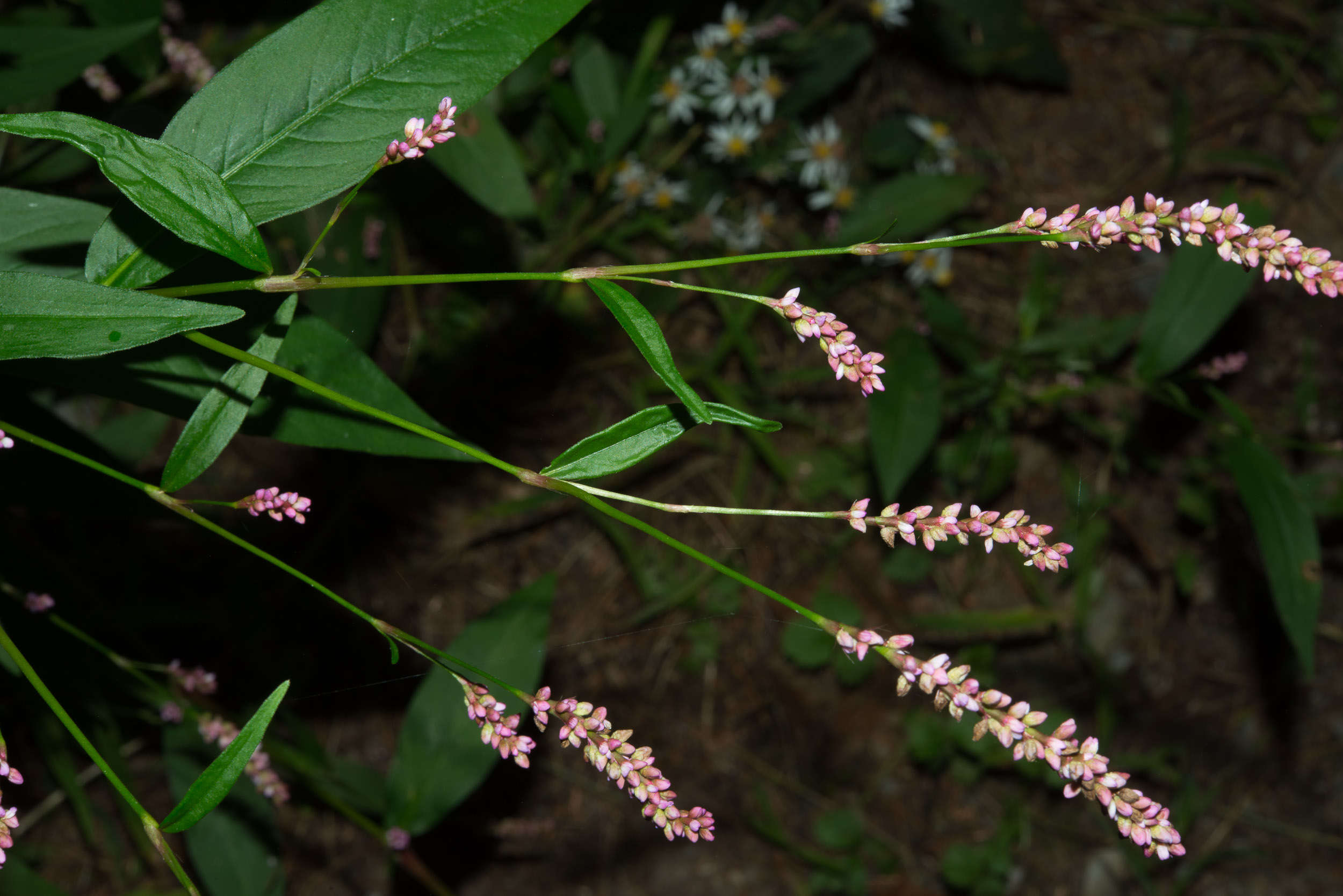
9/9/2013 · J. Harry Rich Forest, Groton, Massachusetts · ≈ 9 × 6″ (23 × 16 cm) 
| Kingdom | Plantae | Plants, but not fungi, lichens, or algae (from Stearn's Botanical Latin) |
| Subkingdom | Tracheobionta | Vascular plants—plants with a “circulatory system” for delivering water and nutrients |
| Division | Magnoliophyta | Flowering plants, also known as angiosperms |
| Class | Magnoliopsida | Dicotyledons—plants with two initial seed leaves |
| Subclass | Caryophyllidae | Cacti, many other succulents, carnivorous plants, and leadworts |
| Order | Caryophyllales | Includes cacti, carnations, amaranths, ice plants, and many carnivorous plants |
| Family | Polygonaceae | Knotweed or smartweed family |
| Genus | Polygonum | Greek poly, “many,” and gonu, “knee,” for the swollen jointed stems |
| Species | cespitosum | Cespitose (also “caespitose”), having a densely-clumped, tufted or cushion-like growth form, with the flowers held above the clump or tuft |
Polygonum cespitosum description by Thomas H. Kent, not updated.

© FloraFinder.org. All rights reserved.