Quercus grisea Liebm.
Gray oak, scrub oak, shin oak
Similar species
Quercus gambelii
Quercus grisea


|
Quercus grisea Liebm. Gray oak, scrub oak, shin oak Similar species | ||
Quercus gambelii |
You are here Quercus grisea |
|
|---|---|---|
| Common Name | |
|
| Plant | Trees are 9½–30′ (3–9 m), though in ideal conditions, they can reach double this height. The largest recorded specimen, in Arizona, is 115′ (35 m) tall. Bark is red-brown to gray. | A tree or multistemmed shrub, with trees reaching up to 66′ (20 m) in height, and a trunk up to 2′ (60 cm) in diameter. |
| Leaves | 2½–4½ ⨉ 1½–2″ (7–12 ⨉ 4–6 cm), deeply or moderately lobed. They are obovate to oblong-obovate. Leaf stalks (petioles) are ½–¾″ (1.3–1.9 cm) long. The upper surface is glossy and dark green, while the lower surface is pale and velvety. | Alternate, leathery, ¾–3″ (2–7.6 cm) long, elliptical to ovate, and either untoothed or with a few coarse teeth. Leaves are grayish green above and felted beneath, due fine hairs. Leaves are evergreen, or drought deciduous[Glossary("[Glossary(drought deciduous)]")]. |
| Flowers | Insignificant greenish or brownish staminate (male) or pistillate (female) catkins. Flowers appear from April to June. | Male catkins are yellowish-green. Female flowers are in small spikes in the leaf axils. |
| Fruit | Light brown acorns are ⅜–¾″ (1–2 cm), with ⅓ to ½ covered by a cap. They may be single or in small clusters. | Acorn cups are scaly, covering about half of each acorn. Acorns are single or paired. Each acorn is about ½″ (1.3 cm) long. |
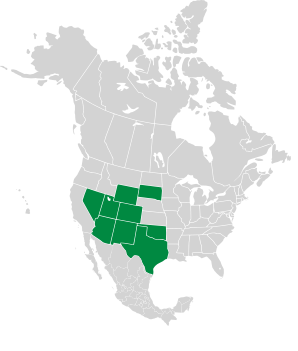
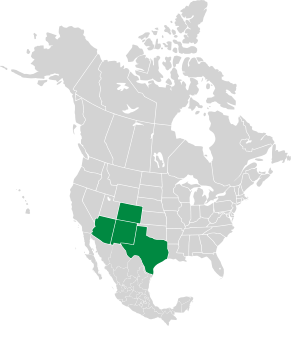
| Range/ Zones |
|
|
| Habitats | At elevations of 3281–9843′ (1–3 km), on sunny hillsides with thin, rocky, alkaline soil. They appear on slopes, in canyons and foothills. | In valleys and on ridges, on rocky slopes and on the banks of streams, at elevations of 3937–8858′ (1.2–2.7 km). |
Quercus grisea description by Thomas H. Kent, not updated.
© FloraFinder.org. All rights reserved.